


A Day at a Coastal Fishing Village
There is no need to venture offshore to experience the rhythm of life in a fishing village. It begins right along the shore, with small basket boats and fishermen hauling in their nets.
Dawn Begins with the Hauling of Nets
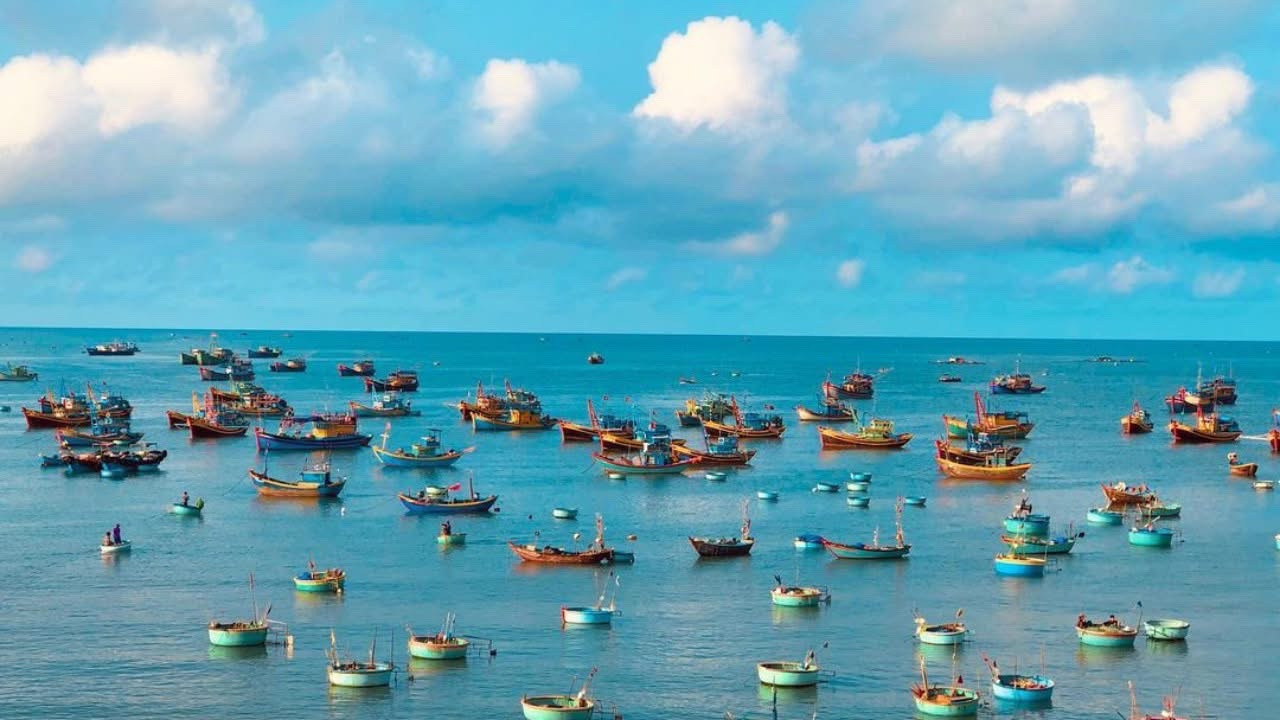
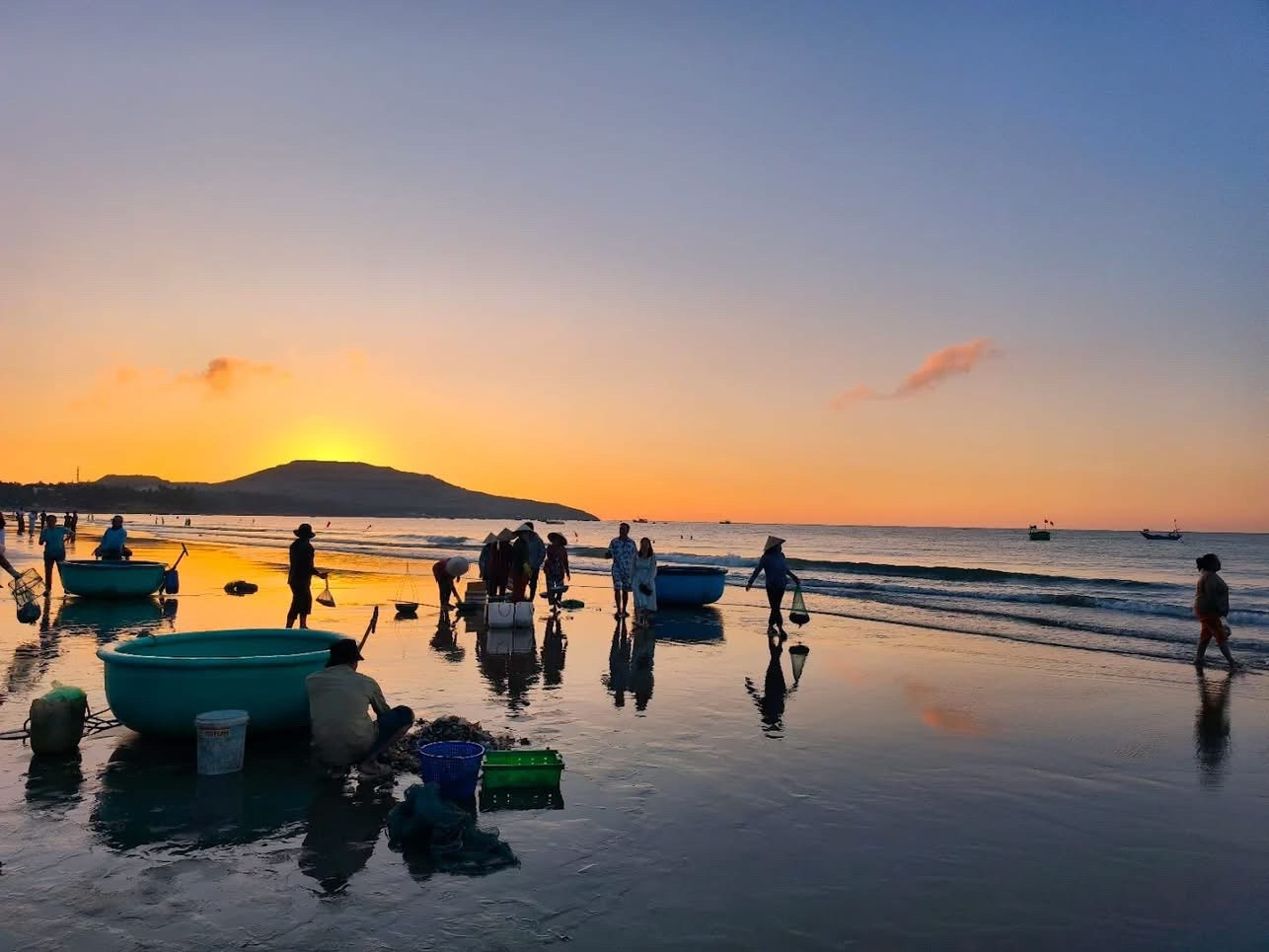
As the first light spreads across the sky, basket boats already come into view off the beach of Ham Tien, Mui Ne. Some people push the boats, some pull the nets, while others wait on the shore. The early morning sea remains calm, with small waves gently lapping against the beach.
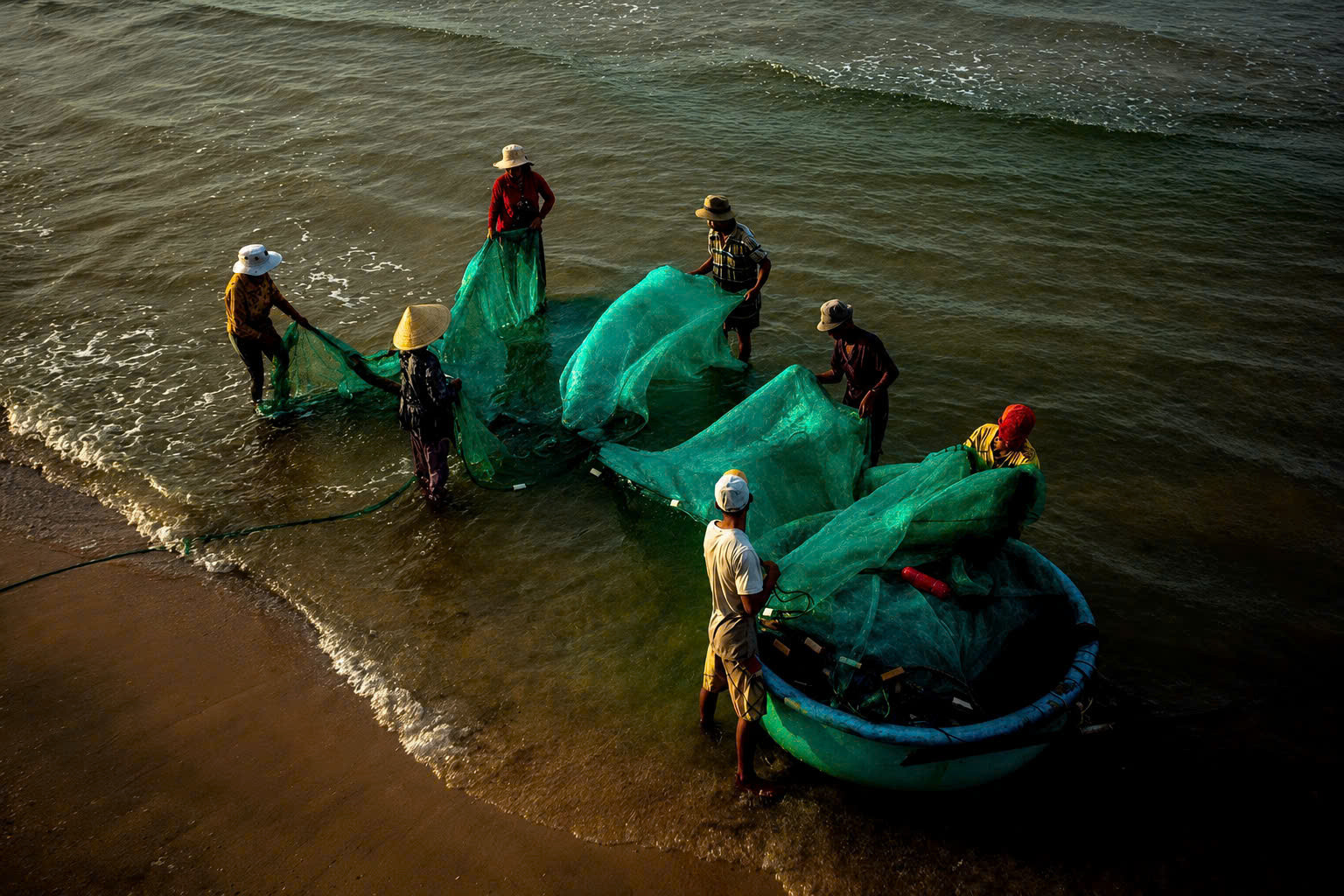
The boats inch toward the shore as the nets behind them are hauled in bit by bit. Those in the water and those on shore work in smooth coordination. Calls to one another mingle with the sound of the waves, while footprints mark the wet sand. As the edge of the net emerges, shrimp and fish glint silver in the mesh. Some people untangle the catch, while others gather it into baskets. Large or small, the haul is quickly sorted, and within moments, baskets of fresh seafood line the beach.
"Whenever the sea is calm, we seize the opportunity to pull in the nets. This work is done close to shore, so we head out early in the morning and return soon afterward. Some days, when there are plenty of fish, we are delighted, and on days with fewer, we still consider it a bit of extra income," said fisherman Nguyen Van Minh, a resident of Mui Ne Ward, as he untangled the fish.

For those who make a living from the sea, the morning begins with the tide. Once the nets are hauled in, the catch is quickly untangled and taken straight to buyers.
When the Catch Comes Ashore, the Market Comes Alive
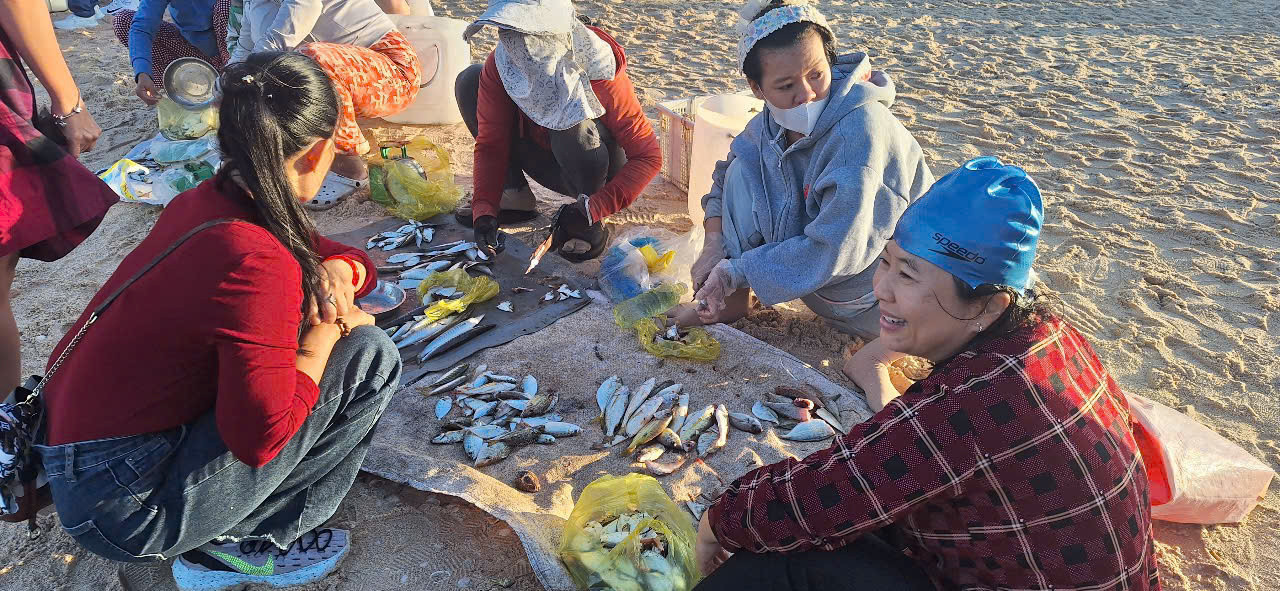
Without the need for stalls or a dedicated market area, a stretch of coastal sand is enough for buying and selling to take place. As soon as the fish are untangled from the nets, nearby residents drop by to choose what they want. Familiar buyers look over the baskets of fish, selecting a few for their meals; the sellers call out prices while untangling the fish. Baskets of fish sit on the sand alongside a few small basins, as hands move swiftly to sort through the catch. Everything happens quickly and neatly because the fish are still fresh, and the buyers also want to bring them home early, before the sun climbs too high.

The net-pulling scene also attracts early-morning beachgoers. A few tourists stop by the shore, attentively watching the basket boats approach and curiously following every movement as the fish are untangled from the nets. Some take out their phones to capture the moment when the first catches are hauled out of the water.
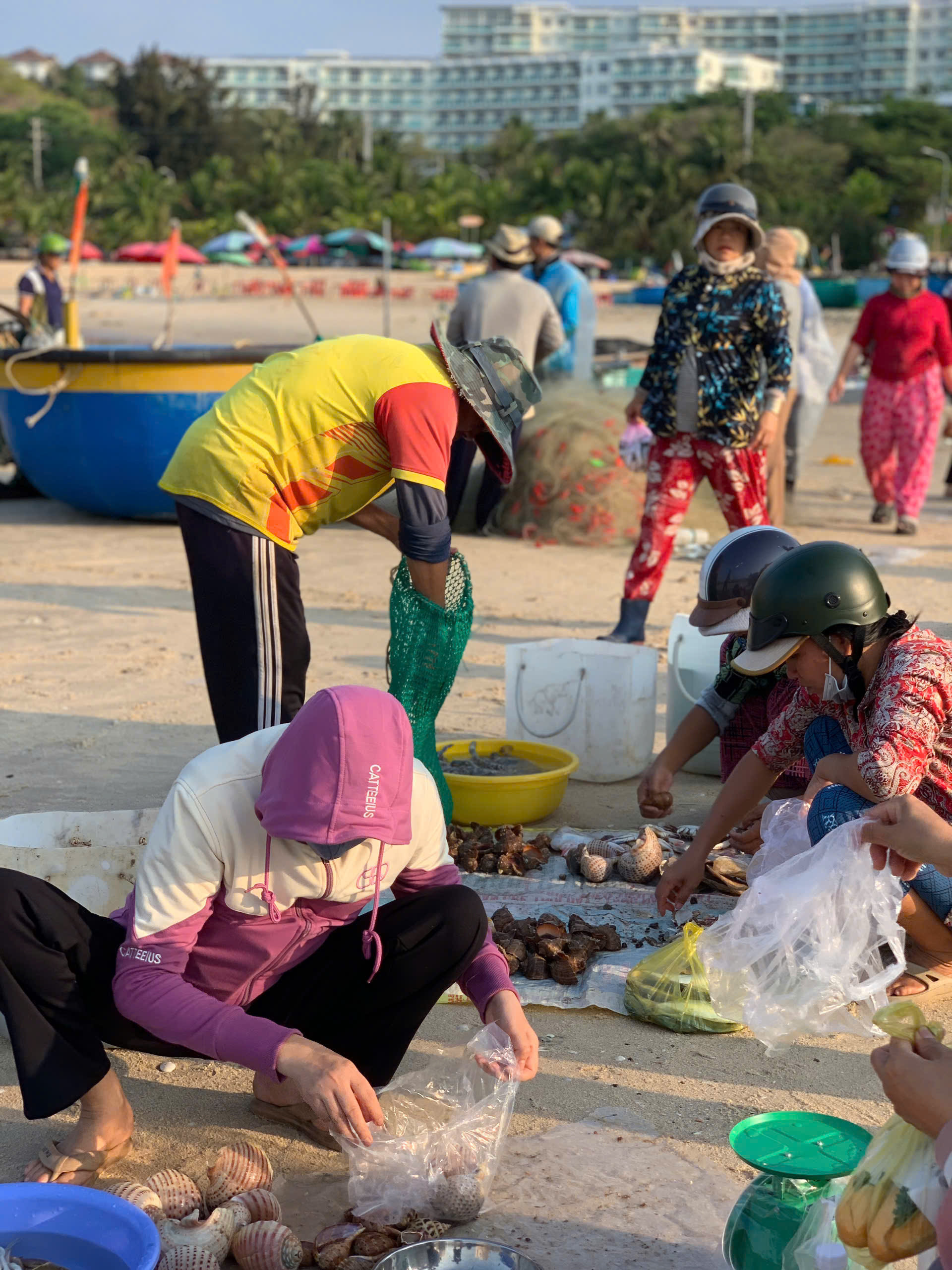
For many tourists, this is another side of Mui Ne—not its crowded beaches or resorts, but an ordinary morning when they can stand on the sand and watch local people earn their living from the sea.
When the fish have been sold, the workers pack up their nets. The nets are shaken clean and spread out on the beach to dry. The basket boats are also moved higher up, lying side by side under the sun. The beach becomes less crowded by then. A few people sit and rest by the boats, while young children run and play on the sand. Near the water's edge, the waves still roll steadily onto the shore.

As the sun climbs higher, the morning's net-pulling comes to an end. The catch has already made its way to nearby kitchens, while the nets are spread out to dry, ready for another dawn. In Ham Tien, life in the fishing village begins simply—with a few basket boats, nets hauled in close to shore, and baskets of fresh seafood changing hands right on the beach.