


A Dedicated Couple Preserving the Traditional Culture of the Ma Ethnic Group
A Ma ethnic couple in Phi Sar Village, Cat Tien 3 Commune, are nurturing a dream of restoring traditional longhouses and preserving the brocade weaving craft of the Ma people. Wounded veteran Dieu K'Loc and his devoted wife are working every day to preserve the cultural heritage of the Ma community.
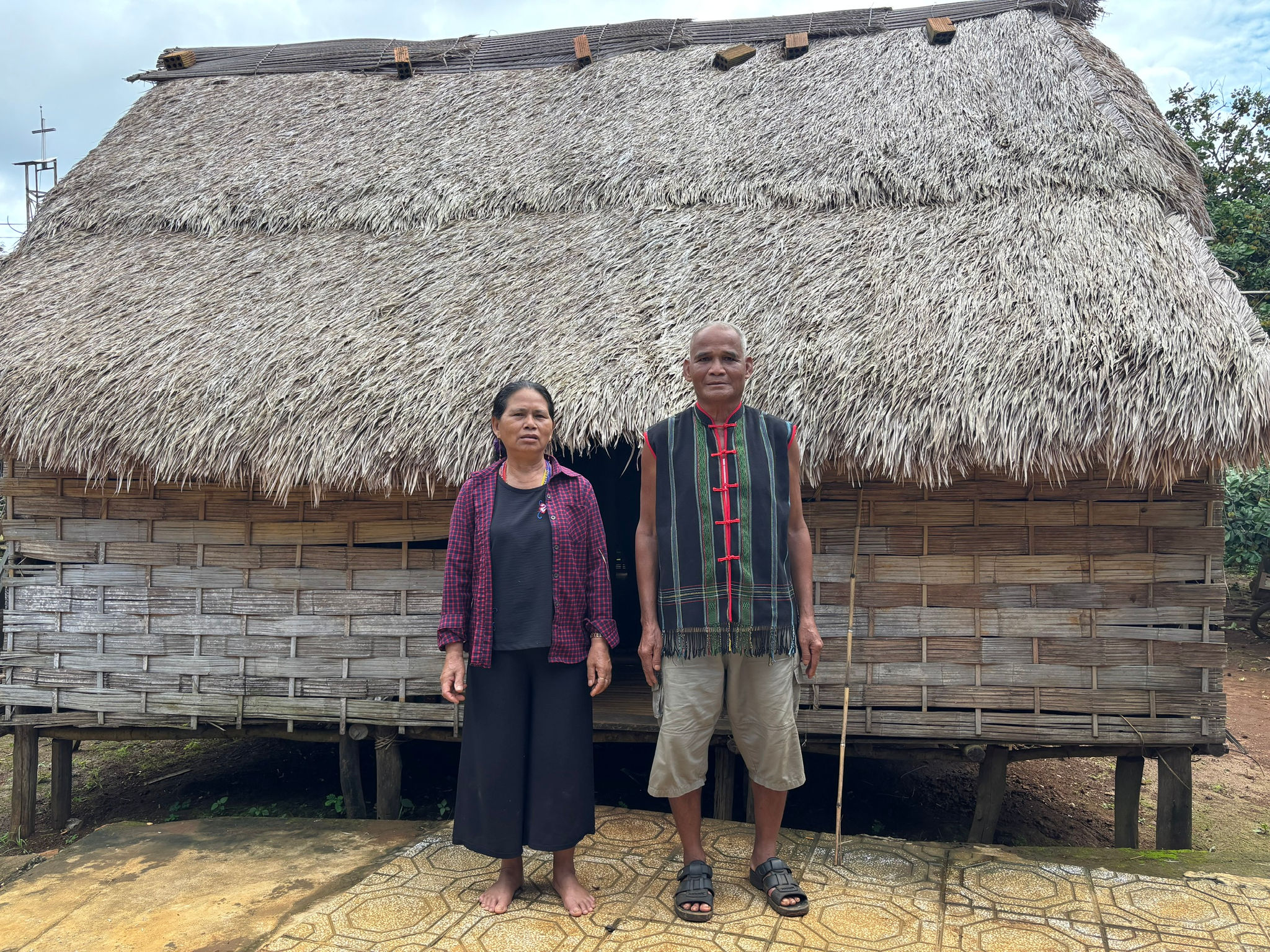
Dieu K'Loc was born into a family with a long revolutionary tradition. His father was a war veteran, and his older brother was a soldier who died while serving. Following in their path, K'Loc enlisted in the military to serve his country. After returning from service with injuries and health issues resulting from wartime bombings, he was recognized as a Class 2/3 wounded veteran.
Together with his wife, Dieu Thi Choc, K'Loc began a new chapter in their lives, focused on raising a family while preserving their cultural traditions.
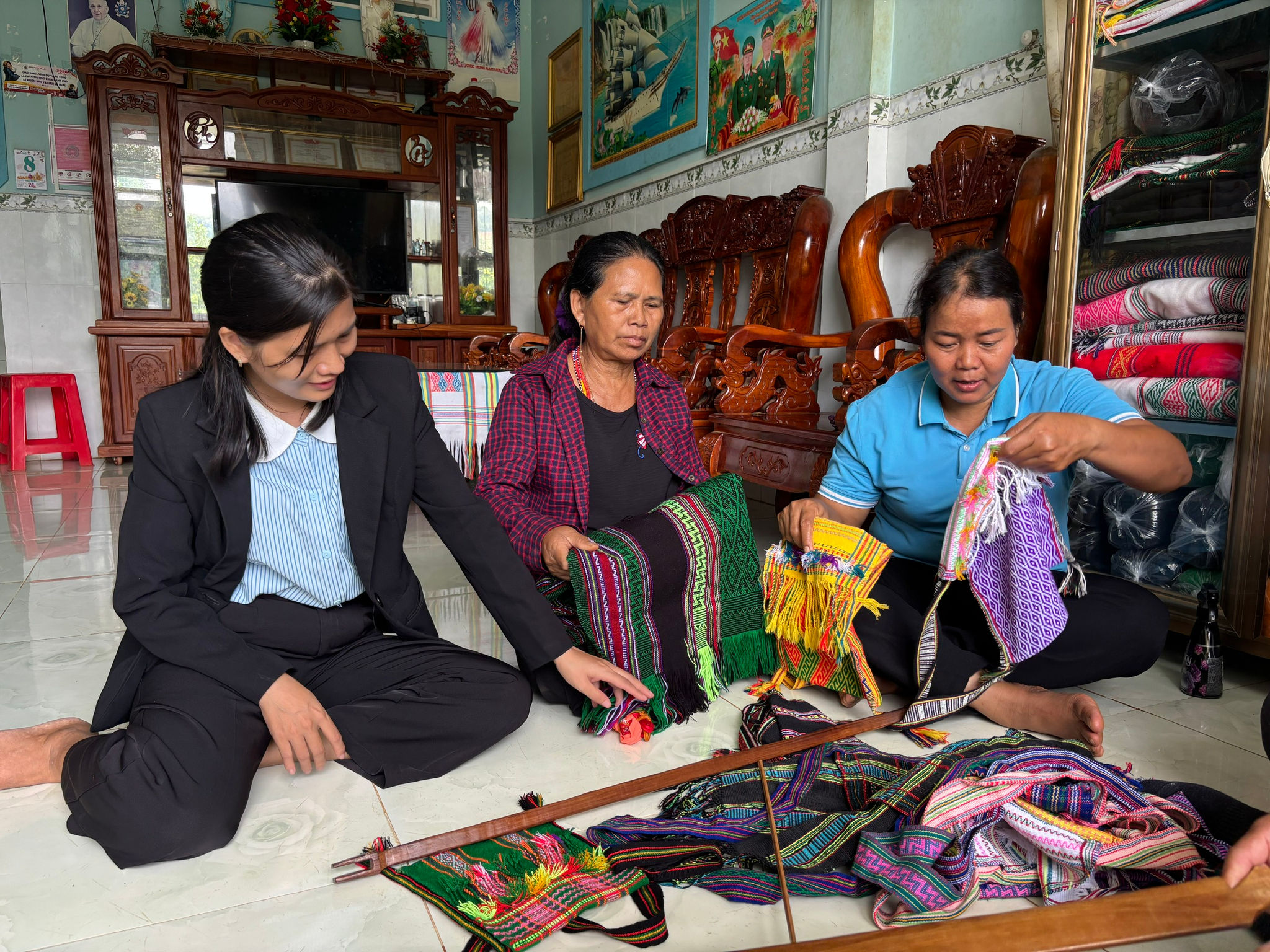
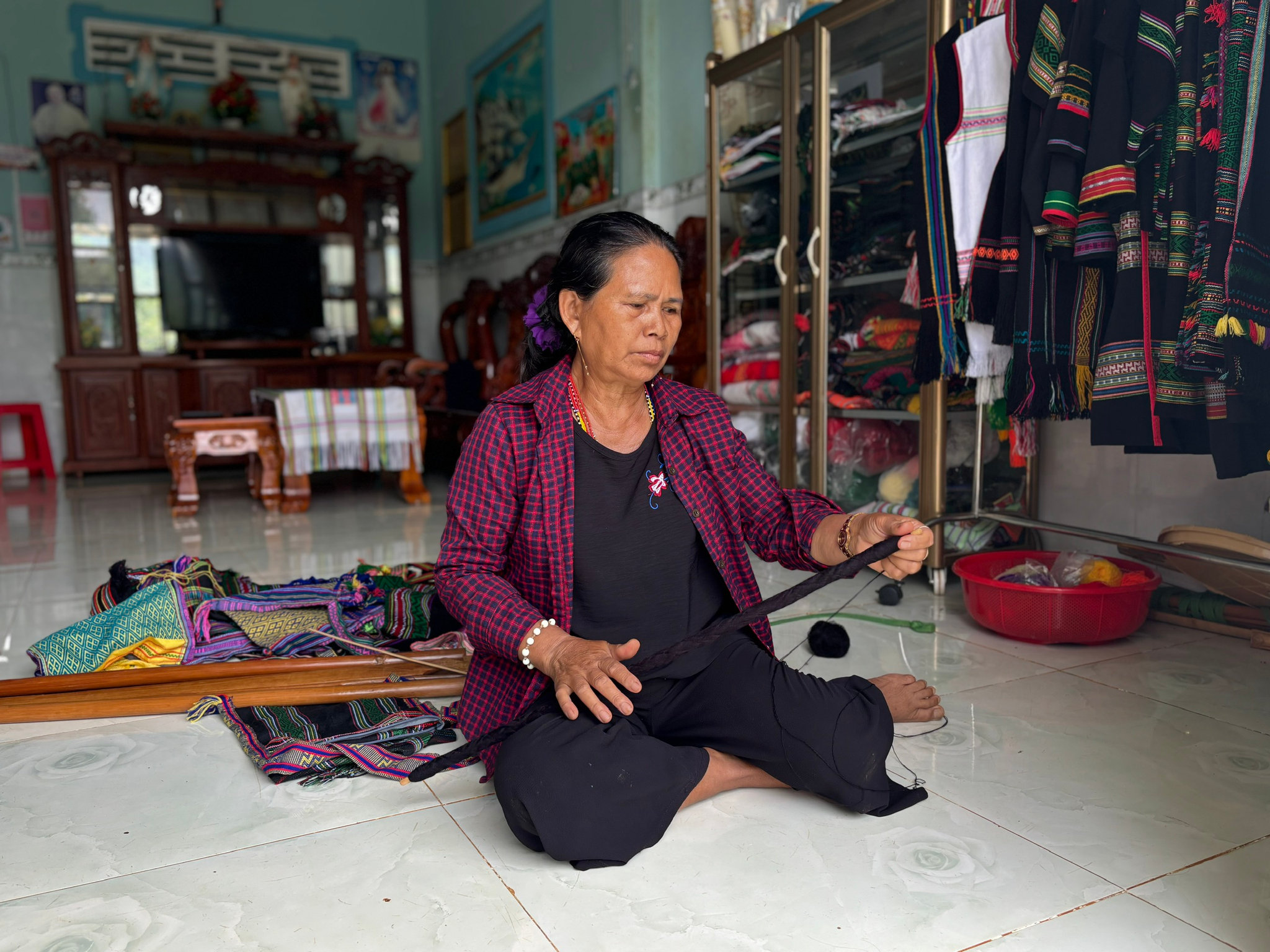
“I am among the few women from the Ma community who continue to weave fabrics, scarves, and skirts. Nowadays, younger women tend to work on coffee and durian plantations, and few of them still sit at the loom. It’s a labor-intensive task that generates little income,” said Dieu Thi Choc, K'Loc's wife.
While she wrapped thread around the shuttle, Choc instructed her granddaughter on how to create a traditional Ma design. She believes Ma women should learn the craft and understand the cultural meanings embodied in its distinctive motifs. Each thread and pattern reflects the traditions, emotions and mountain life of the Ma people.
She hopes that more Ma women will learn weaving techniques and patiently work at their looms so that the mountain-inspired patterns can be preserved for generations to come.
Dieu K'Loc and Dieu Thi Choc are respected members of the local community. They are successful in their livelihoods, raise their children well and preserve local traditions. She is an excellent weaver, while he knows how to build traditional longhouses. They are living examples of how the Ma community preserves its indigenous culture.
Dieu K'Gia, Head of Phi Sar Village
Referring to the longhouse, K'Loc reminisced: “This longhouse represents the traditional home of the Ma people. Both my grandparents and parents lived in longhouses.”
With a roof thatched with rattan leaves, bamboo walls and a simple bamboo floor, the longhouse reflects the Ma people's deep bond with nature. Its steep roof facilitates quick rainwater drainage, while its low entrance helps shield the interior from the Central Highlands' prolonged rains.
“Young people today live in concrete houses because they are cleaner, more beautiful and more convenient, and longhouses have almost disappeared from everyday life. But I still dream of having a longhouse so that my children and grandchildren can remember how their ancestors lived, how the Ma people once made fires, cooked meals and rested in these houses. That is why I built this longhouse—to help the younger generations understand the lives of their ancestors,” Dieu K'Loc said.
Beyond constructing the longhouse, K'Loc has dedicated many years to gathering traditional Ma gongs and ancient ceramic jars. He mentioned that the Ma people once held their gongs and jars in high esteem, but over time, these cultural artifacts became dispersed.
He has diligently searched for them in local homes, convincing residents to part with or sell their old items so he could return them and showcase them within the longhouse, which was designed in a genuine traditional manner. His goal is to provide a place for the gongs and jars beneath the longhouse roof and to enable children to see and learn about the heirlooms passed down from their ancestors.
"The family of wounded veteran Dieu K'Loc is regarded as a model household in the Ma community of Cat Tien 3 Commune. Their longhouse, collection of traditional gongs and ancient jars, along with their brocade weaving methods, help to preserve cultural artifacts of the local community. We hope they will continue playing an active role in passing on the traditional cultural values of the Ma people,” said Le Quang Chuong, Vice Chairman of the Cat Tien 3 Commune People's Committee.