


A glimmer of the ocean’s soul amid the urban hustle
After the administrative merger, Phan Thiet Ward – now the new urban heart of the province’s southeastern region – has emerged as the most vibrant area, home to a bustling fishing port right at the mouth of the sea. Yet it remains the most poetic corner, where the gentle Ca Ty River drifts by, hundreds of boats are anchored, and national flags flutter proudly in the wind. Despite countless hardships over the years and the rapid growth of this young urban area, the pulse of maritime culture still quietly flows through every fibre of the local fishing community.
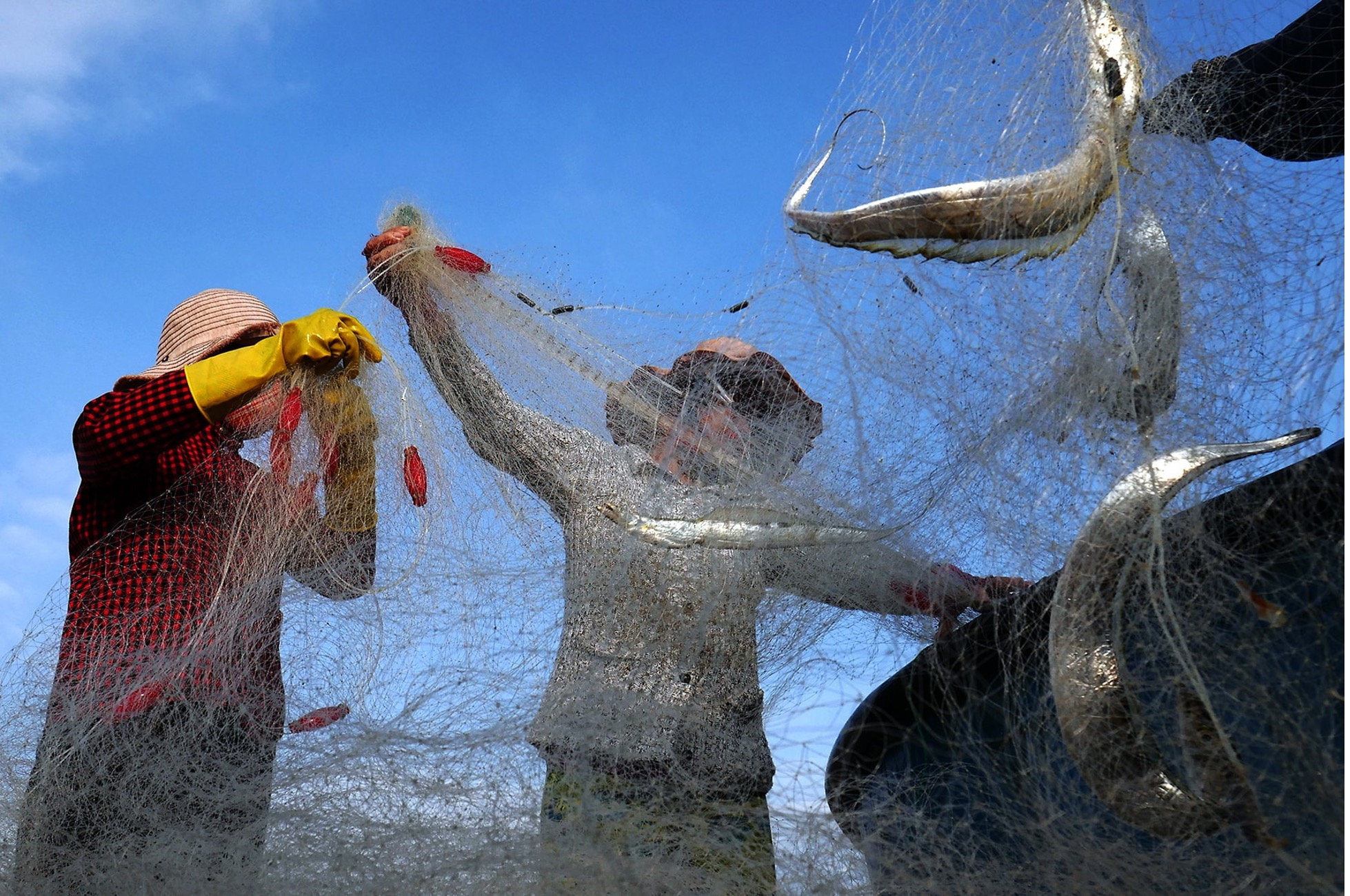
The rhythm of the Nets
From Ngu Ong Street, I follow narrow alleys leading to the sea, where the heartbeat of lives tied to the ocean still presents. More than 25 years ago, during the harsh northeast monsoon season, hundreds of seaside households had to relocate to escape ferocious waves. Their fragile houses could be swept away in one stormy night, so they took shelter elsewhere until March, then returned to the coast to work again.
Mr. Le Xuan Van, Head of Residential Group 7, who has lived here for over 40 years, recalls:
“This area has more than 400 households working at sea. Since 2000, when the sea embankment was completed, around 250 families suffering from tidal surges and erosion were overjoyed. Now, when the monsoon season comes, they no longer panic looking for shelter. Solid houses were built, people finally settled, and the fishing village turned to a new chapter.”
Walking deeper into the winding alleys, rows of sturdy houses stand closely together, reflecting the warmth of this coastal community. As in most fishing villages, the men head to sea while women sit mending nets, their laughter spreading through the neighborhood.
To the locals, net weaving is not viewed as a mere profession; it is an instinct for anyone bound to the ocean. From children to elders, men and women alike know each knot and each mesh, passed down through generations. These delicate nets are not only tools of livelihood but also silent witnesses preserving the culture of the fishing village.
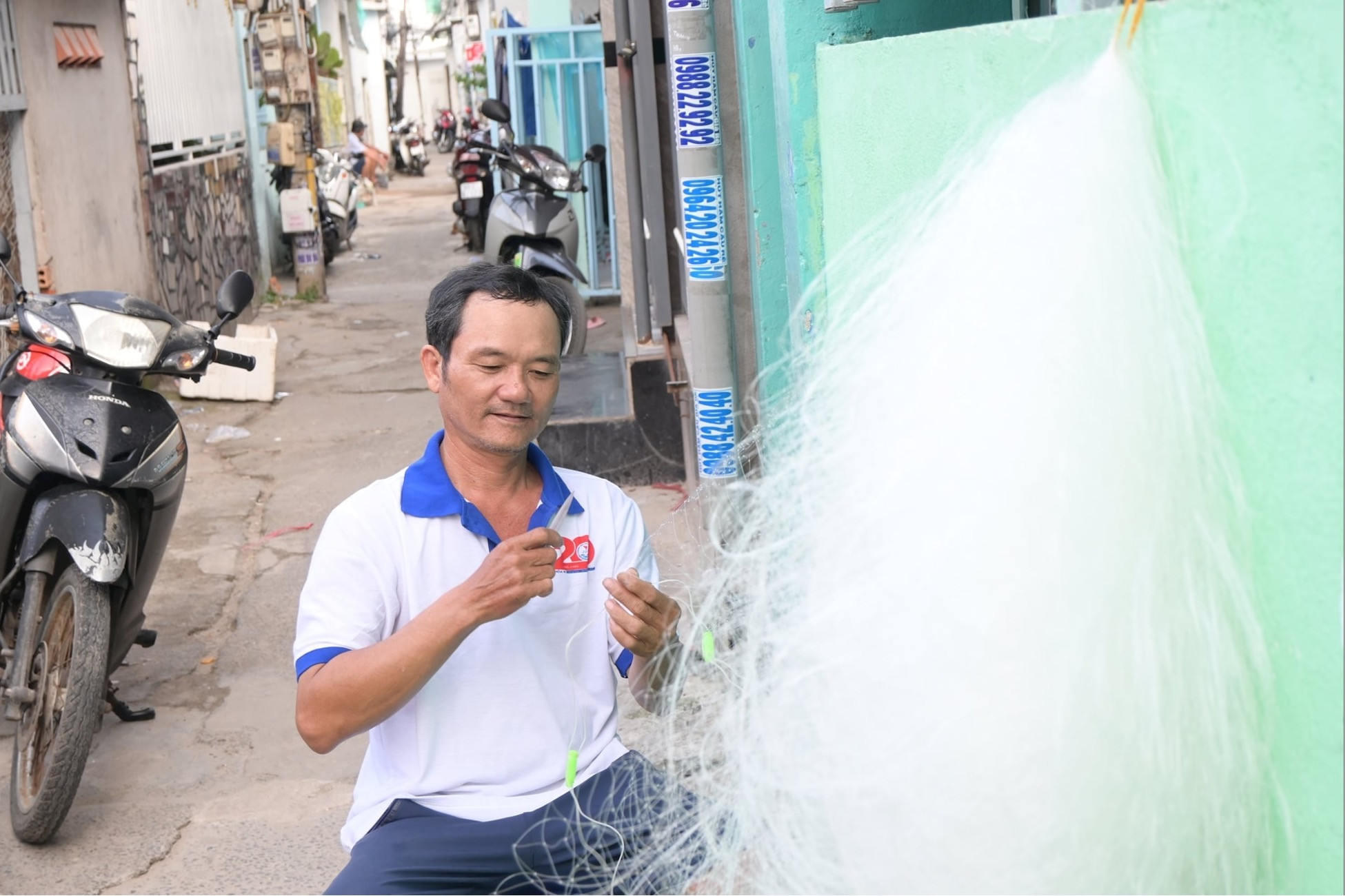
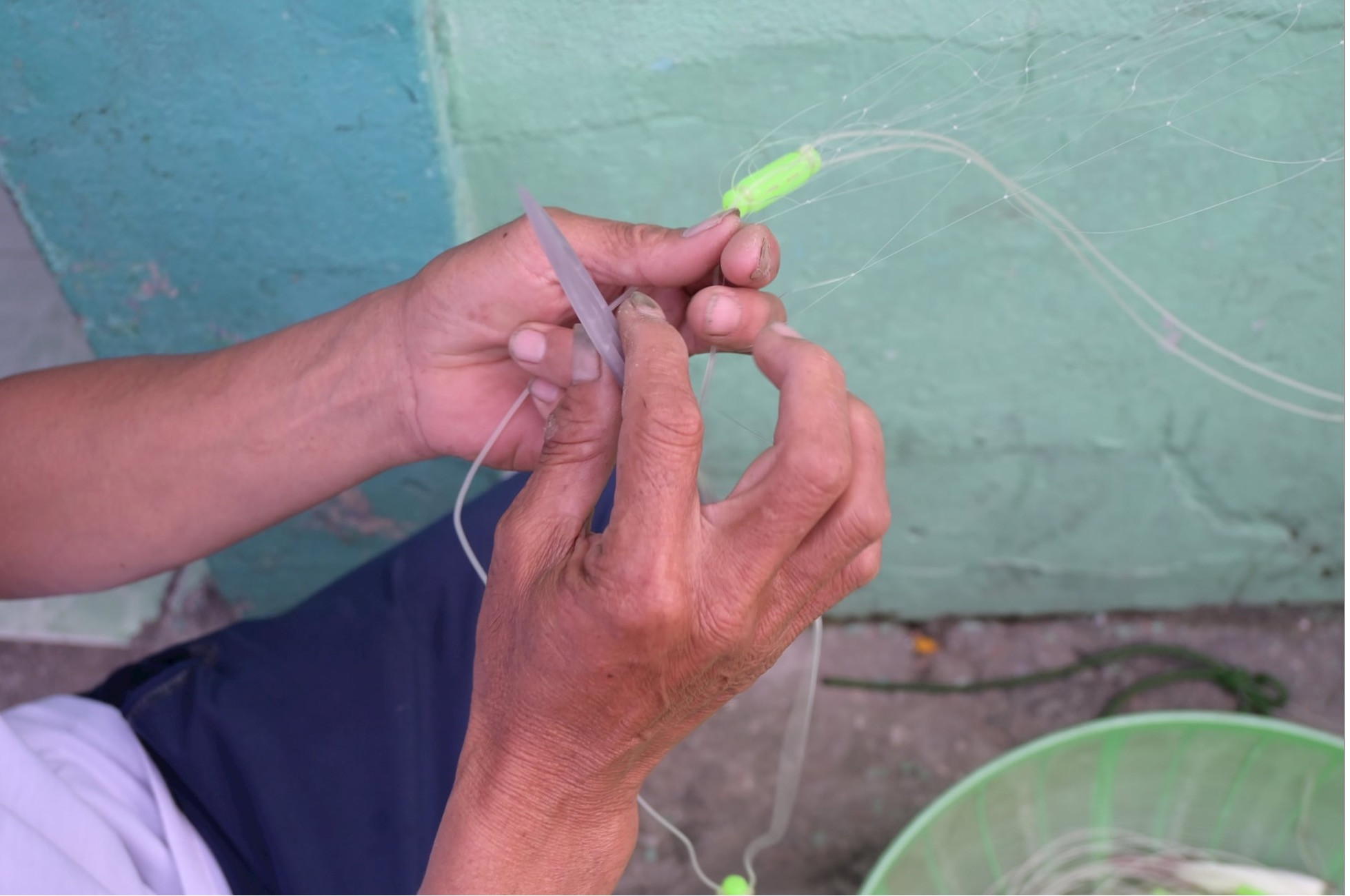
Mr. Le Thanh Hoa of Residential Group 7 in Phan Thiet Ward has spent over 30 years “battling” the sea. That time is enough for him to master every type of fishing net. His skillful hands quickly knot each mesh with precision. Smiling, he shared “Anyone who makes a living from the sea knows how to weave nets. Each type of fishing requires different nets—nylon, plastic fiber, or braided cord, crab nets, fish nets, and whether they are two-layer or five-layer depends on mesh size. Whatever the type, the weavers must understand every intricate step.For offshore vessels, monsoon season is when boats stay ashore. It is also when fishermen gather to repair nets, preparing for prosperous journeys ahead.”
Fading Into Memory
He recalls that before industrial nets existed, making a fishing net took an entire month of hand weaving. Those handmade nets were precious—worth tens of millions of VND. Today, machine-woven nets cost only 3.5–4 million VND; workers simply add floats and lead. As technology advances, handcrafted nets slowly disappear. Villages once bustling with net weavers now see only a few remaining, weaving not out of necessity, but to fill the quiet hours.
For more than 20 years, Ms. Dang Thi My Nghia has been attaching floats and lead to nets for modest pay. “For every 100 floats, I earn 40,000 dong. A crab net with 500 floats takes 3–4 days. The work is light but demands patience—tight knots, steady hands, and always remember: floats on top, leads at the bottom,” she says.
As dusk falls over the Ca Ty estuary, the sea still beats steadily, the fishing trade continues, yet the craft of net weaving quietly fades—kept alive mostly by elderly hands determined to preserve the soul of the sea in each knot.
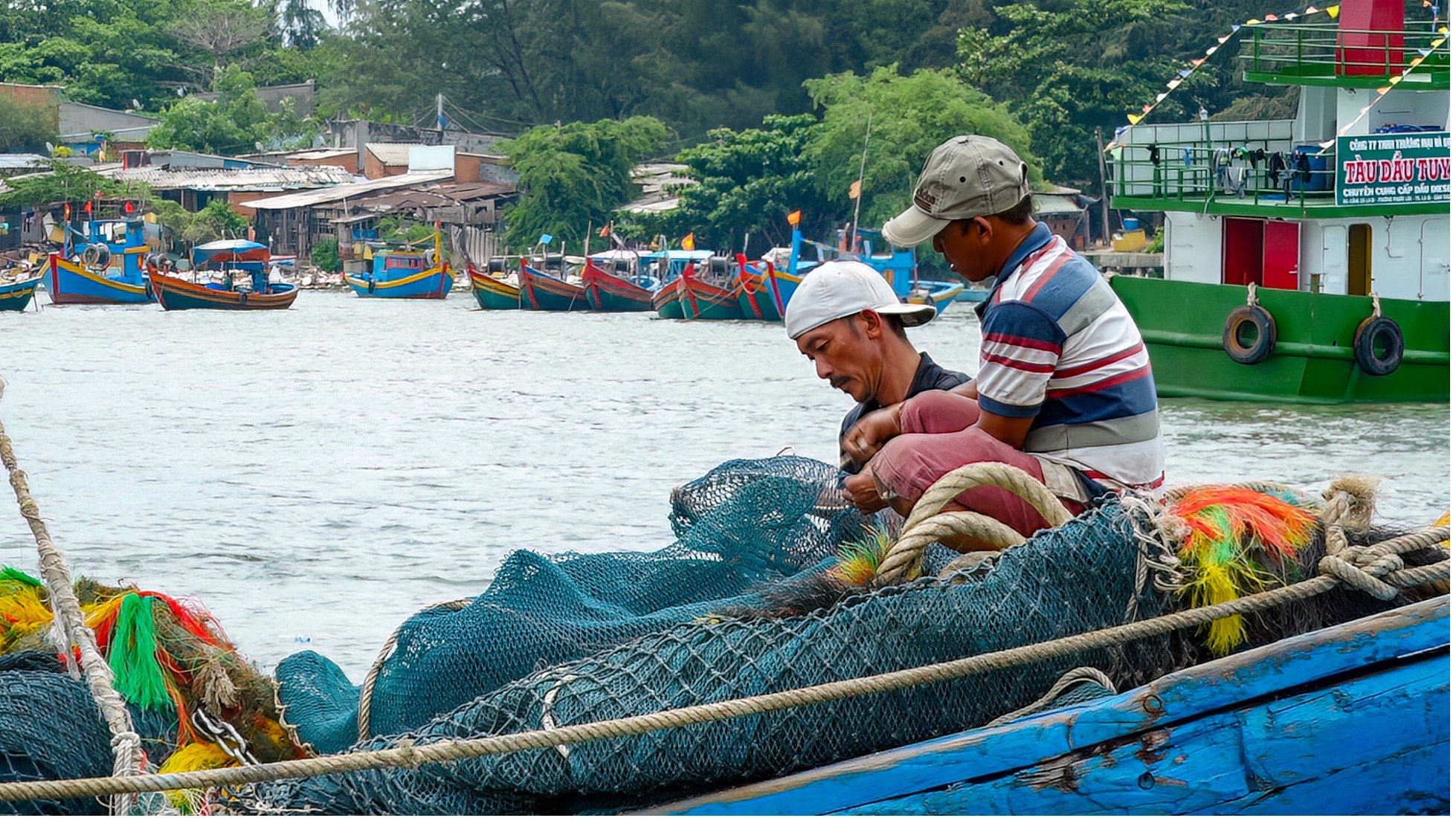
“Our family has followed the sea for three generations. Everyone knows how to weave nets. But my children may not continue… one day they might not even imagine how we once lived with the sea,” Mr. Hoa shares.
Every knot once told a story of resilience, skill, and love for the ocean. However, without preservation, culture slowly fades away. Amid rapid urban growth, maritime traditions cannot survive only in memories—they must be protected, honored, and kept alive so that the soul of the nets, the sea, and the fishing villages remains anchored the urban hustle.