


A Unique collection of Folk Wooden Horse Sculptures
To mark the Lunar Year of the Horse (Binh Ngo) 2026, ethnographic researcher and collector Dang Minh Tam from Xuan Huong - Da Lat Ward has spent over four months creating a distinctive series of wooden horse sculptures inspired by Central Highlands folk art. The collection will be displayed at Van Mieu Quoc Tu Giam in Hanoi as part of the “Horses Come to the City” exhibition, celebrating the 950th anniversary of Quoc Tu Giam, opening on January 8, 2026.
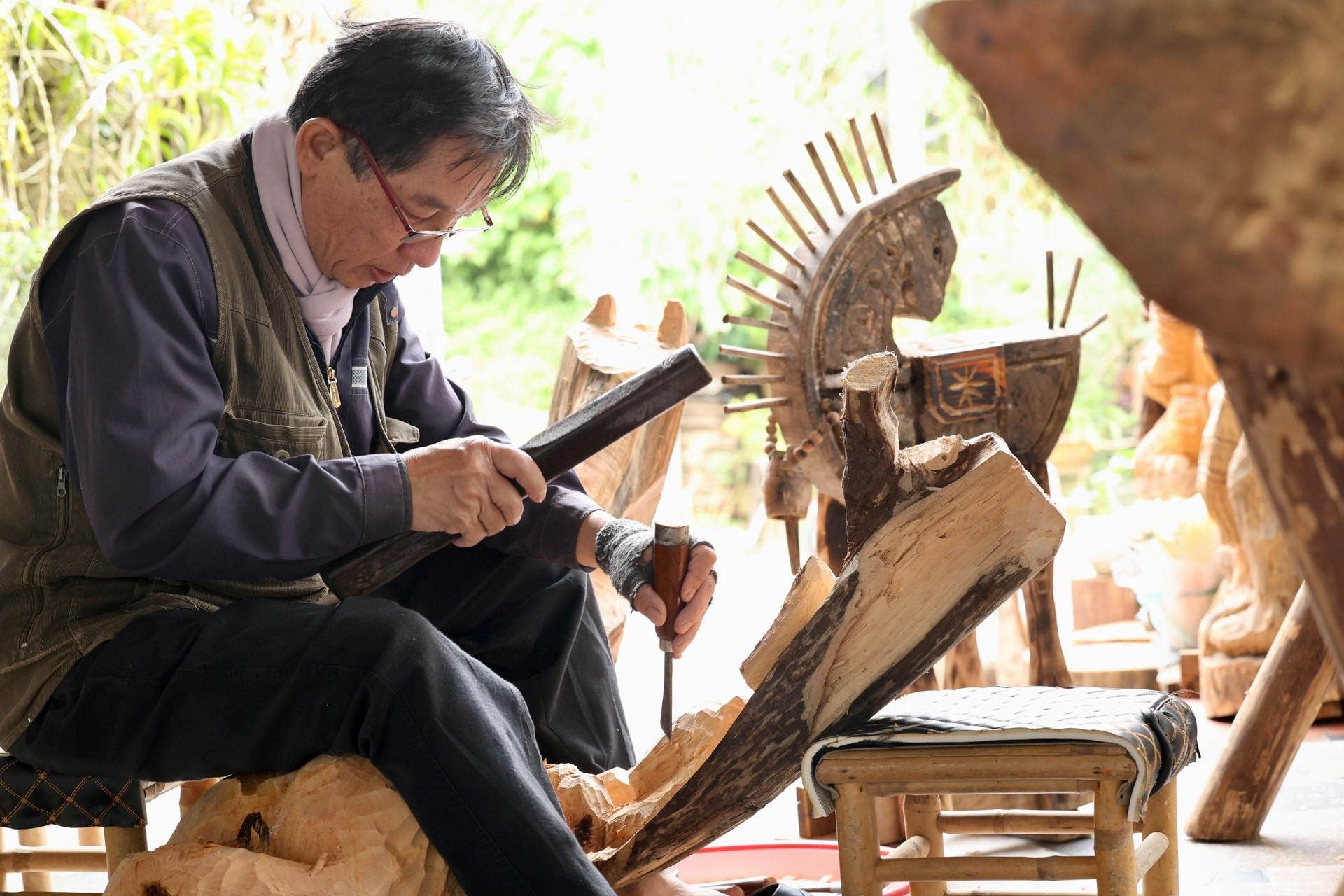
Spontaneous Creation, Infinite Forms
Unlike conventional sculpture, Dang Minh Tam’s wooden horses are created entirely through spontaneous inspiration. Each piece is shaped according to the natural form of the wood—whether curved or straight, round or flat, with knots or branches—without sketches or fixed rules.
The artist uses a wide range of wood types, from common pine and oak to more valuable materials such as cam xe, lim xanh, go and huong. The carving style is deliberately simple and rough, echoing the traditional sculpting techniques of the Central Highlands. Yet each horse carries deep symbolic meaning within its form.
“When I see a piece of wood, I imagine what the horse is doing,” Tam explained. “Then I carve accordingly.” As a result, none of the 50 wooden horses are alike. Some turn their heads back, others feature bold decorative motifs; some are carefully refined, while others remain raw and expressive. Each sculpture tells its own story.
Horses in Central Highlands Culture
In Central Highlands belief systems, the horse holds a special place. It is the seventh animal in the zodiac - a number considered sacred by many ethnic groups and reflected in cultural narratives such as seven-step staircases or epic tales like Dam San overcoming seven mountains and seven waterfalls.
The sculptures depict horses deeply connected to daily life and spiritual traditions: a plump horse drinking “Can wine” (fermented rice wine), a horse carrying jars or bells, horses adorned with traditional motifs such as gourd flowers, brocade patterns, leaves, or solar symbols.
Some works are particularly imaginative—a round-shaped horse decorated with moonlight and floral motifs; horses pounding rice, drinking wine, or symbolizing abundance and joyful gatherings. One touching piece portrays a mother horse cuddling her foal, who carries a small basket on its back.
The horse ranks seventh among the 12 animals of the zodiac. For the people of the Central Highlands, the number seven holds deep spiritual significance and is widely reflected in daily life and folklore. Many ethnic communities apply the rule of seven in cultural narratives and practices, such as seven-step staircases, or the epic hero Dam San who overcomes seven mountains, seven waterfalls, seven layers of heaven, and survives seven life-and-death battles.
From Daily Life to Scholarly Symbolism
Historically, Central Highlands horses were sturdy pack animals—small yet agile, adept at climbing steep terrain and swimming rivers. They played an essential role in transport, trade, and even physical training for young men. Riders traditionally used no saddle, a practice later commemorated through the bareback horse racing festival in Lac Duong, which preserves this heritage and promotes tourism.
During a recent visit, Dang Minh Tam was carving a sculpture of a mother horse watching her foal study. He said the idea emerged because the exhibition is held at Van Mieu Quoc Tu Giam, regarded as Vietnam’s first university. The foal reads a book with sleepy eyes, while the mother looks on—a gentle metaphor for learning and examinations.
The collection also includes symbolic group sculptures such as three horses carrying each other under the theme “Returning Home in Glory”, wearing floral garlands and lifting a golden doctoral plaque; other figures depict horses reading books, acting as exam invigilators, or lazy students with big bellies and small heads.
Seven Pillars of Life
Complementing the horse sculptures are seven wooden pillars, each 20 centimeters in diameter, carved with scenes of Ede ethnic life. Each pillar is topped with a horse and features different themes: musical performances, festivals, daily labor, animals, traditional motifs, and the human life cycle—from birth and love to labor and death—along with images of tomb houses and "tolang" birds symbolizing connections between the living and ancestors.
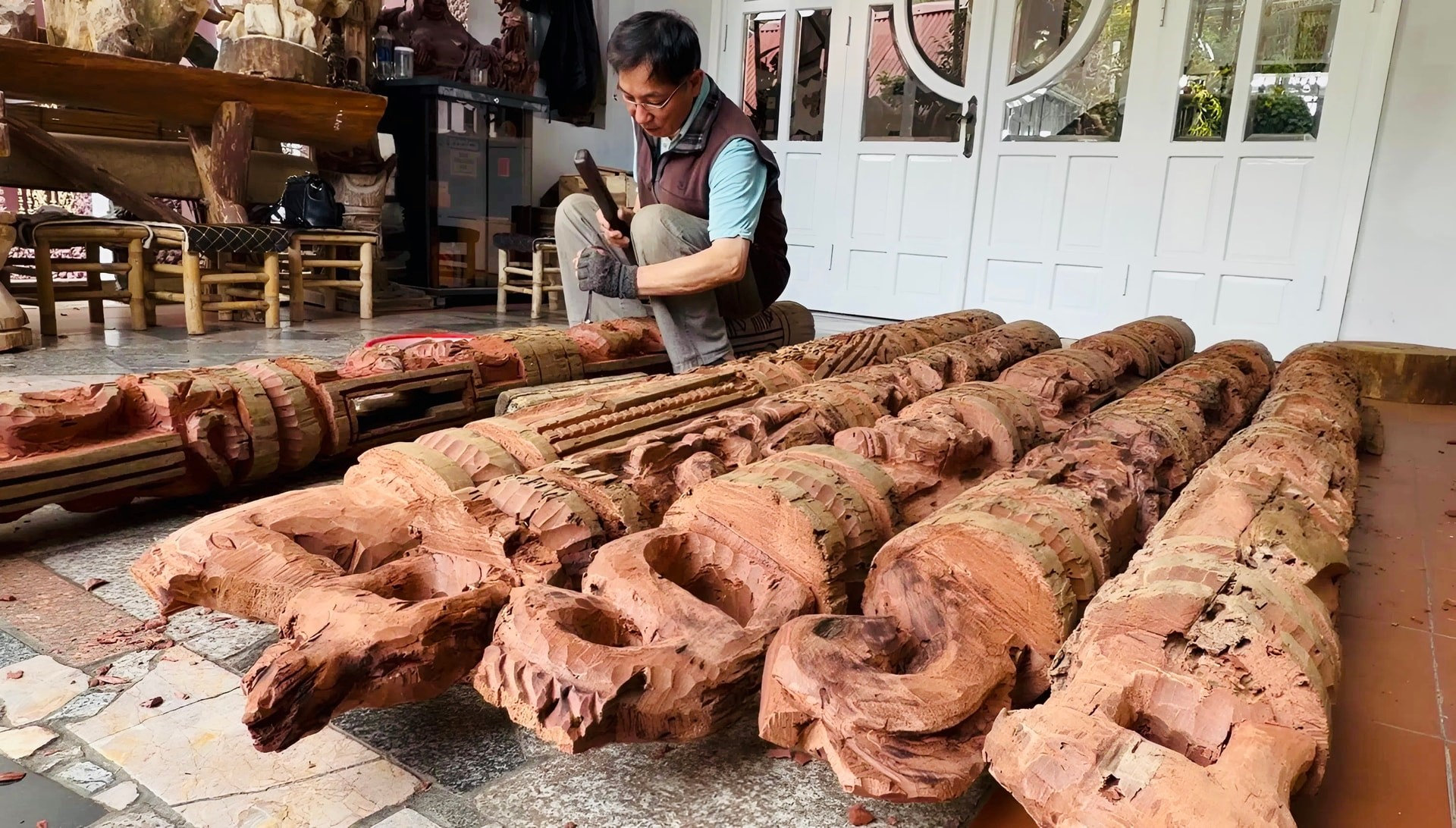
The exhibition will also include antique saddles, Dalat horseshoes, and traditional horse-care tools, creating a rich, immersive cultural display.
A First at Van Mieu Quoc Tu Giam
According to Le Xuan Kieu, Director of Van Mieu Quoc Tu Giam, this is the first time such an exhibition has been held at the site.
The rustic wooden horses and carved pillars, rich with Central Highlands identity, will leave a strong impression on both domestic and international visitors.
Mr Le Xuan Kieu, Director of Van Mieu Quoc Tu Giam
Dang Minh Tam will also demonstrate live wood-carving during the exhibition, offering audiences a rare opportunity to witness folk artistry in action. The event is expected to contribute meaningfully to promoting Central Highlands heritage within Vietnam’s broader cultural landscape.
Van Mieu Quoc Tu Giam was built in 1070 during the reign of King Ly Thanh Tong to honor Confucius and other revered Confucian scholars. In 1076, King Ly Nhan Tong established the Quoc Tu Giam school adjacent to the Temple of Literature, serving as a royal academy exclusively for princes and the children of high-ranking mandarins. In 1253, King Tran Thai Tong renamed Quoc Tu Giam as the National Academy (Quoc Hoc Vien), expanded its scope, and admitted outstanding students from common families. As a result, it is widely regarded as Vietnam’s first national university.