


Adapting to Drought Through Nature-Based Farming
Farmers in western Lam Dong Province are increasingly adopting nature-based farming practices to cope with drought while improving product quality.
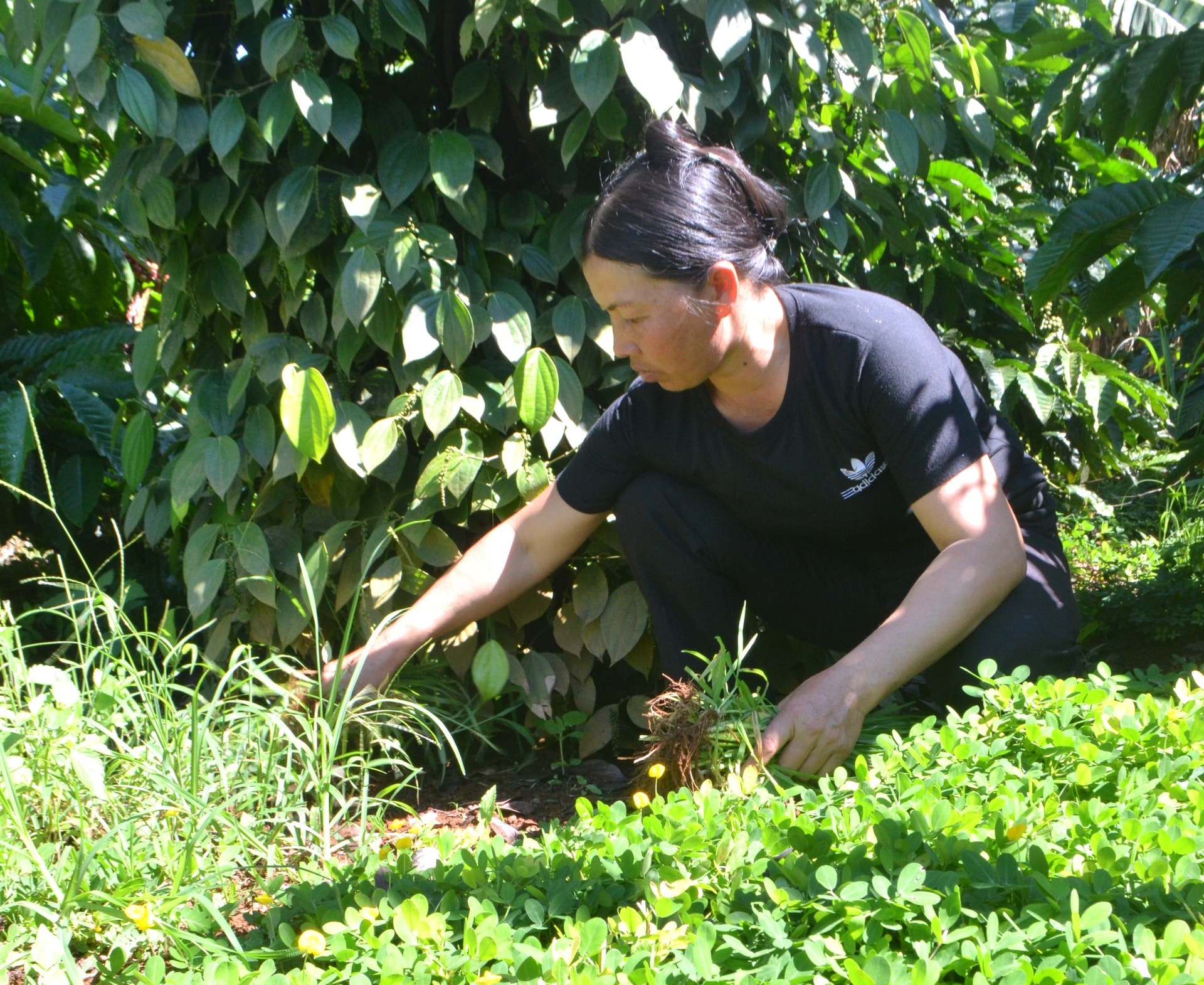
For years, Hoang Thi Mui in Dak Sin 1 hamlet, Quang Tin Commune, has sustainably cultivated one hectare of coffee and pepper. By applying integrated natural farming methods—such as canopy pruning, balanced fertilization, and especially planting perennial peanut as ground cover—she has maintained soil moisture during the dry season.
This approach improves soil fertility, prevents hardening in dry periods, and reduces waterlogging and pests during the rainy season. Her farm yields an average of 3 tons per hectare, generating around VND 300 million annually. Products grown under these methods also meet standards such as organic, VietGAP, and GlobalGAP, enhancing market competitiveness.
According to local authorities in Quang Tin Commune, the area has over 15,200 hectares of agricultural land, mostly perennial crops. In recent years, drought has become increasingly severe, making the promotion of nature-based farming and efficient irrigation—especially in areas far from water sources—a key solution for sustainable agriculture. Currently, about 100 hectares in the commune follow this model, with plans for further expansion.
Similarly, in Nam Nung Commune, local authorities have encouraged farmers to adopt natural farming practices to improve product quality and value, aligned with certifications such as organic and OCOP. A 340-hectare high-tech coffee production zone has been established, alongside efforts to diversify crops, conserve water, and promote high-value cultivation to raise farmers’ incomes.
The provincial Department of Agriculture and Environment stated that from 2026 to 2030, Lam Dong will continue restructuring its agricultural sector toward green growth, high technology, and a circular economy. Priorities include crop and livestock restructuring, expanding organic and ecological farming, and developing low-carbon agricultural products for export markets with strict environmental and traceability standards.
Currently, the 28 communes and wards in western Lam Dong have more than 1,200 hectares of organic farming, producing an estimated 2,588 tons of agricultural products. Of this, industrial crops account for 1,683 tons, fruit crops 653 tons, and food crops 252 tons—highlighting the growing role of sustainable agriculture in the region.