


Adapting to Drought through Nature-based Farming Practices
Many farmers in the western area of Lam Dong Province are adopting nature-based agricultural practices to combat drought and improve product quality.
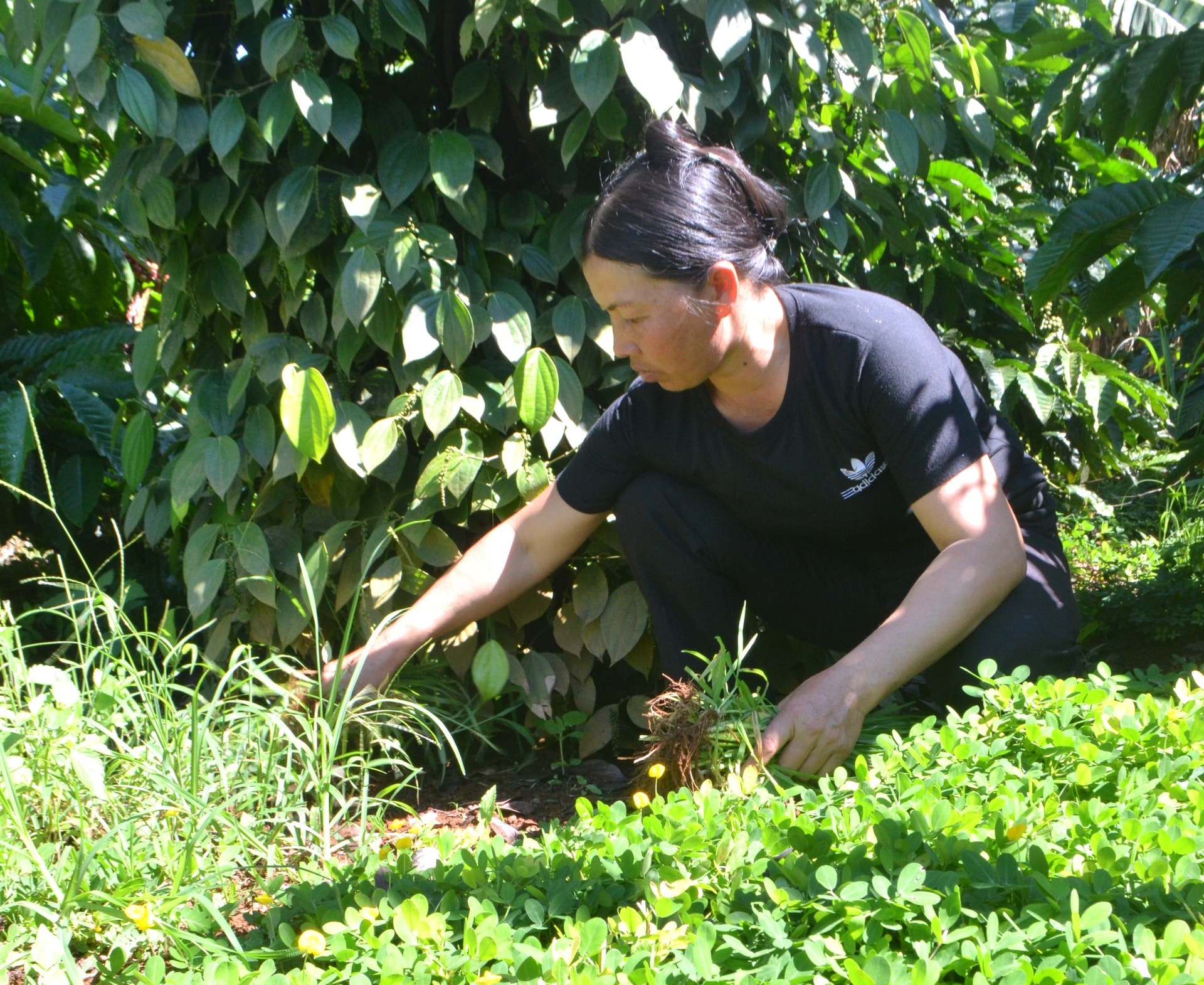
One notable example is Hoang Thi Mui from Dak Sin 1 Hamlet, Quang Tin Commune, who has successfully managed one hectare of coffee and pepper crops for several years. Her approach focuses on building a balanced farm ecosystem through careful planning, canopy management, pruning, and the use of organic and balanced fertilizers.
A key element in her strategy is the use of perennial peanut as ground cover. This plant plays a crucial role in maintaining soil moisture during dry seasons while improving soil structure and nutrient content. It also prevents soil compaction and drying, and during the rainy season, helps reduce waterlogging—thereby limiting pests and diseases and ensuring stable yields.
Thanks to these practices, her farm produces around 3 tons per hectare annually, generating an income of approximately VND 300 million. Moreover, products grown under such eco-friendly methods are better positioned to meet standards like organic certification, VietGAP, and GlobalGAP, thereby enhancing their competitiveness in the market.
According to local authorities, Quang Tin Commune currently has more than 15,200 hectares of agricultural land, primarily dedicated to perennial crops. However, increasingly severe drought conditions in recent years have posed significant challenges. Expanding nature-based farming models, combined with efficient irrigation solutions—especially in areas lacking irrigation infrastructure—has become a critical priority for sustainable development. At present, about 100 hectares have adopted this model, with plans underway to scale up.
In neighboring Nam Nung Commune, local authorities are actively supporting farmers in applying similar practices to improve product quality and value, aligning with standards such as organic certification and OCOP. The commune has also developed a 340-hectare high-tech coffee production area and is promoting crop diversification, water-saving irrigation, crop rotation, and the cultivation of high-value crops to increase farmers’ incomes.
The Department of Agriculture and Environment emphasized that during the 2026–2030 period, the sector will continue to shift toward green growth, advanced technologies, and a circular economy. Localities are encouraged to restructure crops and livestock, expand high-tech and organic farming, and develop green, low-carbon agricultural products for export—especially to markets with strict environmental and traceability requirements.
This transition is considered a key strategy to achieve the goal of promoting green agriculture, optimizing resource use, and protecting the environment. The agriculture, forestry, and fisheries sector is expected to grow at an average rate of 5–5.5% annually, contributing nearly 29% to the province’s total added value.
It is estimated that the 28 western communes and wards of Lam Dong Province currently have over 1,200 hectares of organic agricultural production, with an output of approximately 2,588 tons. Of this, industrial crops account for 1,683 tons, fruit crops 653 tons, and food crops 252 tons.