


Adding Momentum for Phu Quy Island to Rise and Thrive
From its role as a strategic rear base for the Truong Sa Islands, Phu Quy today is embarking on a new development journey. It is a journey that transforms the island’s marine potential into a driver of sustainable growth, so that with each passing spring, the island becomes not only greener but also more prosperous.
Vitality in the Open Sea
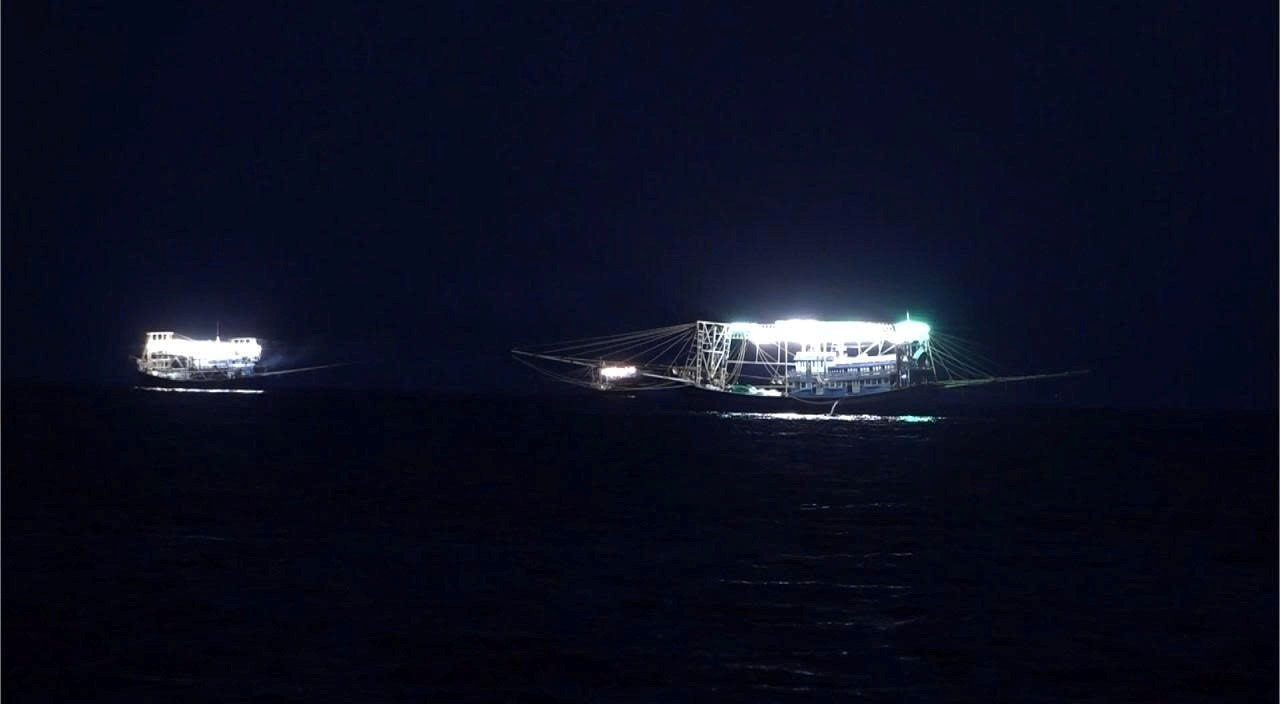
At dawn, as the sun just begins to peek over the horizon, the fishing vessel of Nguyen Van Tu from Trieu Duong hamlet leaves the harbor. The salty sea breeze fills the air, gentle waves lap against the hull, and the lights from nearby boats shimmer like falling stars across the water.
With more than two decades at sea, Mr. Tu is accustomed to rough waves and stormy seasons, yet he has never grown used to the sight of an empty sea. “The sea sustains us, but it also tests us harshly. If I don’t go offshore, the sea feels deserted and my heart feels unsettled,” he says quietly.
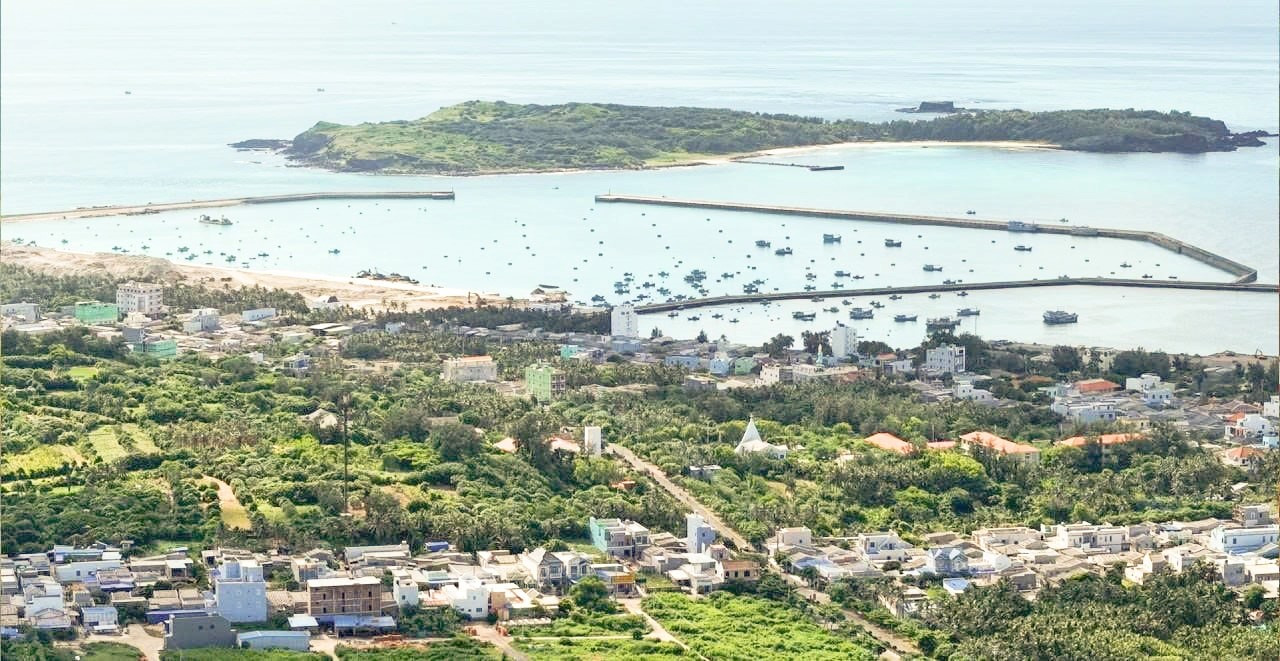
On Phu Quy island, the sea is a livelihood as much as a responsibility. The special administrative zone currently has 1,573 fishing vessels employing 7,586 workers, with an average annual seafood output exceeding 30,000 tons. Of these, 521 vessels measuring 15 meters or longer are qualified for offshore fishing, alongside 132 service vessels engaged in seafood purchasing and fisheries logistics. These boats not only bring home the catch but also form “living markers” asserting presence in the East Sea.
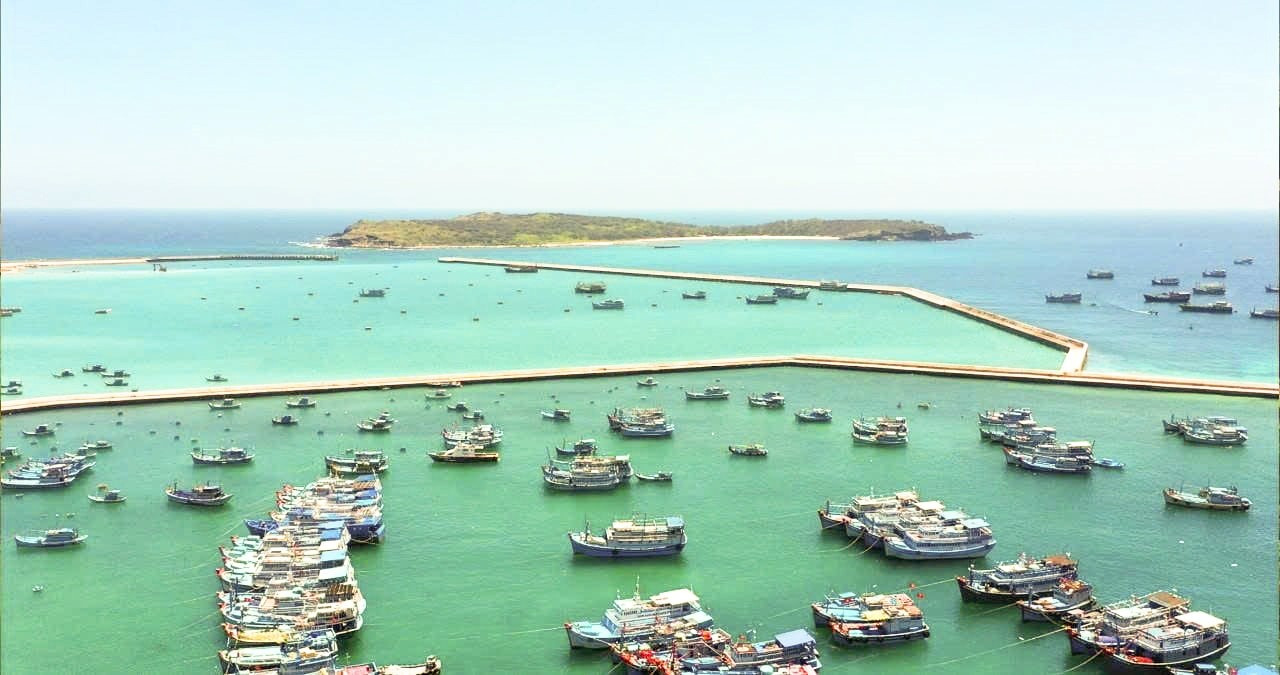
In recent years, Phu Quy has reorganized its fishing industry along more sustainable lines. All eligible fishing vessels are now equipped with vessel monitoring systems, while fisheries management is closely linked with resource protection. For many consecutive years, the island has recorded no fishing vessels violating foreign waters, contributing to national efforts to combat illegal, unreported and unregulated (IUU) fishing.
“Going to sea is no longer like before; fishing must be done in the right zones and in compliance with regulations. But that’s the only way to make it sustainable and keep the trade alive in the long run,” Mr. Tu says. For Phu Quy’s fishermen, compliance is not merely a legal requirement but a dignified way to continue making a living from the sea.
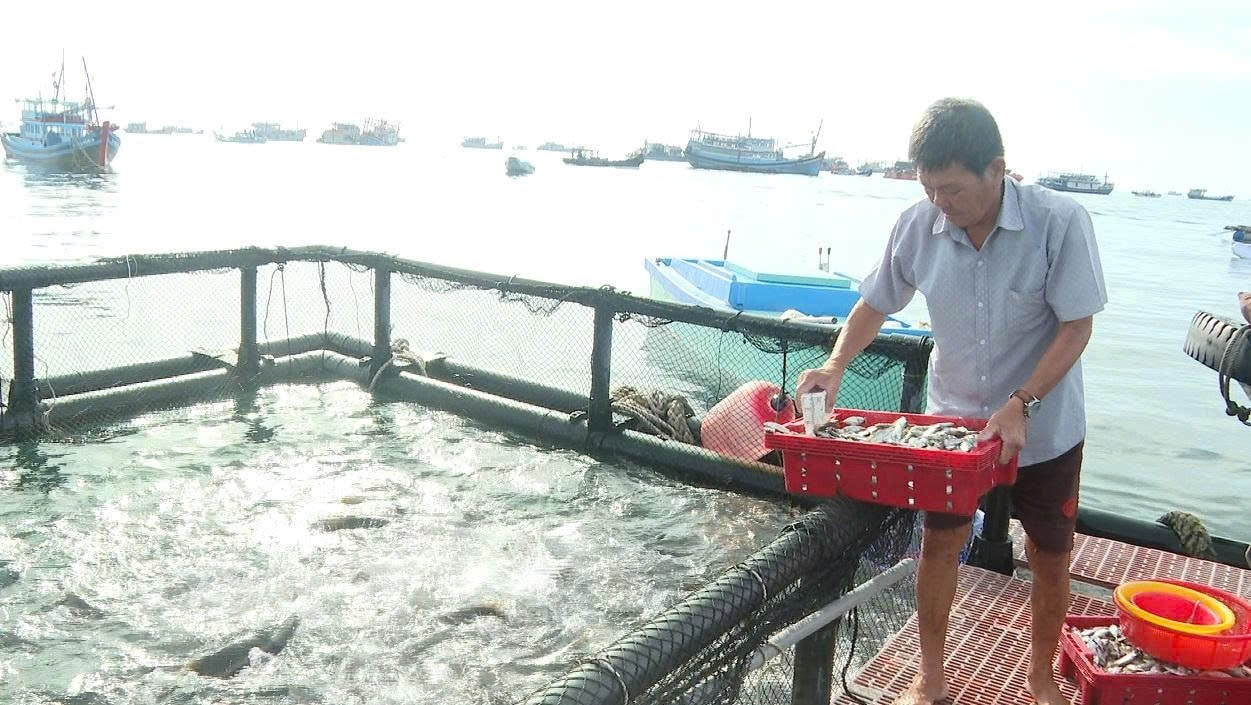
Alongside capture fisheries, cage aquaculture has been maintained by 58 households with 61 rafts and more than 1,000 cages, focusing on high-value species such as grouper, cobia and lobster, yielding nearly 100 tons annually. The marine economy remains the backbone, but it is gradually shifting toward greater stability and efficiency.

Notably, in recent years Phu Quy has opened up a new development pathway: island tourism. Pristine beaches, turquoise waters, rich coral ecosystems and landmarks such as Cao Cat Mountain, the historic lighthouse, the over-300-year-old Linh Son Pagoda and Hon Tranh Island have helped Phu Quy move beyond the image of a purely fishing-based island.
Tran Thi Hong’s family once relied solely on fishing for their livelihood. Today, their small seaside home has been renovated into a homestay welcoming visitors seeking island life experiences. “Guests love waking up early to join fishing boats, diving, and enjoying fresh seafood. We don’t get rich quickly, but our income is steadier and less uncertain,” Hong shares.
In 2025, Phu Quy welcomed about 178,000 visitors, up 18% year-on-year, while international arrivals rose by 24%. High-speed ferries, with a travel time of just around 2.5 hours, have significantly improved connectivity with the mainland. Tourism is gradually emerging as the island’s second economic pillar, complementing the traditional marine economy.
The “Key” to the Future
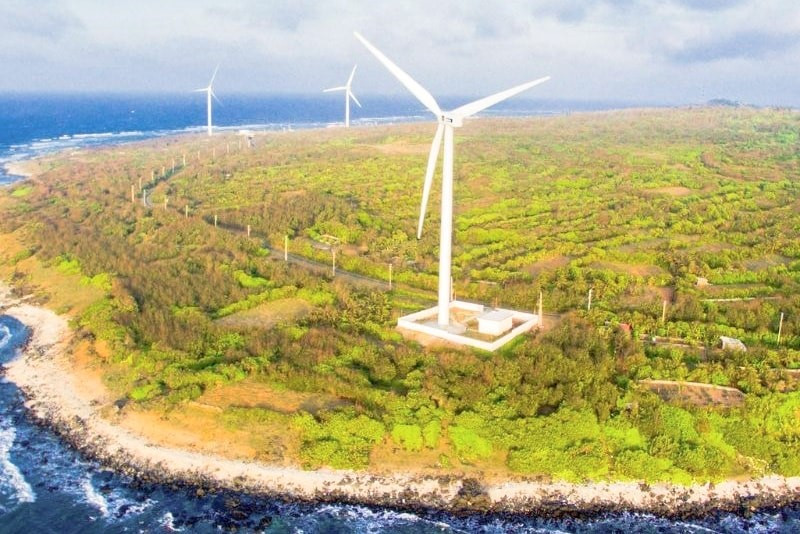
Phu Quy is also regarded as an area with strong potential for renewable energy development. The island currently operates a hybrid power system combining diesel, wind and solar energy, including three wind turbines with a total capacity of 6 MW and a 10 MW solar power plant, largely meeting demands for daily life, production, and national defense and security tasks.
However, according to Mr Le Hong Loi, Chairman of the People’s Committee of Phu Quy Special Administrative Zone, significant potential is still constrained by clear infrastructure bottlenecks. “Freshwater resources are increasingly scarce, while transport and internet systems remain underdeveloped. Several key projects, such as water reservoirs, anti-erosion embankments, airport upgrades and wastewater treatment facilities, have been slow to implement, affecting long-term development,” Mr. Loi frankly acknowledges.
In addition, attracting non-budget investment remains challenging due to the island’s distance from the mainland and heavy dependence on weather conditions. There is also a shortage of high-quality medical personnel, and some educational facilities are deteriorating. These limitations mean that, despite its advantages, Phu Quy has yet to achieve a breakthrough commensurate with its potential.
In response, Lam Đong Province has proposed that central ministries and agencies expedite a series of key projects, including: construction of a dedicated airport on Phu Quy Island; development of a T-shaped port on the island’s southeast coast (Bai Phu); a sports and events complex for the special administrative zone; upgrading the island’s road network; building freshwater reservoirs; expanding the capacity of the Phu Quy power plant and developing a power grid connection from the mainland; upgrading the fiber-optic internet system; restoring and preserving historical relics; and investing in centralized wastewater collection and treatment systems.
Currently, Phu Quy benefits from multiple central government incentive policies for island communes and areas with particularly difficult socio-economic conditions. Lam Đong Province has also proposed a series of large-scale, priority projects and mobilized investment resources for implementation during the 2026–2030 period, aiming to create fresh momentum for socio-economic development in Phu Quy.
To enable Phu Quy to develop to its full potential, strong and tailored mechanisms are essential. When people’s livelihoods are stable and the economy grows, national defense and security will be strengthened as well.
Mr Le Hong Loi, Chairman of the People’s Committee of Phu Quy Special
Administrative Zone, Lam Đong Province
Phu Quy is entering a new spring—a season of hope, of breakthrough policy mechanisms, and of aspirations to build prosperity from the sea. When key projects are unlocked and residents’ lives become increasingly secure and fulfilled, the island is expected to emerge as a dynamic and prosperous special administrative zone, where marine potential and human endeavor converge to create sustainable value in the heart of the East Sea.