


Artisan H’Yong Passes Gong Traditions on to Young Generations
At 68, artisan H’Yong continues to teach gong playing, hoping traditional sounds will remain an enduring part of community life.
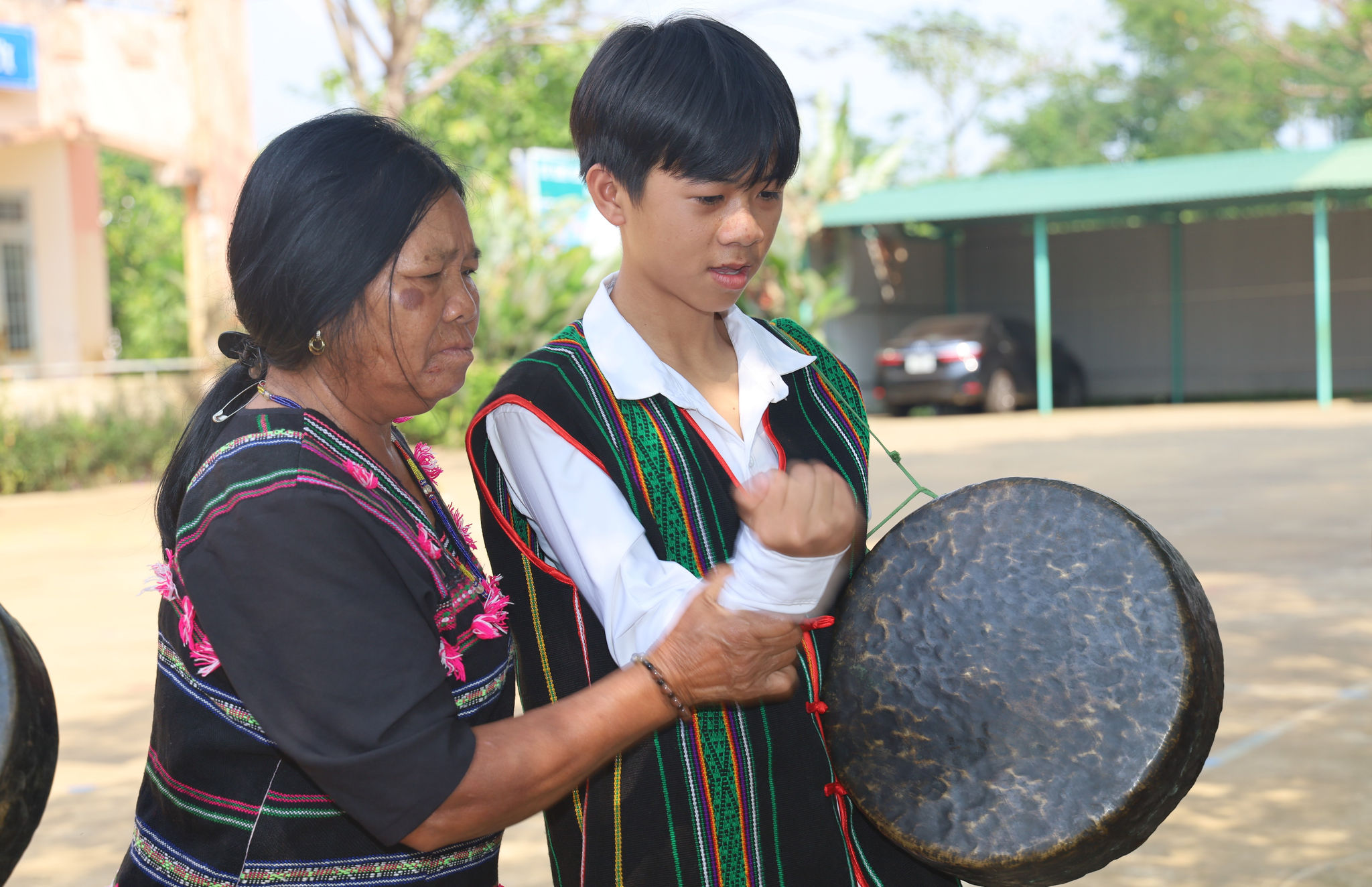
Inspiring Young People to Love Gong Culture
For artisan H’Yong, from Bu Sop hamlet in Dong Gia Nghia Ward, gong music has become an indispensable part of life. Having grown up with the familiar sounds of her community, she remains devoted to passing on her knowledge to younger generations despite her age.
At Tran Van On Primary and Lower Secondary School, gong lessons led by artisan H’Yong and other artisans have introduced students to the instruments, how to hold the beaters, maintain rhythm and play in coordination with one another.
H’Truc, a student in Class 8B, said: “At first, I found learning to play the gongs a little difficult because I had to remember the rhythms and coordinate with my classmates. But artisan H’Yong guided us step by step, and I gradually got used to it and started to really enjoy it. Through these lessons, I have learned more about traditional culture and want to improve so I can play the gongs with everyone.”
The classes have attracted not only students from local ethnic minority communities but also students from other ethnic groups who have volunteered to take part. Their enthusiasm demonstrates the appeal of gong culture when it is introduced through engaging, accessible, hands-on activities rather than presented solely in textbooks.
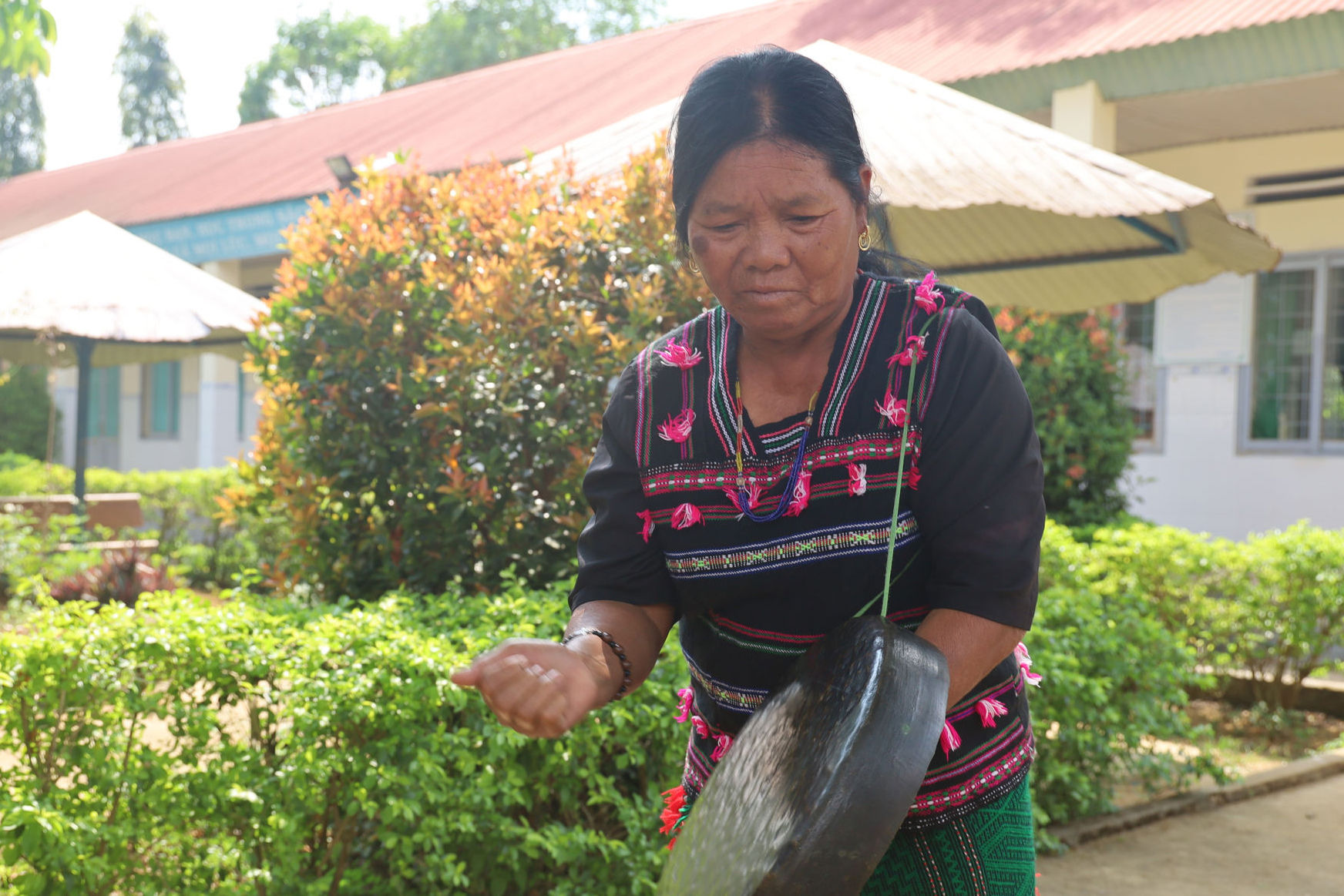
Le Huu Vong, Principal of Tran Van On Primary and Lower Secondary School, said that the school has a large number of ethnic minority students and therefore organizes annual educational activities to preserve and promote the traditional cultural values of local ethnic groups.
These activities give students more opportunities to learn about and practise cultural traditions, fostering an appreciation for their communities’ heritage. The support of artisan H’Yong and other artisans from local hamlets has also made it easier for the school to organize traditional gong lessons.
“Through these activities, the school hopes students will not only learn about traditional culture but also appreciate it, cherish it and develop a sense of responsibility for preserving and promoting these values,” Vong said.
Keeping Cultural Heritage Alive for Future Generations
For artisan H’Yong, her love of gong music also comes with a responsibility to preserve and pass on this heritage. In addition to teaching students at schools, she directly instructs young people in local hamlets and actively participates in cultural activities in the community.
Drawing on the knowledge and experience she has accumulated over many years of playing gongs, she helps younger generations understand the tradition, learn to perform it and develop a stronger awareness of the importance of safeguarding their ethnic cultural heritage.
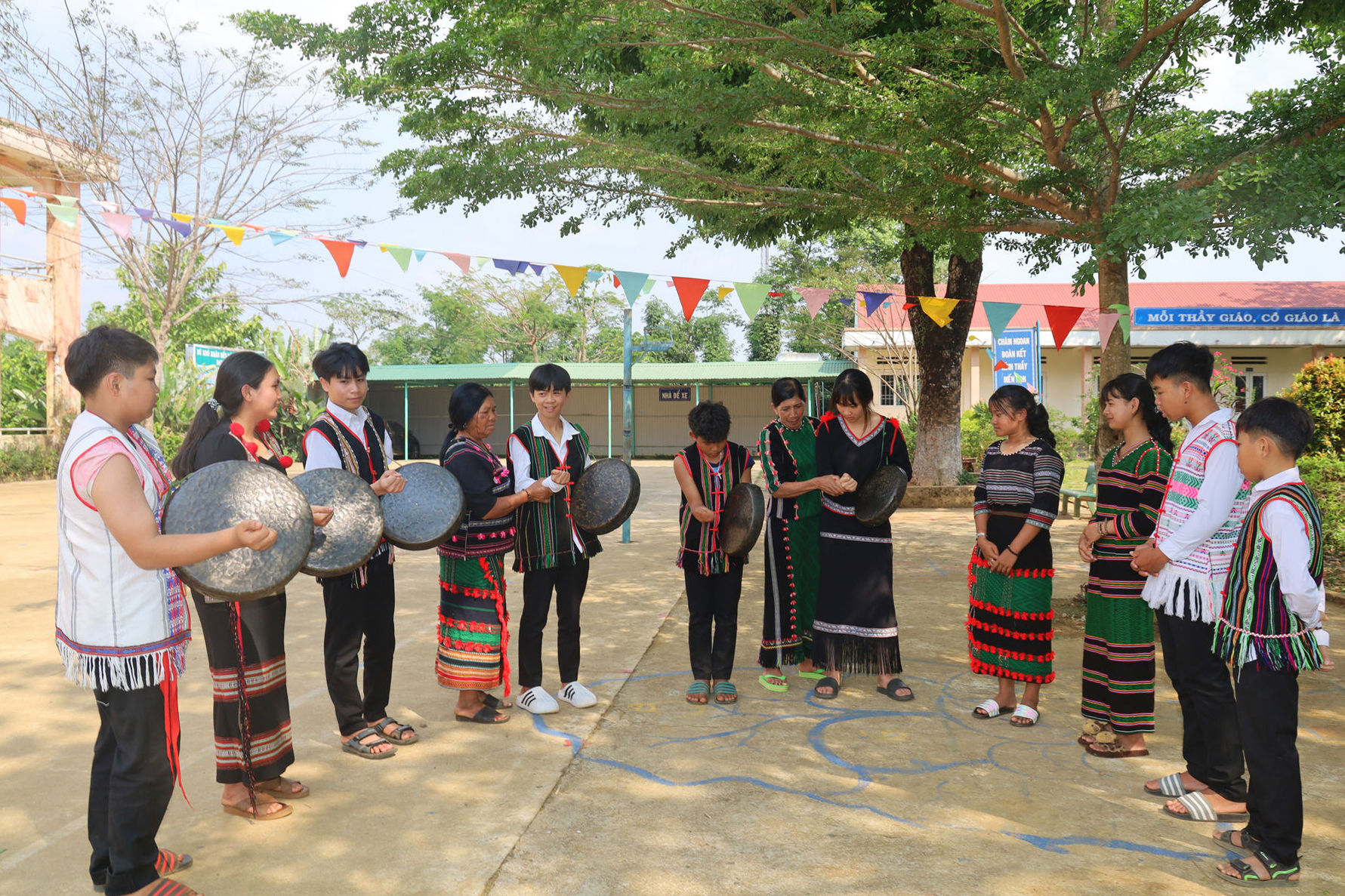
Alongside gong music, H’Yong also shares her knowledge of traditional weaving, brocade textiles, folk songs and other aspects of traditional life. For her, every lesson with young people is an opportunity to keep cultural values alive rather than leave them preserved only in the memories of older generations.
“I just hope that as long as I have my health, I can continue teaching the children. I worry that when the older generation of artisans is gone, young people may no longer know how to play the gongs or feel interested in traditional culture, and the values passed down by our ancestors may gradually fade away. Seeing the children eager to learn, able to play the gongs and proud of their ethnic culture makes me very happy. I try to pass on everything I know, so the sound of the gongs will continue to echo through our hamlets,” H’Yong said.
The dedication of artisan H’Yong shows that safeguarding cultural heritage means more than preserving gong instruments or staging performances at festivals. More importantly, it requires passing traditions on so that successive generations can carry them forward.
She continues to devote herself to this work, hoping that more young people will learn to play the gongs, understand and appreciate their ethnic culture, and willingly take responsibility for preserving their heritage.
With the joint efforts of artisans, schools, families and communities, the sound of the gongs will continue to resonate through local hamlets today and for generations to come.