


Artisan Ntơr Ha Bang: Preserving Tradition in Every Bamboo Strip
Amid modern life, in the village of Lieng Trang (Dam Rong 4 Commune, Lam Dong Province), artisan Ntơr Ha Bang quietly remains devoted to the traditional bamboo weaving craft of the K’ho people — patiently safeguarding a heritage that is gradually fading.
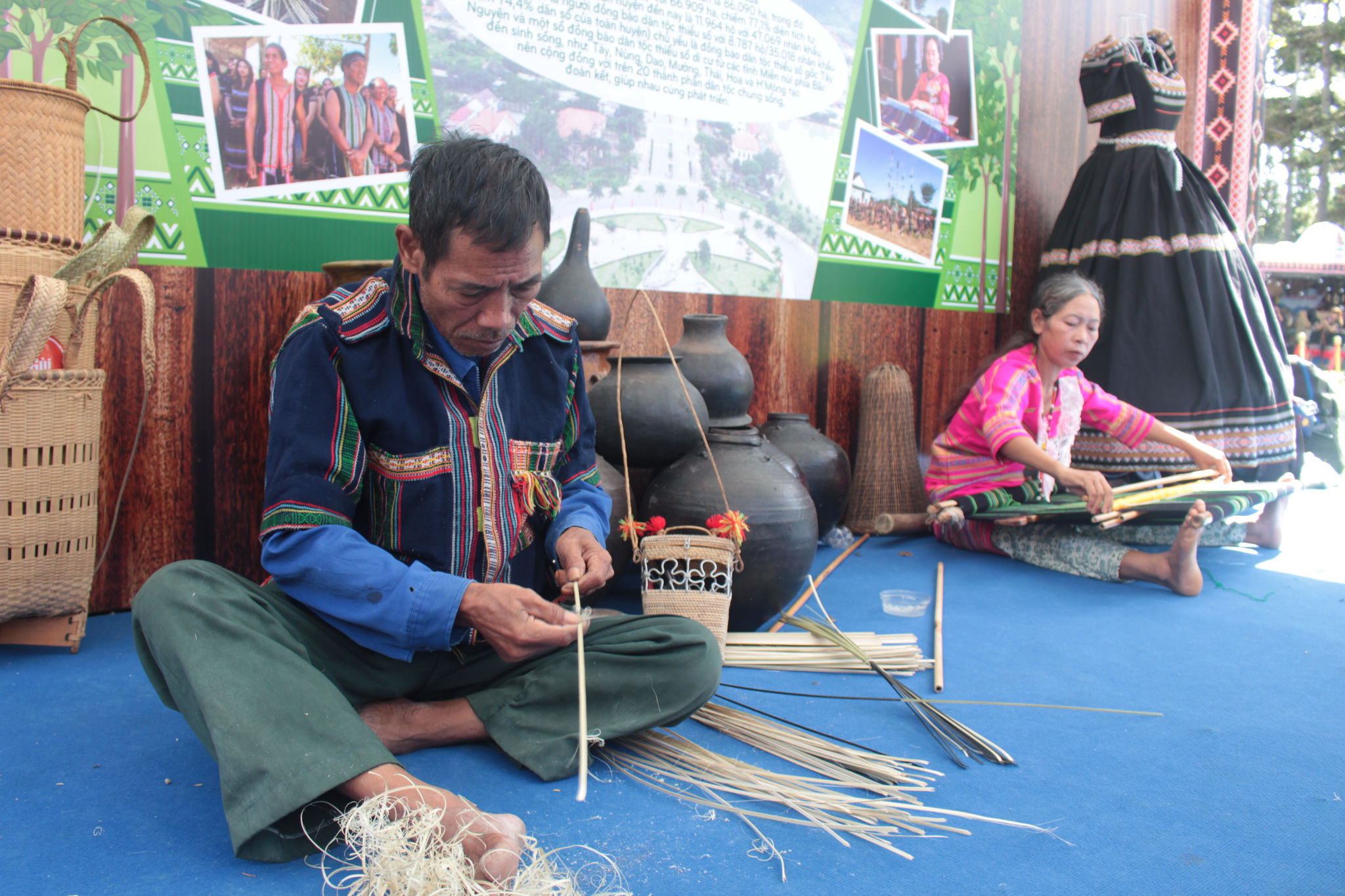
Calloused Hands Creating Everyday Tools
According to Mr. Ha Bang, no one in Lieng Trang remembers exactly when weaving tradition began. “People only know that when they were born, they already saw their grandparents and parents making baskets, traps for fish, and tools for the fields,” he shared. From simple agricultural tools to ritual objects, weaving has accompanied the K’ho community for generations.
In the past, Dam Ron (now Dam Rong 4) was isolated deep in the forest. To leave the village, residents had to cross mountains, rivers, and remote paths. That isolation made weaving a vital self-sustaining craft.
Today, Mr. Ha Bang is one of the few artisans still living with the trade. Now in his 60s, he remains strong and meticulous. He is also among the rare K’ho artisans able to integrate patterns directly into bamboo products using natural bamboo tones.
He recalls: “At around ten years old, I followed my father into the forest to find materials — splitting, shaving, weaving baskets, trays, and fishing traps.” Before every rainy season, he selected the right bamboo and rattan. “The materials must not be too young or too old — too young rots easily, too old becomes brittle.”
For him, weaving is not only work but art and a way of preserving culture. Each finished product requires careful stages — from material selection to weaving, shaping, and drying — with special emphasis on building a strong, durable base.
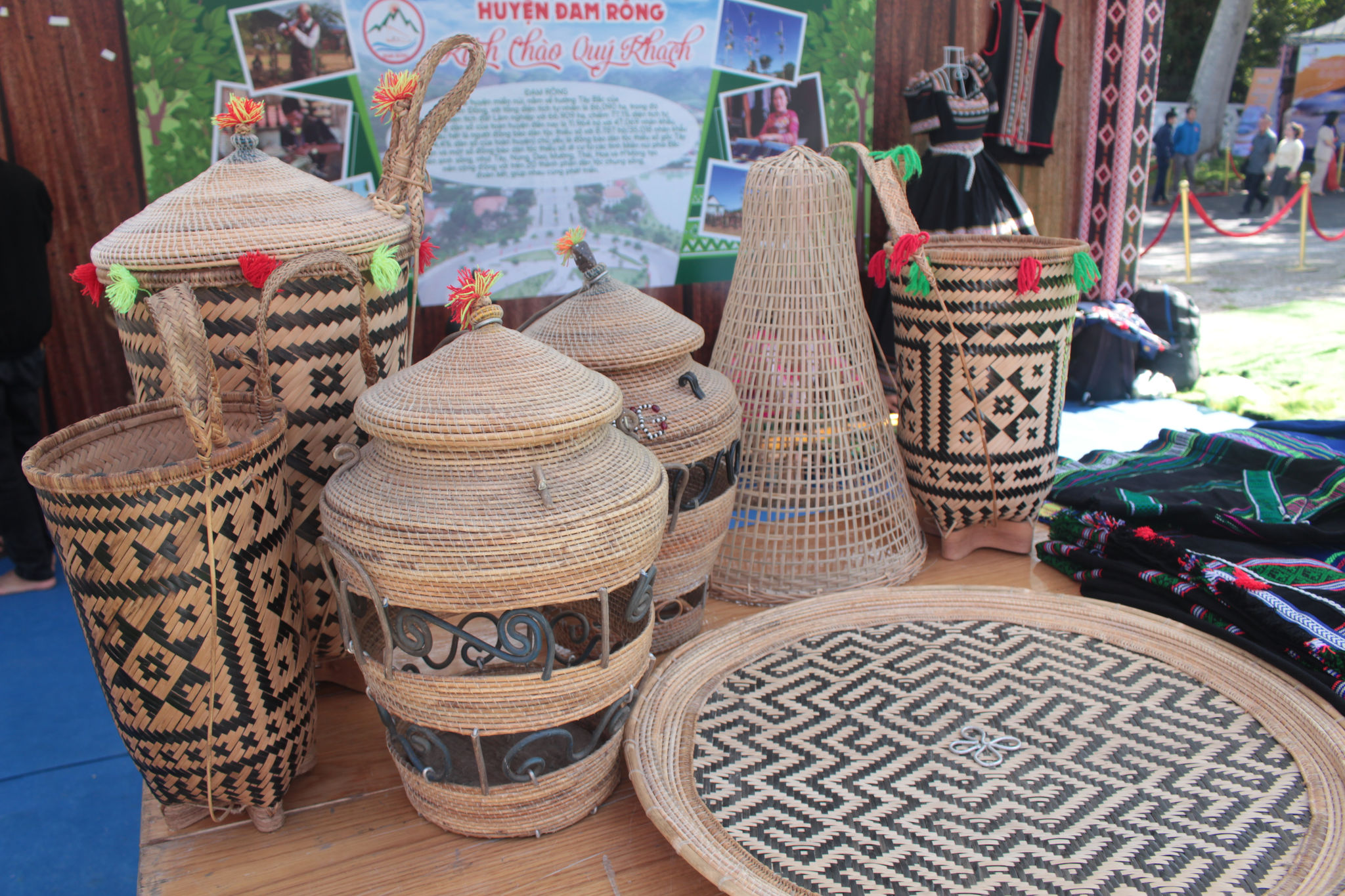
Weaving from Memory, Shaping from Emotion
Unlike factory-made items, his creations follow natural inspiration. His hands move rhythmically, creating patterns like living artworks. “The motifs are already in my mind — my hands simply follow,” he explains.
Every pattern carries symbolism: stylized mountains, animals, spiritual icons, or depiction of people’s connection with nature. His woven goods — from field baskets to fish traps — are both durable and artistic. Particularly impressive are his double-layer woven products, requiring exceptional precision and patience.
During festivals such as gong celebrations or harvest rituals, young villagers proudly carry colorful woven baskets — many crafted by his own hands.
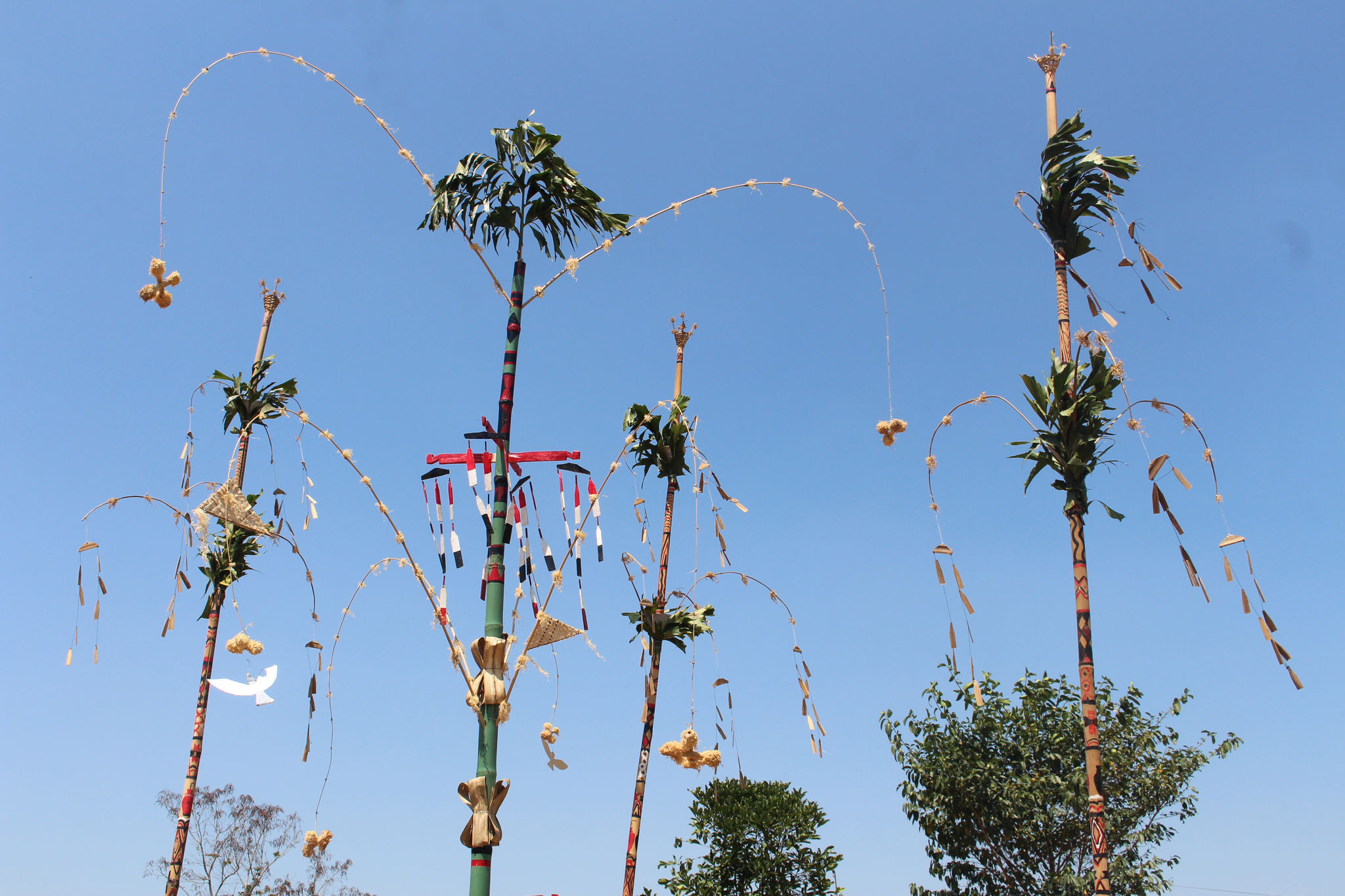
Carving Cultural Depths
Beyond weaving, Mr. Ha Bang is entrusted with carving ceremonial poles for village festivals. Each pole requires days of focused work, guided by deep understanding of K’ho customs and beliefs.
The ceremonial pole is not merely an object — it embodies the K’ho worldview, expressing harmony between humans, nature, and the universe. Every carved line holds cultural meaning — something only “keepers of tradition” like him fully comprehend.
A Guardian of Cultural Memory
In an era dominated by plastic and metal, the sounds of bamboo weaving fade. Yet for Mr. Ha Bang, weaving remains a way to protect cultural identity.
Today, his bamboo items are mainly displayed in museums, tourist spaces, and cultural setups — only a few are used in daily life. Still, he continues weaving and sharing knowledge with younger generations, hoping the craft will not disappear.
For artisan Ha Bang, weaving is not simply a livelihood — it is a way to preserve the cultural beauty of the K’ho people.