


Artisans keep Cham musical heritage alive
The rhythms of the Ghinang and Paranung drums and the sound of the Saranai horn draw listeners into the world of Cham culture, where music preserves memories, expresses the community’s spirit and passes its identity from one generation to the next.
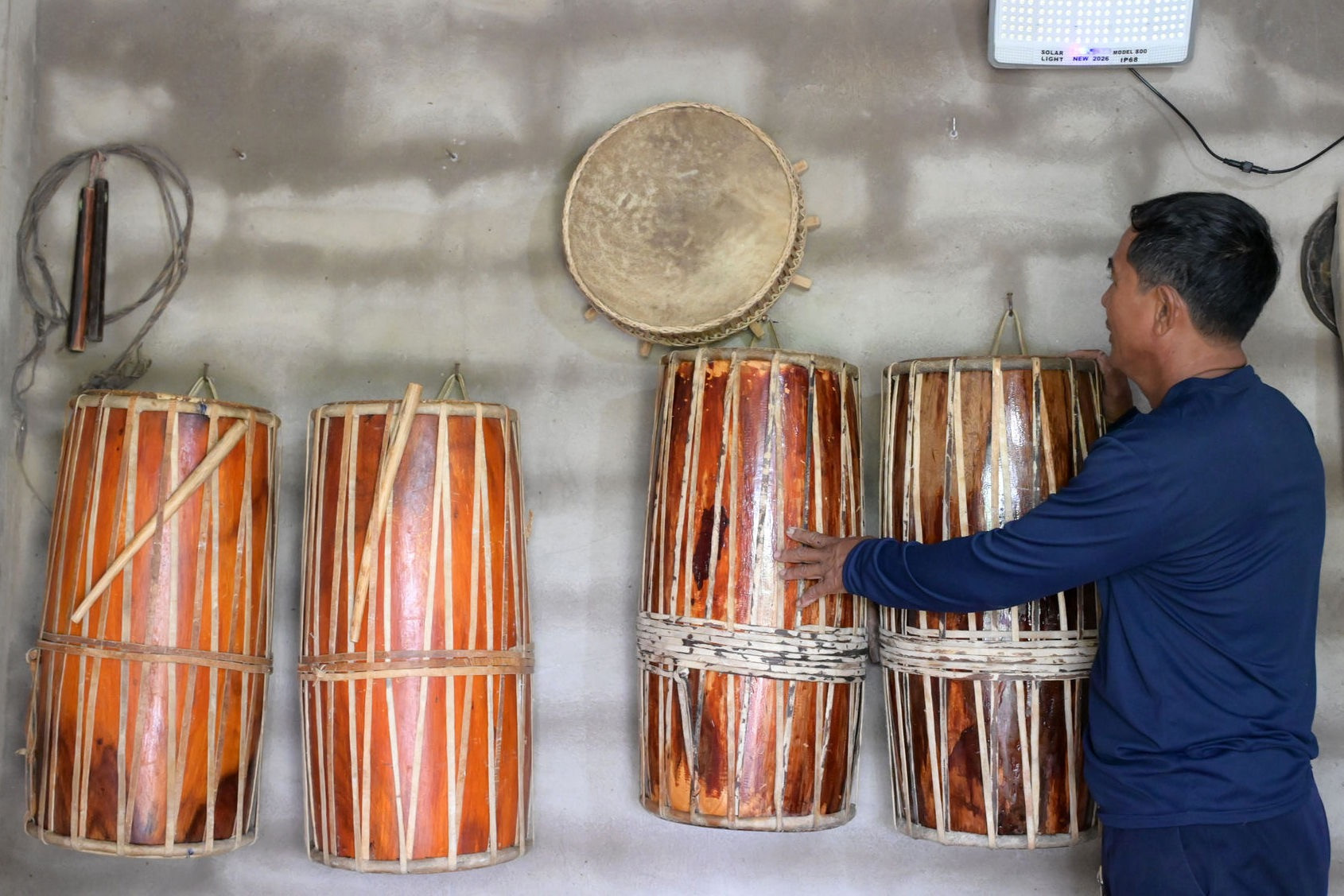
Preserving the distinctive music of the Cham people
In the Cham village of Ham Thuan Bac Commune, Lam Dong Province, almost everyone knows Ma Chau Xa, born in 1972 and a resident of Lam Giang Hamlet. He is not only skilled in playing traditional Cham instruments but has also spent years crafting and preserving them while passing traditional musical knowledge on to younger generations.
In a small hut surrounded by rice fields during the peak growing season, Xa tends to his farm while carefully looking after his collection of traditional instruments.
Recalling how his connection with the music of his community began, Xa said: “I was born into a family with no background in Cham arts. As a child, whenever there was a festival in my hometown, I would go and watch. I did not pay much attention to the individual instruments at the time, but I was fascinated by their sounds.”
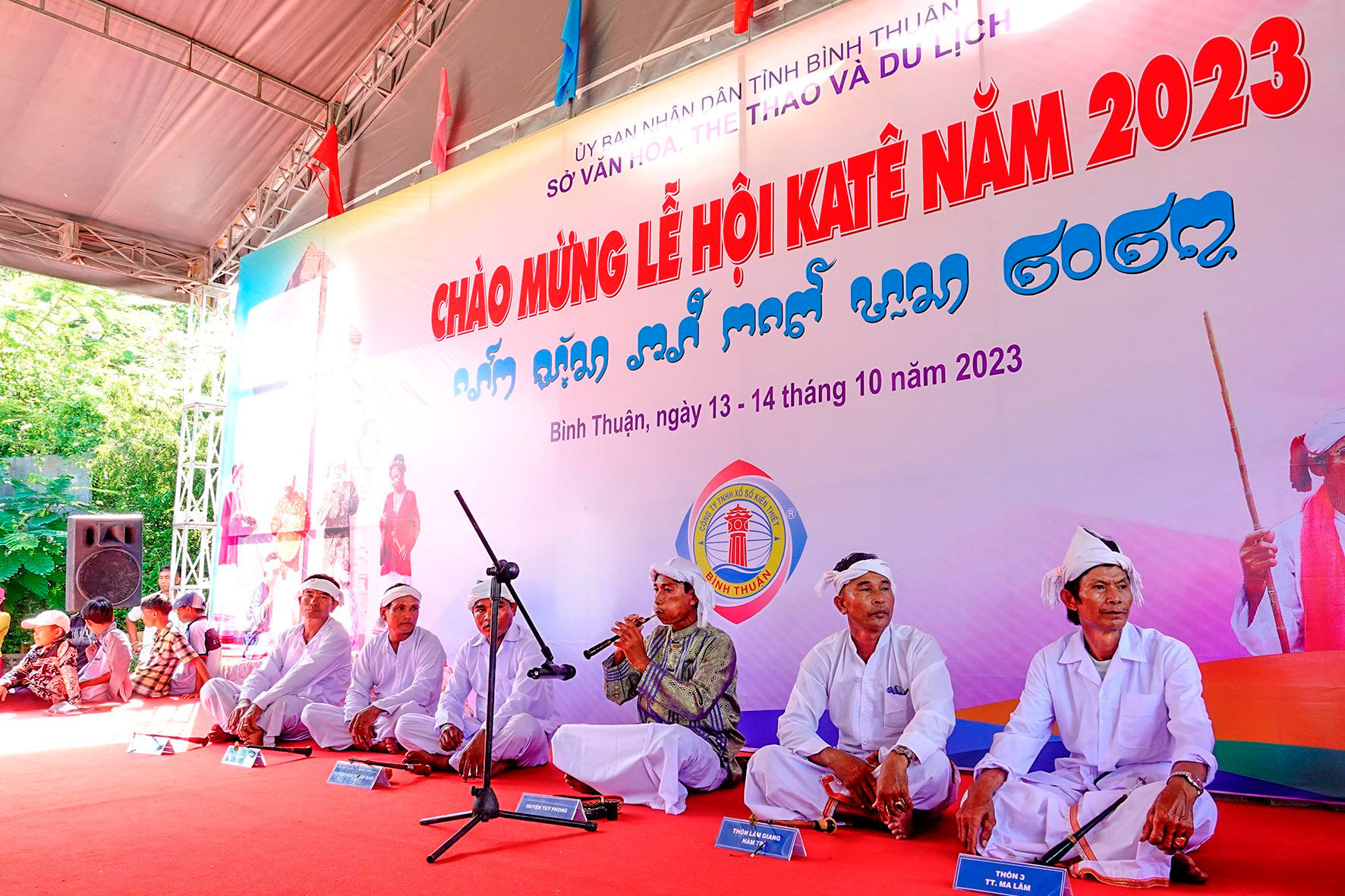
At the time, opportunities to learn traditional Cham instruments were limited. The entire village had only one pair of Ghinang drums, making it difficult for aspiring players to practise.
Years later, when he was nearly 40, Xa noticed that whenever the village held a festival, local residents had to invite drummers and horn players from other Cham villages, often depending on their availability. This prompted him to learn traditional Cham instruments himself.
With a deep passion for traditional music, Xa quickly mastered the rhythms of the Ghinang drums. Before long, he began accompanying senior performers at village ceremonies, including mausoleum rituals, rain-praying ceremonies and the Rija Festival.
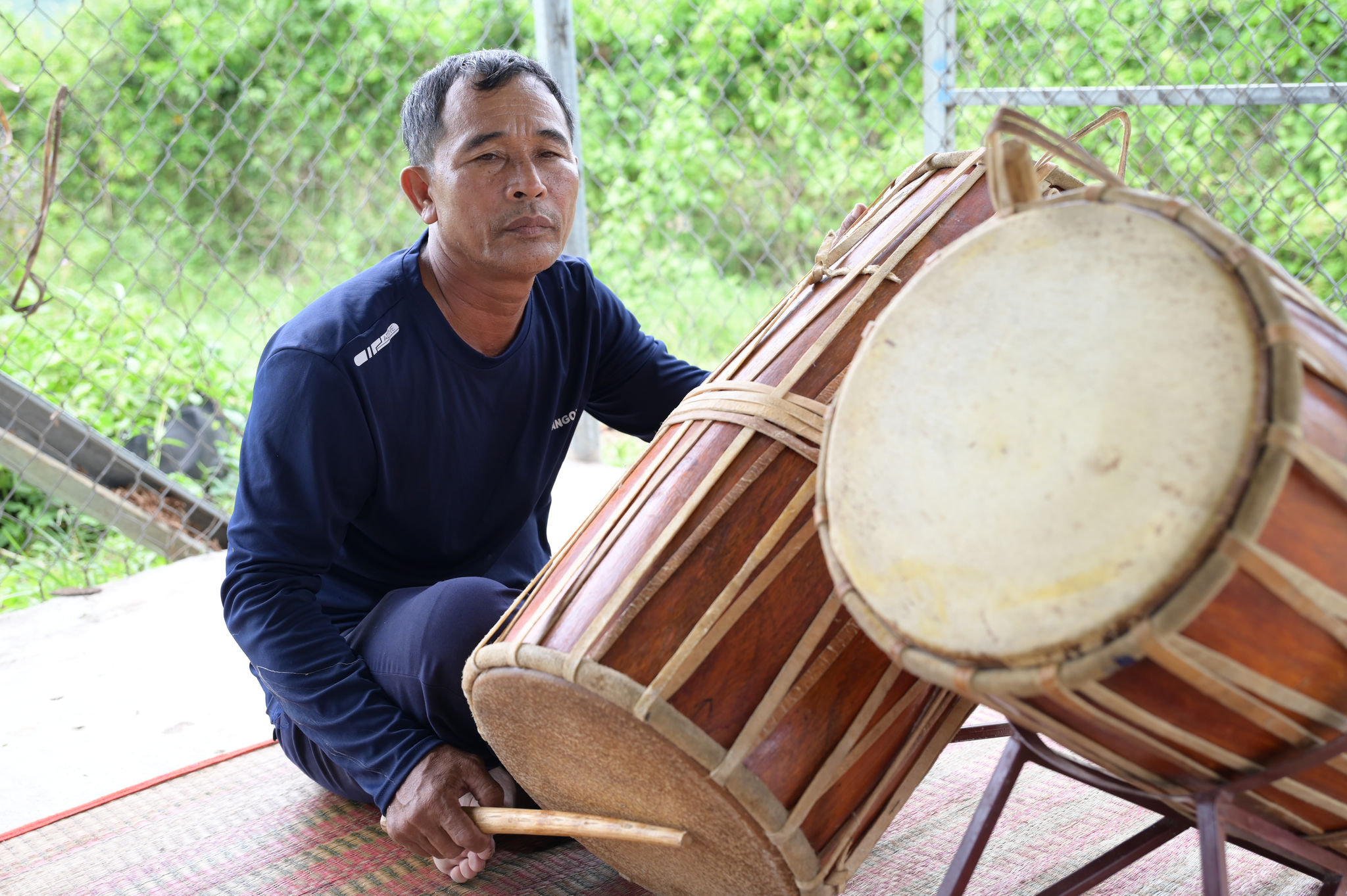
Xa sat down on the floor and carefully placed the pair of Ghinang drums on a stand. Holding a drumstick in his right hand, he struck the rhythm while the fingers of his left hand moved gracefully across the drumhead.
The vibrant sounds of the Ghinang drums echoed across the windswept rice fields - at times powerful and uplifting, at others gentle like a cool morning breeze or soothing like a flowing stream. Under the musician’s skilful hands, the rhythms shifted between crisp, energetic beats and soft, flowing melodies.
According to Xa, Ghinang drums are always played in pairs and positioned diagonally during performances. One drumhead faces the ground while the other faces the sky, symbolising the harmony of yin and yang in Cham spiritual beliefs. Performers combine their hands with a drumstick to create powerful, rapid yet expressive rhythms.
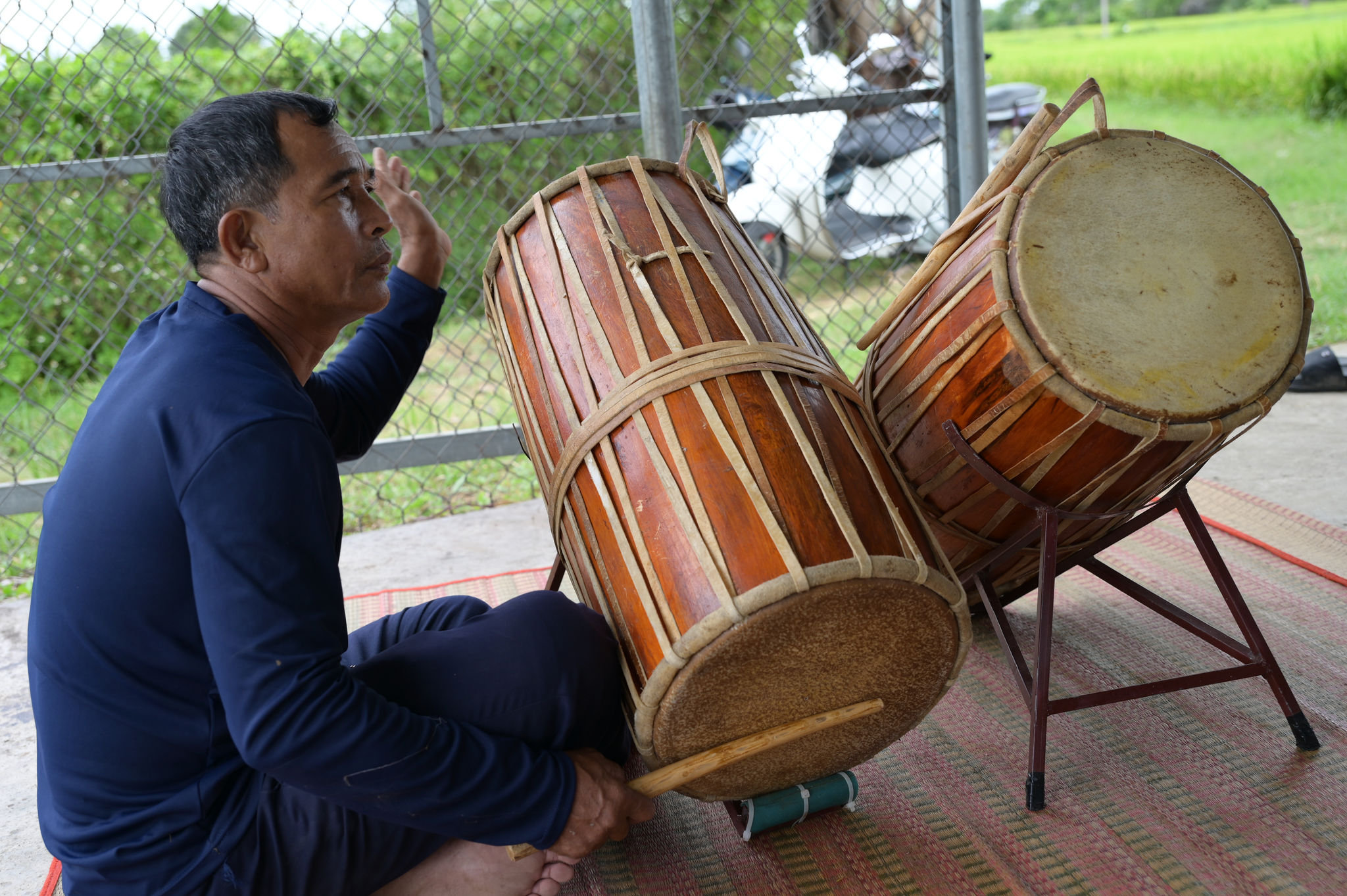
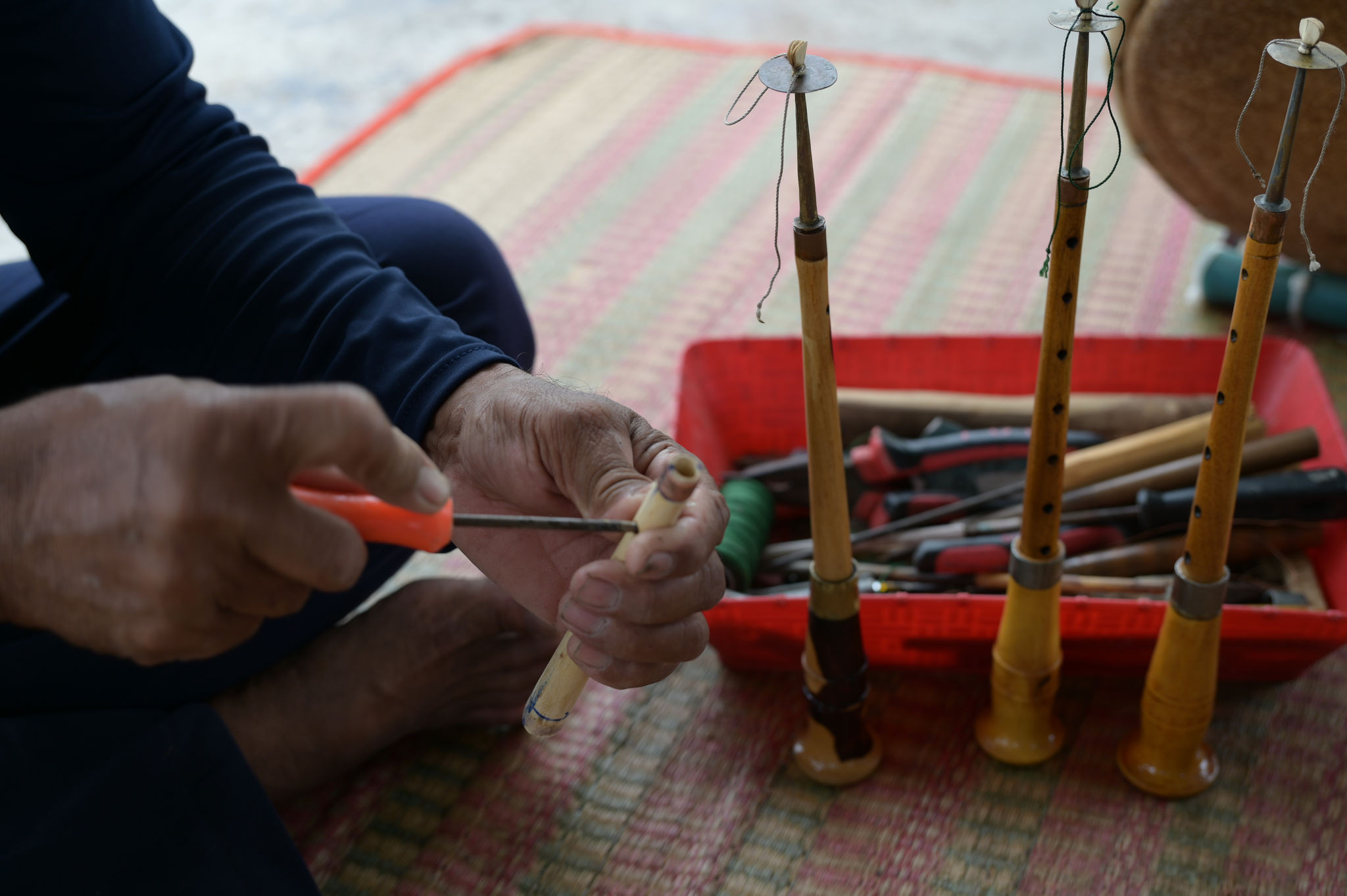
Beyond performing, Xa travelled to Hong Thai Commune to learn the traditional craft of making Cham musical instruments. There, he deepened his knowledge of Ghinang drums and learned how to make them. He also taught himself to play and craft the Saranai horn.
Today, Xa proudly says he is the only person in his village capable of making both Ghinang drums and Saranai horns, with people from other Cham villages seeking out his instruments.
Yet that pride comes with concern. Having watched elderly artisans with extensive knowledge of Cham instruments and craftsmanship gradually pass away, Xa wonders: “Who will carry on after me, so the drums and horns of our ancestors do not fade away?”
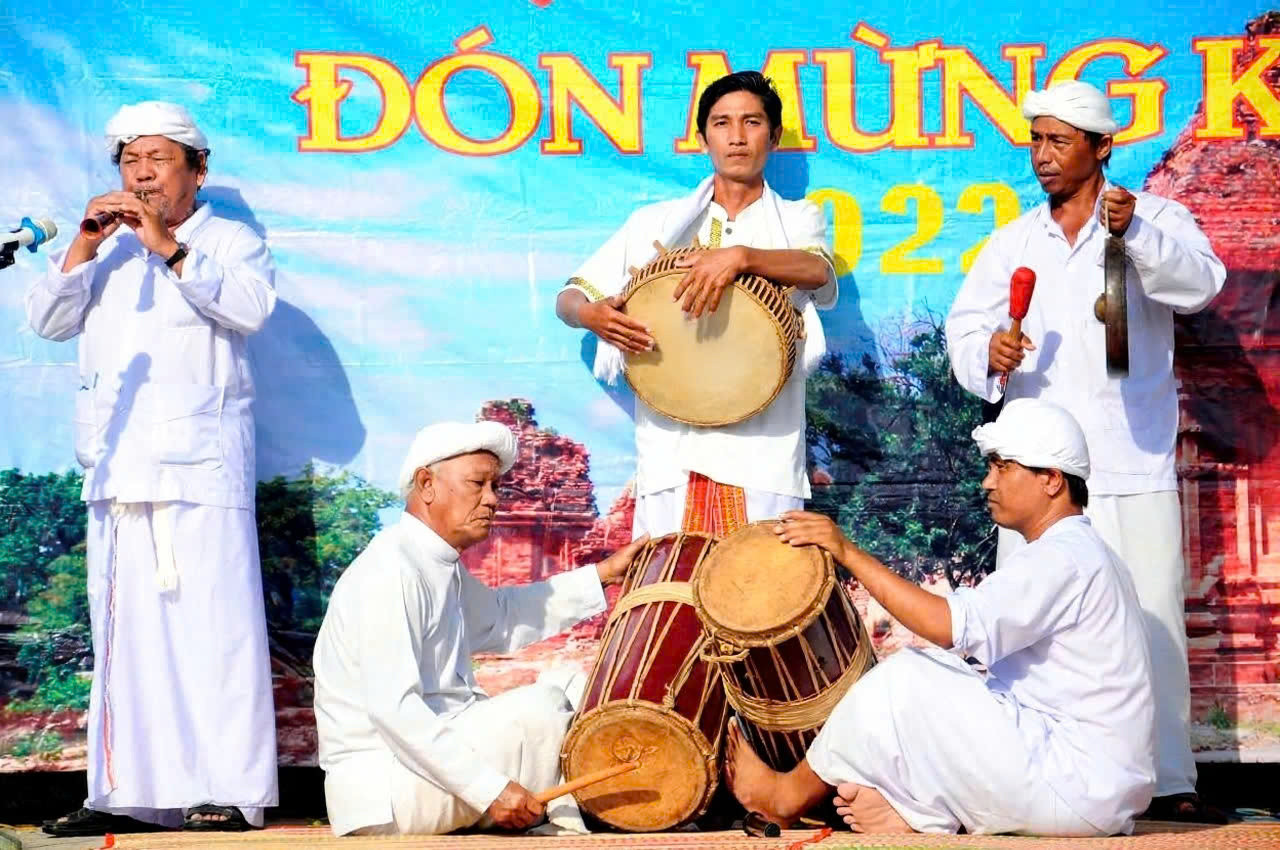
Xa is not alone in worrying about the next generation. Cuu Chi Thong, an artisan from Lac Tri Cham Village in Lien Huong Commune, shares the same concern. Now over 75, he has spent nearly half a century playing the Ghinang drums and is among the few remaining villagers who still master their traditional rhythms.
Asked about drumming techniques, Thong enthusiastically explained: “The Ghinang drum is a distinctive part of Cham culture, with 72 basic rhythms passed down by our ancestors. It has four main tonal patterns, but combining the rhythms is not easy. Players must rely on their own skill and musical sense to improvise and create soulful sounds that captivate listeners.”
Quietly keeping the tradition spark alive
Cuu Chi Thong takes part in most major Cham traditional festivals and cultural events, including Kate, Po Dam and Ramuwan, as well as traditional dance performances. Under his hands, the Ghinang rhythms shift from lively to gentle, adding to the festive atmosphere and bringing joy to the community.
Over nearly 50 years, Thong has not only mastered the instrument’s rhythms but also devoted himself to understanding its traditions and techniques. To him, preserving the sound of the drums means preserving part of the soul of Cham culture.
Although none of his children have followed in his footsteps, he continues to dedicate himself to the Ghinang drums with enduring passion and commitment.
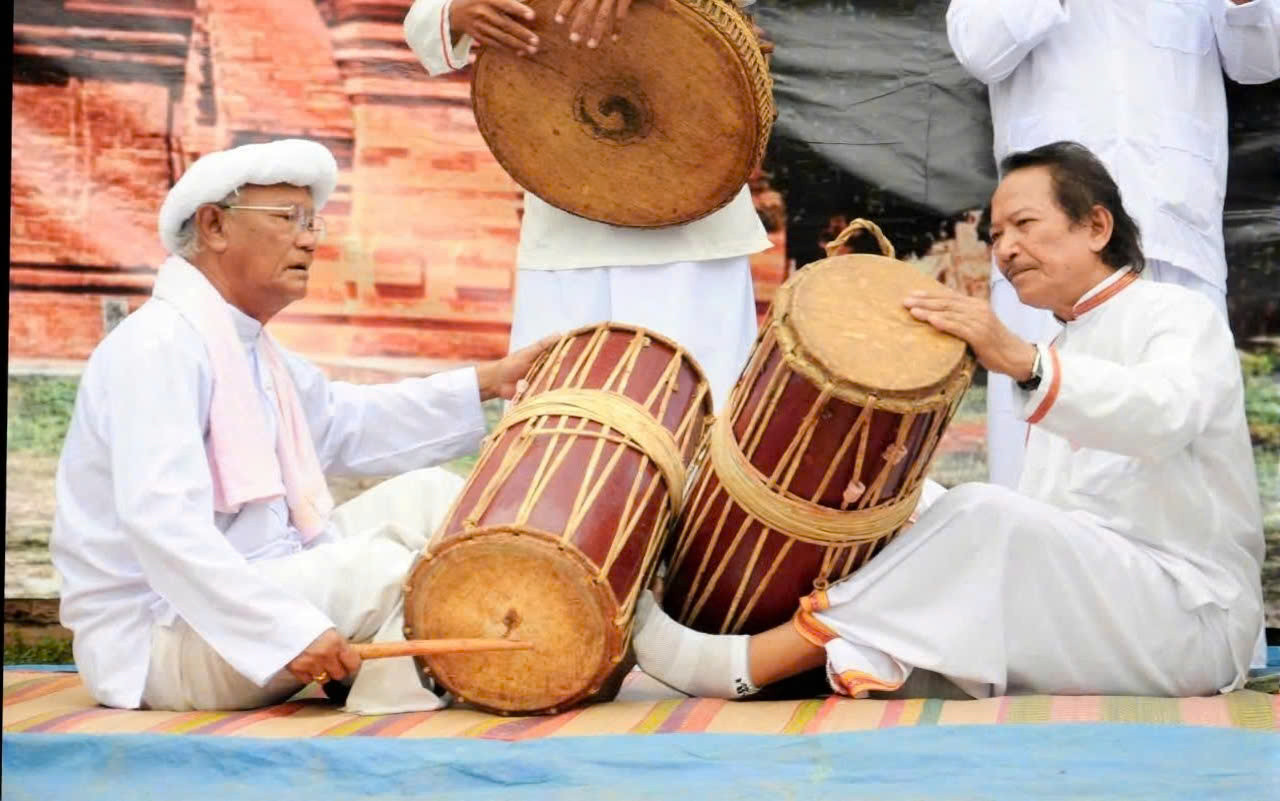
Understanding the concerns of older artisans, Ma Chau Xa believes that the sounds of drums and horns are an inseparable part of Cham cultural life. For years, he has quietly offered free classes, patiently passing his skills on to younger villagers.
Every beat and every lesson helps keep the flame of tradition alive. Preserving the sound of the drums is not simply about protecting a musical instrument, but about safeguarding the cultural soul of the Cham community.
Xa teaches students how to stretch drumheads and play rhythms such as “tin, tin, tac”. During his lessons, he also shares stories associated with the Kate Festival, helping younger generations understand and appreciate their traditional music.
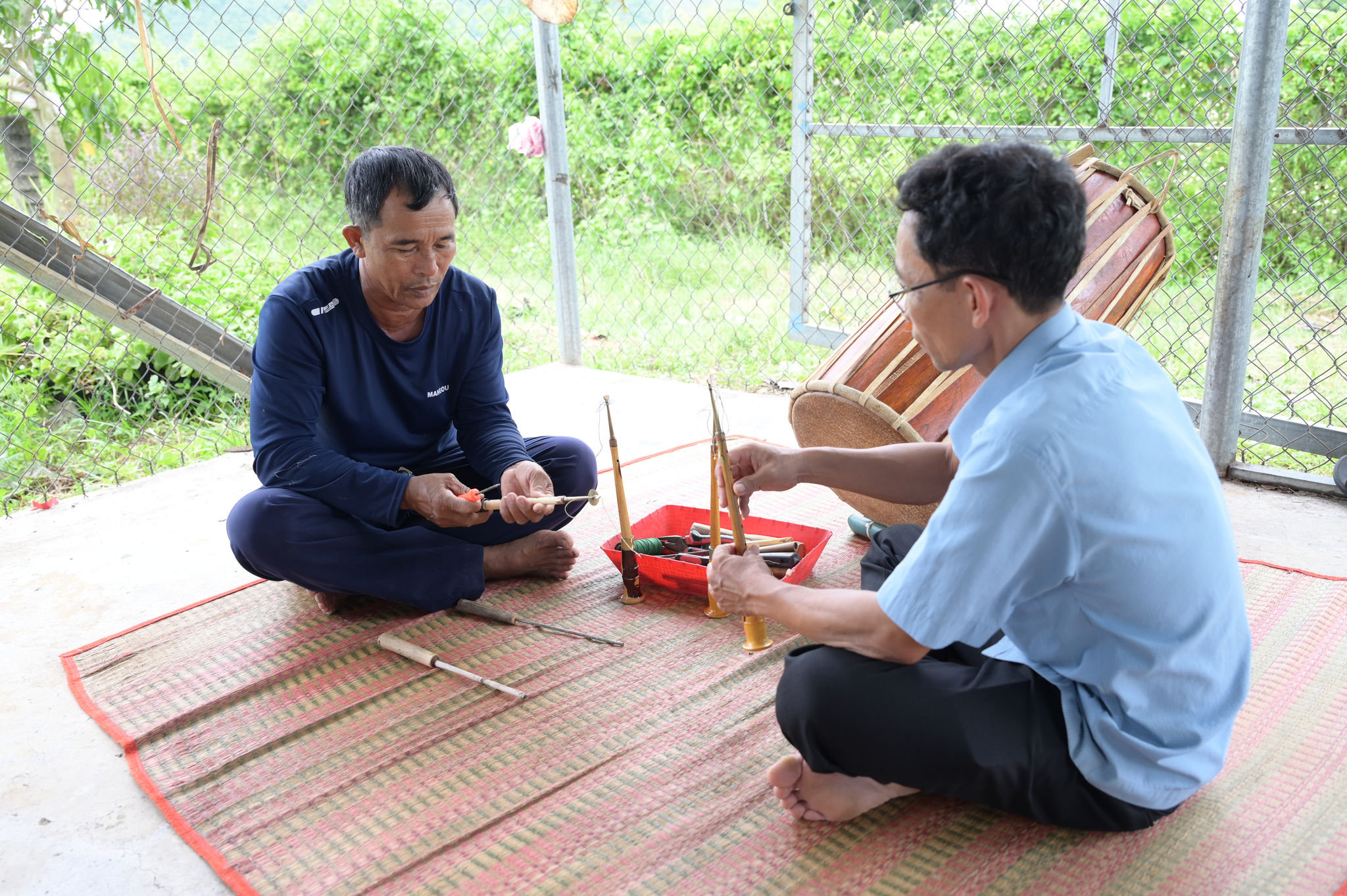
The practice sessions in his small courtyard are more than music lessons. They give young people an opportunity to connect with the memories of their ancestors and experience a living cultural tradition.
In this way, the sounds of the Ghinang and Paranung drums will not fade into the past, but continue to resonate through the present and into the future. Many of Xa’s students have now mastered several traditional rhythms and are able to perform at Cham festivals.
According to local artisans, the trio of the Saranai horn, Ghinang drums and Paranung drums forms the heart of traditional Cham ceremonial music. Their sounds carry a sense of spirituality and cultural depth, reflecting the rich spiritual life of the Cham people across generations.
Thong Minh Dong, head of Lam Giang Hamlet, said artisans with extensive knowledge of traditional Cham instruments are becoming increasingly rare. Beyond collecting and recording traditional music, he said authorities should bring it into community life, festivals, tourism activities and musical performance contests, particularly those involving young people.
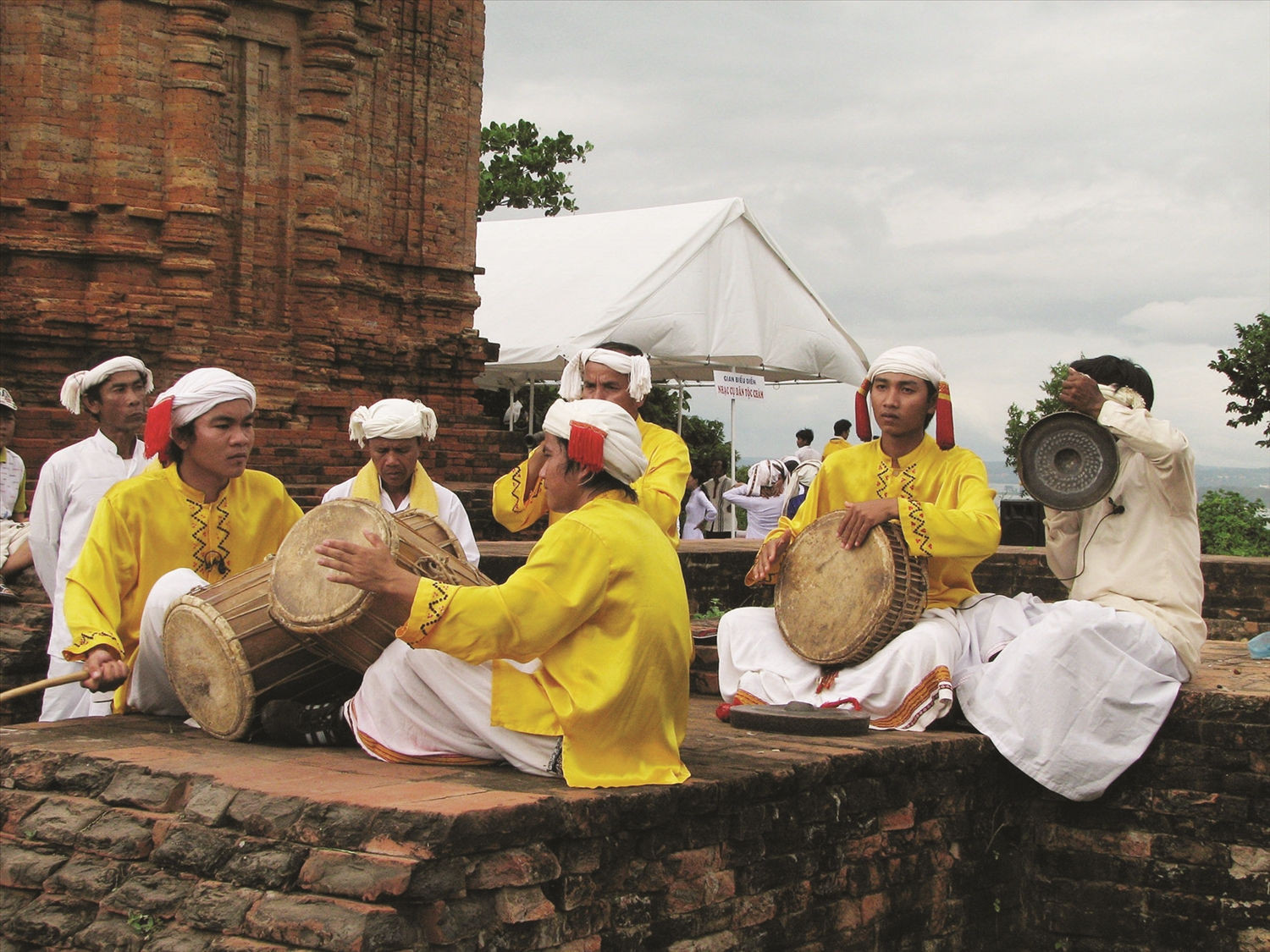
Dong said that alongside creating more opportunities for traditional instruments to be played regularly, greater recognition should be given to artisans and their contributions. Cham artisans and young people should also be given opportunities to learn, teach, practise and perform traditional music, helping preserve Cham musical heritage and the intangible cultural heritage of Lam Dong’s ethnic minority communities.
The cultural sector is also creating more opportunities for the public to experience traditional music. At the Cham Cultural Exhibition Centre and Po Sah Inu Tower relic site, musical performances are held on weekends and major holidays for residents and visitors.
According to the provincial Department of Culture, Sports and Tourism, amid concerns that some traditional Cham instruments could disappear, the sector is developing a programme to teach traditional instruments in nine communes with large Cham communities. The initiative is expected to strengthen connections between artisans and younger generations and ensure that cultural knowledge continues to be passed down within the community.
Besides performances of traditional musical instruments, we are also considering inviting artisans to demonstrate how the instruments are made on site. This would both promote tourism and encourage younger Cham generations to appreciate and learn their traditional instruments.”
Lu Thai Tuyen, Deputy Director of the Lam Dong Provincial Museum
In Cham belief, the trio of the Saranai, Ghinang and Paranung instruments represents heaven, earth and humanity. Their performance together therefore symbolises harmony between these three elements in Cham culture and spirituality. Their sounds are not merely artistic expressions, but also convey the beliefs, emotions and aspirations of the Cham people, as well as their connection with the natural world.
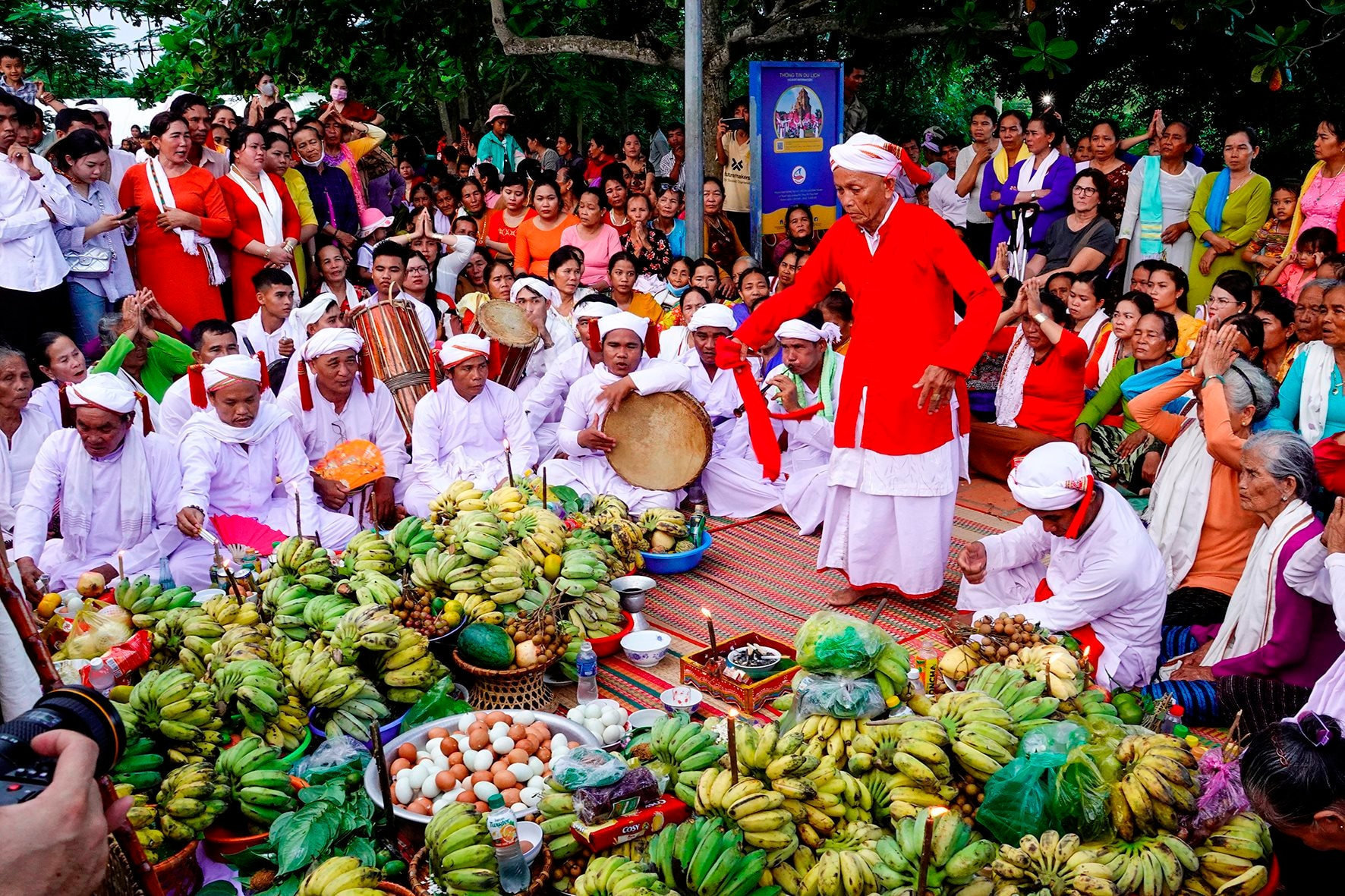
Lam Dong is home to more than 43,000 Cham people, mainly living in nine communes: Tuy Phong, Lien Huong, Bac Binh, Hong Thai, Ham Thuan Bac, Ham Thuan, Tan Thanh, Son My and Tanh Linh. The province is home to 49 ethnic groups, creating a rich and diverse cultural and historical landscape within Vietnam’s broader heritage.