


Behind a Road Taking Shape
Under the dry March sun of the Central Highlands, National Highway 28B stretches like a soft ribbon winding across the mountainsides. Behind its present form lie more than 800 days and nights of labor, as thousands of engineers and workers endured sun and rain, clung to forested slopes, and cut through rock to carve out the route.
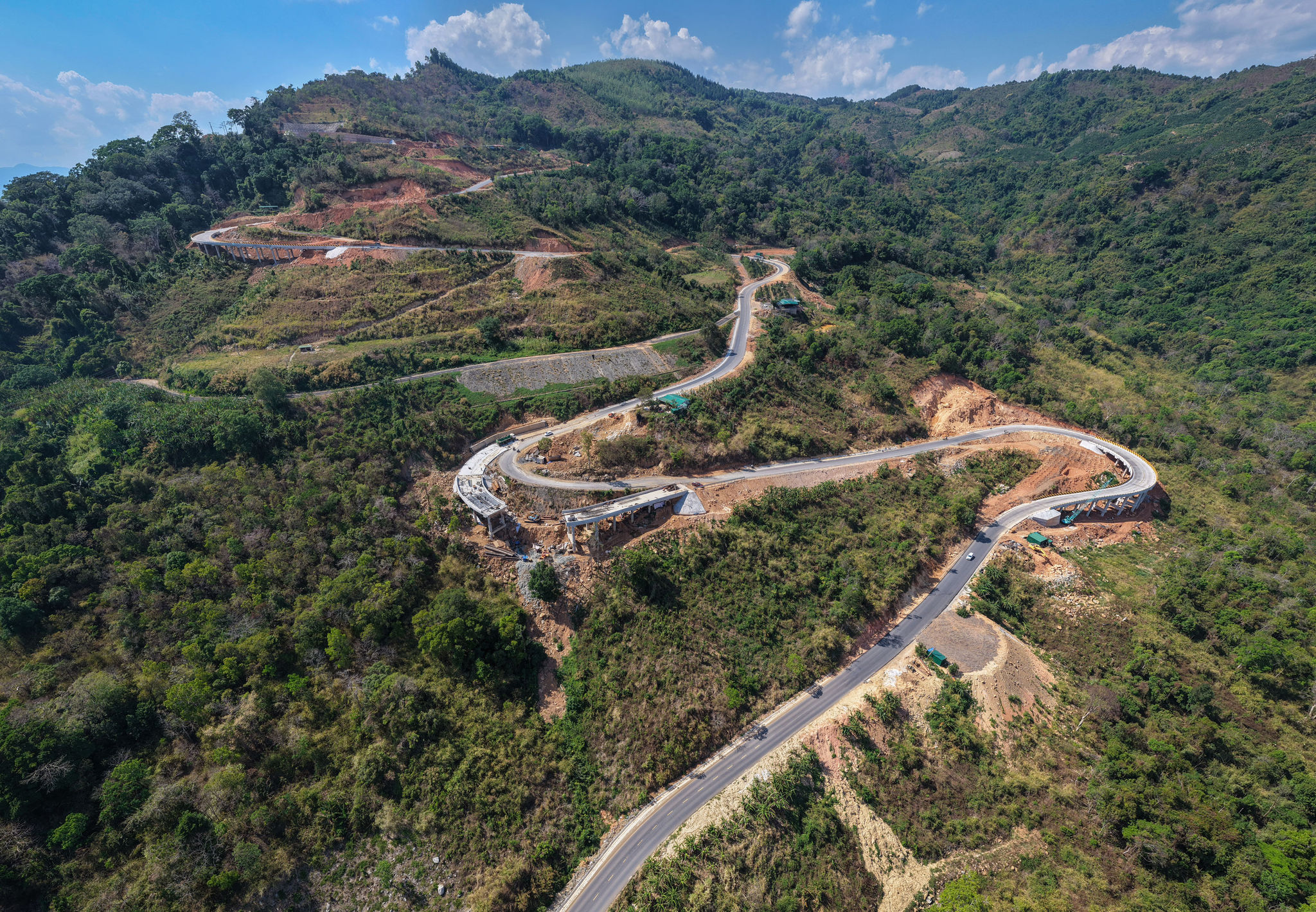
Once infamous for its potholes, red dust, and narrow hairpin turns along the Dai Ninh Pass section, National Highway 28B has now taken on a much smoother, gentler appearance. Yet behind that transformation lies the story of the quiet hardships endured by hundreds of workers from across the country.
In late 2025, as storm after storm battered the region, National Highway 28B became a hazardous construction zone. Torrential rain triggered repeated landslides at Km45 and Km48, damaging sections of the roadbed that had only just begun to take shape. Amid the chaos, workers in reflective vests braved the downpours through the night, determined to repair the damage and keep this vital route open to traffic.
Building a road through a mountain pass is already a formidable task; doing so in the complex geology of a region between highlands and white-sand lowlands is even more demanding. “Our work here goes beyond paving. We have had to contend with massive isolated boulders clinging to the mountainsides. In certain areas, our team took months to blast and chisel just to create a pathway,” said Mr. Nguyen Anh Tuan, executive director of Project Package 1.
The toll of the work was etched in weathered skin, calloused hands, and dust-stained work clothes. In mid-March, despite the blazing sun, the site remained charged with resolve. The roar of excavators and bulldozers mixed with workers’ voices, creating the relentless rhythm of labor. On a newly cleared mountainside, a team of workers clung to the cliff face as they secured rock bolts and steel mesh to reinforce the slope.
A representative of the Central Road Project Management Board said, “At this point, the team can finally breathe a little easier. We place strong emphasis on sustainability, so in sections where the mountainside has been cut, reinforced steel mesh is being used not only as a technical solution, but also as a safeguard for those traveling this route, especially during the rainy season.”
At Viaduct No. 4, where challenging geological conditions have complicated foundation excavation and bored pile construction, engineers and workers continue to push forward, diligently advancing meter by meter to complete the bridge connection.
The upgrade of National Highway 28B has brought joy and renewed hope to many local residents. In Phan Son Commune, the positive impact can be seen in the changing economic situation. Bui Thi Hong Ngoc expressed her delight, noting that since the road was repaved with smooth asphalt, the dust issue has been resolved, more tourists are visiting, and her family's business has improved considerably.
In addition to the residents, long-haul drivers like Mr. Vu Nguyen Ngoc Tri from Ho Chi Minh City now favor National Highway 28B over National Highway 20. He said that straighter curves and wider mountain passes had shortened travel time considerably and eased concerns about traffic jams and dangerous hairpin bends.
According to the Central Road Project Management Board, the project has now been basically completed from Km0 to Km68. Engineers and workers are concentrating on resolving the final bottlenecks, and nearly 60 km of asphalt concrete paving has been completed out of the route’s total 68 km.
“The only unfinished structures along the route are Viaducts No. 1 and No. 4. Viaduct No. 1 is expected to open to traffic by the end of March. As for Viaduct No. 4, unexpectedly complex geological conditions have delayed full connection, but completion is still expected by April 2026. In addition, only five short sections remain without asphalt—at Km19, Km21, Km23, Km41, and the junction with the expressway. We are urging contractors to complete them by early April. All other remaining work, including guardrail installation and slope reinforcement, is scheduled to be completed by May 2026, in line with the Road Administration’s guidance and our commitment to the province,” said the director of the Central Road Project Management Board
The goal of opening the entire route to traffic by late April 2026 is now within reach. As the final meters of asphalt are laid and the last viaduct spans are connected, National Highway 28B will officially become a vital corridor linking Lam Dong’s coast and highlands. Behind that achievement lies the quiet dedication of those who braved the elements—clinging to forested slopes and cutting through rock to carve out the route.