


Breakthroughs in Education and Training Development
The Standing Board of the Lam Dong Provincial Party Committee has issued an action program to implement the Politburo's Resolution No. 71, dated August 22, 2025, on achieving breakthroughs in education and training development across the province.
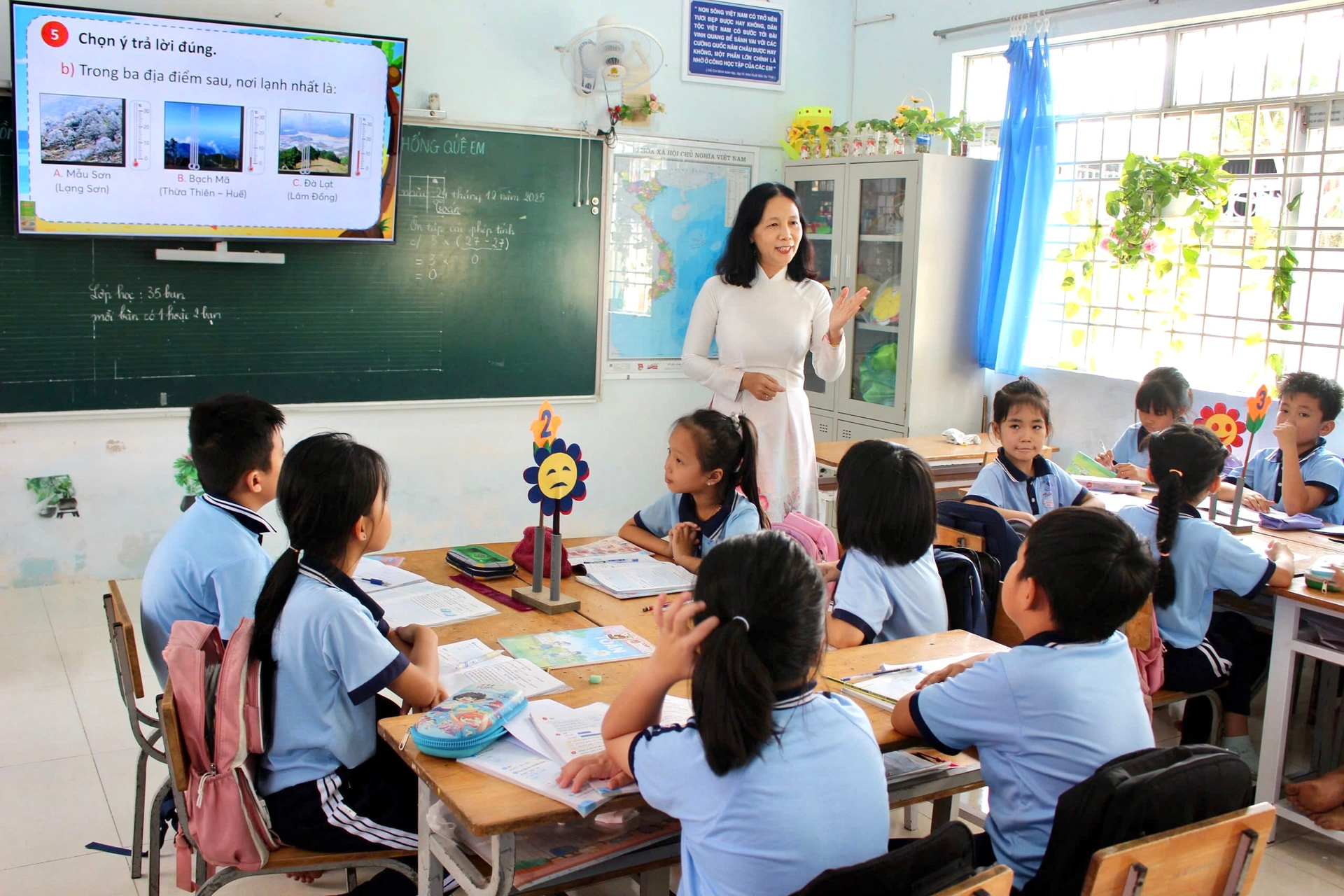
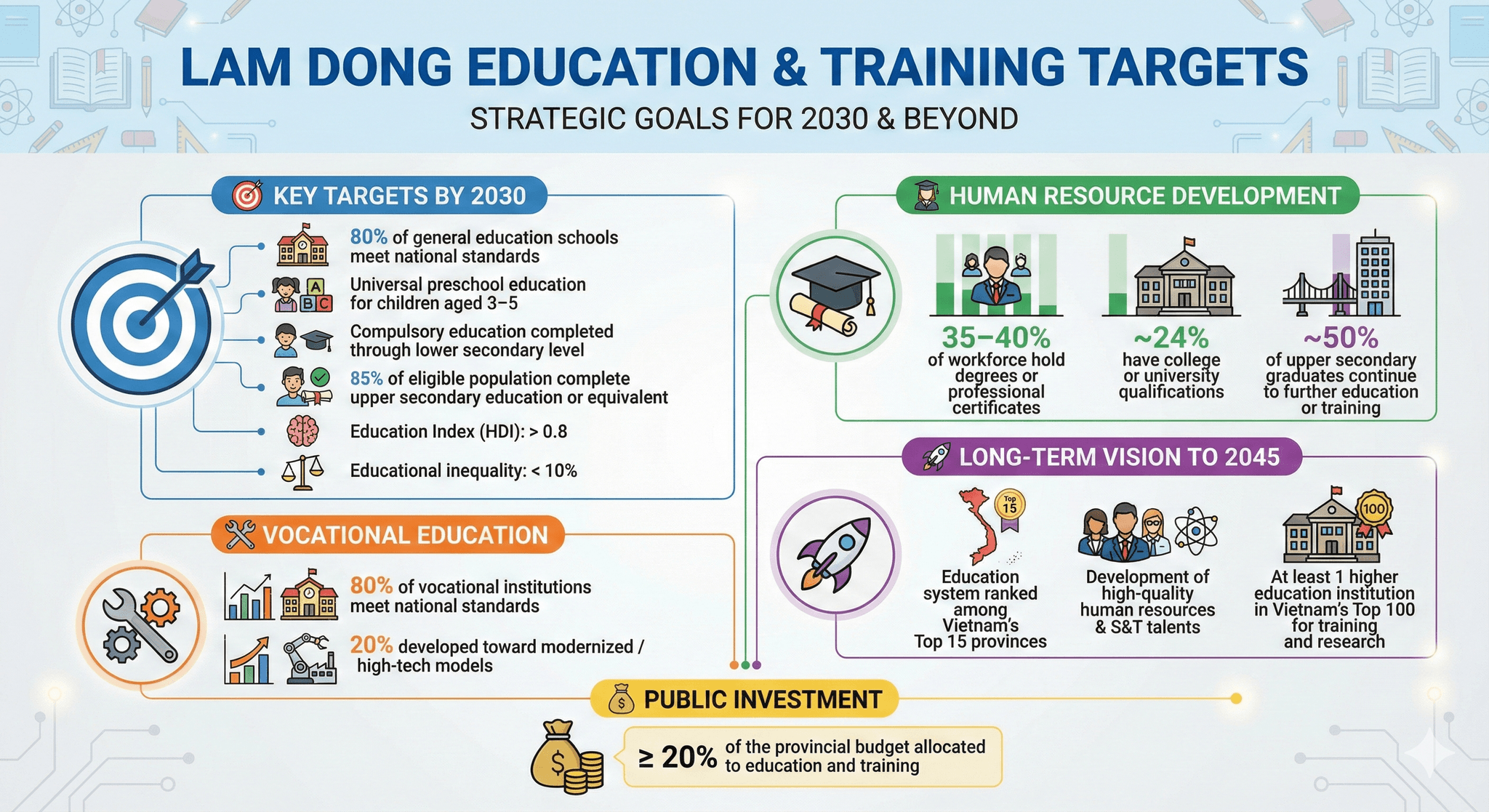
The program reaffirms education and training as a top national priority, setting clear targets through 2030, with a vision toward 2045. By 2030, Lam Dong aims for at least 80% of general education institutions to meet national standards, while ensuring the universalization of preschool education for children aged 3–5, and the completion of compulsory lower secondary education.
The province also targets 85% of the eligible population completing upper secondary education or its equivalent, while the education index within the Human Development Index (HDI) is expected to exceed 0.8, and educational inequality is to be reduced to below 10%.
Human resource development, particularly the cultivation of high-quality human capital, is identified as a decisive breakthrough. By 2030, 35–40% of the workforce is projected to hold formal degrees or professional certificates, including around 24% with college or university qualifications.
At the same time, approximately half of all upper secondary graduates are expected to pursue further education or training. In the vocational education sector, at least 80% of institutions are expected to meet national standards, with roughly 20% developed toward modernized and high-tech models. Public investment in education and training will account for no less than 20% of the provincial budget, underscoring the sector’s priority status.
Looking ahead to 2045, Lam Dong sets the objective of building a modern, inclusive and high-quality education system, positioning the province among the top 15 localities nationwide in terms of educational development. The long-term vision includes the formation of a strong pool of science, technology and innovation talents, with at least one higher education institution ranked among Vietnam’s top 100 for training quality and research performance.
To achieve these goals, the action program identifies seven key tasks and policy solutions, focusing on institutional reform, governance innovation, digital transformation in education, teacher and lecturer development, vocational modernization, and expanded international cooperation. Furthermore, the program emphasizes coordinated implementation across the political system, supported by robust monitoring, evaluation and accountability mechanisms, to ensure measurable and sustainable outcomes.
The policy framework reflects Lam Dong’s broader ambition to align education and training with socio-economic restructuring, productivity growth and regional competitiveness, positioning human capital as a central driver of long-term, resilient development.