


Bringing the Katê Festival into Coastal and Island Tourism Itineraries
For the Cham community in Bac Binh, the Katê Festival is more than an annual celebration. The rhythms of ginăng drums, the sounds of saranai trumpets, traditional songs and dances, and pottery making all form part of a distinctive cultural identity. Bringing these traditions closer to visitors is now becoming part of efforts to connect Cham heritage with coastal and island tourism.
Keeping the Festival Alive Through Practice
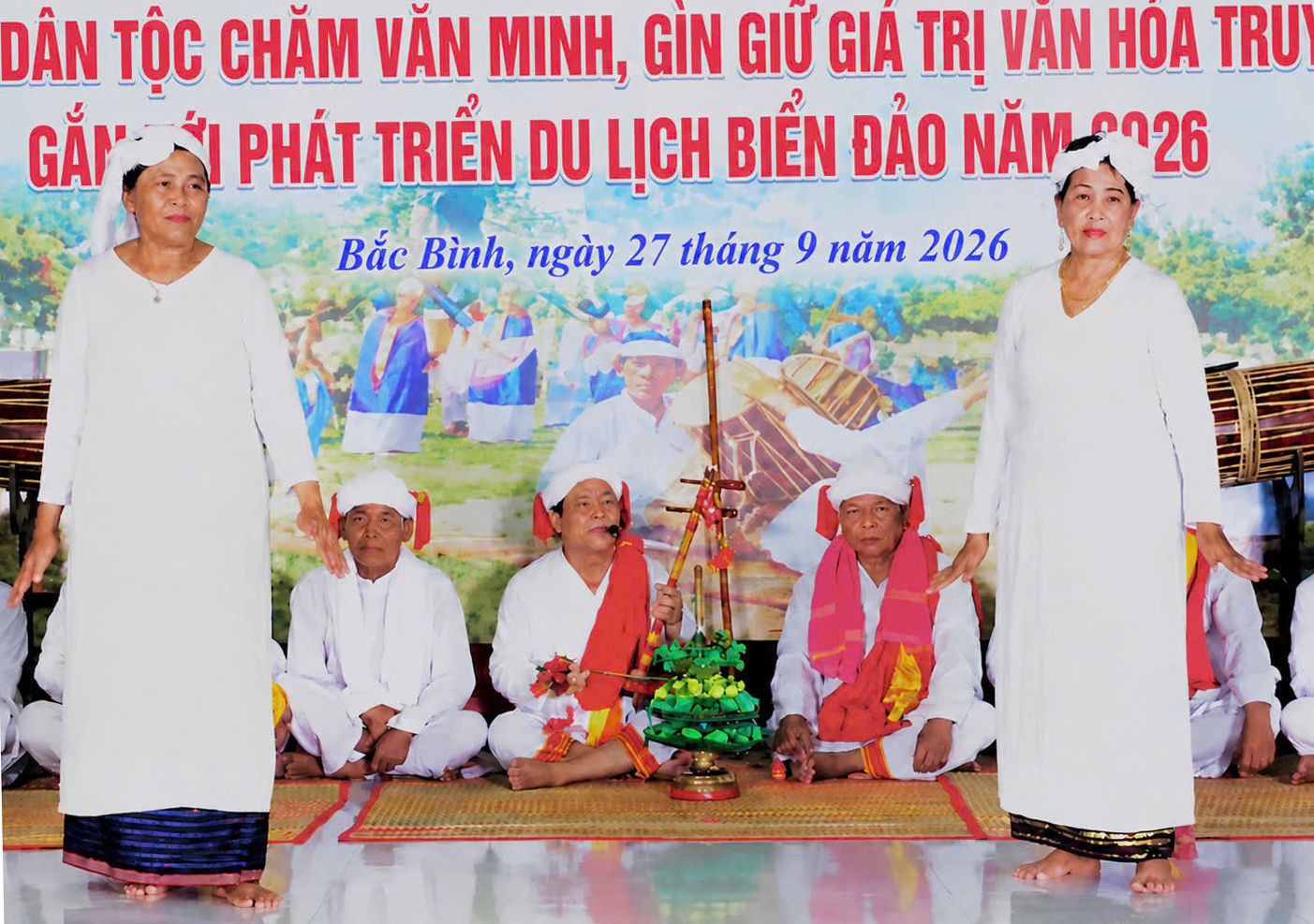
In late September, 80 participants in Phan Hiep Village joined local artisans in learning about and taking part in hands-on activities to develop a model titled “Organizing the 2026 Katê Festival of the Cham Community in a Civilized Manner, Preserving Traditional Cultural Values in Association with Coastal and Island Tourism Development.” The participants were community members with knowledge of folk culture and skills in performing traditional folk songs and dances.
Over five days, Meritorious Artisan Lam Tan Binh and Cuu Dang Long An directly instructed the participants in various aspects of festival organization. In addition to introducing the festival, the artisans guided them through its rituals and customs, the organization of folk cultural and artistic activities, and the staging of festival performances.
Elements that may seem familiar in Cham cultural life were incorporated into hands-on practice. These ranged from ceremonial invitations, the retrieval of royal decrees and the opening of temple towers to ritual singing, purification rites and the dressing of deity statues, as well as folk songs, folk dances and performances featuring traditional musical instruments.
Through these activities, participants gained further knowledge and skills to continue practicing cultural traditions passed down within the community. What is notable about the model is not the creation of a new performance program, but how it returns rituals, melodies and traditional forms of performance to the community members who practice them.
At the closing session, this was demonstrated through four performances. The atmosphere of the Katê Festival at Po Nit Temple was recreated in a staged presentation. The festive segment featured a celebratory dance by the ba bong and a fan dance, evoking the atmosphere of a festival honoring kings, deities and ancestors while praying for peace and prosperity.
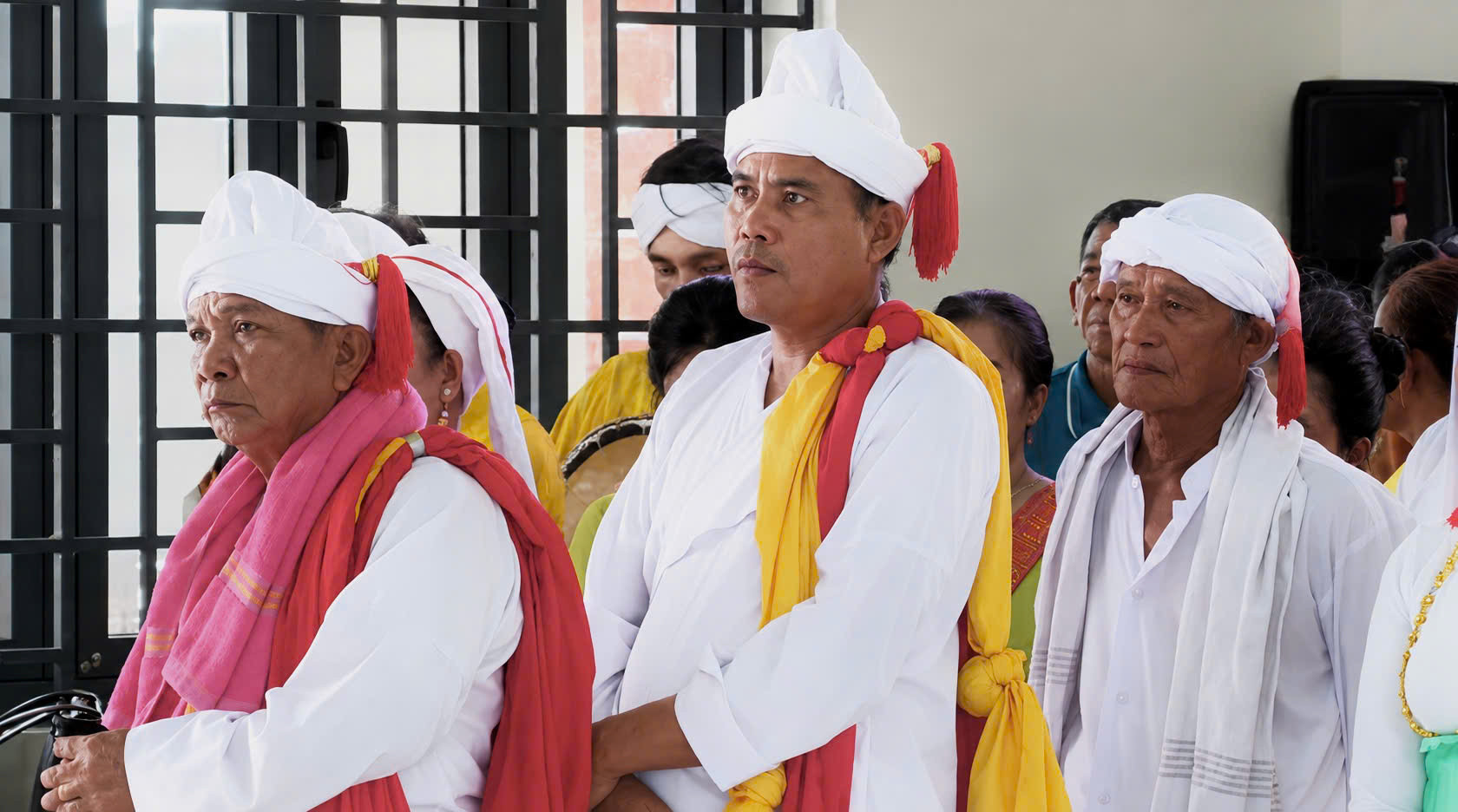
In another setting, the “Cham Village Festival” was brought to life through sound, with ginăng drums, saranai trumpets, bells, gongs and rattles blending together to create the distinctive character of traditional Cham music. Pottery making was also featured in the performance “Pottery Village Bonds,” while the program concluded with a fan dance, a familiar form of folk dance performed at Cham festivals.
From Cultural Spaces to Tourism Destinations
The cultural values practiced within the community also open up a different approach to tourism. When visitors travel to the eastern coastal region, their journey need not end at the coast but can extend to the cultural spaces of local communities.
According to Tran Quoc Tuan, Vice Chairman of the Bac Binh Commune People’s Committee, the training course aims to help preserve and promote the traditional cultural values of the Cham community through the practice, preservation and transmission of Katê Festival traditions. This approach links heritage preservation with sustainable tourism development, while also raising public awareness of and responsibility for preserving cultural traditions and observing civilized practices during festivals.
This is also a way for Cham culture to become a more natural part of coastal and island tourism. Visitors to Bac Binh can combine relaxation with exploring a culture that has been shaped and passed down through generations.
The model is being implemented by the Department of Grassroots Culture, Family and Library under the Ministry of Culture, Sports and Tourism, in coordination with the Lam Dong Department of Culture, Sports and Tourism and the Bac Binh Commune People’s Committee. Going forward, rituals, dances, traditional music and crafts will continue to be practiced and passed down within the community. This will also provide a foundation for introducing Cham cultural values to visitors as they explore the eastern coastal region.