


Cash Bonuses for Farmers in Linked Production Chains
Financial bonuses paid per kilogram of produce are the result of farmers’ long-term commitment to applying advanced and sustainable farming practices.
Incentives tied to strict standards
In recent years, many cooperatives and agricultural enterprises in western Lam Dong Province have introduced incentive mechanisms to strengthen long-term linkages with farmers. One notable approach is to offer incentive payments for each batch of products that meets specific standards.
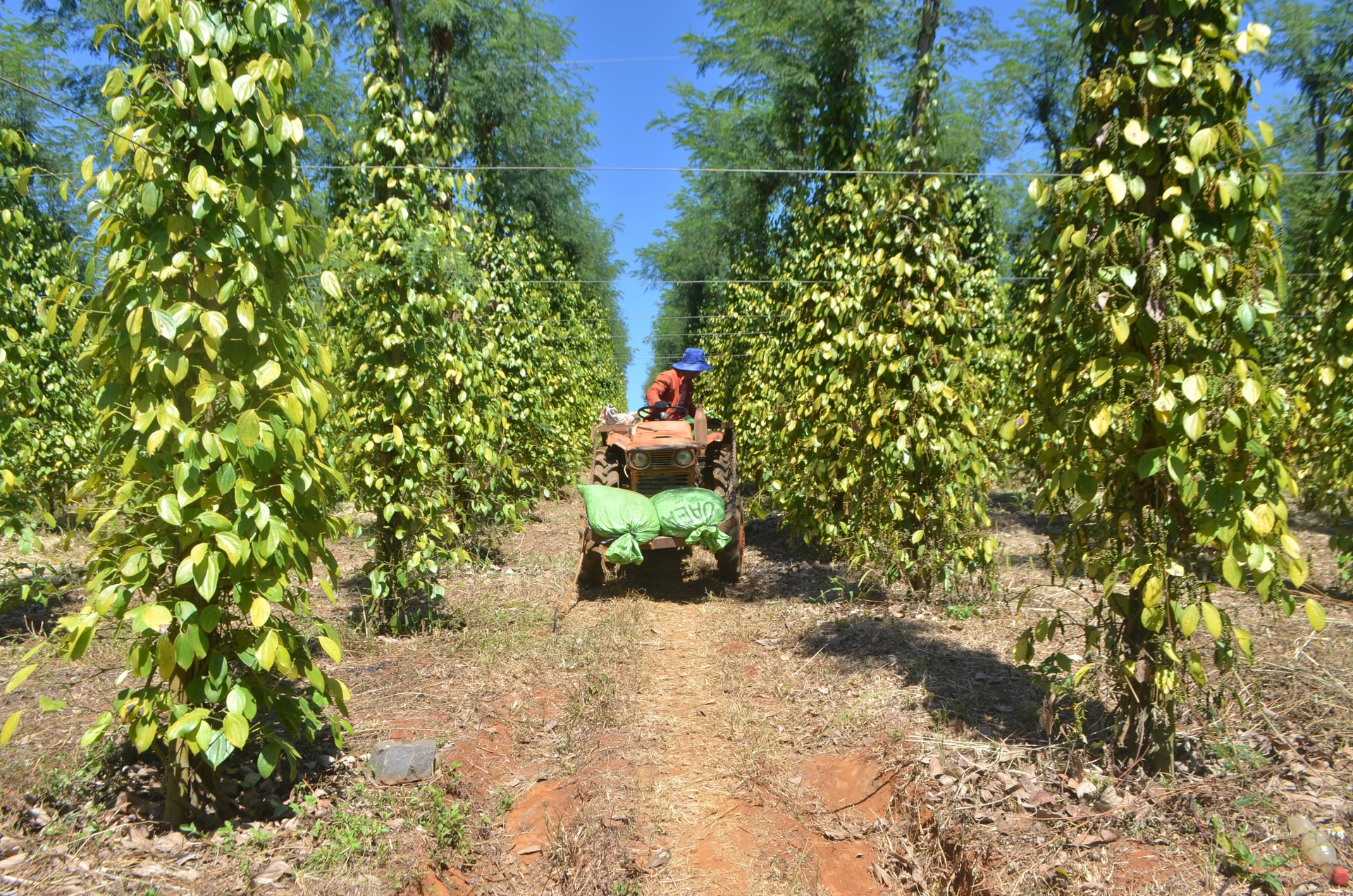
In areas such as Dak Wil, Cu Jut, and Nam Dong, a cooperative has implemented this model for pepper growers. Farmers receive incentive payments of at least VND 1,000 per kilogram based on environmental, social, and economic sustainability criteria. To qualify, they must strictly follow safe pesticide practices, use chemicals only when necessary, avoid routine spraying, ensure labor safety and prohibit child labor.
These requirements go beyond compliance, reflecting a broader shift in awareness and farming practices toward more responsible agriculture. Many participating households have obtained certifications such as Rainforest Alliance (RA), while those meeting organic standards receive even higher incentive payments. The cooperative has also partnered with Nedspice Vietnam to secure stable market access and help reduce price volatility.
Thanks to these incentives, participation has grown significantly, with over 1,500 households covering more than 2,000 hectares across 11 communes. Similar incentive schemes are also being adopted by other pepper cooperatives in the region.
Enhancing agricultural value
Beyond pepper, coffee farmers in the region are also benefiting from incentive payments through linkages with businesses and cooperatives. Nguyen Thien Trung, a farmer in Nhan Co Commune, said his family has received direct incentive payments on top of the purchase price for years.
However, earning such incentives requires strict compliance with production standards. Farmers must ensure biological safety, use approved pesticides, avoid herbicides, apply balanced fertilization, and prioritize organic inputs to protect soil and water resources.
Post-harvest processes—including drying, storage, and handling—must also meet food safety standards to prevent contamination. Buyers closely monitor these practices through product testing to ensure that quality meets or exceeds required benchmarks. The purchasing company is connected to larger exporters, giving farmers direct access to international markets.
Toward sustainable value chains
Sustainable production of key crops such as pepper, coffee, and fruit is expanding across western Lam Dong. Incentive payment schemes are proving effective in encouraging farmers to adopt standardized, science-based practices from cultivation to post-harvest handling.
This approach helps build stable raw material zones and strengthen value chains, thereby enhancing the competitiveness of Lam Dong’s agricultural products in both domestic and international markets.
Currently, more than 3,100 hectares of pepper have obtained certification, with 24 enterprises and cooperatives involved in production and purchasing linkages. Certified coffee production covers around 23,000 hectares, supported by 25 enterprises and cooperatives participating in farmer-linked value chains.