

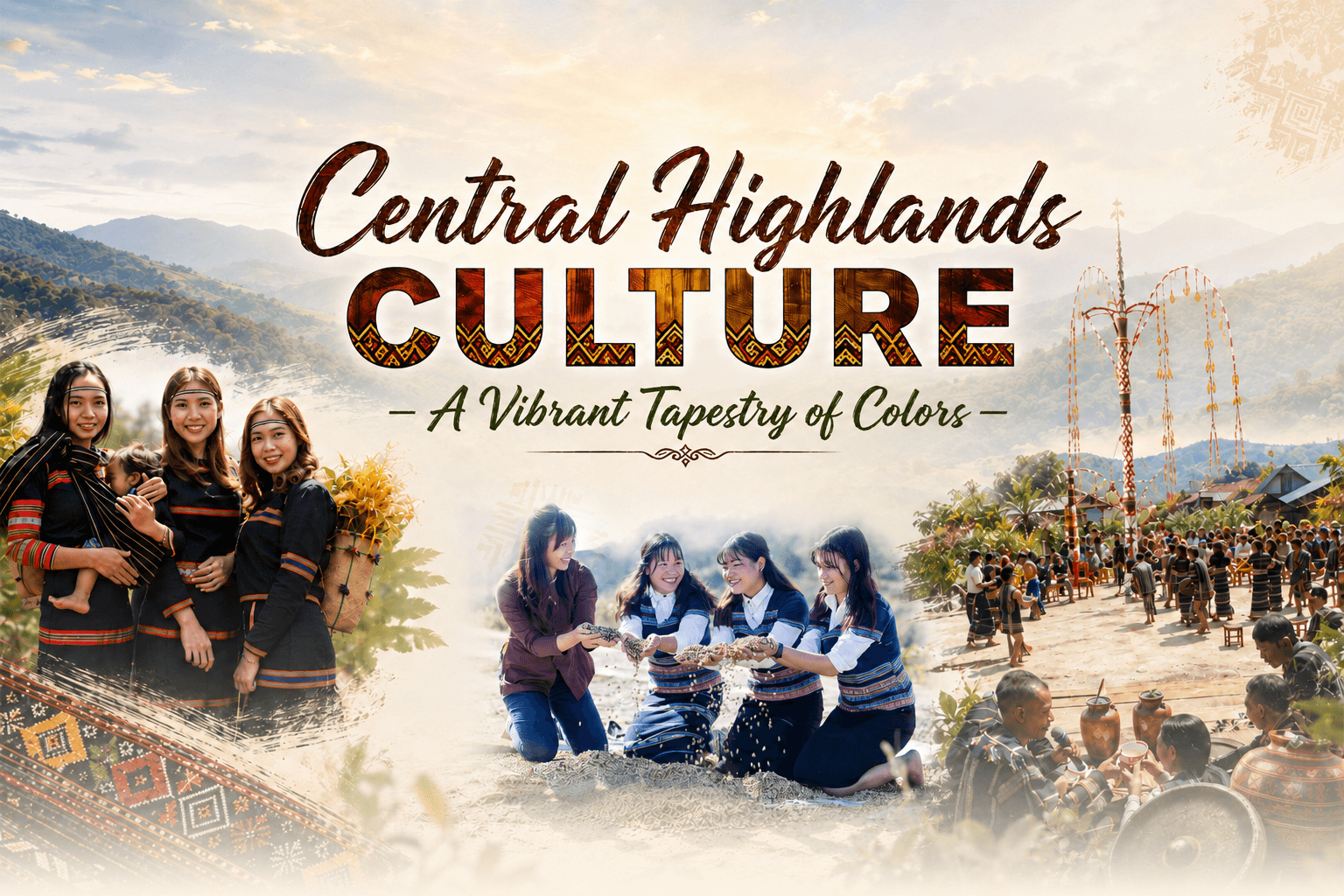
Central Highlands Culture – A Vibrant Tapestry of Colors
The Central Highlands, the ancestral homeland of generations of indigenous ethnic communities, is now even more vibrant with the convergence of diverse cultures from across the country. Through waves of migration and the choice of this highland region as their new home, people from many parts of Vietnam have brought with them the spirit of their native lands and the rich cultural identities of their ethnic communities. Together, these values have helped transform the majestic highlands in the west of the country into a vibrant, multicolored tapestry of cultural patterns.
The Central Highlands, the ancestral homeland of generations of indigenous ethnic communities, is now even more vibrant with the convergence of diverse cultures from across the country. Through waves of migration and the choice of this highland region as their new home, people from many parts of Vietnam have brought with them the spirit of their native lands and the rich cultural identities of their ethnic communities. Together, these values have helped transform the majestic highlands in the west of the country into a vibrant, multicolored tapestry of cultural patterns.
Often, as I meandered through the twisting mountain paths of Lam Dong, Dak Lak, and Gia Lai, enveloped by the rich aroma of basalt soil, I sensed that the mountains and forests were radiant with the intricate patterns of brocade from the Northwest.
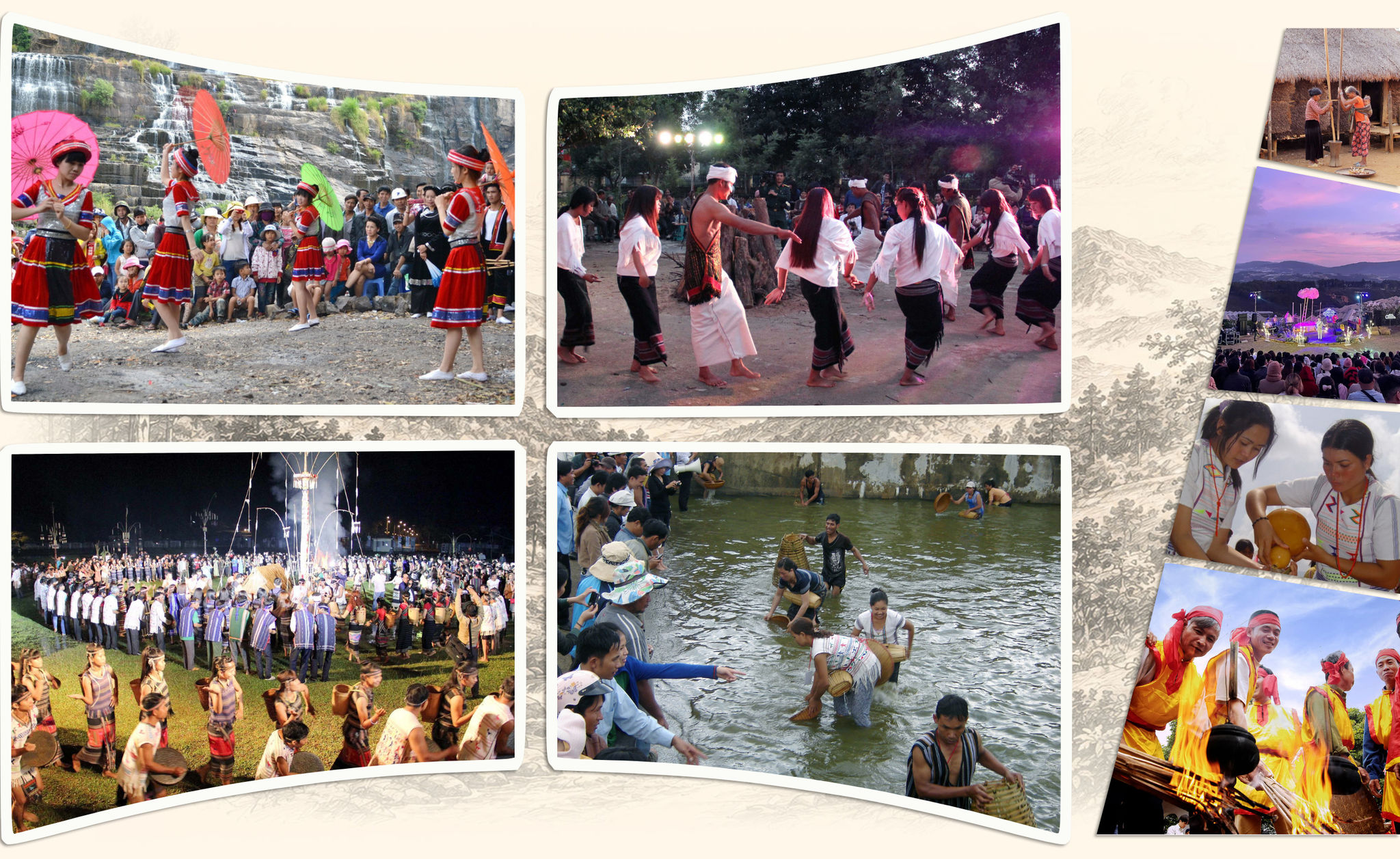
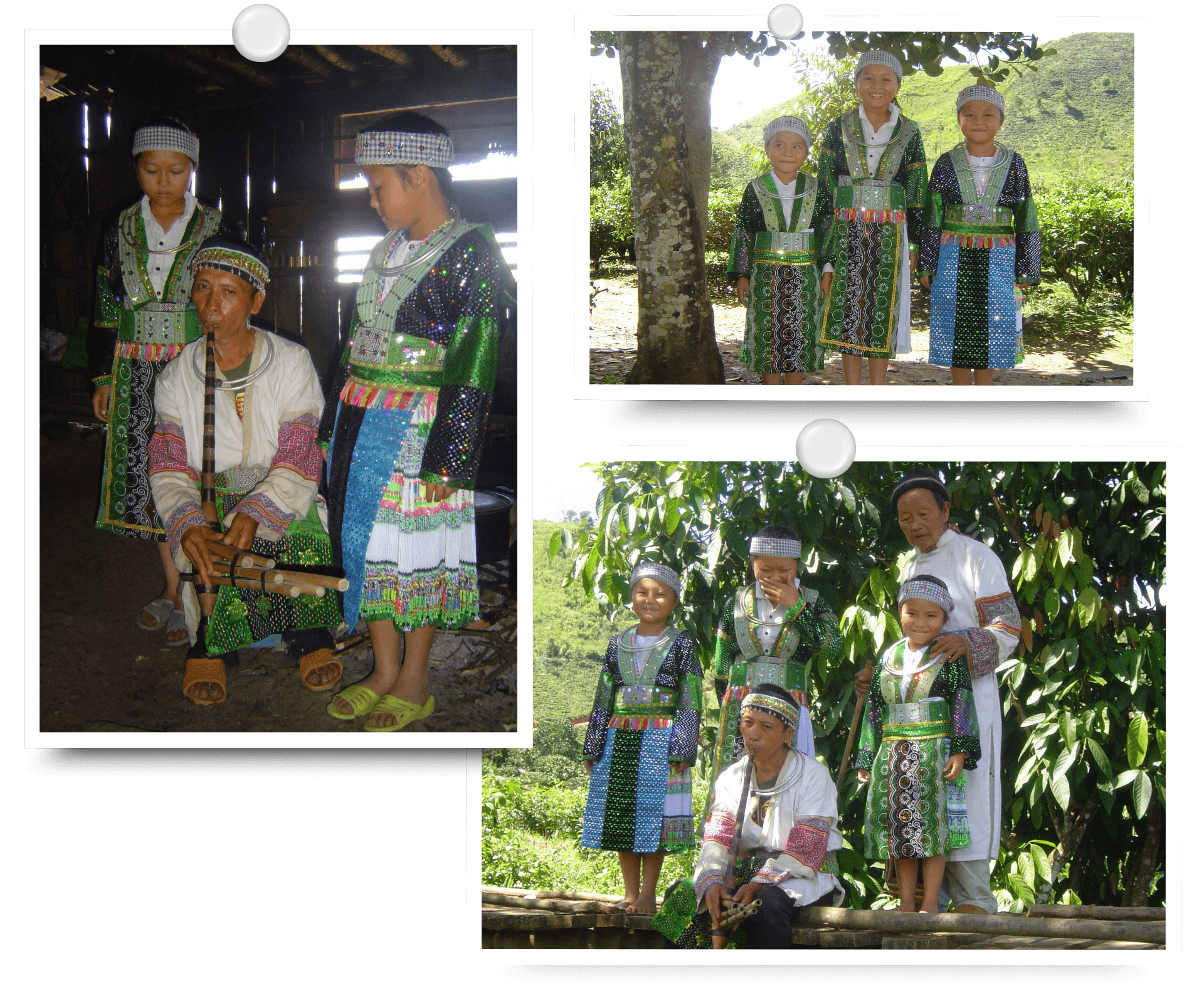
I observed Hmong men wielding machetes in their hands, with a kenh—a bamboo panpipe with six pipes—strapped to their backs. I noticed Hmong women holding bright floral umbrellas above them, their striking outfits sparkling with numerous silver ornaments and sequins.
On occasion, while standing on a sun-soaked, breezy slope of a valley next to the Krong Ana or Dak Bla rivers, I would unexpectedly hear the melodies of luon suong folk songs drifting above the lush cornfields, as the indigo-dyed cotton outfits of Tay women from the far northern regions of Lang Son came into view.
Additionally, amid the lively atmosphere of Tung Nghia Market in the Lam Dong highlands, I would encounter groups of young Thai men and women engaging in animated conversations in their own ethnic language. Their ancestors had migrated from Cao Bang, Bac Kan, and Lang Son to this area many years earlier.
To explore and immerse oneself in the culture of the Central Highlands is to encounter a vibrant array of colors, scents, and life, brought together from various homelands and diverse ethnic groups. I can almost hear lines from the epic poems Xong Chu Xon Xao (Farewell to the Beloved, from the Thai community) and Te Tac Te Dac (The Birth of the Earth and Water, from the Muong community), harmonizing with the traditional khan epic tales of the Central Highlands, including Dam San and Xing Nha.
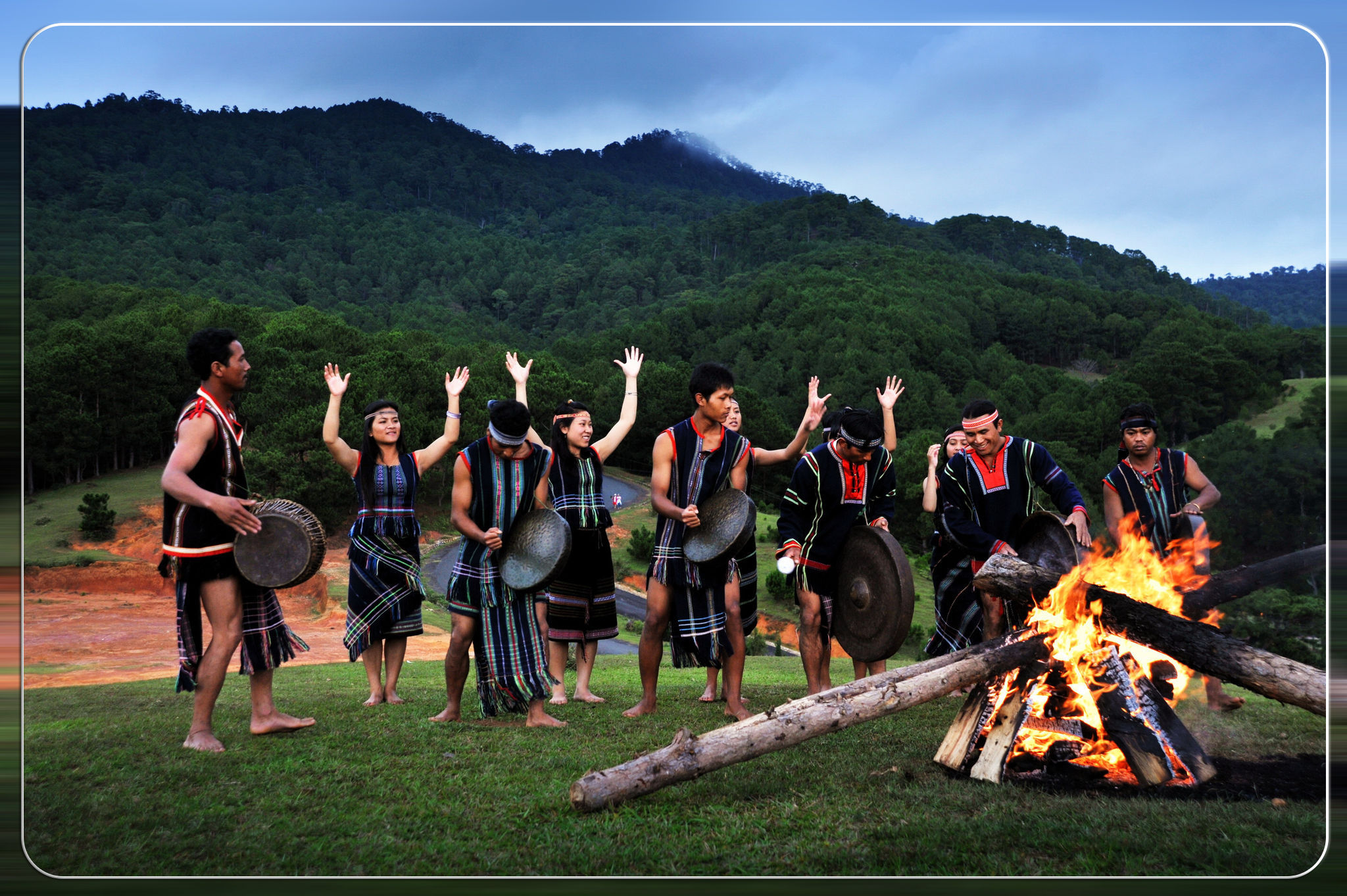
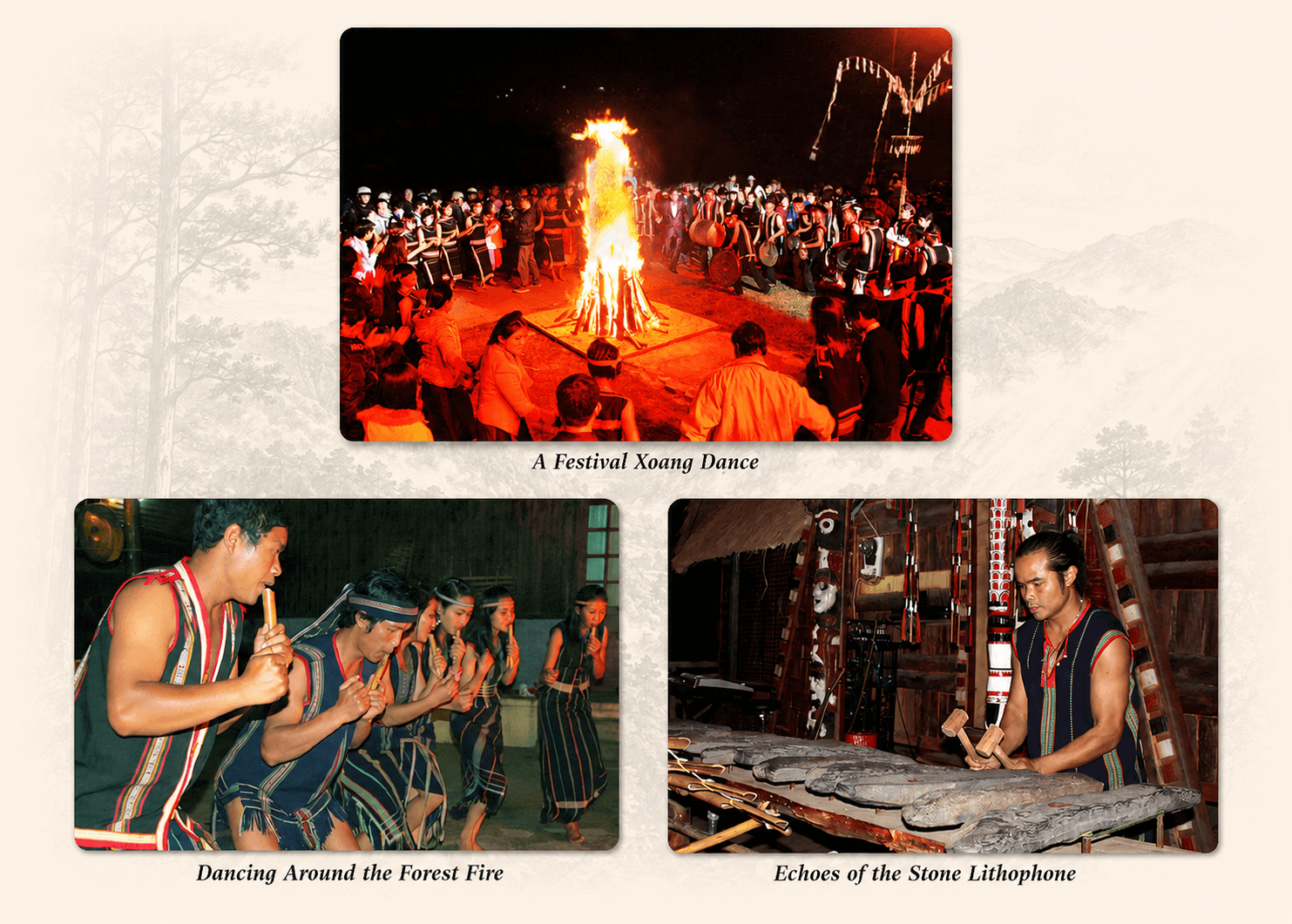
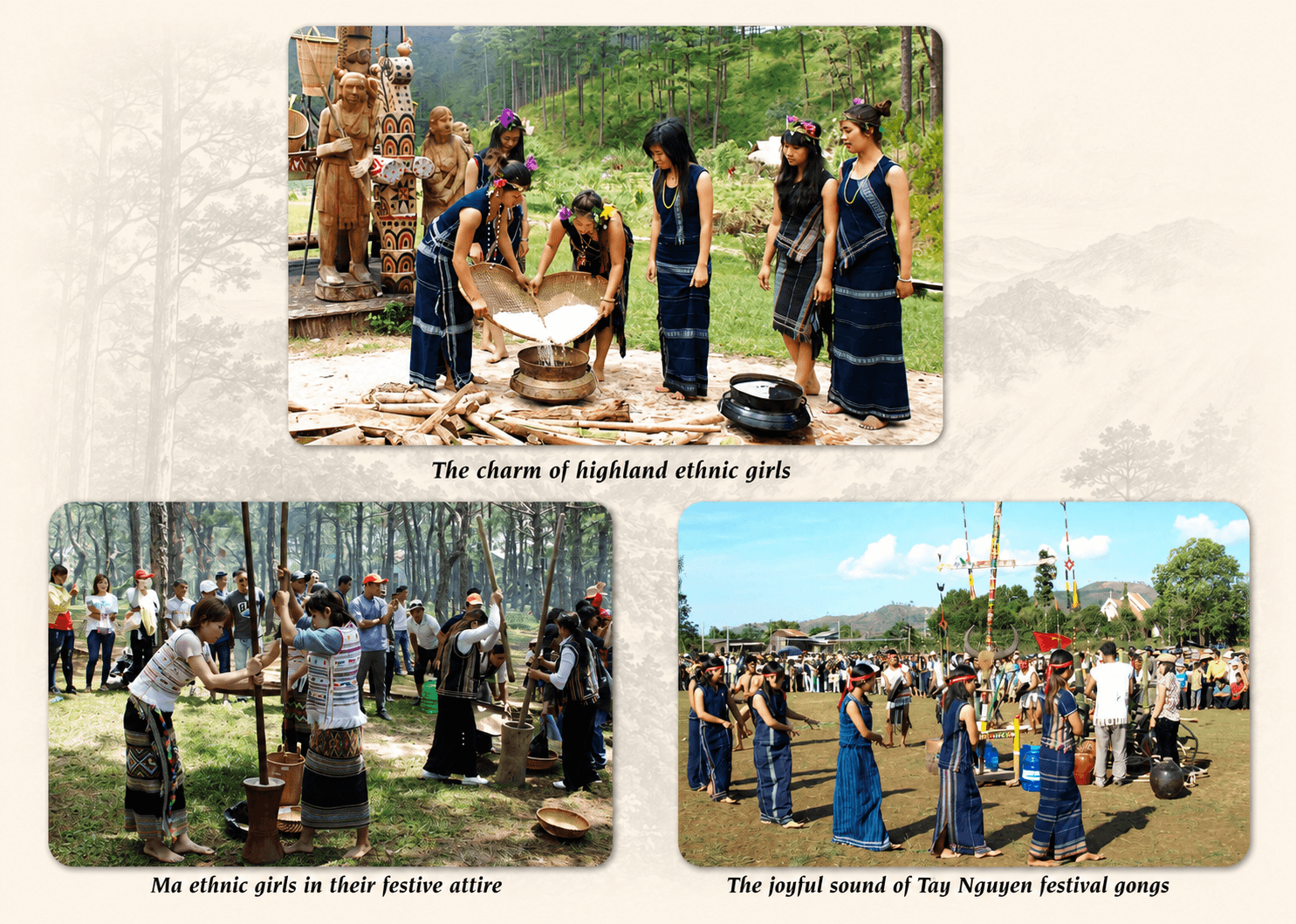
I can almost hear the Hmong panpipe intertwining with the melodic tunes of the Mbuot panpipe from the Co Ho; the sounds of Muong gongs merging with the knobby and flat gongs of the Ede, Bahnar, and Churu; and the xoe dances from the Northwest linking arms with the rhythmic movements of the xoang dance from the Central Highlands.
During community solidarity gatherings in villages today, in addition to traditional foods from the Kinh and indigenous ethnic groups — such as sticky rice cooked in bamboo tubes, grilled meat, bitter eggplant soup made with buffalo skin, wild vegetables, and aromatic jars of rice wine flavored with the scents of the Central Highlands — there are now also dishes originating from the northern mountainous regions, including thang co, rice cooked in bamboo tubes, cham cheo dipping sauce paired with grilled fish, and various wines such as San Lung, Mau Son, Bac Ha, and Coc Ngu, typically buried in rocky caves.
My friend Thao Hung Khai, a former Hmong soldier, guided people from his hometown of Nguyen Binh, Cao Bang, to create a village in Bao Lam 3 Commune, Lam Dong, almost 30 years ago. In many respects, he has become the leader of the Hmong community, especially in maintaining and promoting the traditional culture inherited from their ancestors.
In Khai's village, residents continue to wear traditional attire; girls still know how to sing folk songs, and boys still play the leaf panpipe and bamboo panpipe. Khai once invited me to his village to participate in a pao ball-throwing game during the Gau Tao Festival celebrated in their new home.
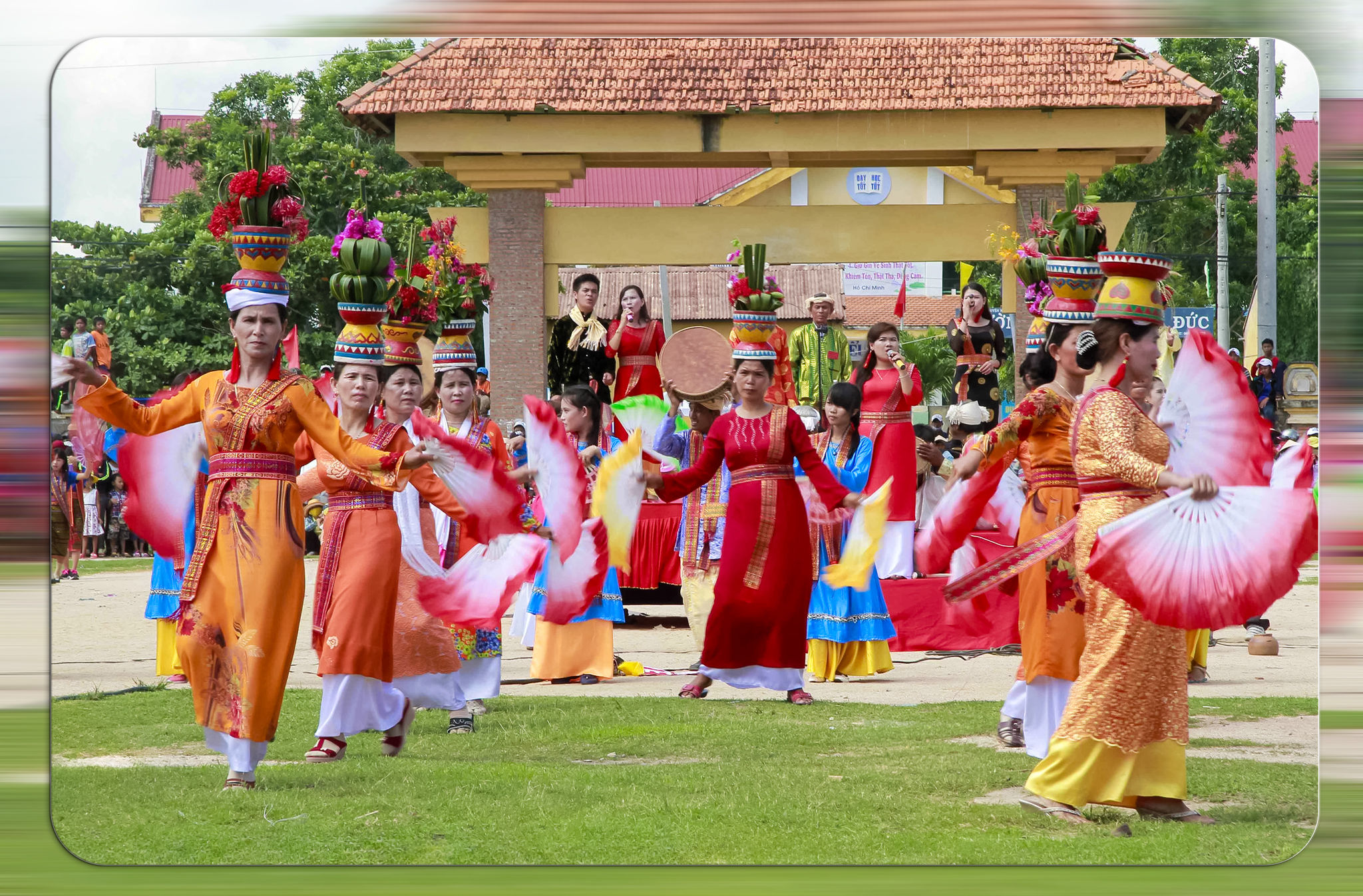
I have also appreciated performances by artisans from the Then singing and Tinh lute club representing the Thai, Tay, and Nung communities who relocated from the north to Cat Tien 2 Commune in Lam Dong. Additionally, I met Bac Thi Hien, a woman who frequently plays the drum at festivals in a Thai village located in Duc Trong, Lam Dong.
Hien was among those who contributed to the founding of the Thai Cultural Identity Club in their new community, providing members of the same ethnic group a space to assemble, converse in their native language, perform fan dances, sing then songs, and play the tinh tau lute to alleviate their nostalgia for their homeland.
.jpg)
Following national reunification, people from the northern mountainous regions, the Red River Delta and the central coastal region migrated to the Central Highlands through both organized resettlement programmes and spontaneous migration, gradually making the region their second home.
As poet Nguyen Khoa Diem wrote, they "carried the names of their communes and villages with them through successive migrations." They brought along the village-based civilization of the Red River Delta and the cultural heritage of the coastal communities.
In the Central Highlands, the cultural identities of ancestral homelands remain deeply rooted wherever people from various regions of the country have formed concentrated communities. Like hidden springs these cultural traditions quietly nourish the daily lives of residents and their neighborhoods. Whenever opportunities arise, these cultural streams burst forth, infusing their new homeland with warmth and vibrancy.
This heritage is evident in the names of villages and streets, as well as in local regulations aimed at safeguarding customs, traditions, and values that have been passed down from historic villages and former homelands. It manifests in food, living styles, daily behavior, modes of social interaction, and customary practices. Traditional songs and dances, which have been handed down through generations, continue to be cherished and celebrated in modern life.
Acknowledging these traditions as valuable cultural treasures, local governments and cultural organizations have, over the years, launched various initiatives to celebrate the cultural identities of distinct regions in the Central Highlands.
These endeavors have contributed to the formation of a vibrant cultural environment. The deep-seated traditions of indigenous Mon-Khmer and Malayo-Polynesian communities, enriched by cultural influences brought by ethnic groups from across the country, have shaped a harmonious, diverse and captivating cultural landscape.
Amid the vast forests of the Central Highlands, the cradle of gong culture and khan epic storytelling suddenly echoes with the haunting melodies of Then singing and the music of the tinh lute from the Northwest.
After the coffee harvest, residents once again gather for evenings of traditional northern cheo theatre, recalling the cool communal-house courtyards of days gone by. Meanwhile, lien anh and lien chi singers bring the graceful Quan ho melodies of Kinh Bac to life in their new homeland.
Even though they have lived far from the sea for many years, coastal communities continue to remember their roots through sacred ho ba trao chants at the Cau Ngu Festival, lyrical courtship songs and traditional tuong performances based on ancient tales.
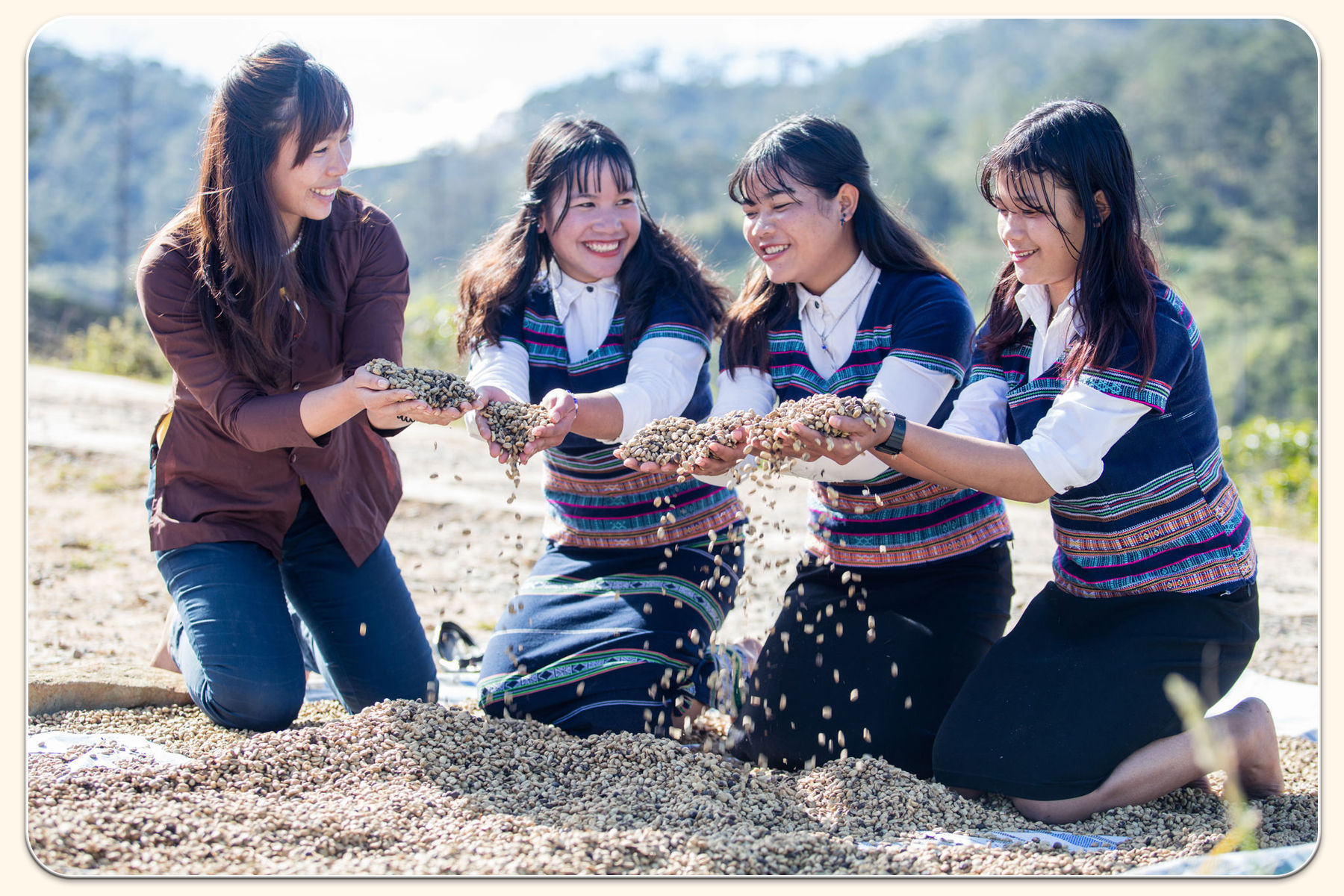
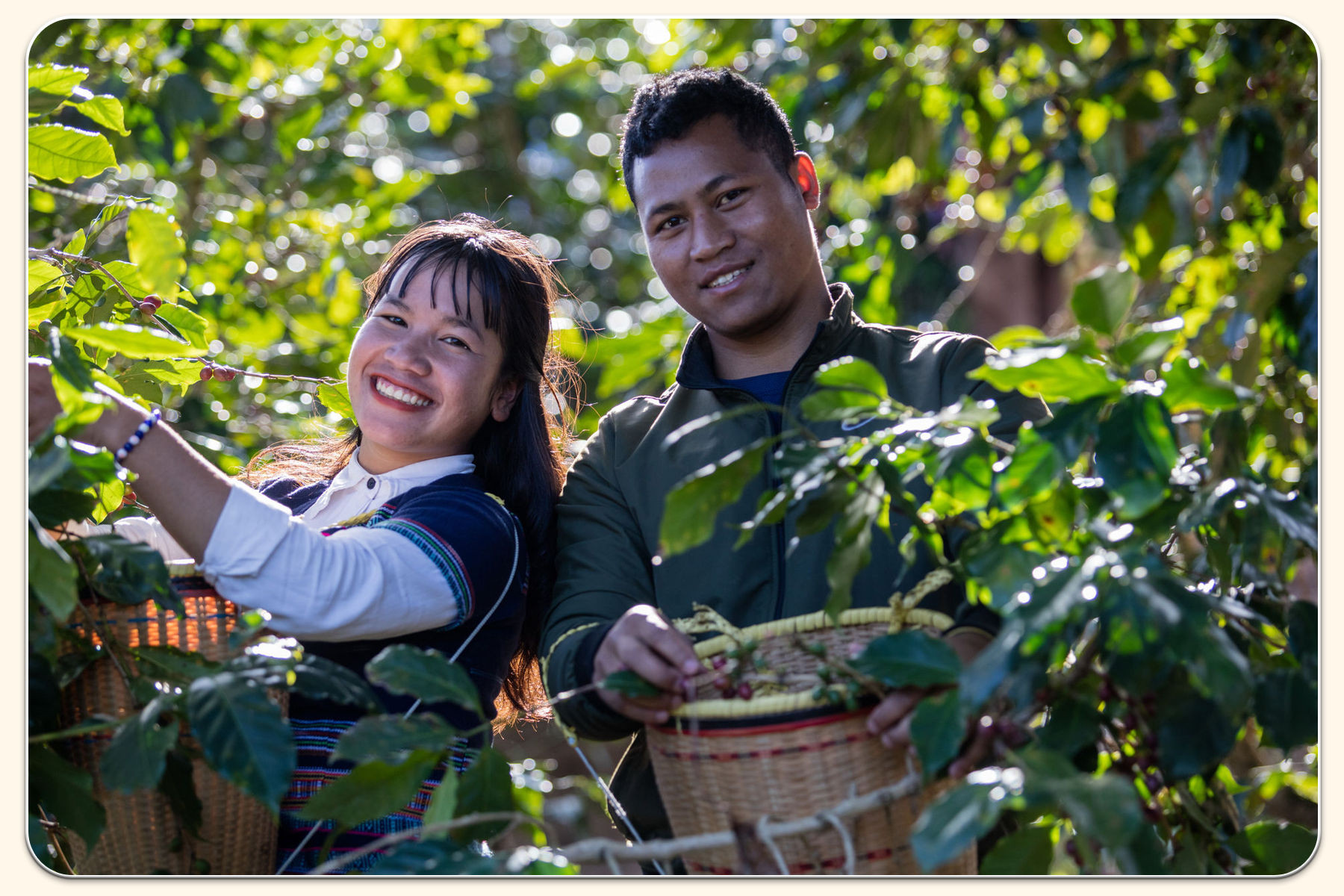
In these highland regions, the cultural festivities of various ethnic communities have evolved into shared celebrations for the whole community, while communal cultural events have incorporated the unique traditions of diverse ethnic groups from multiple areas.
This phenomenon occurs wherever different ethnic communities live side by side, driven by a desire to showcase their identities and participate in cultural exchange. The unique cultural identities of different regions have played a significant role in enriching and diversifying community cultural life, while also helping shape the character of the people in the Central Highlands today.
.jpg)
The unique cultural traits of each ethnic group and region are like small, cool streams flowing into the great cultural river of the Central Highlands. The beauty of culture has brought communities closer together. By preserving and promoting the identities of different regions and ethnic groups, people have created new vitality, strengthened community bonds and built strong humanistic foundations in their new homeland.