


Challenges in Preserving Paper Artifacts in Museums
In recent years, staff of the Lam Dong Provincial Museum (Southeastern area) have devoted significant effort to collecting and preserving antiques and historical artifacts from different periods, including paper-based materials. These efforts have contributed to enriching the museum’s archival collections in both type and material, while increasingly attracting visitors and researchers.
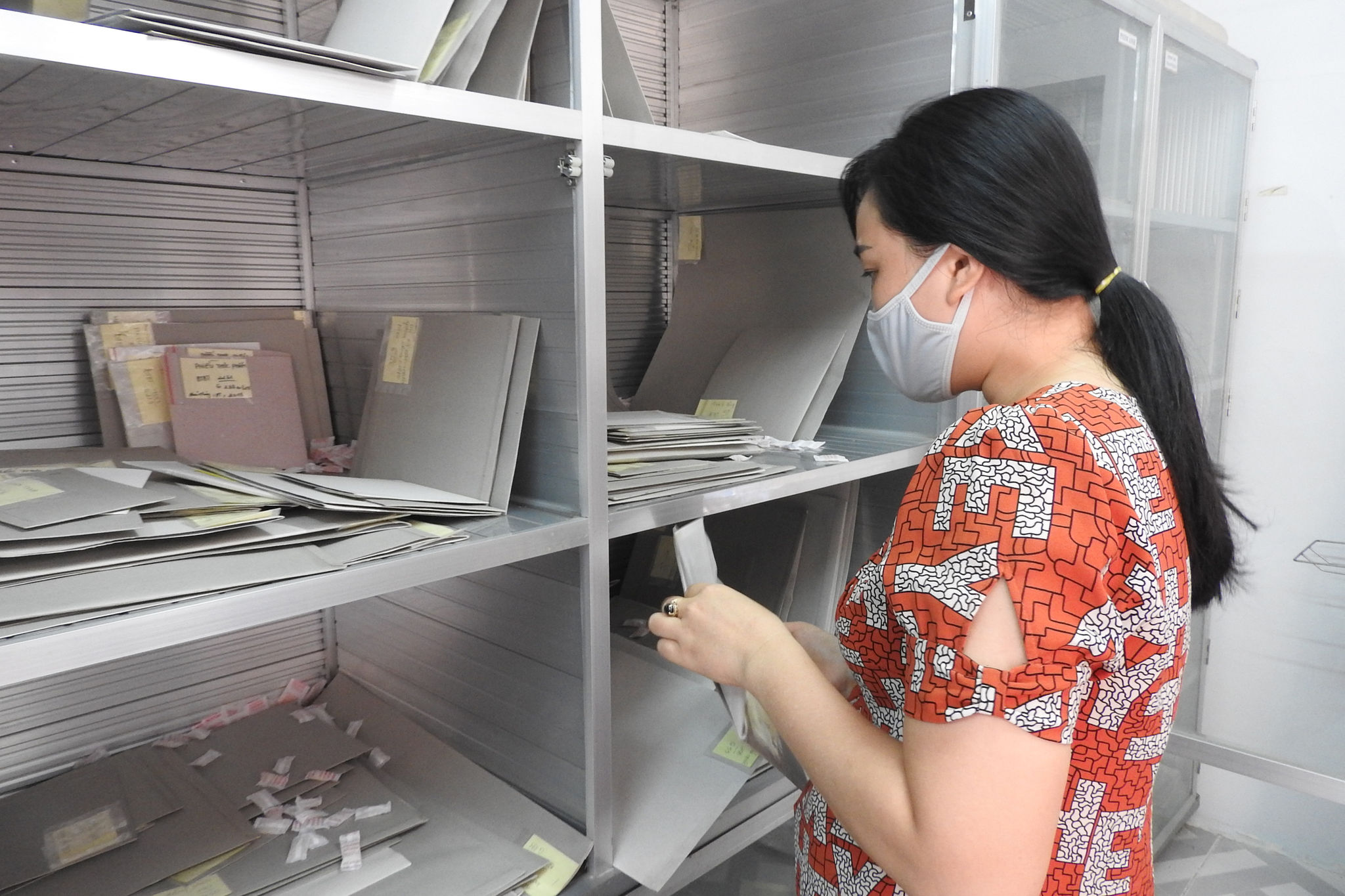
Preservation challenges
Although the storage facility is modest in size, the Lam Dong Museum (Southeastern area) currently houses more than 30,000 original artifacts of cultural and aesthetic value, reflecting comprehensively the historical and social development of the southeastern region of the province
Among them are approximately 1,212 paper artifacts, including royal decrees from the Nguyen Dynasty, administrative documents from wartime periods, archival photographs, diaries, and handwritten notes.
Each artifact carries not only documentary value but also represents a vivid historical narrative—an irreplaceable fragment of memory.
Carefully turning each page of a wartime diary donated by veterans, Uong Trung Hoa, in charge of the Museum’s Professional Division, noted that paper artifacts are highly delicate. Unlike metal or ceramic objects, their preservation requires absolute precision and sensitivity. Every action must be gentle and exact, as paper artifacts have low mechanical durability and are highly susceptible to humidity, which can cause brittleness, fragmentation, degradation, insect damage and staining.
Strict technical and environmental requirements
It is often assumed that careful packaging and storage in boxes are sufficient for long-term preservation. However, this is a misconception. Without timely and proper conservation, paper artifacts will deteriorate over time.
Preservation requires a well-structured plan and professional expertise, including stain removal, page separation, restoration, and recovery to a condition as close as possible to the original. It also requires adequate investment in facilities, equipment, and financial resources.
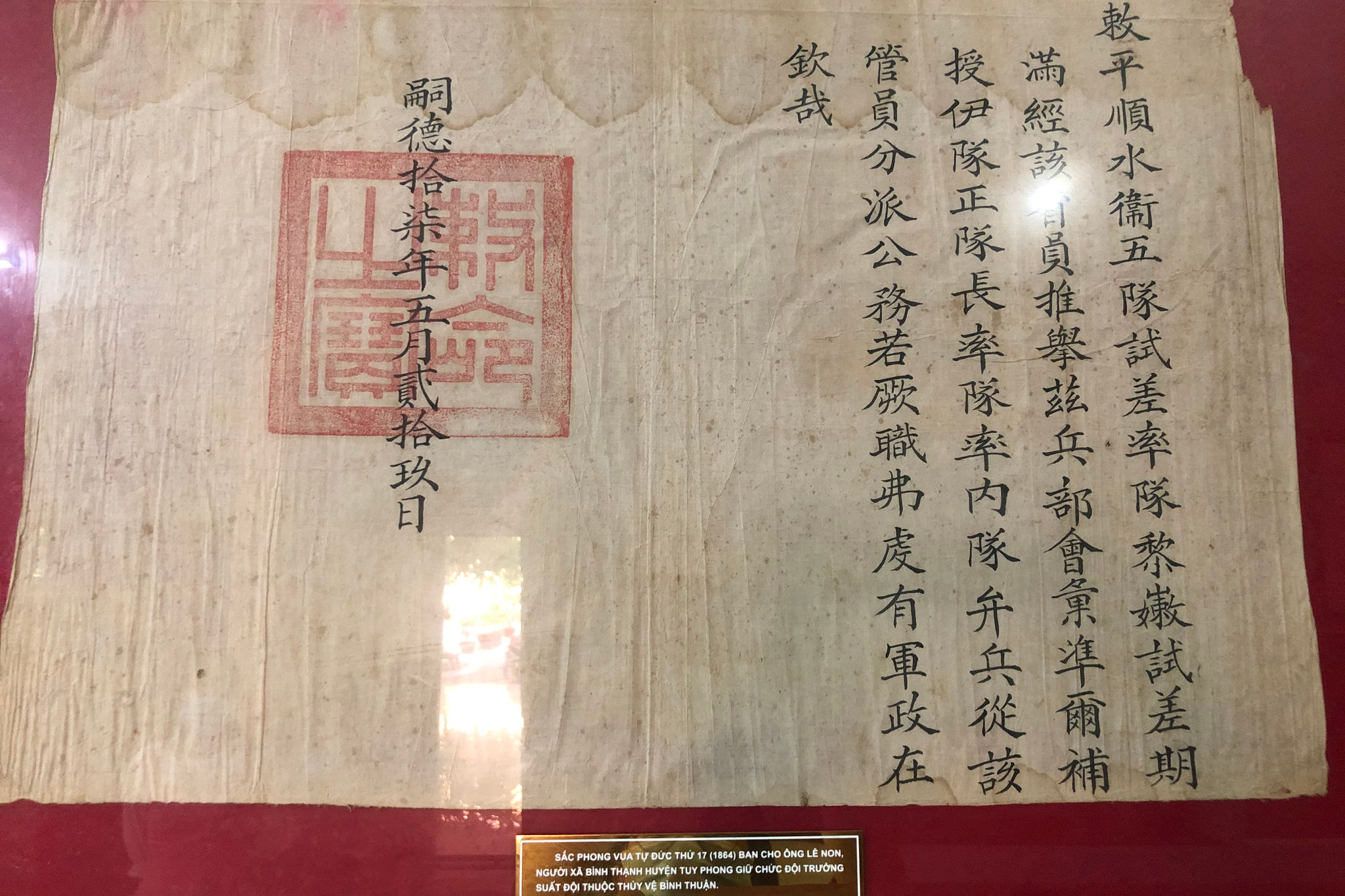
Quiet dedication to safeguarding heritage
Having worked at the museum for nearly 20 years, Nguyen Thi Hong Oanh, an official of the Professional Division, shared: “Some documents, especially bound books, are received in a damp and adhered condition due to improper storage, making it very difficult to separate pages. Therefore, we must patiently and carefully create controlled humidity over a certain period so that the paper softens and expands appropriately. The principle is to bring the artifact as close as possible to its original state and maintain long-term stability.”
She added that due to the fragile nature of paper artifacts and limited access to conservation materials and chemicals, preventive preservation methods are commonly applied, such as using desiccants, ro-ki paper, and acid-free paper for moisture control.
Another traditional method involves using bamboo or reed tubes to store rolled paper artifacts. This approach is particularly effective for large-format documents, facilitating transport while preventing moisture, creasing, and tearing.
Enhancing exhibition value
Despite operating behind the scenes and facing numerous challenges, museum staff continue to work quietly within storage facilities, away from the spotlight of exhibitions and displays.
Their silent dedication contributes to enriching the diversity of the museum’s collections, thereby enhancing exhibition value and attracting an increasing number of visitors and researchers.
Though small in form, paper artifacts carry immense historical and cultural value; without proper preservation, vital evidence of the past may be lost.
Uong Trung Hoa, In charge of the Museum’s Professional Division