


Cham Culture Captivates Visitors in Lam Dong
In recent years, alongside developing distinctive tour routes and introducing new recreational facilities, Lam Dong’s tourism sector has effectively leveraged the tangible and intangible cultural heritage of the Cham people as a form of “soft resource,” offering visitors unique and memorable experiences during their stay in the province’s coastal areas.
Echoes of the Champa Civilization
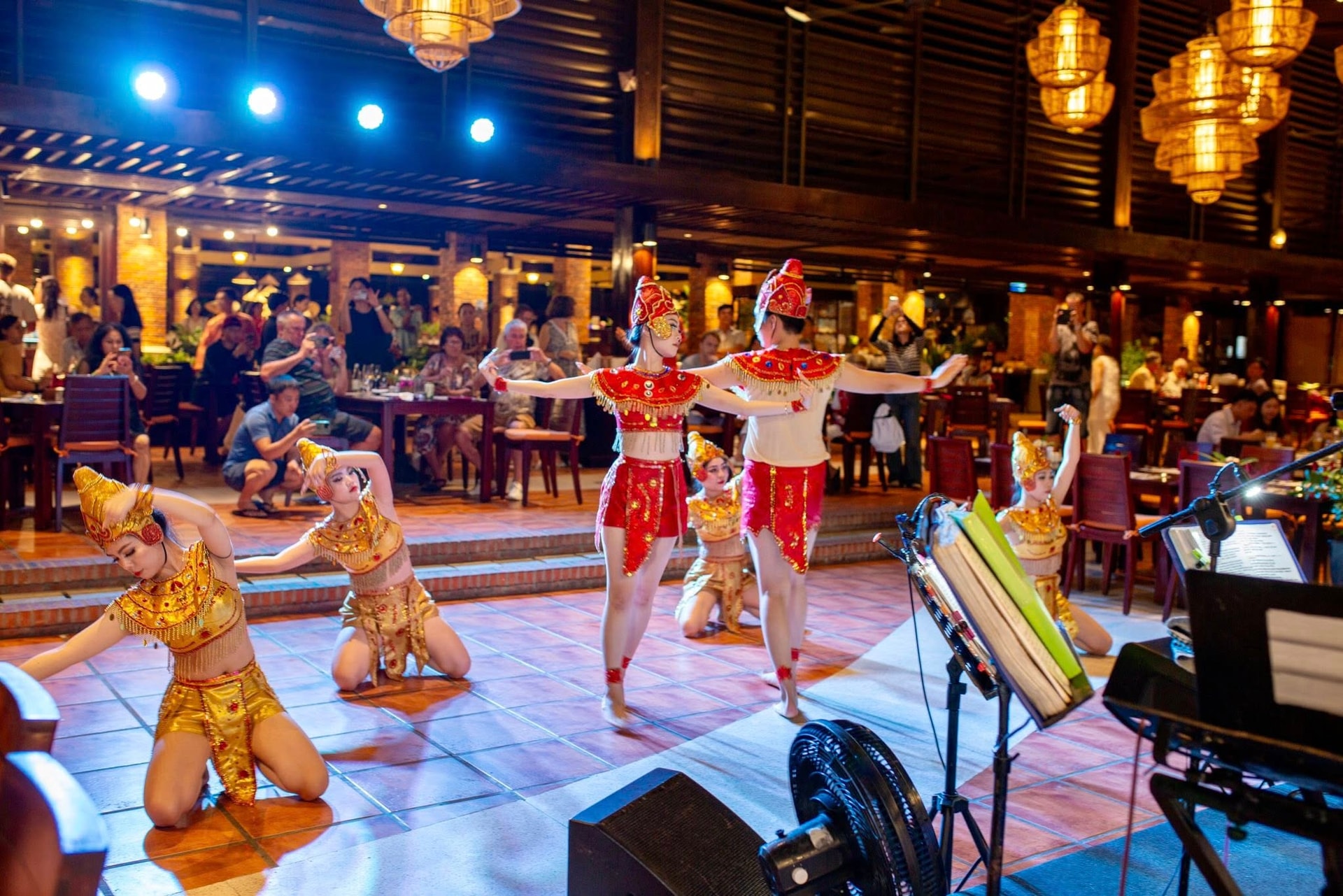
Southeastern Lam Dong is renowned not only for its sunshine, sea breezes and white-sand beaches, but also as a living repository of the Cham community’s centuries-old cultural heritage. At several resorts in Mui Ne Ward, Cham motifs can be found throughout the premises—from lobbies and gardens to restaurants and guest rooms—creating a strong sense of place.
Traditional Cham ceramic products, such as vases, jars and storage pots, are prominently displayed in resort lobbies or arranged along walkways, adding rustic charm while subtly introducing local cultural identity.
Muine Bay Resort, in particular, has left a strong impression on visitors—especially international guests—thanks to its architecture inspired by ancient Champa culture. Interior details, wall paintings and decorative patterns vividly evoke Cham heritage, with the “Shiva’s Ring of Fire” sculpture at the center of the resort grounds serving as a symbolic focal point. The design offers not only physical relaxation but also a culturally enriching spiritual experience.
According to Ms. Nguyen Thi Mai Tram, a representative of Muine Bay Resort, the resort’s theme “A Glimpse of Cham Essence” is reflected in each carefully curated space. The harmonious blend of nature and culture enhances aesthetic value while contributing to the preservation of local identity and raising cultural awareness among guests.
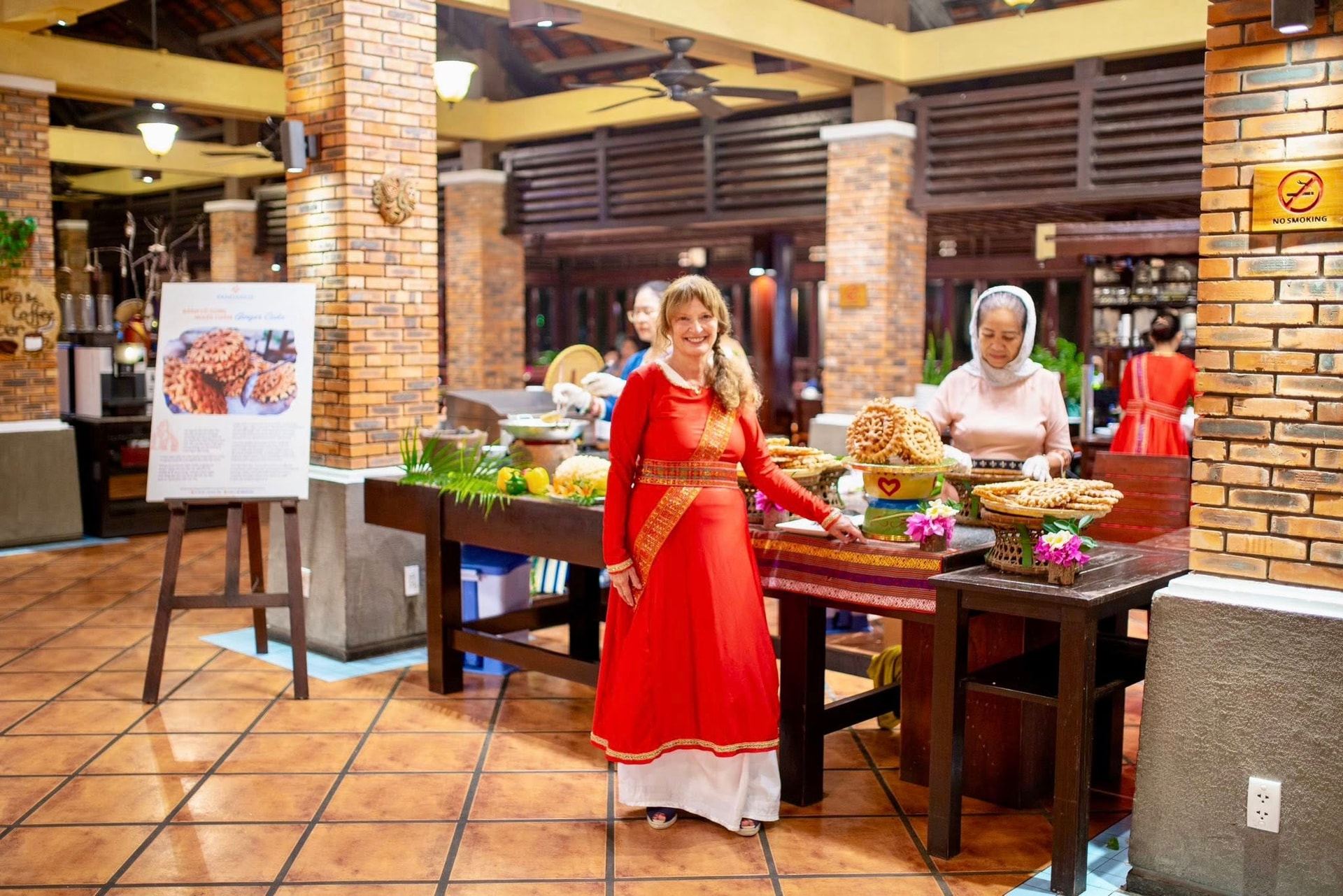
At Pandanus Resort, weekend programs feature live demonstrations of pottery-making and brocade weaving, along with introductions to Cham cuisine, meeting the interests of visitors seeking cultural exploration during their stay.
Mike Wilson, a tourist from the United States, shared:
“From the moment I arrived, I was fascinated by the strong Cham cultural atmosphere. I could explore Cham patterns, cuisine, music and traditional dances right at the resort, without having to travel elsewhere. That makes Mui Ne truly special.”
Reviving Rituals and Living Traditions
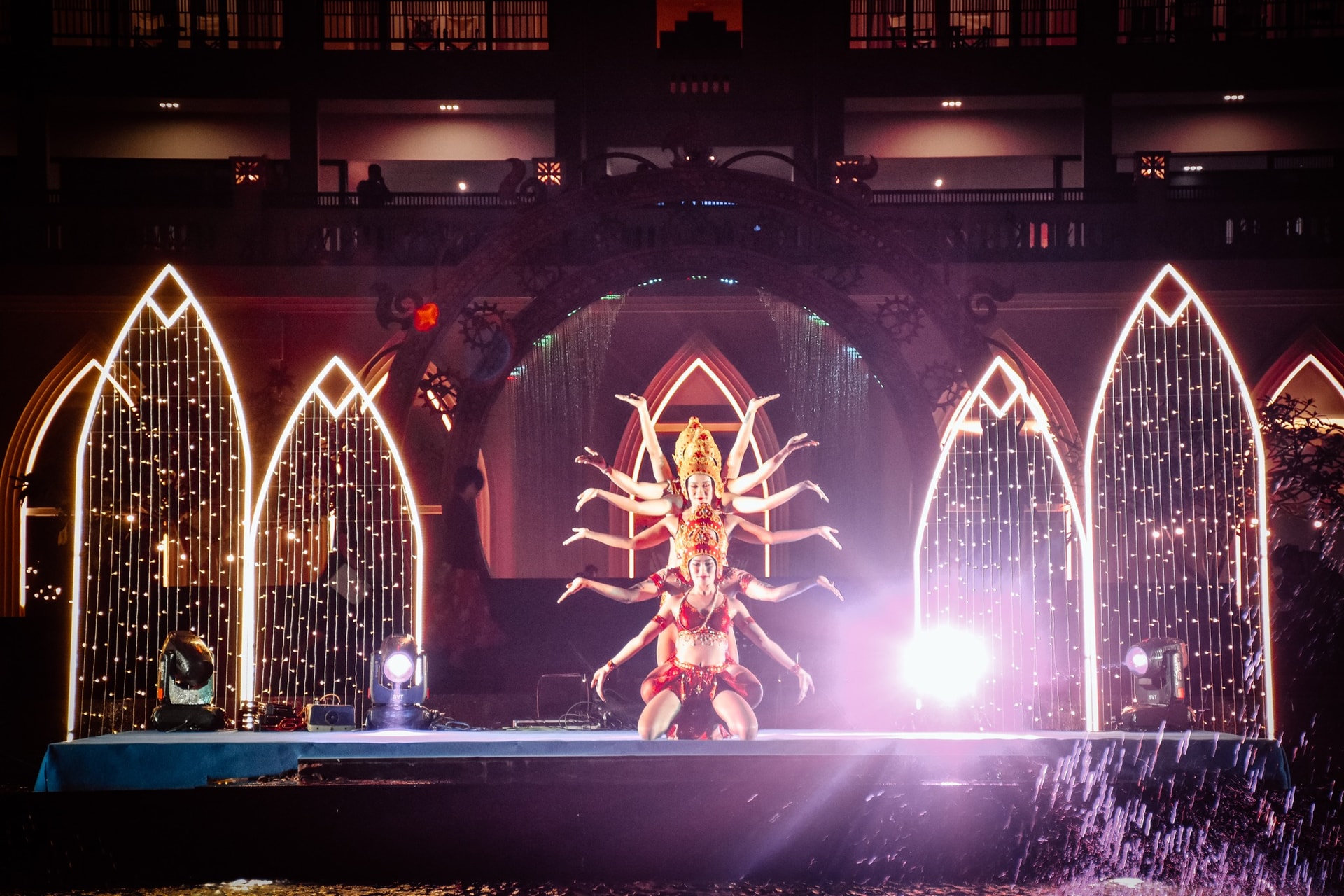
Beyond decorative elements, some resorts have recreated ritual practices honoring Cham ancestors. At The Anam Mui Ne Resort, guests can witness the daily “Farewell to the Sun” ceremony at sunset. Dressed in traditional Cham costumes, staff members carry torches and guide guests from the lobby through the garden to the beach, accompanied by the deep, resonant rhythms of the Ginang drum. The ritual, which pays tribute to the ancient Champa civilization, has been maintained by the resort for many years as a cultural highlight.
The Allure of Cham Cuisine
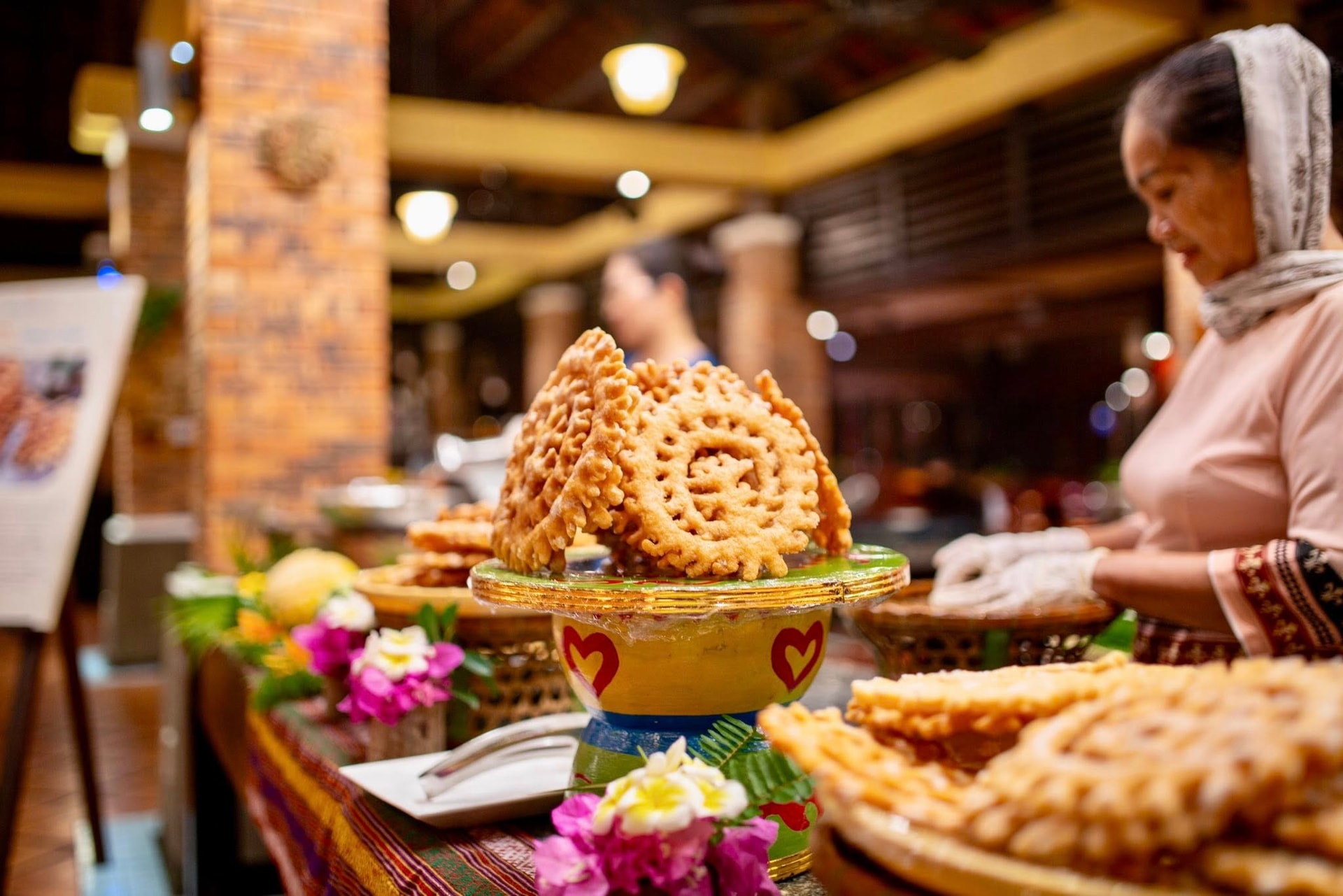
Cham cuisine has also been thoughtfully incorporated into resort menus. According to Mr. Lu Quoc Thien of Hong Thai Commune, who helps connect Cham artisans from Bac Binh with Pandanus Resort, Cham food is simple yet refined, characterized by rich, distinctive flavors. Signature dishes include goat stew served with fresh herbs, spiced grilled goat, grilled chicken with sticky rice, anchovy mango salad, ginger cakes and steamed rice rolls—foods traditionally prepared for festivals such as Katê.
Set against lively music and graceful Cham dances, guests enjoy an immersive experience reminiscent of a miniature Katê festival. Cham-themed buffet nights are particularly popular among international visitors.
Anastasia, a tourist from Russia, remarked:
“This was my first time trying Cham cuisine. The flavors are well-balanced, and the goat stew is excellent. I was especially intrigued by ginger cakes and learned they are important offerings to ancestors during Katê festivals and weddings.”
Cultural Identity as a Tourism Asset
Through a balanced approach to preservation and creative utilization, the Cham community has contributed a distinctive cultural dimension to Lam Dong’s tourism landscape. In Mui Ne, often described as a “resort paradise,” visitors encounter Cham culture not only through architecture, but also through patterns, rituals and traditional cuisine recreated within modern resorts—offering deeper insight into the Cham cultural spirit.
This approach provides Lam Dong with an opportunity to strengthen its position on Vietnam’s cultural tourism map, shaping an image of a vibrant, multi-layered destination in the hearts of domestic and international travelers.
According to forecasts by the World Tourism Organization, by 2030, 54% of travelers will choose destinations for sightseeing and leisure, with traditional cultural values playing a decisive role in defining destination identity and supporting cultural preservation.