Cham Ginger Cookies – The Taste of Traditional Heritage
Huyen Tran•02/07/2026 07:14
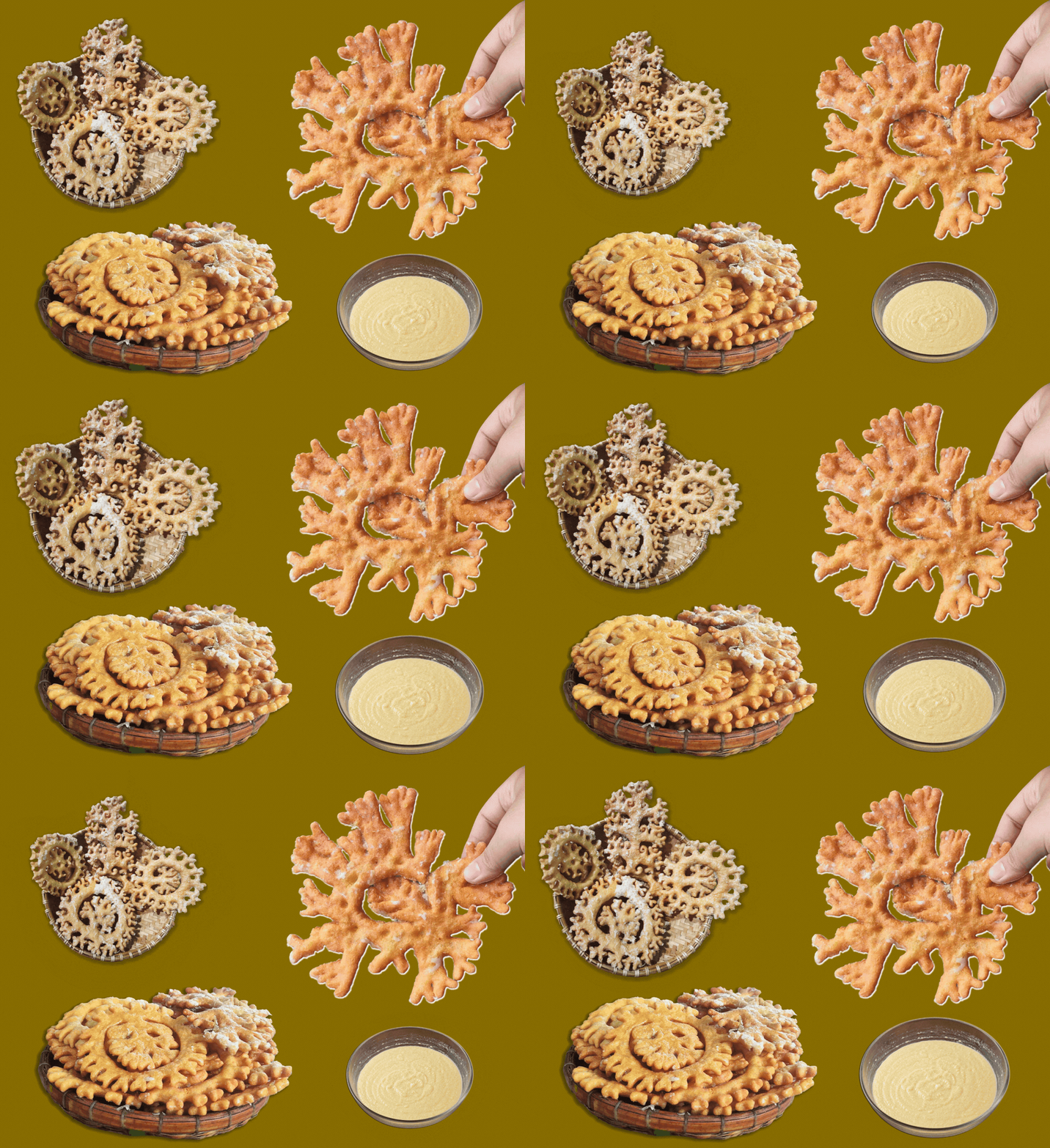
Amid the rich culinary heritage of the Cham people, ginger cookies (Ginrong Laya in the Cham language) are more than just a traditional delicacy. They symbolize fidelity, community solidarity, and the preservation of cultural memories passed down through generations.
Amid the rich culinary heritage of the Cham people, ginger cookies (Ginrong Laya in the Cham language) are more than just a traditional delicacy. They symbolize fidelity, community solidarity, and the preservation of cultural memories passed down through generations.
Despite the passage of time and changing situations, these cookies with their golden hue and ginger aroma, continue to play a crucial role in significant Cham festivals, acting as a connection between history and modernity.
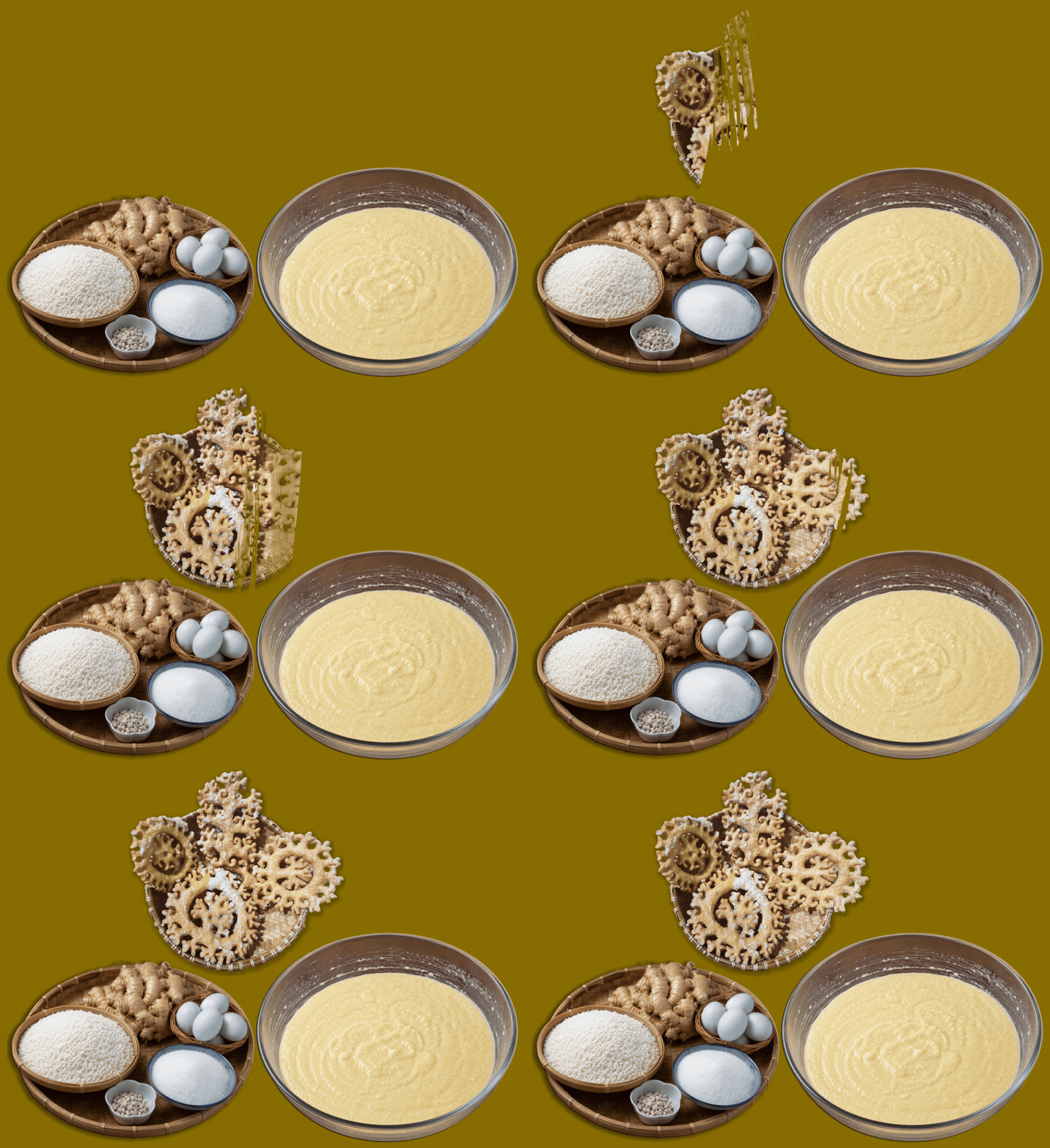
The main ingredients for making ginger cookies include fragrant glutinous rice flour, fresh ginger, duck eggs, granulated sugar, and a moderate amount of rice wine yeast. These ingredients are ground and thoroughly mixed into a dough used to shape the cookies.
Upon initial observation, many individuals might regard ginger cookies as an uncomplicated treat. Nonetheless, producing a cookie that adheres to traditional standards in both appearance and taste demands a careful, multi-step process along with meticulous attention to detail.
The primary ingredients consist of aromatic glutinous rice flour, fresh ginger, duck eggs, granulated sugar, and a modest amount of rice wine yeast. The glutinous rice is thoughtfully chosen, ground into a fine flour, and then dried. Following this, the flour is combined with whisked duck eggs and boiling water to obtain the desired elasticity.
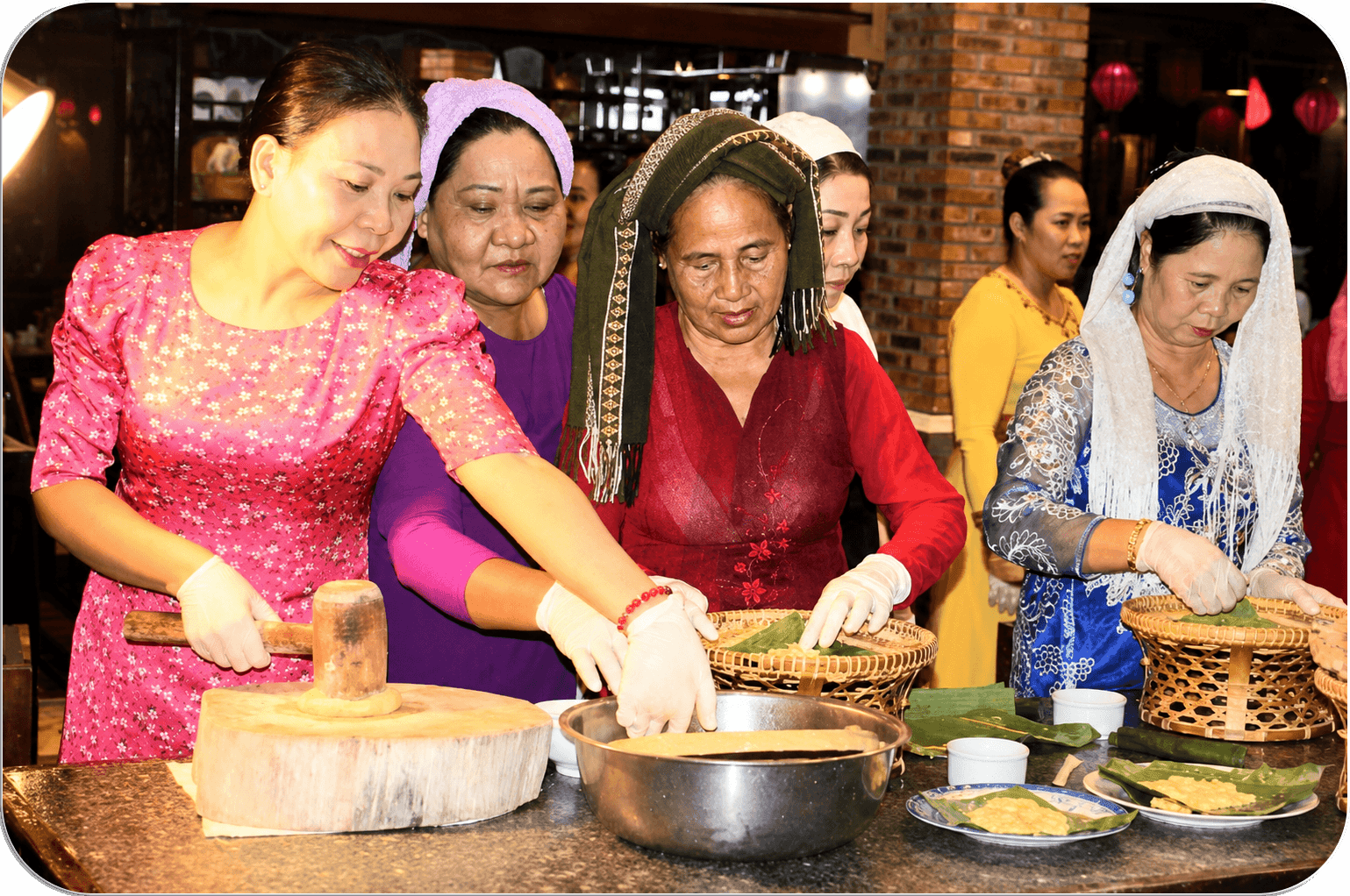
Cham women skillfully shape ginger cookies by hand
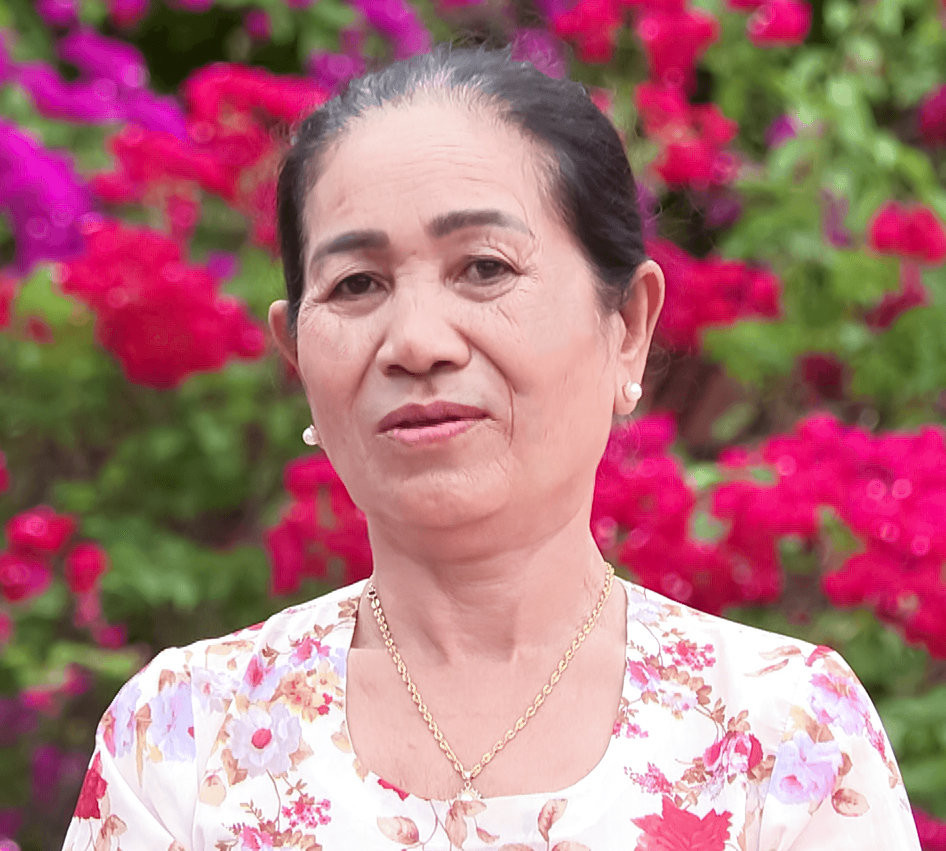
Nguyen Thi Mai from Binh Duc Village in Bac Binh Commune, who has dedicated over fifty years to the preservation of the traditional Cham ginger cookie craft, shared
“In the Cham language, Ginrong translates to ‘claw’ while Laya means ‘ginger root.’ The cookie is shaped like a ginger root and has a unique flavor. It is a vital treat during Cham festivals, particularly the Katê Festival. For the Cham community, ginger cookies serve as offerings to ancestors, symbolizing hopes for prosperity, joy, and health.” Once the dough is thoroughly kneaded and pounded to achieve the ideal consistency, it is divided into smaller pieces for shaping. This phase is regarded as the most evident showcase of the skill and artistry of Cham women.
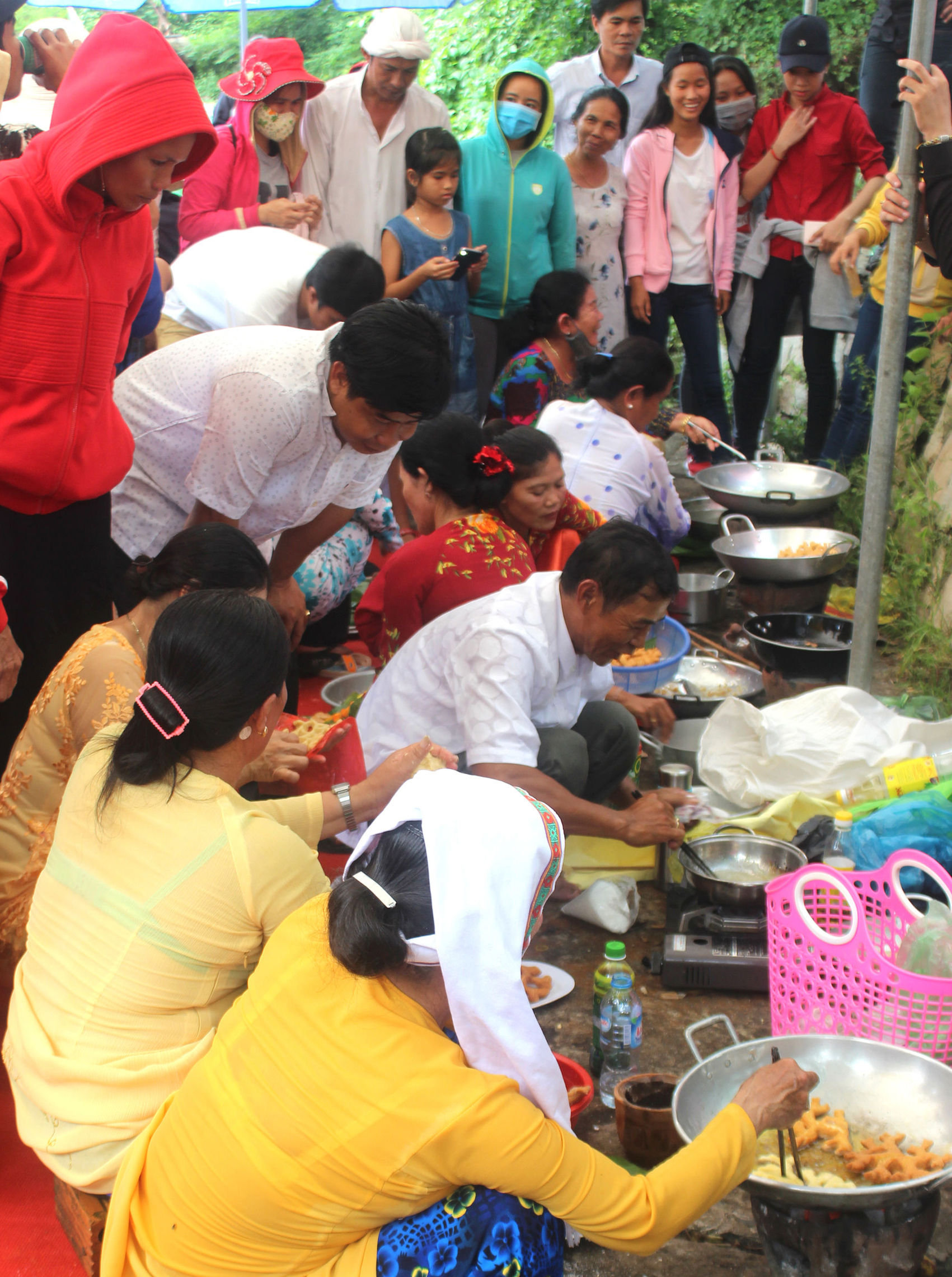
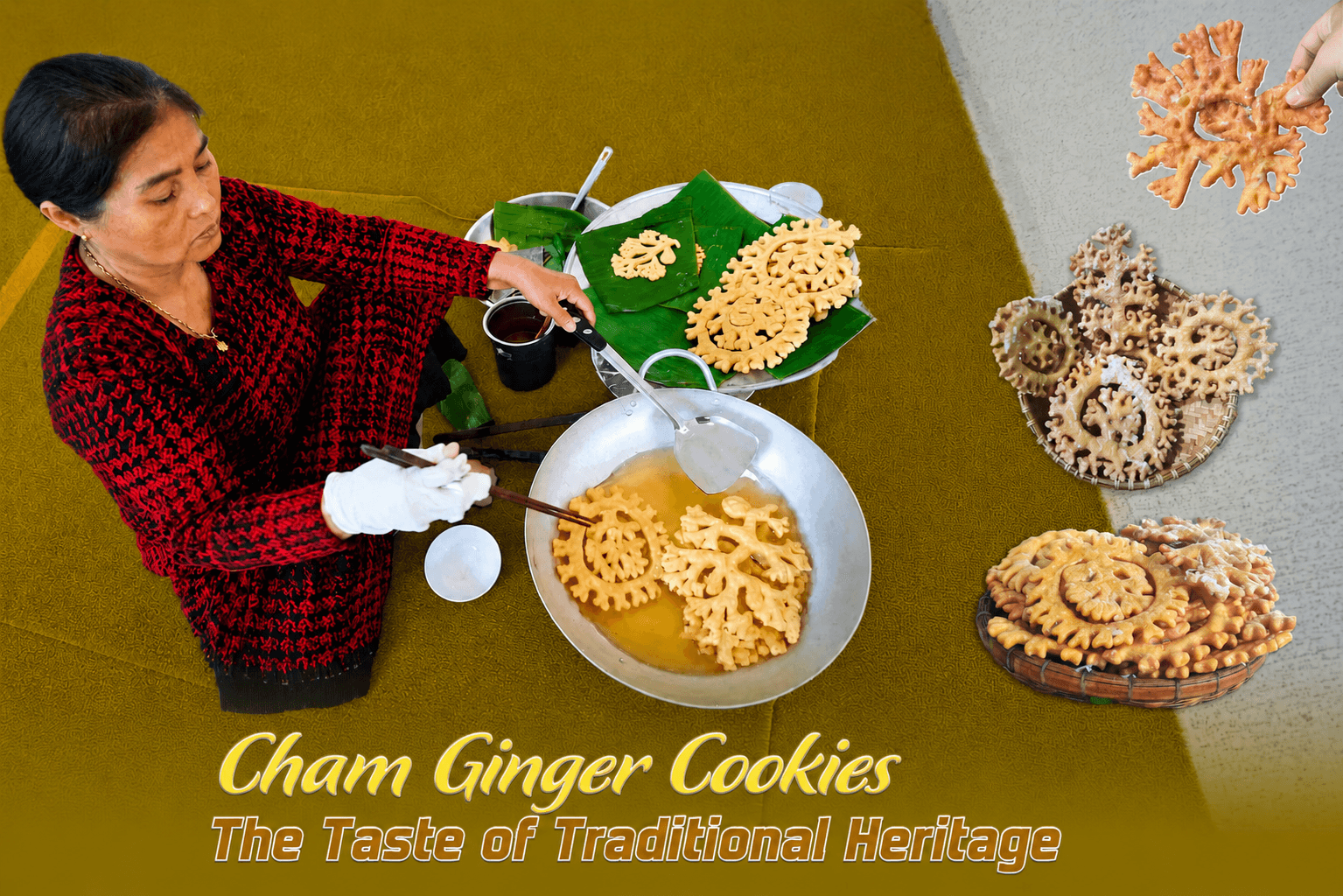
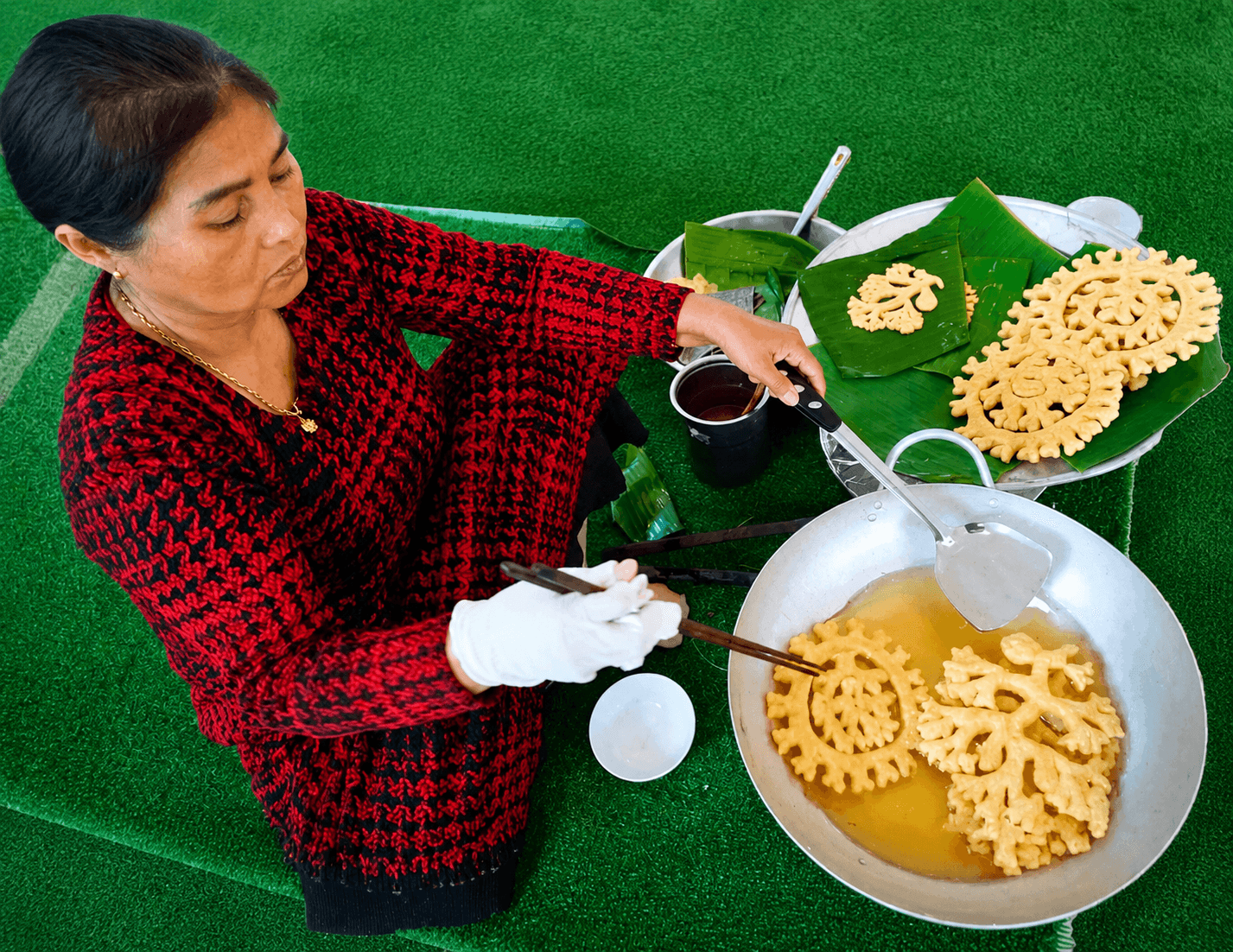
The shaped cookies are deep-fried in hot oil.
Dan Thi Son from Bac Binh Commune stated: “As each cookie is crafted entirely by hand, the process demands both patience and precision. In addition to the traditional ginger-root design, numerous artisans are now producing patterns influenced by Cham daily life, as well as motifs like fish, coral, and other symbols thought to bring good luck.”
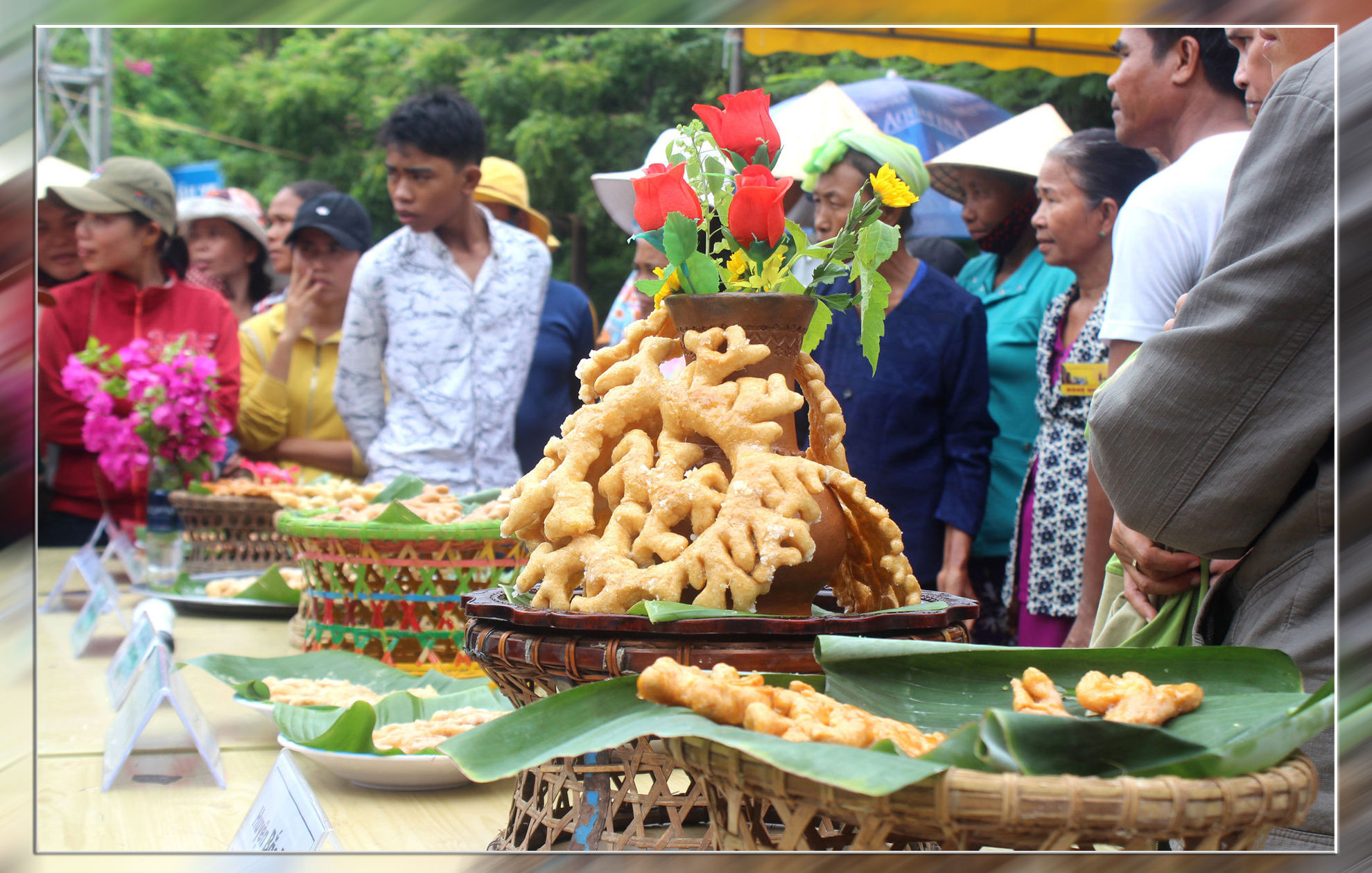
Cham women carefully shape ginger cookies as offerings to deities and ancestors during the Katê Festival.
After being shaped, the cookies are cooked in hot oil. Throughout the frying process, the artisan uses chopsticks and a spatula to gently press each side, ensuring they maintain their original form. Once they acquire a deep golden hue, they are immersed in a syrup made from caramelized sugar and fresh ginger before being set aside to dry. This technique provides them with their characteristic crisp texture and prolongs their freshness.
The completed product is enrobed in a fine layer of white sugar, delivering a subtle sweetness, a pleasing crunch, and the unique warm scent of ginger.
In addition to their delicious taste, ginger cookies are tied to an enchanting Cham legend. This tale recounts the devotion of Nai Chrao Cho Pho, a wife who waited patiently for her husband, who had set sail on a military mission. Overwhelmed by her yearning, she prepared Ginrong Laya (ginger cookies) and delivered them to the shore, relying on fish and shrimp as messengers to convey her desire for her husband’s safe return.
Golden cookies infused with the rich aroma of ginger
With the passage of time, her spouse never returned, and no news of him was ever received. Remaining committed to her loyalty, the wife ultimately turned into stone on the beach. The ginger cookies she had presented transformed into vibrant coral reefs beneath the waters of Ca Na. Since that time, ginger cookies have represented steadfast loyalty and lasting marital devotion.
In Cham traditions, ginger cookies also have unique importance in wedding rituals, symbolizing the balance of yin and yang. If bánh tét signifies the husband and sakaya cake represents the wife, then ginger cookies illustrate the enduring connection and lasting unity between the partners.
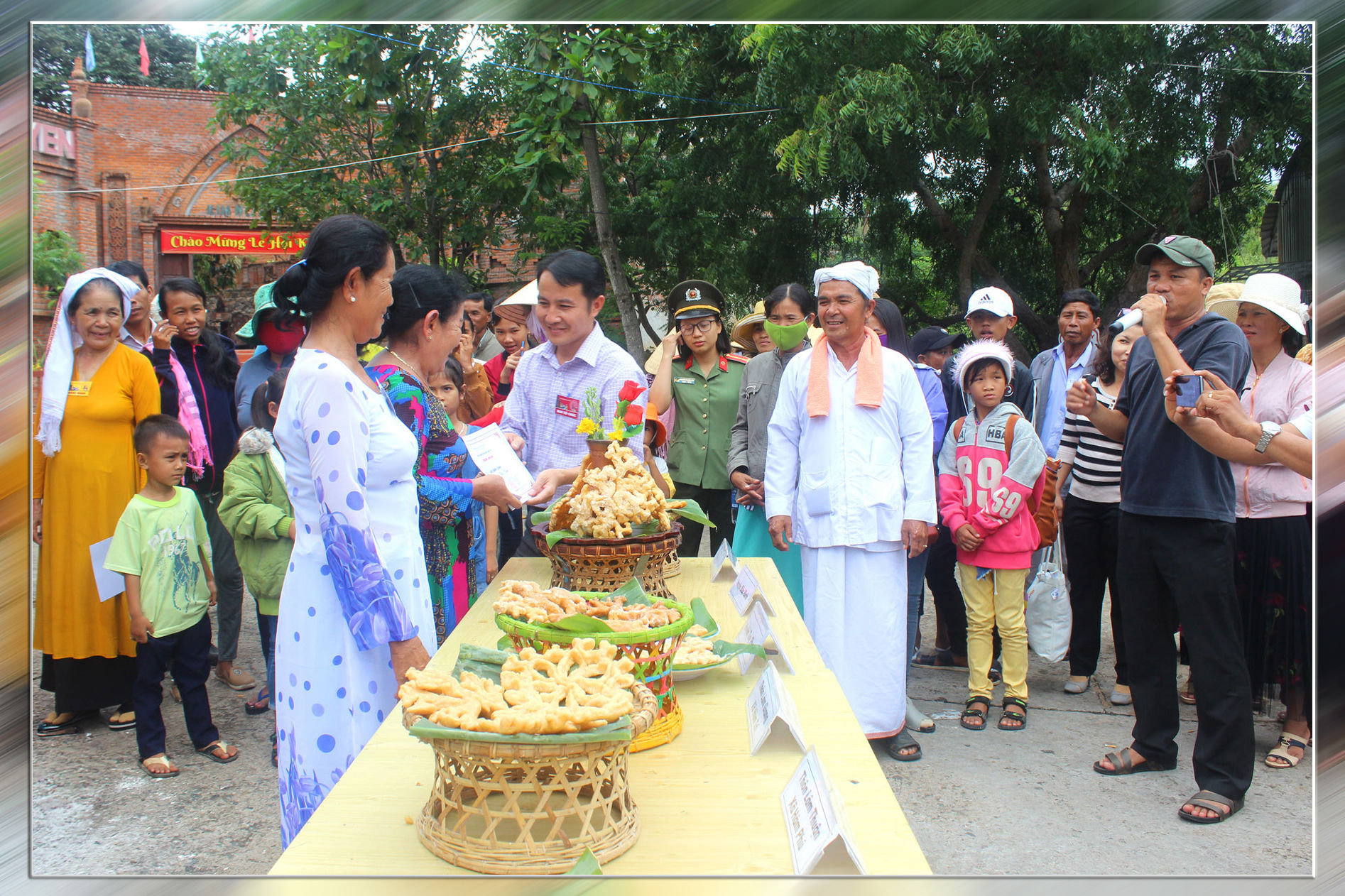
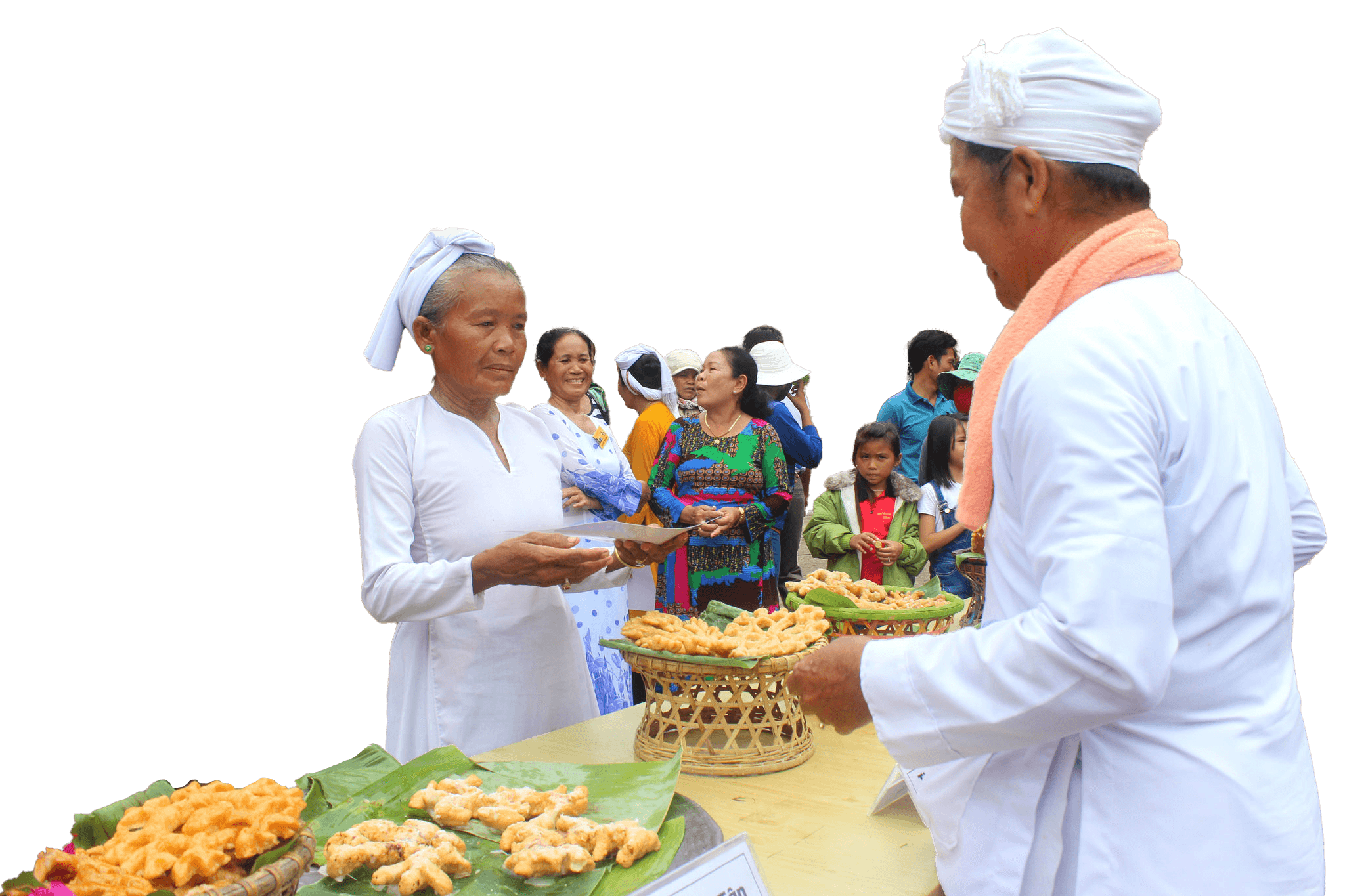
Ginger cookie-shaping competitions always attract large numbers of visitors during the Katê Festival.Cham artisans showcase the traditional ginger cookie-making process at the Katê Festival, held at the Po Sah Inu Tower Relic SiteGinger cookie-shaping competitions always attract large numbers of visitors during the Katê Festival.
For the Cham community, the preparation of ginger cookies transcends mere cooking; it serves as a chance for the community to unite. With the Katê, Ramưwan, or Rija Nưgar festivals on the horizon, village women convene to gather ingredients, mill rice into flour, and craft the cookies by hand.
“
We make these cookies not only to honor our ancestors but also to preserve the customs and traditions passed down by our forebears
Luong Thi Hoa, Bac Binh Commune, Lam Dong Province
Currently, ginger cookies are not just limited to the Cham community; they have transformed into a cultural item that draws visitors from both nearby and distant locations. At the Po Sah Inu Tower Relic Site, artisans from Bac Binh, Ham Thuan, and Ham Thuan Bac are frequently invited to showcase the traditional cookie-making technique to tourists during the Katê Festival.
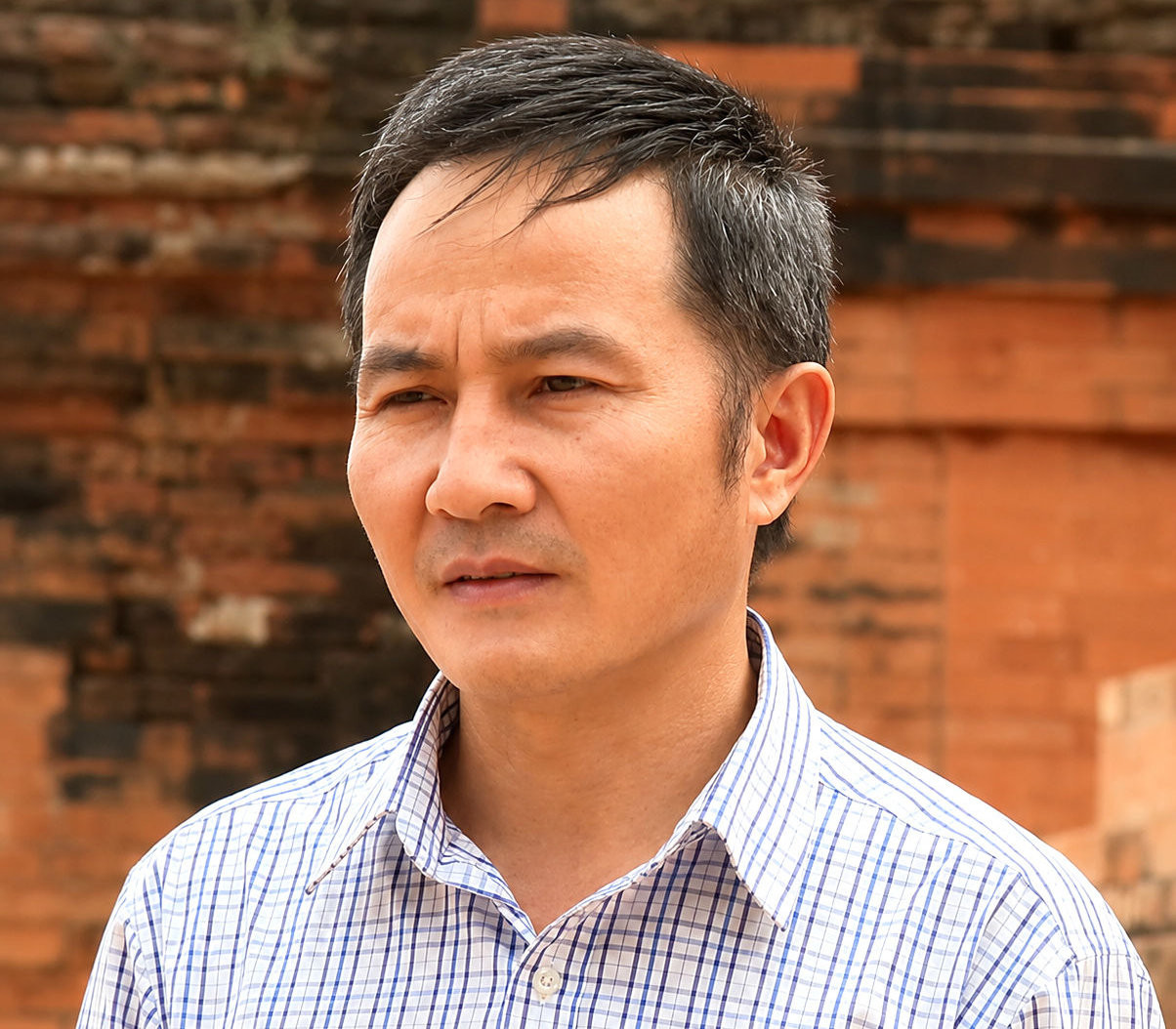
Tran Duc Dung, an expert from the Management Board of the Po Sah Inu Towers, stated: “Competitions for making ginger cookies always draw significant crowds of spectators who come to watch, support, and learn about the craft. Many are intrigued to see, for the first time, how each cookie is shaped completely by hand. These events serve as a valuable means to showcase Cham culture to a broader audience.”
“
Organizing ginger cookie-making competitions is also an effective way to promote Cham culture to both domestic and international visitors
Tran Duc Dung from the Management Board of the Po Sah Inu Towers
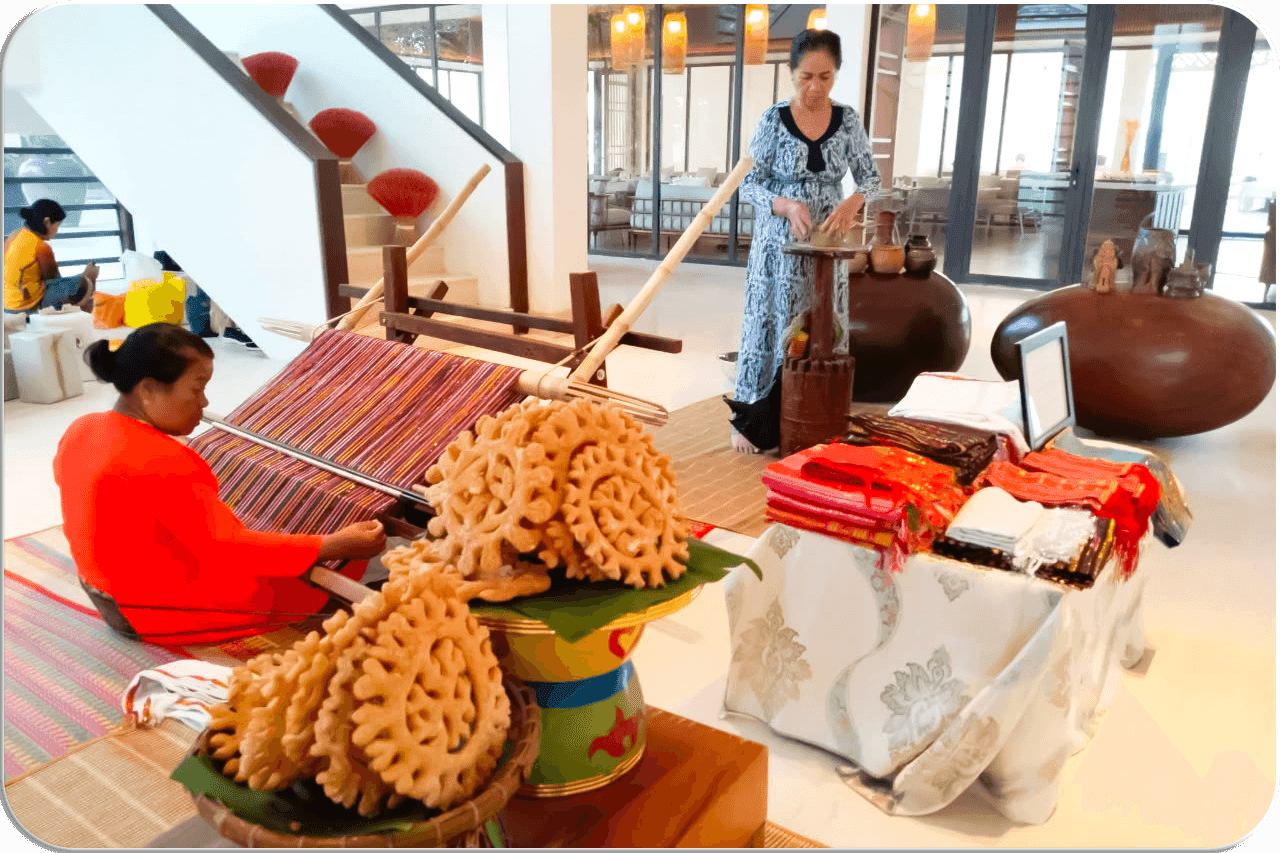
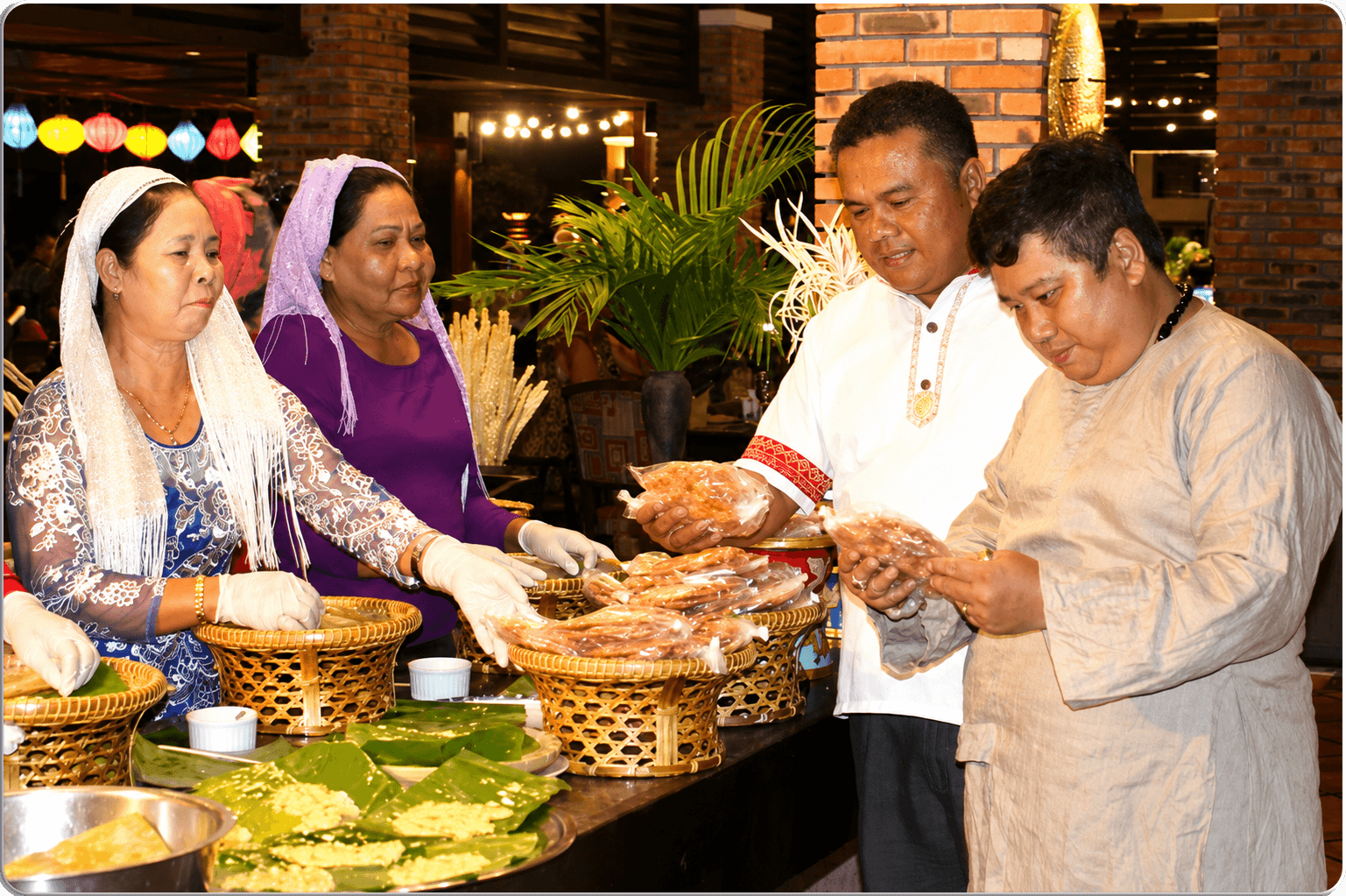
Furthermore, several resorts in Mui Ne have added traditional Cham cuisine to their offerings. Live demonstrations of ginger cookie preparation have emerged as a popular attraction, garnering significant interest from both domestic and international visitors.
Amid the fast pace of contemporary life, when many traditional values are at risk of being lost, ginger cookies remain valued and preserved by the Cham community. Through baking contests, cultural performances, and initiatives to promote tourism, this simple treat is steadily carving out its niche in Vietnam’s culinary landscape.
Collector Nguyen Ngoc An (far right) visits a Cham ginger cookie-making area in Mui Ne
“
Regularly organizing ginger cookie-making demonstrations and competitions not only helps preserve this traditional craft but also enhances the appeal of Cham cultural destinations, contributing to sustainable tourism development
Lu Thai Tuyen, Deputy Director of the Lam Dong Provincial Museum
Crisp and subtly sweet, imbued with ginger's fragrance, and steeped in a tale of lasting commitment, ginger cookies represent much more than just a snack. They capture cultural heritage and embody the essence of the Cham people, reflected in every meticulously crafted detail.
For those who try them, enjoying a ginger cookie offers a chance to connect with the rich tapestry of Cham culture directly. Even after the warm scent of ginger dissipates, the narratives of marital loyalty, community unity, and cultural pride remain alive in the memories of those who have enjoyed this distinctive traditional treat.



.png)
.png)