


Chinese cultural imprints in Phan Thiet
As maritime trade flourished, merchant ships frequently stopped at Vietnamese ports for trade. Attracted by favorable conditions, many Chinese traders settled in Phan Thiet, forming a long-established community.
Chinese cultural imprints in Phan Thiet
The early Chinese settlers arrived at Phu Hai Port. From the moment they set foot in this new land, they faced numerous hardships. However, they quickly integrated into the local Vietnamese community. Despite exposure to diverse cultural traditions, they preserved their distinct identity by maintaining their language, life philosophies, traditional customs, and ancestral worship practices. They also honored the early pioneers who paved the way for future generations.
As the community began building new lives, places of worship were gradually established to meet spiritual needs and provide support. In Phu Hai, the Chinese community built the Thien Hau Temple.
According to historical records, the temple was built in 1725 by Chinese settlers and bears strong Northern architectural influences. Perched on a hill overlooking the Phu Hai River, it stands as a solemn spiritual refuge for those seeking to build new lives.
Over time, through several restorations, the temple has incorporated Vietnamese artistic elements, including intricate carvings, parallel inscriptions, and decorative panels. Elaborately crafted dragon and phoenix sculptures not only enhance the temple’s beauty but also carry deep spiritual significance in Mother Goddess worship.
Preserving cultural identity
With a strong spiritual foundation, the Chinese community thrived, expanding its trading and business activities, particularly around Phan Thiet Market and the Seven Corners area.
According to Mr. Ly Cam Minh, Deputy Head of the Management Board of Quan De Temple, the Chinese community accounts for about 1.2% of the ward’s population. Most residents are engaged in business, services, and small-scale trade. Several well-known family businesses include Ly Chan Ky, Van Thuan, Lien Hoa, Nhan Ai, and Kim Son.
The Chinese community in Phan Thiet is traditionally organized into associations based on their regional origins—Hainan, Guangdong, Chaozhou, and Fujian. Each group established its own assembly hall for worshiping ancestors and supporting one another in economic activities. However, Quan De Temple, also known as Ong Pagoda and built in the late 18th century, remains the central cultural and spiritual symbol of the community.
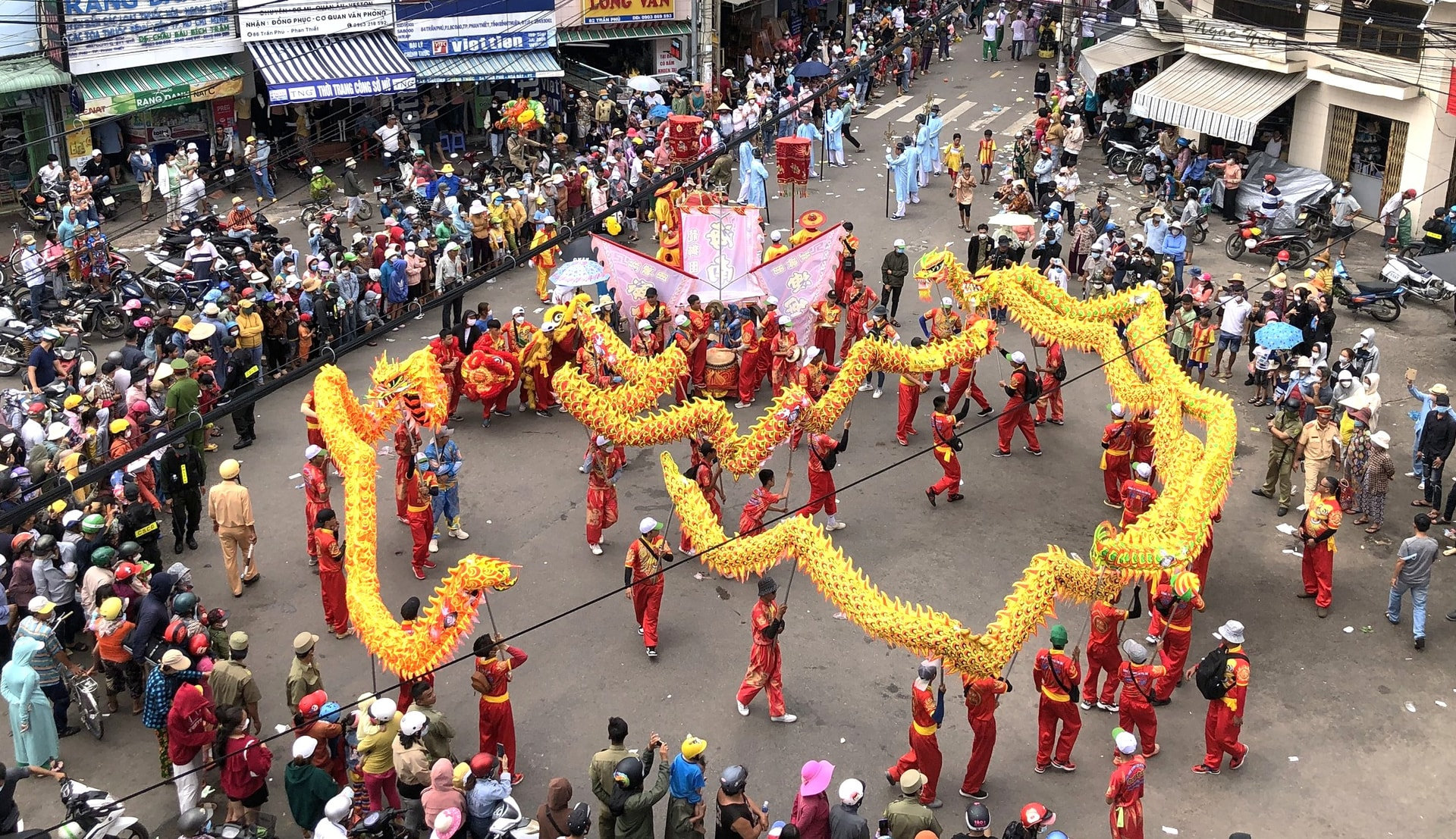
The Nghinh Ong Festival is one of the most prominent traditional events associated with the temple. Held every two years over three days in late July of the lunar calendar (even-numbered years), the festival attracts thousands of locals and visitors. It is not only an occasion to pray for favorable weather and prosperity but also an opportunity to preserve and promote the unique cultural identity of the Chinese community in Phan Thiet. The atmosphere is always vibrant, festive, and full of color.
In addition, Chinese cuisine has left a lasting impression, with familiar dishes such as wonton noodles, dumplings, char siu, and roasted duck. Many family-run eateries have preserved their traditional flavors across generations.
Today, the Chinese community in Phan Thiet stands as a vivid testament to enduring cultural exchange. Amid modern life, traditional values continue to be preserved and promoted, becoming an integral part of the coastal area’s cultural landscape.
Local authorities have consistently supported the Chinese community by creating favorable conditions for business and livelihoods, while also contributing to local socio-economic development. At the same time, they have promoted public awareness efforts to encourage residents to preserve traditional customs and cultural values, while fostering a stronger spirit of national unity throughout the locality and the province.
Trinh Thi Kim Thanh, Chairwoman of the Vietnam Fatherland Front Committee of Phan Thiet Ward