


Circular Livestock Farming Thrives on Sandy Soil in Lam Dong
After more than 40 months of operation, Thien Nghiep Organic Livestock Cooperative in Mui Ne Ward has successfully developed and expanded circular livestock farming models on sandy hills, combined with eco-tourism under coconut canopies. The model has provided stable livelihoods for member households while improving the local ecological environment.
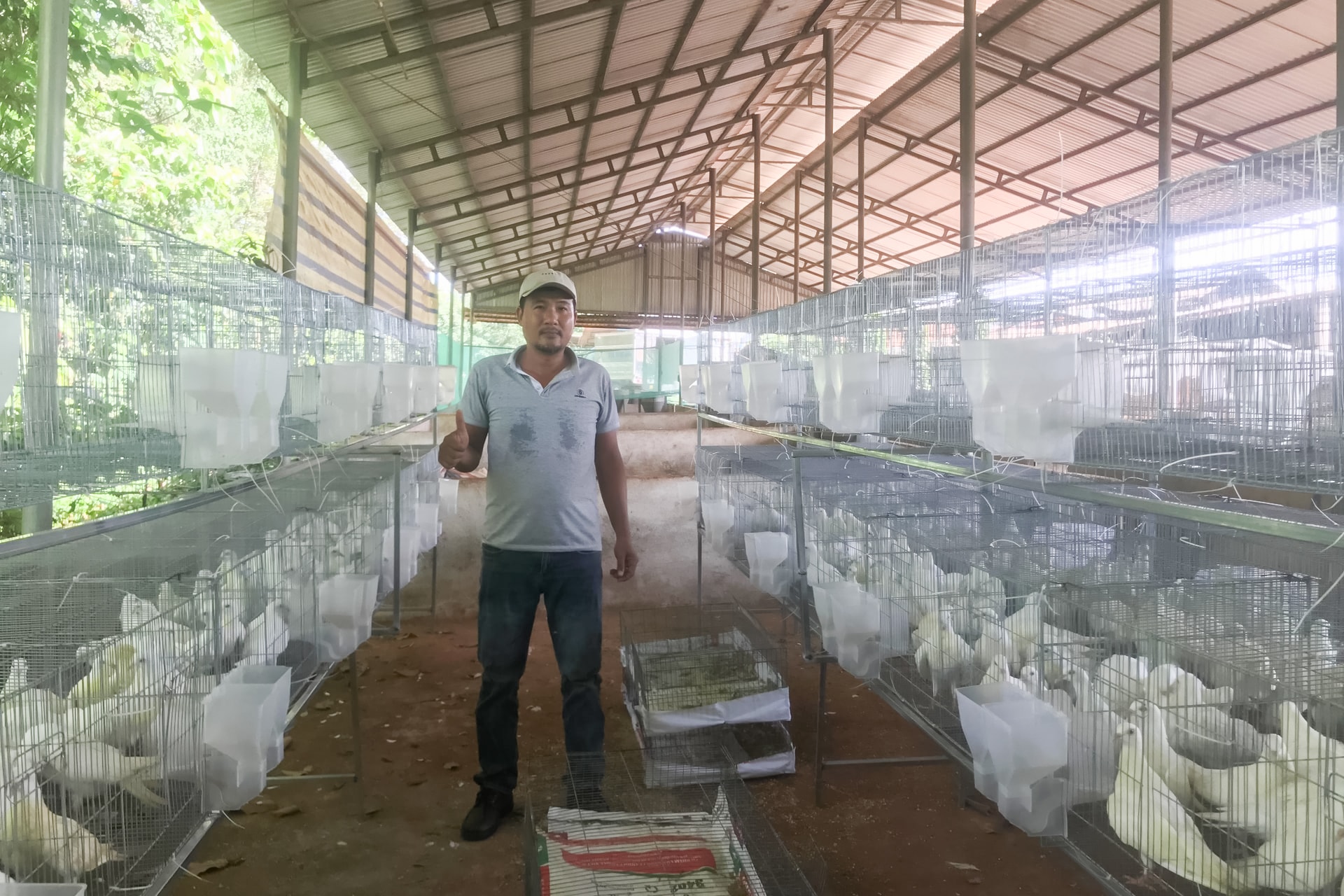
A decade in the making
During the spring tourism season of 2026, a model farm located about one kilometer from Mui Ne Beach—owned by farmer Nguyen Minh Tam—welcomed up to 500 visitors on peak days, with some days reaching 1,000 guests. This represents a 20–30% increase compared to the same period last year.
The 4.5-hectare farm includes 2 hectares of coconut trees over 50 years old. Beneath this canopy, areas are organized for raising wild chickens, French pigeons, and sand lizards (dong) using a circular farming system adapted to sandy soil conditions.
The model operates on closed-loop principles: livestock feed is sourced directly from the farm environment—vegetables, fruits, insects, and clean water—while animal waste is recycled as organic fertilizer for crops. Coconut by-products such as leaves, husks, and shells are reused for building shelters, bedding, and composting.
An additional 2 hectares are dedicated to experiential tourism, where visitors can explore farming practices, taste products, and participate in agricultural activities.
According to the farm owner, it took nearly 10 years to build a fully integrated system combining production, processing, and tourism into a complete value chain. The farm currently maintains around 50 breeding pairs of pigeons, 300 wild chickens raised both free-range and in enclosures, and sand lizards raised in burrow systems at high density.
Expanding to 60 hectares of circular production
Established in October 2022 with 10 founding members, the cooperative has used this model farm as a training and demonstration hub, enabling members to replicate circular farming practices across Mui Ne and neighboring areas.
A typical example is Nguyen Van Hoang, who has converted 3,000 m² of coconut land into a circular system combining pigeon, sand lizard, and wild chicken farming. Previously limited to coconut cultivation, the land now yields multiple income streams.
Through circular techniques—recycling coconut fibers and livestock waste into organic fertilizer—his farm now produces:
- 700–1,000 coconuts every 20 days
- 30 market-ready pigeons per week
- Over 5 kg of sand lizards every two weeks
He is currently expanding his model by planting additional coconut trees to create shaded areas for poultry farming, with plans to supply commercial chickens by late 2026.
According to Cooperative Chairman Nguyen Van Tanh, the organization has grown to 25 members, expanding its integrated farming area from 10 hectares to 60 hectares. Some members now supply hundreds of kilograms of pigeon meat and other specialty products each month.
Coconut plantations—at a density of 400 trees per hectare—begin yielding nearly 10 fruits per tree per month from the third year onward, further enhancing economic efficiency.
Market expansion and future outlook
Several products from the cooperative have been certified as 3-star OCOP (One Commune One Product), strengthening their market position. The cooperative has established distribution partnerships with 11 domestic partners and expanded into e-commerce channels, maintaining an average annual growth rate of 15%.
Looking ahead, by the end of 2026, Thien Nghiep Cooperative aims to expand its circular farming network by an additional 10 hectares and attract around 10 more households to join.
This model highlights a practical pathway for sustainable agriculture in challenging environments, demonstrating how circular economy principles, when combined with eco-tourism, can unlock both economic and ecological value.