


Co Bay Hon Tranh Café Turns Ocean Waste Into Art
Phu Quy Island has long been known as a pristine, untouched picture in the middle of the sea. Within this setting, Hon Tranh Islet remains a destination that continues to captivate visitors. Notably, the area is home to a small café named Co Bay Hon Tranh, nestled beneath rows of casuarina trees and uniquely decorated with items crafted from ocean waste.
From Ocean Waste to a Must-Visit Check-in Spot
From Hon Tranh Beach, a narrow path leads to Vung Phat, where visitors soon come across a café splashed with vibrant colors.
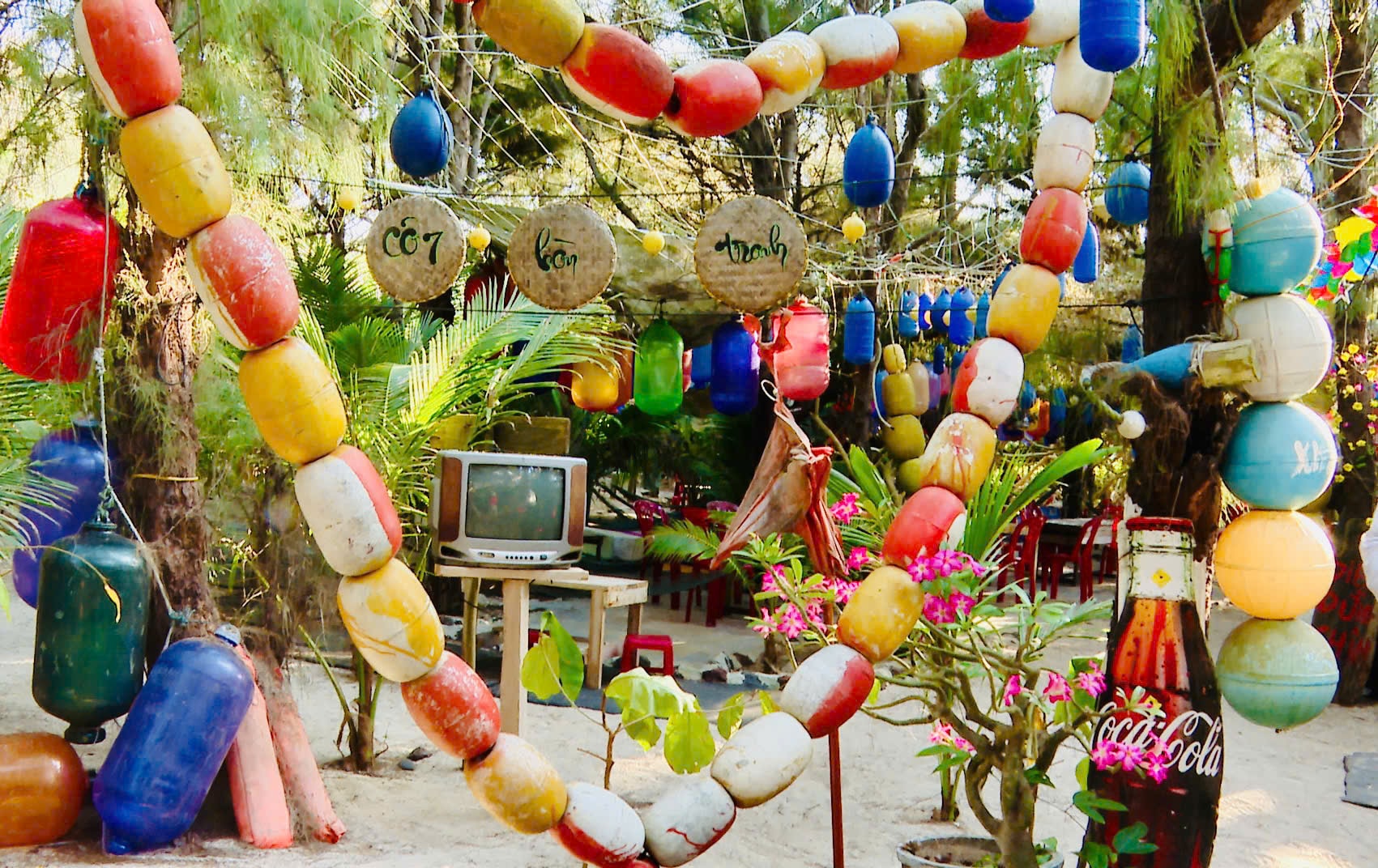
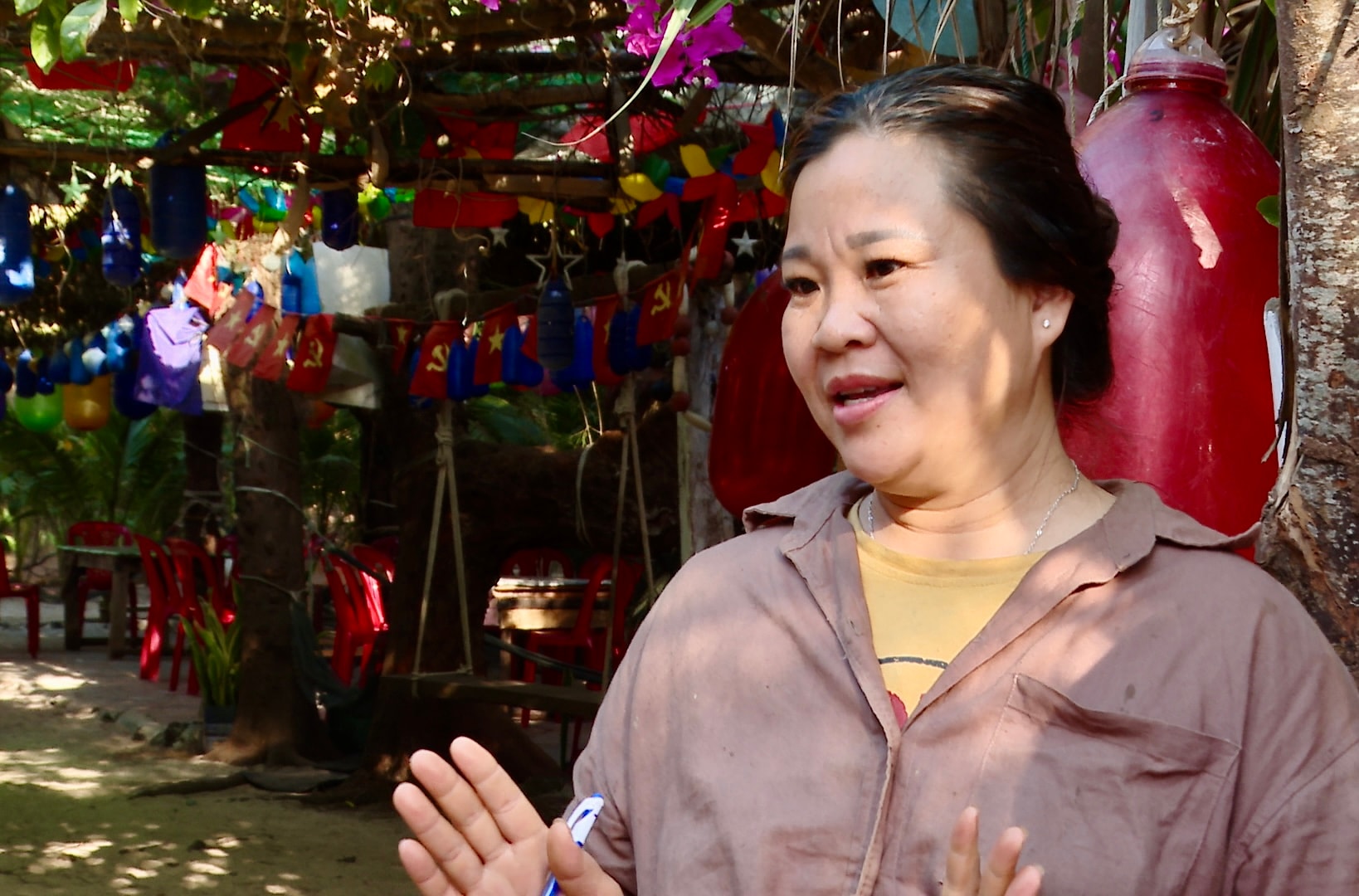
Co Bay Hon Tranh Café is distinctive for its one-of-a-kind décor: aged ropes, life buoys of varying sizes, and rustic wood—each element is thoughtfully positioned and hung along the trail, gently swaying in the sea breeze.
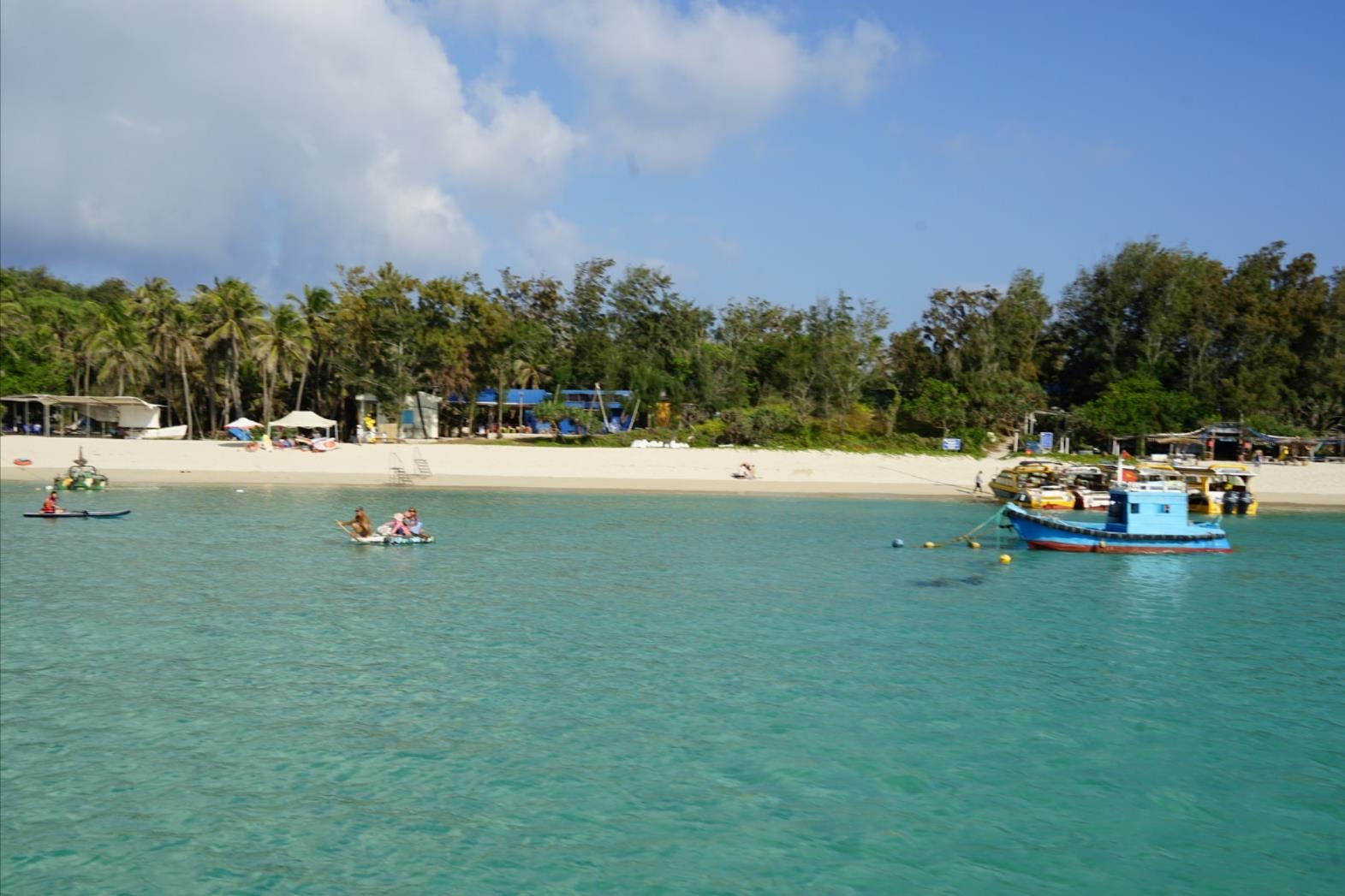
This café is owned by Ta Thi Kim Phon, who is often referred to as Co Bay, and is one of the few inhabitants on the island. Previously, she focused on agricultural work. With the growth of tourism, she started a small refreshment stall to cater to visitors.
What began as a basic resting area has slowly transformed into a popular spot for tourists looking to dive, enjoy the coral reefs, and paddle stand-up paddleboards.
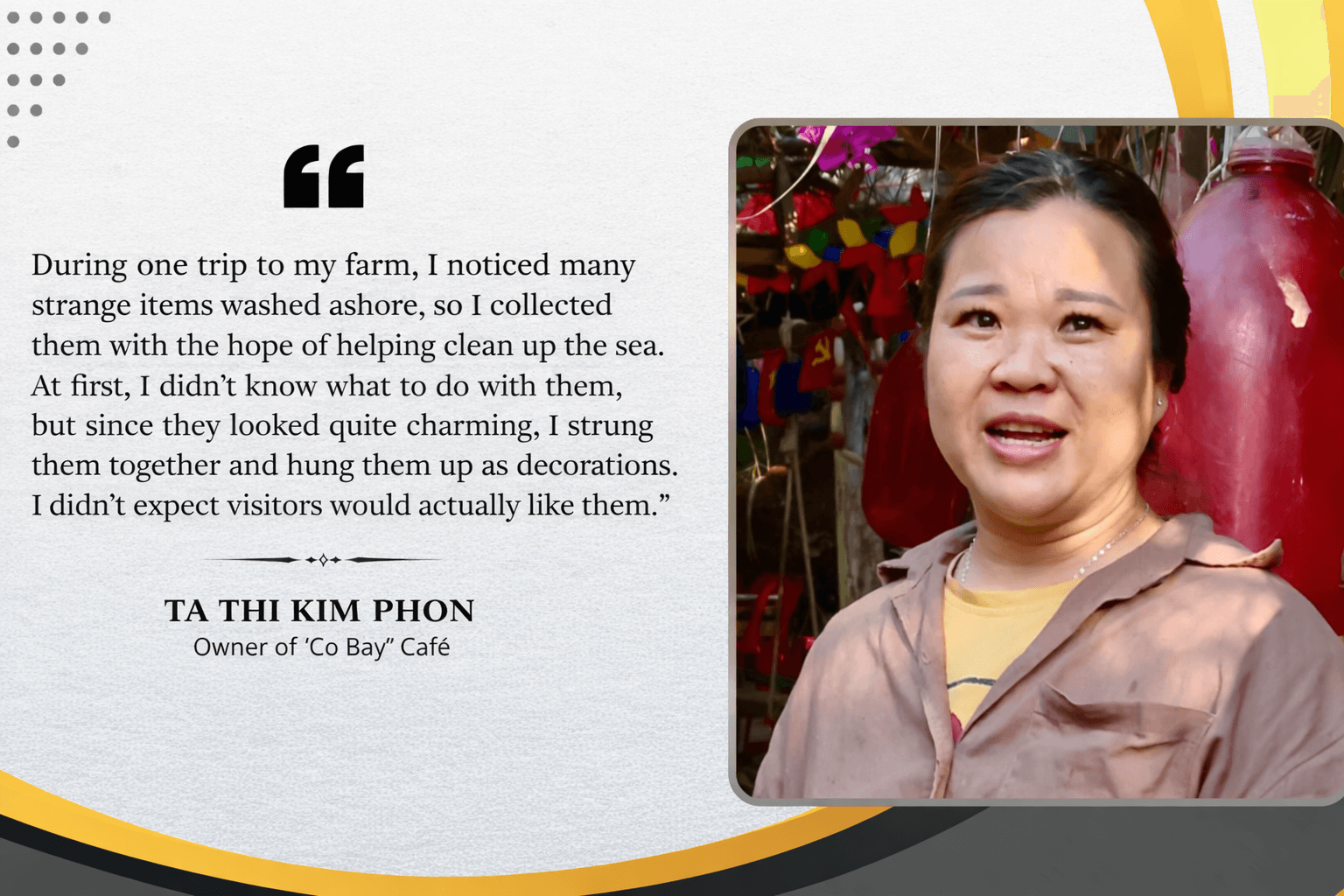
According to her, these items are mainly fishing buoys that drift ashore onto the island with ocean currents. At one point, she collected thousands of them. Unable to use them all, she gave some away to visitors as souvenirs.
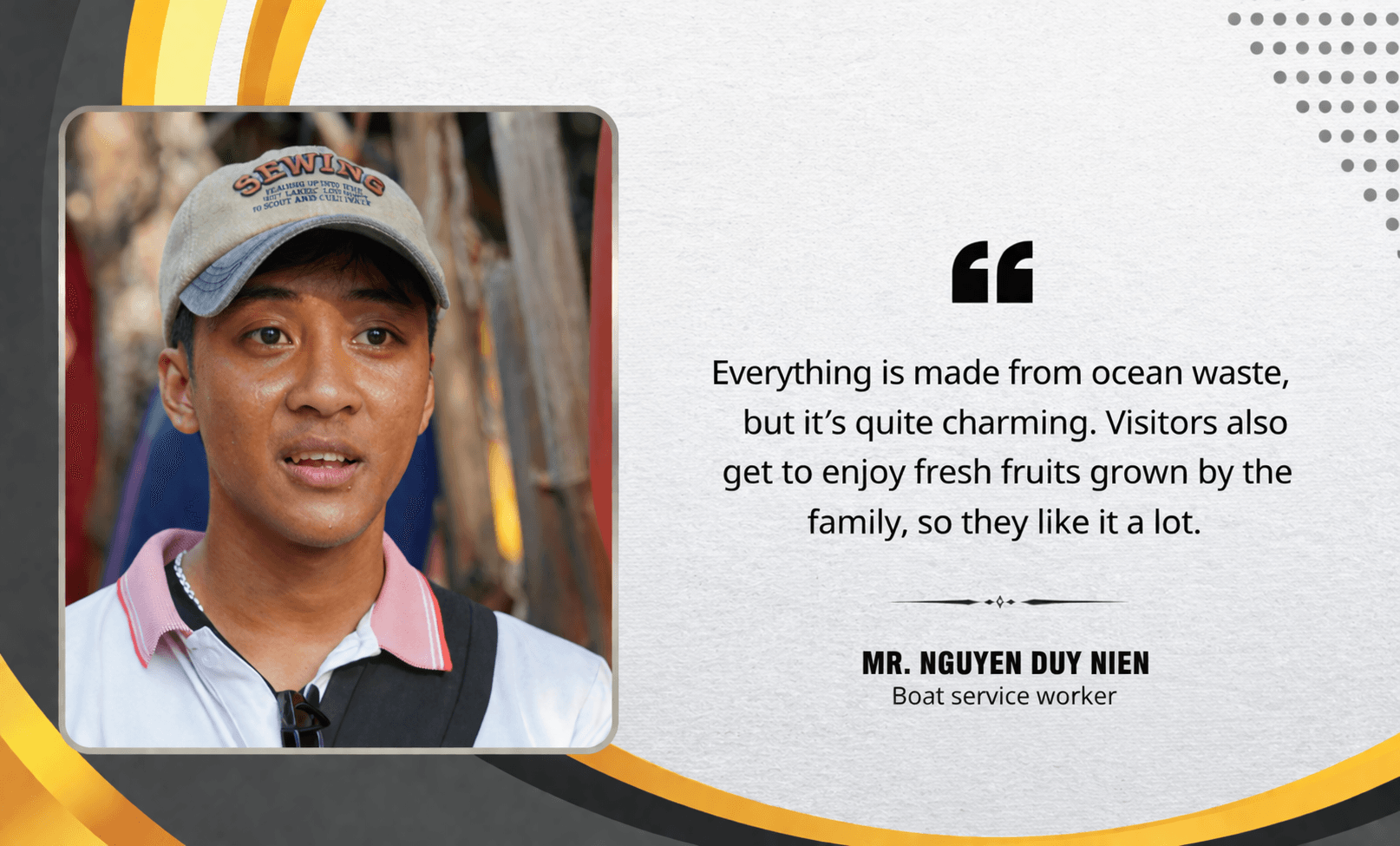
Nguyen Duy Nien, a canoe service provider who transports visitors to the island, said he was initially surprised to see Co Bay collecting waste. However, as the café gradually became more vibrant and emerged as an interesting stop, he began recommending it regularly to tourists.
Contributing to Keeping the Island Green
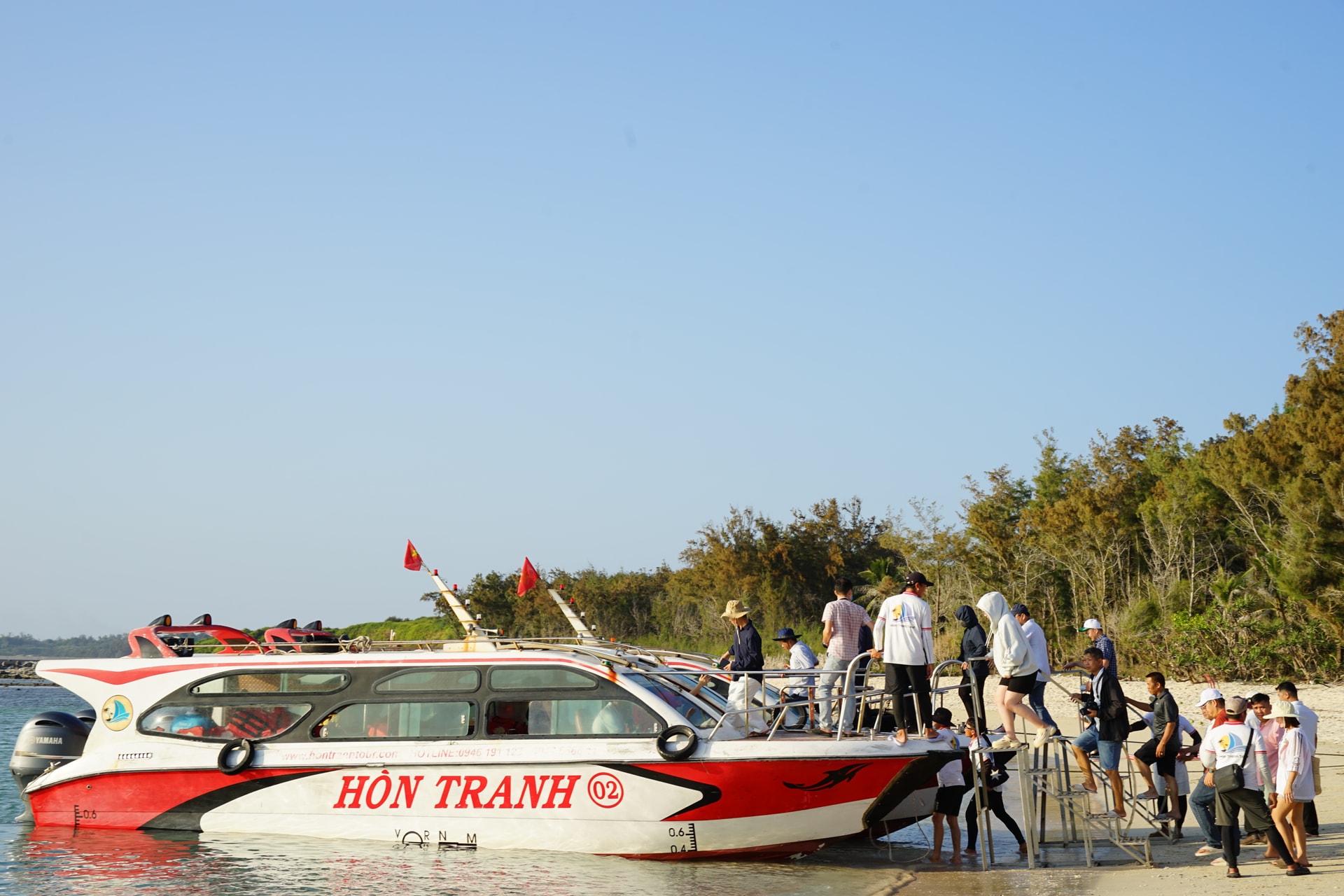
Hon Tranh Islet is located approximately 0.5 nautical miles to the southeast of the center of Phu Quy Island. The islet has an S shape, with its widest point measuring around 400 meters and its length of about 1,200 meters. Historically, it remained largely undisturbed, with only a few families visiting seasonally for agricultural activities.
In recent years, Hon Tranh has emerged as a popular destination for its unspoiled beauty—pristine white beaches, clear waters, lively coral reefs, and unique natural attractions such as Vung Phat, Vo Cuc Lake, To Vo Gate, and Tran Bac Shrine.
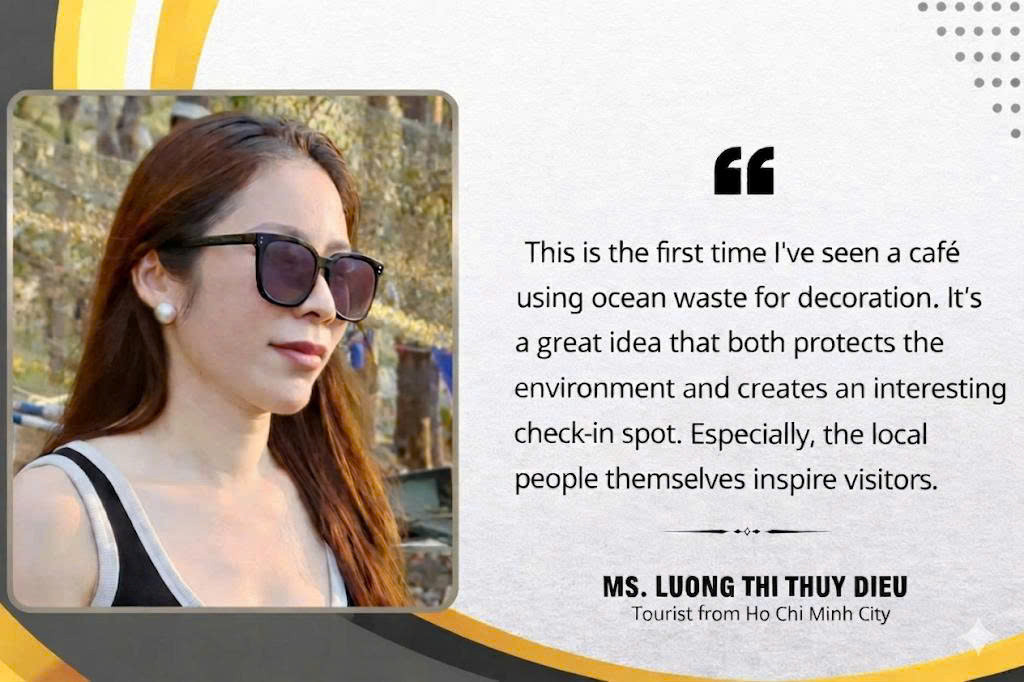
Every year, approximately 20,000 visitors, primarily young adventurers in search of unique experiences, flock to the islet. Amid this growth, Co Bay Café, decorated with repurposed ocean waste, stands out as a distinctive attraction.
Ms. Phon has not stopped there. She continues to refresh the café with creative touches, turning anchor ropes into steps and using bamboo and driftwood to make seating for visitors.
“I gather anything that washes up on the shore and can be repurposed to decorate the café—both to enhance its beauty and to contribute to keeping the island clean,” she said.
According to Le Hong Loi, Chairman of the People’s Committee of Phu Quy Special Zone, Hon Tranh Islet is planned for tourism development, with facilities including a mooring area, service zones for day visitors, beaches, and marine sports activities. The area is expected to accommodate around 500 visitors per day.
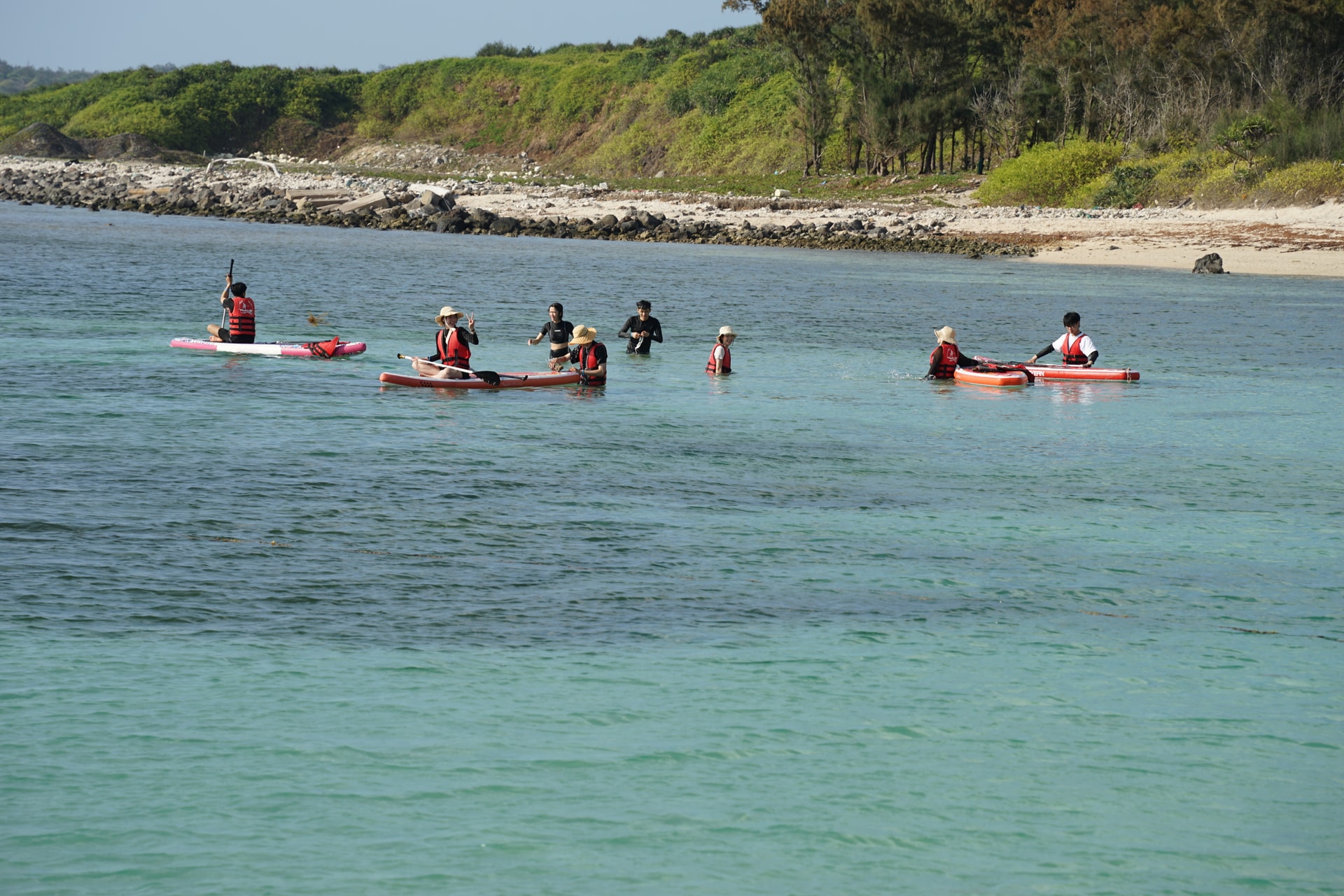
With this direction and the active participation of local residents, Hon Tranh Islet is not only a destination for unique experiences but also a model of tourism aligned with environmental protection.
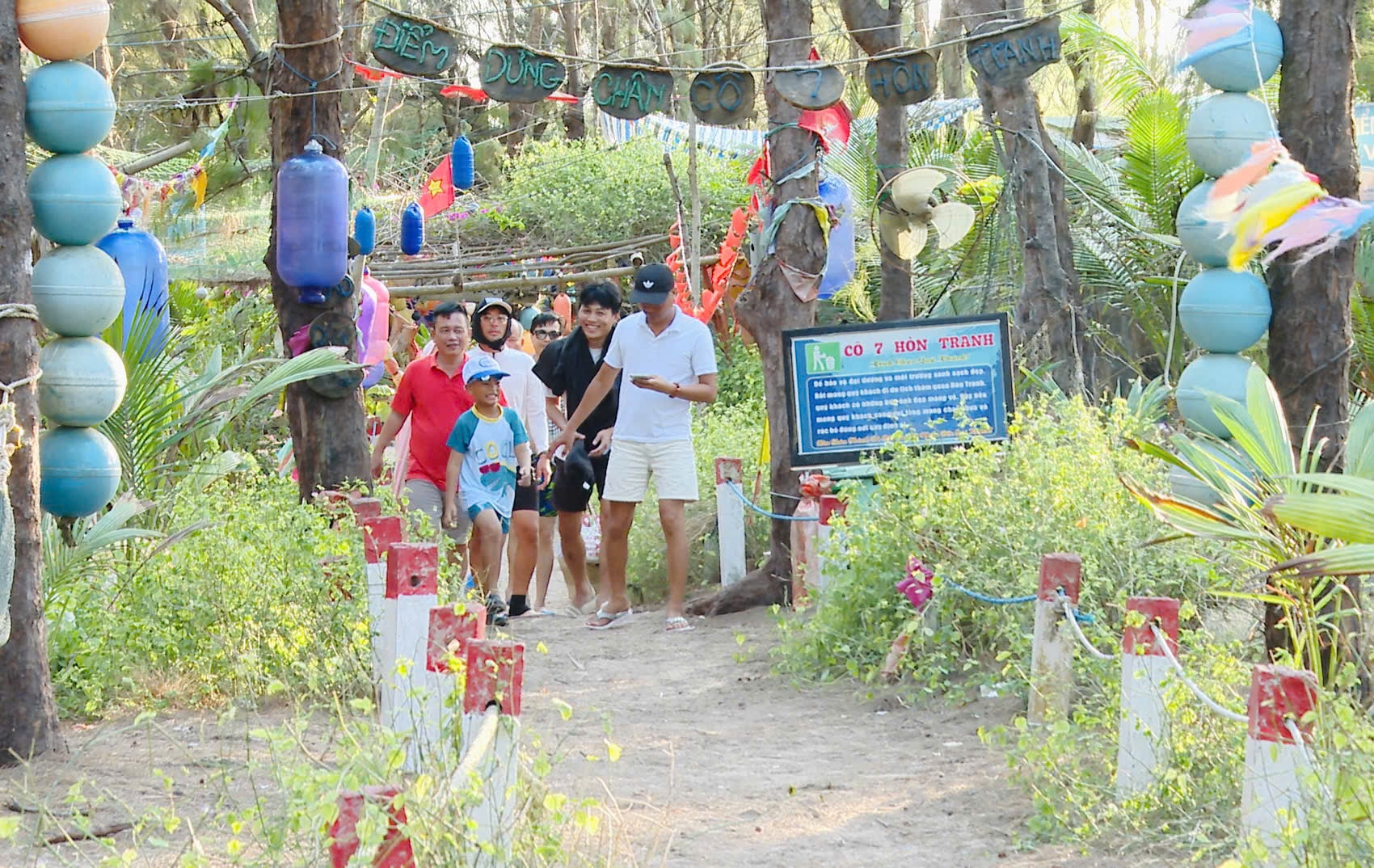
Models like the ocean-waste-decorated café at Hon Tranh Islet help raise environmental awareness and promote green, sustainable tourism.