


Coffee Is More Than Just a Drink
Many tourists come to Da Lat just to have a cup of coffee and snap a few pictures, yet they depart with a lingering promise to return and immerse themselves once more in its unique flavors and scenery.
150 Years of Coffee Taking Root in Basalt Soil
Coffee was introduced to Vietnam by the French in the late 19th century and quickly took root in the fertile basalt soil of Lam Dong, spreading from the Di Linh Highland to the rest of the country.
Coffee has not only changed the natural terrain over the last 150 years, but also the economic structure, production methods, and daily life of communities in the Central highlands.
Alongside tea, which has become a "way of life" in Vietnamese spiritual culture, coffee quickly established its own place. While tea is savored for relaxation, coffee is consumed for alertness. Tea promotes peace of mind and reflection, whereas coffee stimulates creativity and opens the door to new ideas.
Vietnamese people do not drink diluted coffee as Americans do; instead, they have developed a unique style: strong, concentrated coffee with milk. Coffee is taken slowly, in small mouthfuls, turning even the teeth brown, and the aftertaste lasts long after each sip. This leisurely approach to coffee has fostered a culture where conversations and meetings can unfold for hours around a familiar cup.
Coffee may not become a "way" like tea in the age of global integration, but it remains the most-consumed beverage worldwide. Rich, seductive, and passionate—qualities that are deeply personal and challenging to describe—these are the only ways coffee enthusiasts can characterize its flavor. From this depth, coffee has transcended the boundaries of an agricultural product to become a living legacy with unique cultural significance.
A Green Coffee Canopy Covering the Highlands
With a history spanning more than a century, Lam Dong is also the birthplace of Vietnamese Arabica coffee, particularly in the 1,500-meter-high Cau Dat region. This area is highly valued by global coffee giants for its potential to produce specialty coffee. Meanwhile, Robusta coffee keeps Vietnam at the top of the world in terms of both output and quality.
A solid foundation for brand growth has been established by the geographical indication status granted to Lam Dong's Arabica and Robusta coffee and the protection of 21 registered brands. Lam Dong coffee is gradually reaching demanding international markets while adhering to international standards.
The highlands are covered in coffee plantations, which support hundreds of thousands of farming households and are a vital component of the province's agricultural economy. Da Lat has long been a popular location for coffee tourists due to its mist, flowers, and pine forests. With their imaginative designs and "million-dollar views," cafés provide not just coffee but also visual and experiential pleasure.
The Provincial People's Committee, in collaboration with TNI King Coffee Group, organized the inaugural Global Coffee Heritage Festival 2025 in Lam Dong from December 18, 2025, to the end of the year. This event is regarded as a strategic milestone toward increasing the value of Vietnamese coffee beans.
By establishing Lam Dong as Vietnam's "coffee capital" and Da Lat as a top international destination for coffee appreciation and experience, the festival aims to demonstrate that Vietnamese coffee is more than an export commodity; it is a creative cultural legacy with a distinct identity.
Bringing Coffee Heritage to the World Stage
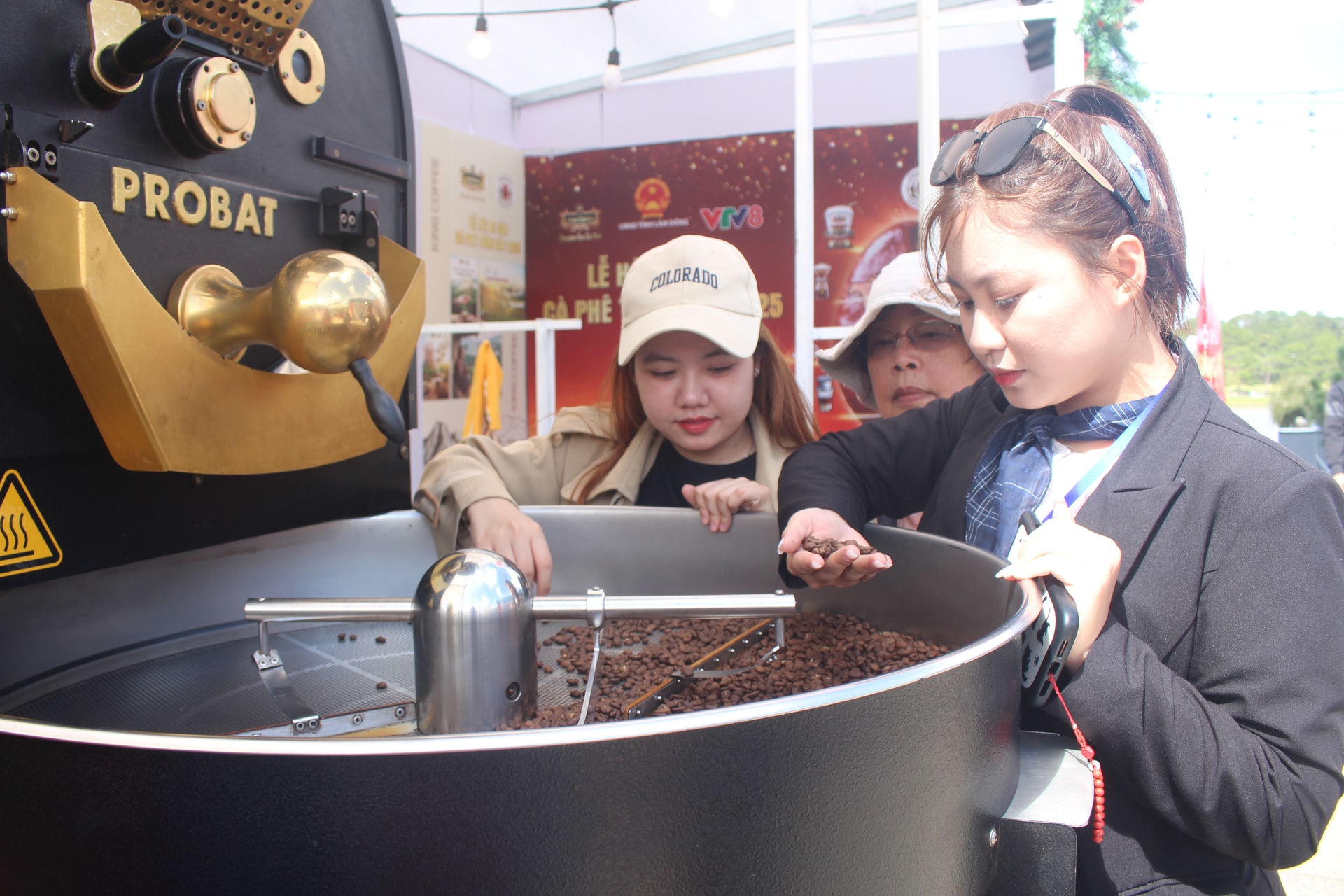
The festival area in Lam Vien Square, themed "Honoring Heritage – Shaping the Future," has just come alive with the alluring scent of coffee. An extensive range of coffee items is available for visitors to peruse, sample, and purchase the finest local brews.
Kiosks near Xuan Huong Lake further broaden the cultural landscape of coffee by leading guests to the "Global Coffee Journey" on a 1932 antique train at Da Lat Railway Station,a component of the "Da Lat Coffee Tour." The seamless fusion of architecture, history, and coffee appreciation creates a sophisticated, connoisseur-level experience.
German visitor Thomas Müller said he was delighted to learn about Vietnamese coffee culture:
"In Europe, we drink coffee quite quickly." However, coffee is consumed extremely slowly here. I adore how Vietnamese people can enjoy a cup of coffee for hours while conversing, taking in the view, and enjoying each sip. I see this as more than travel; it's a genuine cultural experience.
The festival, according to Mr. Dinh Van Tuan, Vice Chairman of the Provincial People's Committee, is an opportunity to attract investment, draw tourists, and enhance the local image. It also catalyzes the coffee industry's restructuring, including building strong brands, developing sustainable value chains, and shifting from raw exports to deep processing.
Lam Dong views coffee as a cultural experience and a legacy in addition to a product, according to the Global Coffee Heritage Festival.