


Cu Jut Aims to Become a Key Urban Center in the West
With its strategic location, transport infrastructure and strong foundations in industry, trade, services and energy, Cu Jut is well positioned to become a ward before 2030 and gradually establish itself as a key urban center in western Lam Dong Province.

Building on Existing Advantages
After the merger of Ea T'ling Township with the communes of Tam Thang, Truc Son, and Cu K'nia, Cu Jut Commune now encompasses over 104 square kilometers and has a population exceeding 50,900. Located at the heart of western Lam Dong Province, Cu Jut has significant advantages for economic development, urban expansion, and enhanced regional connectivity.
National Highways 14 and 28 traverse the area, facilitating easy access between Cu Jut and other regions throughout the Central Highlands and southeastern area.
The locality is capitalizing on this advantage to develop trade, services, transport, and logistics, thereby fostering a favorable environment for attracting investment.
Cu Jut's economic landscape prominently features its industrial sector. The Tam Thang Industrial Park spans over 179 hectares and has drawn in nearly 50 projects, boasting an occupancy rate greater than 96%.
Presently, the commune is home to approximately 1,200 establishments engaged in industrial, handicraft, and construction activities. In 2025, the value of production in the industrial and construction sectors reached VND1.7 trillion.
We prioritize investing in and upgrading essential infrastructure, focusing on transportation, water supply and drainage systems, landscape improvement, environmental sanitation, as well as educational, healthcare, cultural and sports facilities serving local residents.
Ngo Quoc Phong, Deputy Secretary of the Cu Jut Party Committee and Chairman of the Cu Jut People's Committee
Industrial growth has not only spurred economic development but has also generated employment opportunities and raised incomes for local residents, especially local workers and members of ethnic minority communities.
Y'Robel, a resident of Cu Jut Commune working at Tam Thang Industrial Park, stated: “Initially, I was unfamiliar with the job, but after receiving training once I started, I gradually adapted to it. My employment and income are now more secure, allowing my family to better manage our living costs.”
In addition to industry, Cu Jut has significant potential for renewable energy. The locality currently has 38 rooftop solar power systems serving agricultural production, along with two solar power plants with a combined capacity of more than 136 MWp.
This is another advantage that will enable Cu Jut to diversify its economic sectors and generate additional resources for development.
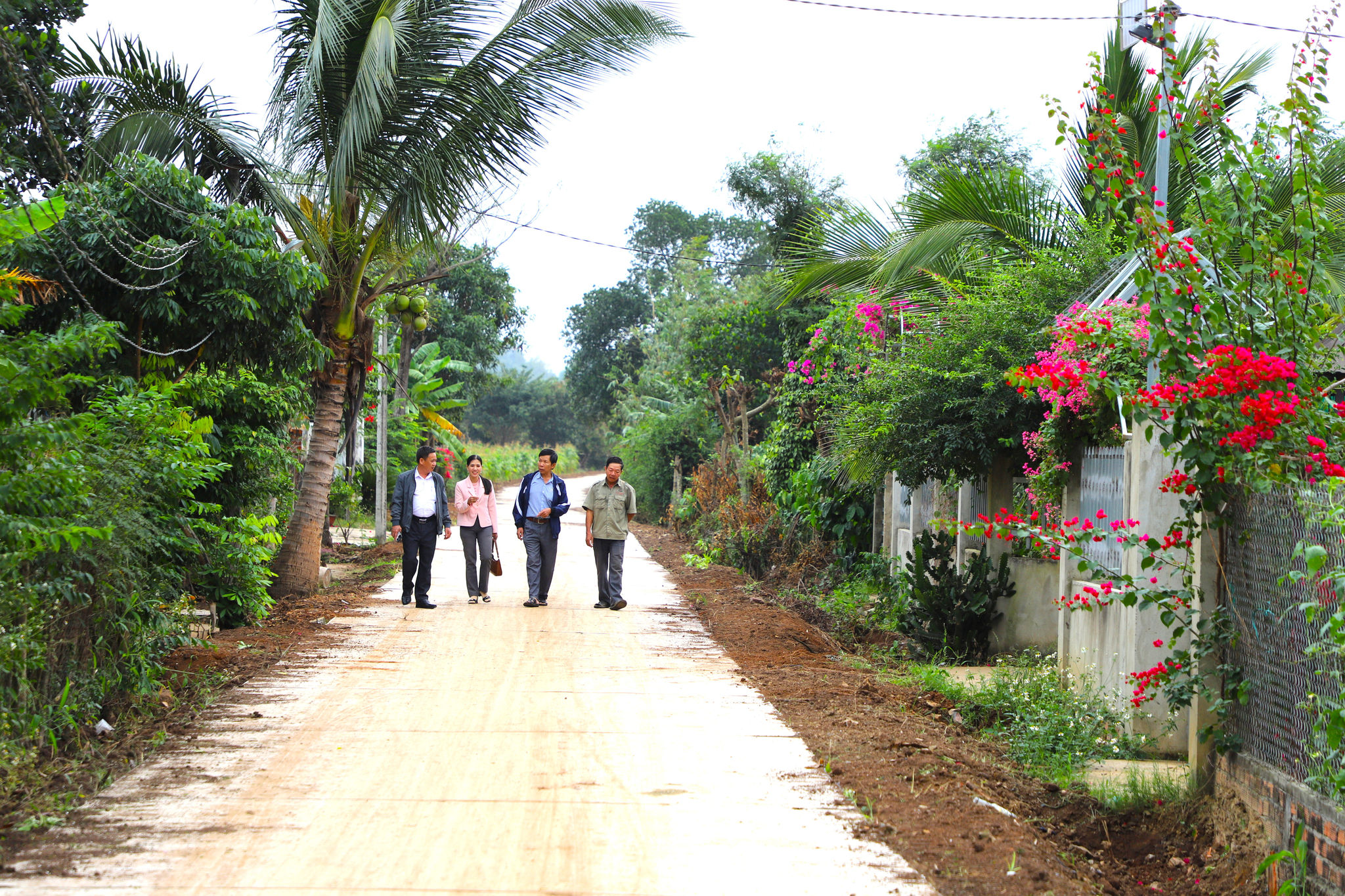
Moving Toward a Civilized Urban Area
In Cu Jut, urbanization is being expedited alongside economic growth through investments and enhancements to infrastructure. The construction of roads, water supply, drainage systems, schools, healthcare facilities, as well as cultural and sports venues, is progressively being completed.
Additionally, markets, shopping centers, supermarkets, banks, and postal and telecommunications services are increasingly catering to the needs of local production, business activities, and the daily lives of residents.
The aim of converting Cu Jut into a ward by 2030 was established in the Resolution of the Cu Jut Party Congress for the 2025-2030 term. This objective is not simply a necessity of the urbanization process but also a developmental strategy that seeks to optimize the locality's potential and advantages while fostering new avenues for growth.
According to Ngo Quoc Phong, Deputy Secretary of the Party Committee and Chairman of the Cu Jut People's Committee, the locality is working to mobilize resources and systematically enhance its technical and urban infrastructure in a modern and coordinated way to achieve its objectives.
In addition to investing in infrastructure, Cu Jut emphasizes the importance of planning management, fostering a cultured urban lifestyle, and implementing digital transformation in government administration as essential priorities. These initiatives are intended to enhance services for residents, create a conducive environment for production and business activities, and draw investors.
With its existing resources, Cu Jut has the chance to broaden its development opportunities and expedite its transition towards industry, trade, and services, while simultaneously undergoing urbanization.
Strong public consensus, together with a clear development strategy, is providing additional momentum for the locality to achieve its goal of becoming a ward before 2030. This will also lay the groundwork for Cu Jut to gradually develop into a civilized and modern urban area and strengthen its role as a driving force for socio-economic development in western Lam Dong Province.