


Cultural values reflected in the daily objects of the K’ho people
In the daily lives of the K’ho ethnic community in the southeastern mountainous areas of Lam Dong Province, everyday household items not only serve practical needs but also preserve deep cultural values. These objects carry spiritual significance, reflecting the close connection between the K’ho people, nature, and their community.
Closely Tied to Everyday Work
Around 15,000 K’ho people live in southeastern Lam Dong Province, mainly in mountainous communes such as Dong Giang and La Da. Agriculture remains their traditional livelihood, with farming practices shaped by the terrain, ranging from wet-rice cultivation to slash-and-burn farming. Common crops include rice, maize, cassava, beans and sugarcane. Shaped by geography and tradition, the K’ho have developed distinctive tools and household utensils.
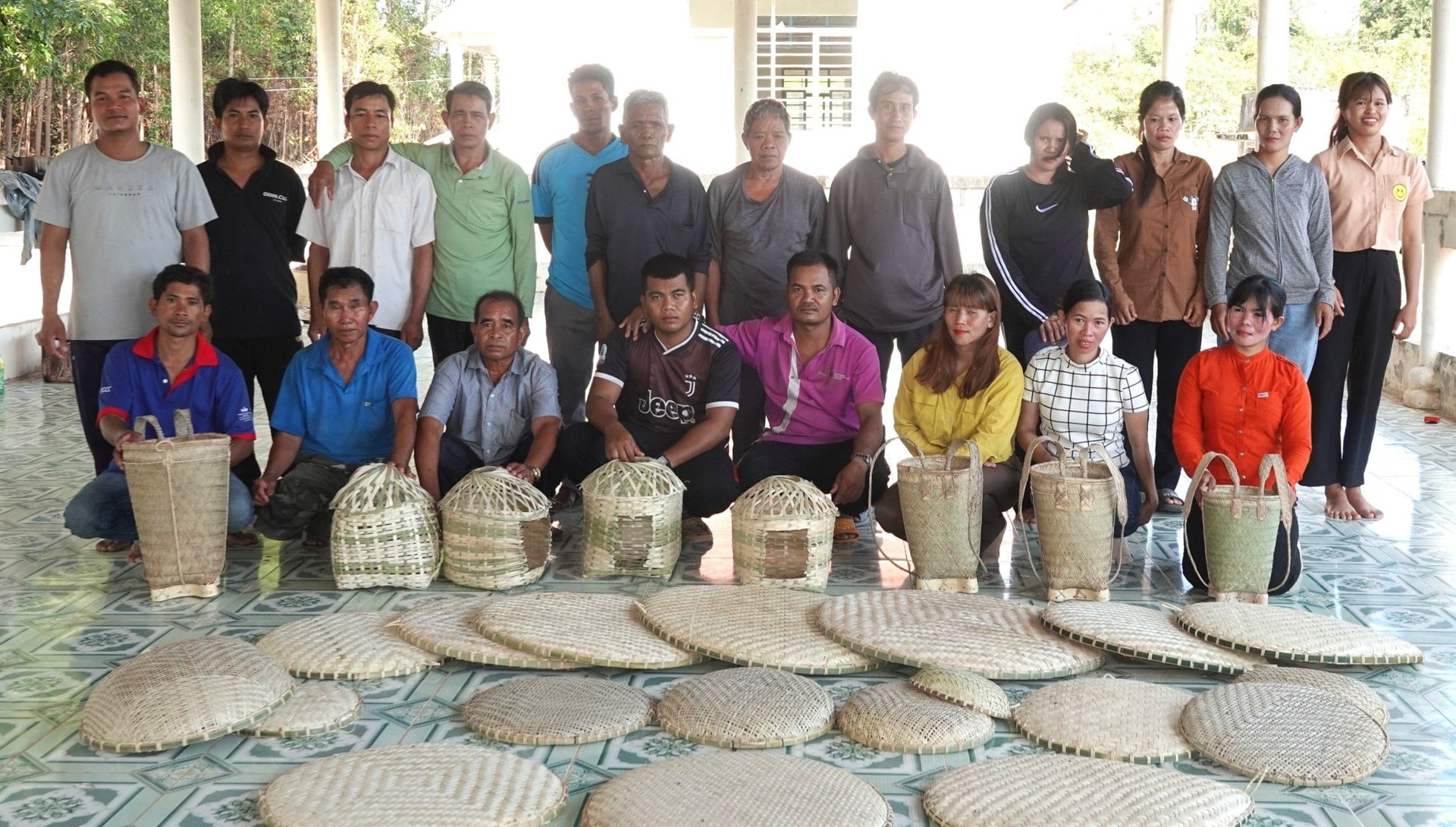
Le Van Linh, a basket-weaving artisan in Hamlet 3, La Da Commune, said the K’ho people are skilful and hardworking. In the past, during the off-season, men would go into the forest to collect bamboo, rattan and other weaving materials for weaving. Completing a product typically takes five to seven days, from selecting flexible mature bamboo to soaking, drying, splitting and refining the strips.
Depending on their purpose, baskets are made in different shapes and sizes, but all are designed for durability. Loosely woven baskets are used to carry fruit or tools to the fields, while tightly woven ones are used to store maize and seeds. Those used in festivals, such as the New Rice Festival or Giang worship ceremonies, are often decorated with traditional patterns like diagonal lines and diamond shapes, giving them a harmonious and visually striking appearance.
In addition, the K’ho people weave sa vi, containers used to carry cooked rice and food. K’Thi Hien, from Dong Giang Commune, shared: “As we rely heavily on nature and often travel far for farming, these containers are very convenient for storing food for a whole day or even several days. They are made from dried pandan leaves, which are soft and flexible. Sa vi can retain heat well, keeping rice fresh and reducing the risk of spoilage.”
Preserving Traditional Values
Another common item closely associated with the K’ho people's daily life is the water gourd. Typically made from dried bottle gourds grown in home gardens, these containers are naturally shaped with a slim waist. Once dried on the vine, the gourd is cut, hollowed, soaked and cleaned. Although not as elaborate as brocade textiles or as intricate as woven items, the water gourd still carries unique cultural significance. Water stored in it remains cool and has a natural fragrance.
Dried gourds are also used to create traditional musical instruments, producing distinctive sounds that are an essential part of K’ho festivals.
These everyday objects are more than simple tools; they are also a form of “living heritage.” Amid the spread of modern industrial products, and with support from a project launched in 2024 to preserve and promote the traditional cultural values of ethnic minorities alongside tourism development, the K’ho community is becoming increasingly aware of the importance of safeguarding and passing on its traditional crafts.
Today, artisans in several communes continue to craft these items while teaching weaving skills to younger generations within their families. In doing so, they help preserve and promote the cultural identity of their people in a simple yet deeply meaningful way.