


Da Lat Enters the Wind-Dried Persimmon Season
As autumn arrives, persimmon growers in Da Lat select firm, golden-orange fruits to dry using a Japanese method, producing a local specialty that has become a favorite among visitors.
From Persimmon Orchards to Wind-Drying Racks
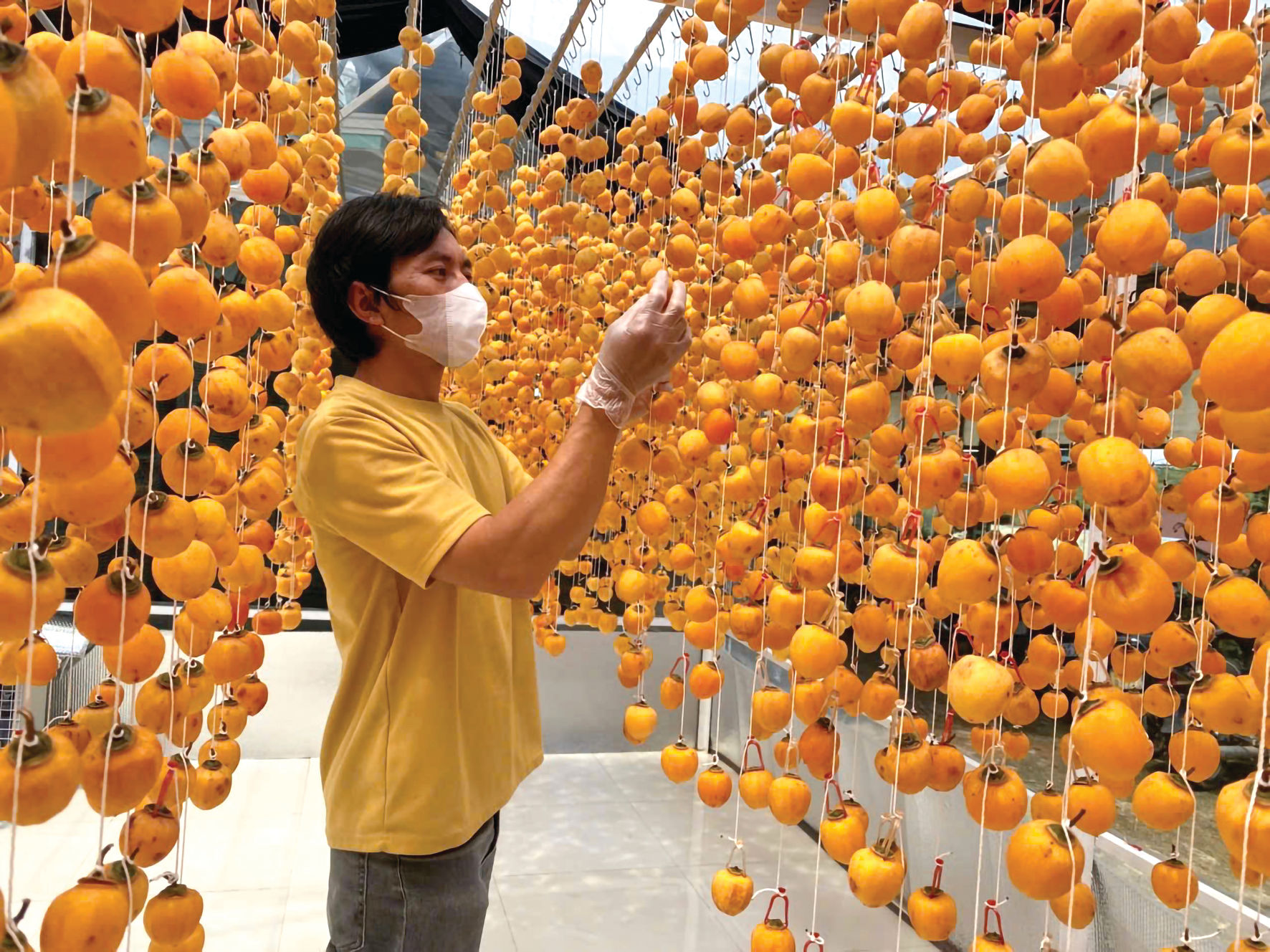
Da Lat’s persimmon season runs from late August to early December each year. Orchards laden with plump, golden ripe fruit attract many visitors. This is also when local farming households begin producing wind-dried persimmons. The Dat Lang and Cau Dat areas of Xuan Truong - Da Lat Ward are home to some of the largest concentrations of persimmon-drying racks.
Inside a nearly 100-square-meter workshop, Nguyen Le Diem My, a resident of Dat Lang residential quarter in Xuan Truong - Da Lat Ward, carefully hangs persimmons harvested from her family’s orchard after they have been cleaned and prepared.
My said her family began making wind-dried persimmons nine years ago, when many local orchard owners growing persimmons for fresh consumption learned the Japanese method of hanging the fruit to dry.
“To make delicious wind-dried persimmons, we must carefully select the raw fruit. We harvest mature, firm, glossy persimmons that have turned from yellow to light orange, leaving the stems intact. The fruit is then washed and drained before being prepared for drying,” My explained.
Her family’s orchard has been cultivated for many years, with some trees approaching 40 years old. The fruit is allowed to grow naturally without pesticides or growth-promoting substances, she said, helping ensure the safety of the finished product while preserving the flavor of fresh persimmons.
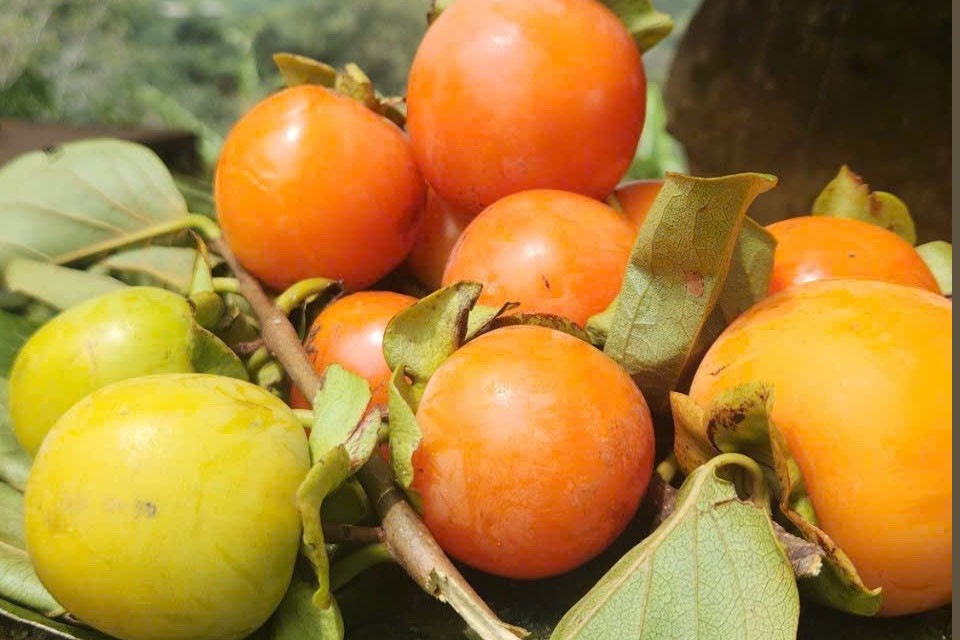
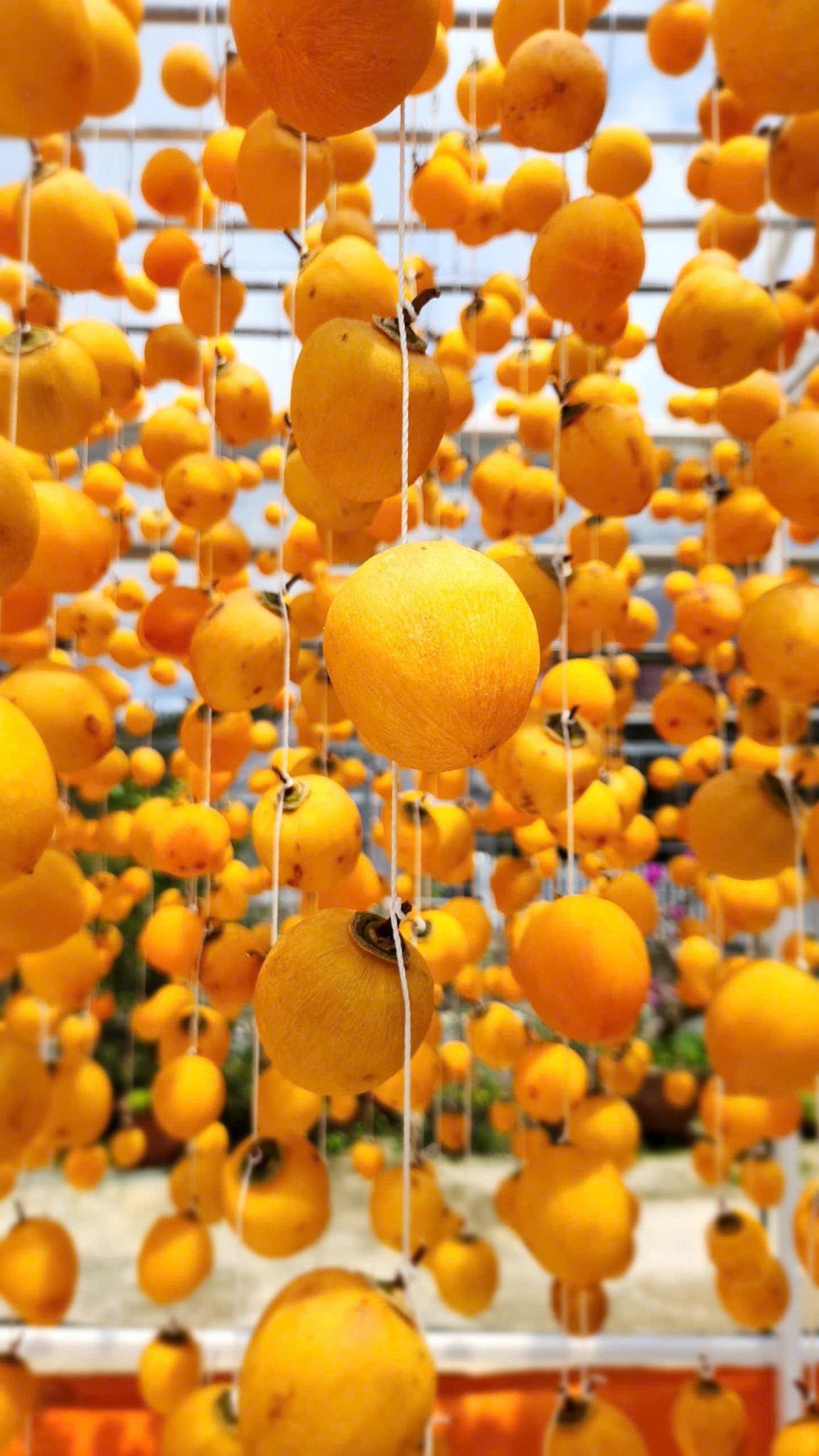
After preparation and careful hand-peeling, each persimmon is individually secured and hung on a string. No preservatives or sweeteners are added; the fruit dries naturally in the air.
The drying racks are placed inside glass enclosures fitted with mesh screens to keep out dust and insects while allowing air to circulate. The persimmons are left to dry until they are ready to be taken down. On cold evenings or during periods of heavy, chilly mist, convection heaters are used to maintain a stable temperature.
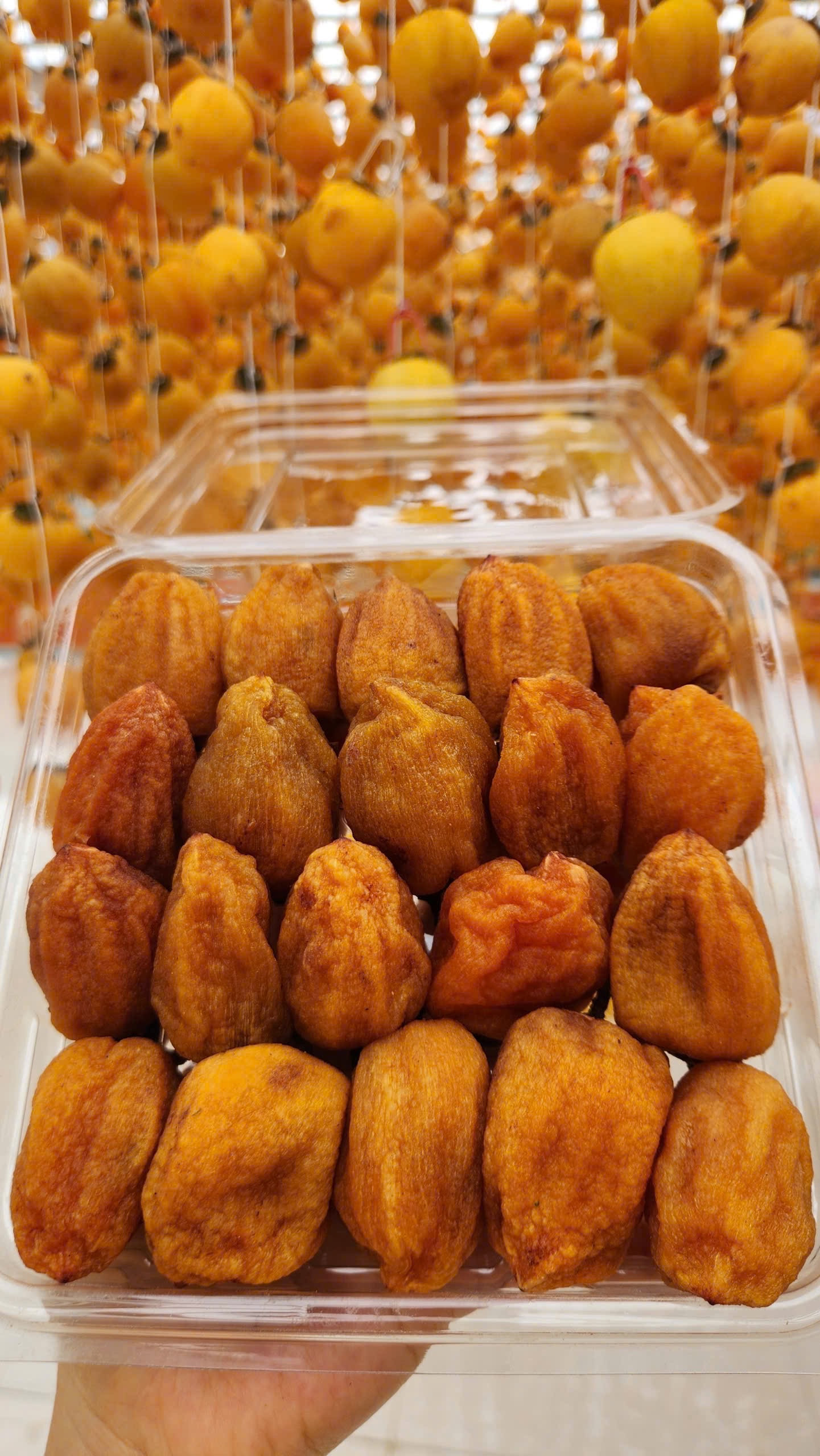
My explained that as the persimmons hang in the moving air, they gradually lose moisture while retaining their natural sweetness. After three to four weeks, the fruit shrinks and begins to release its natural sugars. The skin turns a deep orange-brown and develops a light coating of white bloom.
When bitten, the skin is slightly chewy, while the inside is soft, dense and honey-like, with a delicate sweetness and the characteristic flavor of ripe persimmons.
Under favorable weather conditions and with consistent fruit quality, around five kilograms of fresh persimmons yield one kilogram of wind-dried fruit.
Adding Value to Da Lat’s Local Specialty
Wind-dried persimmons currently sell for around VND 350,000 to VND 500,000 per kilogram in Da Lat, depending on quality. Buyers can store them in the refrigerator to enjoy over time.
The product has become a popular choice among visitors. Nguyen Thi My Nga, a tourist from Nghe An Province, said:
“I visited a Da Lat persimmon orchard laden with fruit to take photographs and was introduced to wind-dried persimmons. I also had the chance to see how they are made. They taste delicious and retain the flavor of fresh, ripe persimmons while keeping for longer, making them a suitable gift to take home for family and friends.”
Da Lat is home to hundreds of hectares of persimmon orchards supplying fresh persimmons, crisp persimmons, soft dried persimmons and, in particular, wind-dried persimmons to the market and visitors.
Wind-drying has provided additional income and greater stability for many persimmon-growing households in Da Lat. More than a decade ago, when fresh persimmon prices fell, processing the fruit into wind-dried products offered growers another way to increase its value. Today, wind-dried persimmons have become a distinctive Da Lat specialty, widely favored by visitors.