


Developing Tourism Products from Nature and Local Culture
Nam Ban Lam Ha Commune is restructuring its community tourism and craft village tourism models, integrating them with agriculture, natural landscapes, and high-tech farming — with the goal of turning tourism into a key economic sector that drives local socio-economic development.
Abundant Tourism Resources
Located just over 20 km east of downtown Lam Dong and 8 km from Lien Khuong International Airport, Nam Ban Lam Ha Commune enjoys a mild climate, rich natural ecosystems, and diverse cultural heritage — all offering strong tourism potential.
Currently, the locality is home to two officially recognized agritourism sites:
• Cuong Hoan Private Silk Production & Tourism Enterprise
• Tam Trinh Coffee Experiences
Another site is in the process of being evaluated for licensing, alongside numerous nature sightseeing and experience-based attractions.
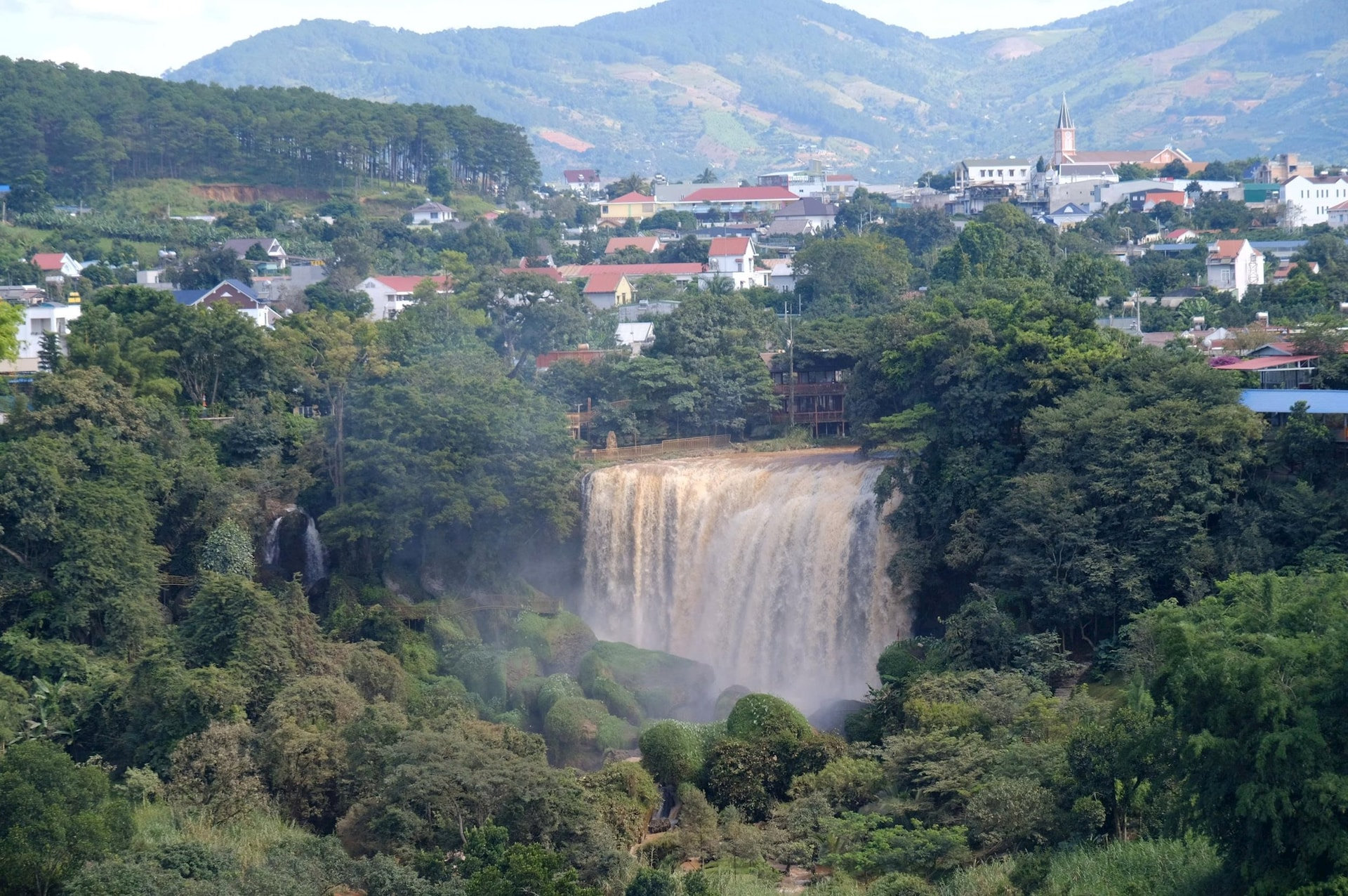
Since 2001, Elephant Waterfall (Thác Voi) has been recognized as a national-level scenic and cultural heritage site. Considered one of the most beautiful waterfalls in the Central Highlands, it is known in the K’ho indigenous language as Liêng Rơwoa Jơi Biêng — “the waterfall of stone elephants bowing in eternal love”.
At over 30 meters tall, the waterfall features misty spray and mysterious caves behind the cascading flow. Beyond its poetic beauty, Thác Voi also served as a revolutionary base during both the French and American wars.
Nam Ban Lam Ha Commune is also unique for its cultural imprint as the “homeland of Hanoi people in the Central Highlands”, preserving traditional Northern Kinh cultural heritage, including Quan họ folk singing, an iconic cultural expression of Kinh Bac. The area also features the Hai Ba Trung Temple in the former Me Linh Commune — where the Hai Ba Trung Festival is held annually on the 6th day of the Lunar New Year. Another major landmark is Linh An Pagoda, famous for its 70-meter-tall Avalokitesvara statue, among the tallest in Vietnam.
According to Ms. Le Thi Thuyet, Deputy Head of the Department of Culture and Society, Nam Ban Lam Ha Commune is also endowed with numerous rivers, streams, and water reservoirs with high tourism potential — including Cam Ly Thuong Dam, Dong Thanh Lake, Bay Tang Waterfall, Tron Lake, Bai Cong Lake, and Tu Liem Lake — forming a rich landscape network. Several tourism models leveraging culture, nature and agriculture have already been launched, initially meeting the demand for sightseeing and hands-on rural experiences, while helping improve local livelihoods and environmental awareness.
Building a Green Tourism Value Chain
From 2020 to 2025, Nam Ban Lam Ha Commune welcomed nearly 2 million visitors, including more than 39,000 international tourists. However, growth and investment efficiency at major sites are still not optimized.
In response, Nam Ban Lam Ha Commune has set a strategic vision to develop and connect tourism routes, while restoring and promoting its cultural and natural heritage assets. The commune has formulated a Tourism Development Plan to 2030, with vision to 2035, focusing on planning and upgrading local destinations and tourism products — with the target of having at least five officially recognized tourism sites, anchored in its strengths in culture, natural landscape, high-quality agriculture, and craft heritage.
The plan prioritizes investment and connectivity upgrades for key attractions such as Thác Voi and Linh An Pagoda — while elevating cultural heritage sites like the Hai Ba Trung Temple and Nam Ban Church to develop signature spiritual tourism products. At the same time, Nam Ban Lam Ha Commune aims to foster agricultural tourism, experience-based tourism, and craft village tourism.
This initiative is expected to accelerate economic growth, maximize the sustainable value of local tourism resources, and promote the cultural identity, people, and image of Nam Ban Lam Ha Commune to a broader audience.