


Dray Sap Waterfall: A Majestic Gateway to Vietnam’s Central Highlands Wilderness
Nestled on Lam Dong Province’s vast basalt plateau, Dray Sap Waterfall rises amid mist and roaring waters fed by the legendary Serepok River. Often described as the Central Highlands’ foremost waterfall, the site has been recognized as a national scenic site since 1993.
A symphony of firestone and reversed rivers
The journey to Dray Sap begins long before the waterfall appears. A winding road cuts through towering pine forests, where wildflowers line the slopes and morning mist drifts between mountain ridges. The air is cool, humid, and layered with the scent of forest and wet earth, creating a surreal transition into the highlands.
As visitors approach, Dray Sap reveals itself as a massive curtain of water set against endless coffee plantations and basalt terrain. The waterfall crashes down with force, sending white spray into the air and echoing through the valley like a continuous natural symphony.
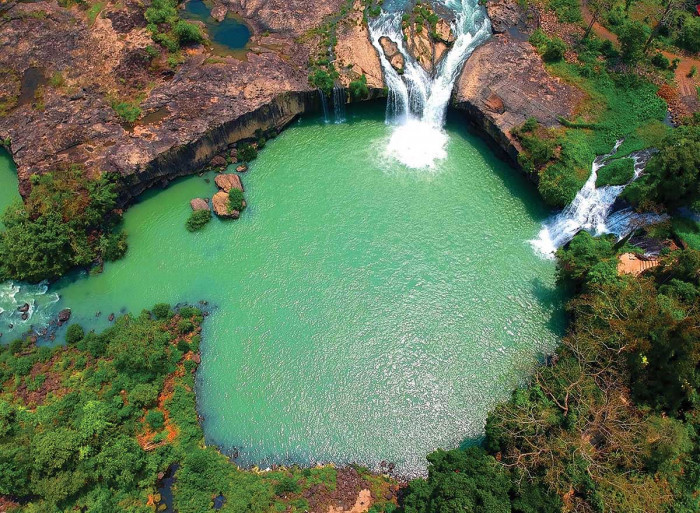
Located in Lam Dong Province, Dray Sap lies along the Serepok River, whose unusual reverse-flowing course has long shaped local legends. Molded by ancient tectonic movements and volcanic activity, the surrounding landscape is marked by rugged basalt formations that trace the region’s geological history over millions of years.
Geologists note that the waterfall system was shaped by tectonic subsidence, creating a valley that cuts across the river’s natural path. Lava flows from ancient volcanic eruptions formed columnar basalt structures still visible today.
The main fall stands around 20 meters high and nearly 100 meters wide, giving it a broad, powerful horizontal spread rather than a vertical plunge. This unique structure amplifies the sensation of force and scale.
During the dry season, water levels drop significantly, allowing visitors to walk across smooth basalt rocks while feeling the gentle flow beneath their feet.
In the Ede language, “Dray Sap” means “smoky waterfall,” a reference to the mist-like spray that constantly rises from the crashing water.
Legends of love and sacred rivers
Beyond geology, Dray Sap is deeply rooted in Central Highlands mythology. Local M’nong and Ede communities tell stories of star-crossed lovers whose tragic fate led to the formation of the Serepok River’s two branches — Krong No (male river) and Krong Ana (female river), giving rise to the twin waterfalls Dray Sap and Dray Nur, known as the “Husband and Wife waterfalls.”
Another legend tells of H’Mi, an Ede woman whose devotion and grief are said to have become the cascading waters of the falls after her husband’s death. These stories continue to shape the site’s cultural identity, where nature and spiritual memory are deeply intertwined.
A dynamic landscape shaped by seasons
Dray Sap Waterfall changes dramatically with the seasons.
From May to October, heavy rains transform the waterfall into a powerful torrent, with mist rising high and rainbows forming in the sunlight. From November to April, the flow softens, revealing basalt formations and calmer waters.
The surrounding forest becomes a living ecosystem of birds, butterflies, and ancient trees, offering visitors a constantly shifting natural experience.
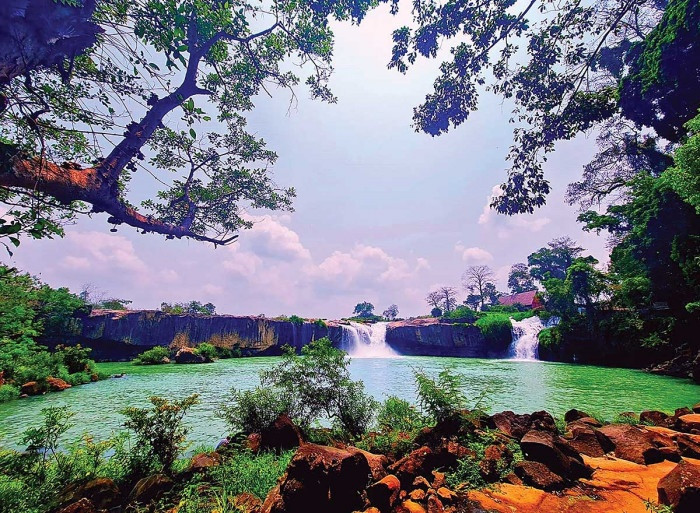
Walking deeper into the site, visitors encounter moss-covered stones, clear streams, and dense forest corridors filled with wildlife sounds. The contrast between raw geological force and serene landscape defines the character of Dray Sap.
A strategic node in Central Highlands tourism
Dray Sap is increasingly seen as part of a broader tourism corridor across the Central Highlands. Located near UNESCO Global Geopark areas, it connects to other natural landmarks such as Ta Dung Lake, Nam Nung Nature Reserve, and Lieng Nung Waterfall, forming an integrated ecological and cultural route.
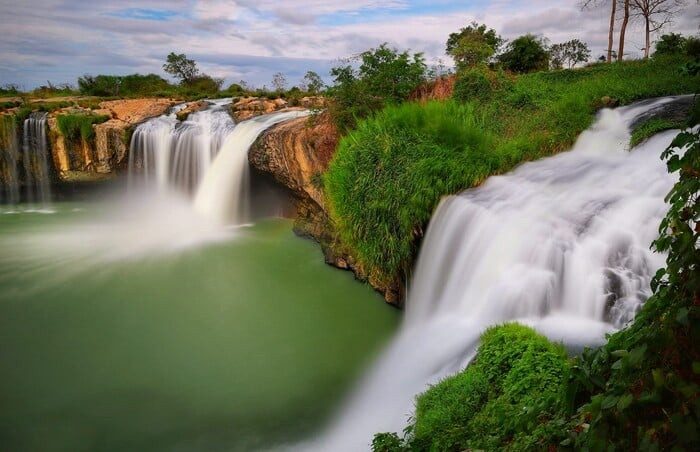
This positioning strengthens Dray Sap’s role as a core destination within Vietnam’s highland tourism strategy, linking geology, ecology, and indigenous culture into a unified experience.
A place that leaves only silence behind
Leaving Dray Sap, visitors do not carry away noise, but silence — the silence of ancient basalt, the eternal flow of the Serepok River, and the echo of legends carried through the forest wind.