


Ede Ethnic People Focus on Economic Development
The Ede ethnic community in western Lam Dong is gradually transforming its production mindset by applying science and technology to economic development. As a result, incomes have improved, and the appearance of local villages is becoming increasingly prosperous.
.jpg)
Transforming Production Mindsets, Creating Sustainable Paths out of Poverty
The Ede community primarily resides in the communes of Cu Jut, Dak Wil, and Nam Da, comprising a population exceeding 10,000 individuals. In the past, numerous Ede households encountered various challenges. Most families depended on traditional agricultural practices, primarily cultivating rice and corn, with their yields heavily reliant on weather patterns, leading to low economic returns and inconsistent earnings.
Thanks to communication campaigns by local authorities and support programs, residents have gradually changed their production mindset in recent years. Many households have shifted to high-value crops such as coffee, pepper, durian and avocado, while combining crop cultivation with livestock farming to increase income.
In Nui Village, Cu Jut Commune, coffee plantations intercropped with fruit trees have become a common sight, while advanced farming techniques have helped crops grow well and produce higher yields.
Discussing his journey towards economic improvement, Y Phich Prieng stated: "Our family's financial situation significantly improved after we adjusted our crop and livestock practices. In addition to growing rice, we cultivated over one hectare of coffee and raised chickens. Consequently, our family now earns more than 200 million VND annually, leading to a much more stable life."
In addition to Nui village, numerous families in K'Nha village, Dak Wil border commune, have also embraced technological advancements in their farming practices. Appropriate crop management and the adoption of enhanced varieties have contributed to improvements in both productivity and the quality of agricultural output.
.jpg)
H'Oan H'ra from K'Nha village, Dak Wil commune, shared: “With guidance from agricultural officers, my family learned better ways to care for coffee and pepper plants, so productivity increased. With a stable income, I can confidently send my children to school and build a better home.”
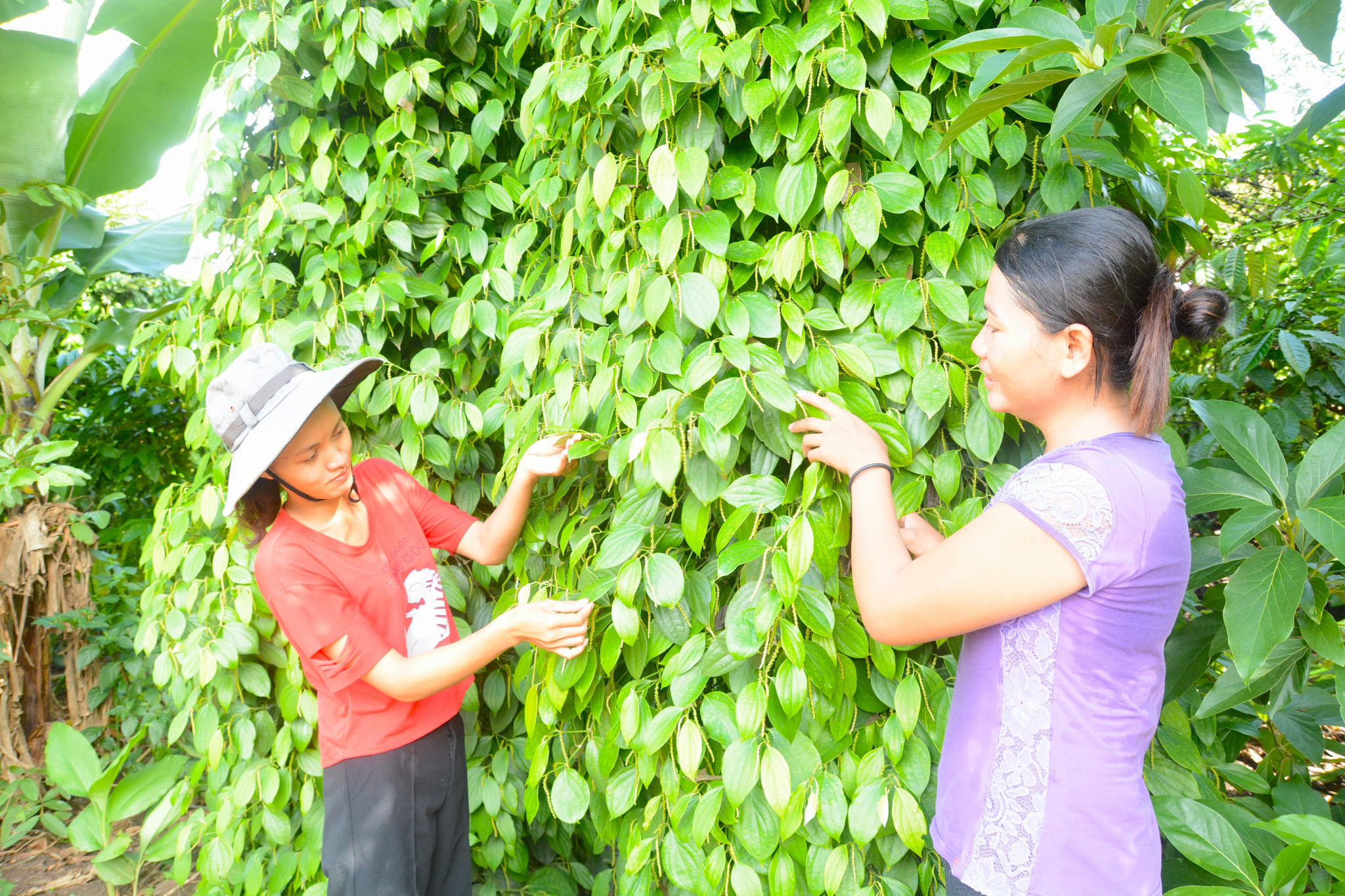
Economic Growth Brings New Changes to Villages
As the production changes, the Ede villages in western Lam Dong are seeing a rise in prosperity. Numerous successful economic initiatives have been scaled up, contributing to better income levels for the locals.
Alongside crop cultivation, residents are developing commercial livestock and poultry farming, with many households using preferential loans to expand production and build stable livelihoods.
.jpg)
Trum village, located in Cu Jut commune, consists of 105 households and has a population of over 300, with more than 95% identifying as Ede ethnic group members. In collaboration with local authorities to advance their community, residents voluntarily contributed more than 1,000 square meters of land to enhance and expand inter-village roads, improving travel, production, and trade.
Mr. Ro Cham Tuyet, the Secretary of the Party Cell in Trum village, remarked: “Previously, life here was quite challenging. With government investment in infrastructure, economic support initiatives, and the unity of the villagers—some offering land, while others provided funds and labor—Trum village has experienced notable growth, resulting in a cleaner and more spacious environment.”
People now know how to develop the economy effectively, and the poverty rate has decreased considerably. In 2021, the village still had 17 poor households (17.53%). By 2023, the number had fallen to 10 households (9.35%). The village now has no poor households, with only three near-poor households remaining. More successful economic models are also emerging across the village.
Ro Cham Tuyet, Secretary of the Party Cell in Trum village
.jpg)
As household incomes improve, both material and spiritual living standards have significantly improved. Durable homes are increasingly replacing temporary accommodations, and living as well as production spaces are being upgraded. Many families are prioritizing education for their children.
Numerous parents are eager to invest in their children's higher education, believing that the young generation will gain better access to knowledge and stable professions, thereby aiding in the growth of their homeland.
Rural infrastructure has also been consistently enhanced. Roads have been paved with concrete, while the systems for electricity and clean water have been extended, fostering favorable conditions for socio-economic progress.
.jpg)
These achievements reflect not only the hard work of local residents but also support from local authorities through practical policies and development initiatives.
Commenting on the Ede community’s progress, Mr. Y Jut Buon Ya said: “In recent years, local authorities in western Lam Dong have supported the Ede people through preferential loan programs, technical training and the promotion of effective economic models. Looking ahead, we hope authorities at all levels will continue helping residents improve their incomes, reduce poverty sustainably and raise their living standards.”
Alongside economic development, the Ede community continues to preserve its traditional cultural identity, combining livelihood improvement with cultural enrichment to promote comprehensive progress.
.jpg)
Visible transformations are taking place throughout Ede villages. Inefficient fields have been replaced by productive gardens generating stable income; temporary houses have given way to solid homes. The journey of the Ede people in western Lam Dong stands as vivid proof of changing mindsets and aspirations for sustainable development.