


Elevating Dragon Fruit to a National Key Crop
In a bid to position dragon fruit as a national key crop, the Lam Dong Department of Agriculture and Environment is collaborating with local authorities, businesses, and farmers to implement a range of synchronized solutions. The focus is on improving the quality of new varieties, applying VietGAP, GlobalGAP, and organic standards, implementing electronic traceability, and enhancing processing capabilities to expand domestic markets and boost exports.
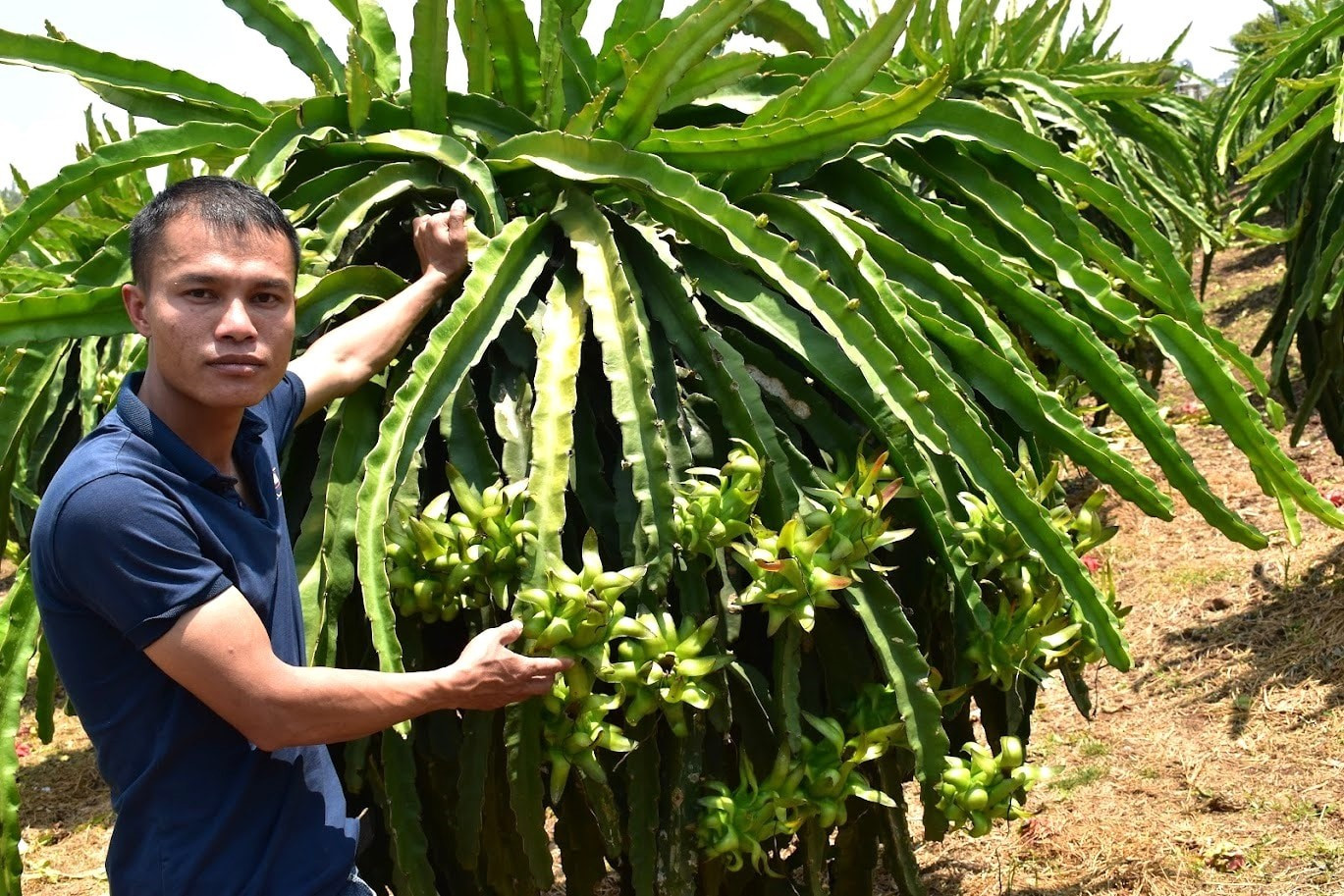
Building Large-Scale Production Zones
Since August 2019, when the former Binh Thuan Provincial People’s Committee (now Lam Dong Province) identified dragon fruit as a strategic crop, multiple incentive policies have been issued to encourage enterprise investment. In April 2024, the province launched the “Dragon Fruit Development Plan to 2030.”
Under this plan, large-scale commercial farming zones have been mapped out, ensuring disease safety, environmental sustainability, and compliance with domestic and international good agricultural practices.
The Lam Dong Department of Agriculture and Environment treats this as a long-term mission, closely monitoring market trends and consumer demands to make timely policy adjustments for dragon fruit production and consumption.
According to the Lam Dong Plant Protection and Crop Production Sub-Department, all dragon fruit cultivation areas in Lam Dong have been assigned production codes and packing facility codes for export to major markets such as China, the U.S., South Korea, Japan, Australia, and New Zealand. Specifically, 106 production area codes covering 14,377 hectares and 38 packing facility codes have been verified and monitored, while 25 new production area codes (1,232 hectares) and 19 packing codes were recently issued.
Lam Dong now has about 25,900 hectares of dragon fruit—nearly 40% of the country’s total area. Off-season lighting techniques allow stable harvesting across more than 22,000 hectares, yielding about 520,000 tons— an increase of 7% compared to the same period in 2024.
Currently, 45% of the total area meets VietGAP standards, 12% meets GlobalGAP standards, and about 300 hectares are certified organic. White-flesh varieties make up 65% of production, while red- and purple-flesh account for 35%.
The domestic market accounts for approximately 18% of production, primarily distributed through major retail systems like Winmart, BigC, and Co.opmart, as well as wholesalers like Thu Duc and Binh Dien. In the first half of 2025, white-flesh dragon fruit prices averaged about 12,000 VND/kg lower than red-flesh varieties.
Turning Advantages into a Sustainable Brand
According to Huynh Canh, Chairman of the Binh Thuan Dragon Fruit Association, from late 2025 the region will expand an additional 1,000 hectares of GlobalGAP and organic-certified cultivation. At the same time, businesses are being encouraged to invest in deep-processing products such as dried, frozen, and juice-based dragon fruit to extend shelf life.
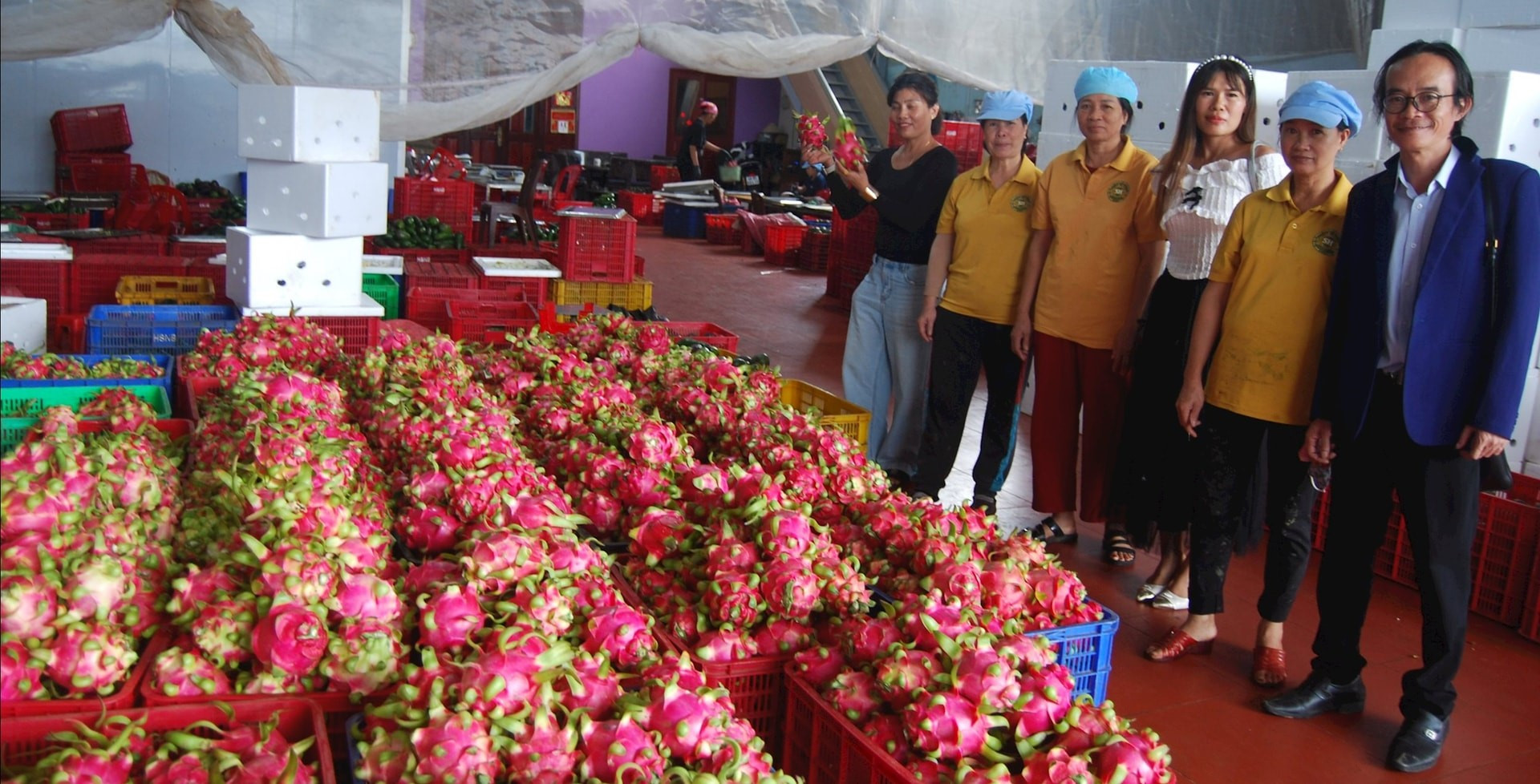
and international markets
Efforts are also underway to maintain geographical indication protection, strengthen branding with QR traceability labels, and actively participate in international trade fairs in Hong Kong, India, the UAE, and Europe. These are critical steps toward expanding market share in potential markets such as the U.S., EU, Japan, South Korea, India, and the Middle East.
Expanding Market Access
The Lam Dong Department of Agriculture and Environment is currently attracting investment to establish a dragon fruit quality inspection facility in Lam Dong’s Zone 2. Previously, a company had registered to build a testing facility in Zone 1, facilitating easier quarantine and food safety analysis before export.
In parallel, the department is working with the Plant Protection Department to negotiate with the U.S. Animal and Plant Health Inspection Service (APHIS) on adopting heat treatment measures for fresh dragon fruit exports. It is also collaborating with the Southern Fruit Research Institute to rejuvenate and replant white-flesh varieties to adapt to climate change, improve yield and quality, enhance pest resistance, and replace aging, low-yield plantations.
Toward a National Key Crop
With favorable natural conditions, rising product quality, and expanding market potential, Lam Dong’s dragon fruit has strong foundations to become a national key crop. This not only affirms its sustainable brand but also contributes to higher farmer incomes and promotes green economic growth in a land that harmonizes both sea and forest.