


Elevating Lam Dong Coffee to the Premium Segment
Coffee beans are harvested at full ripeness, carefully selected, fermented, and sun-dried. Through these meticulous processes, Lam Dong coffee is being refined and positioned step by step to enter the premium segment.
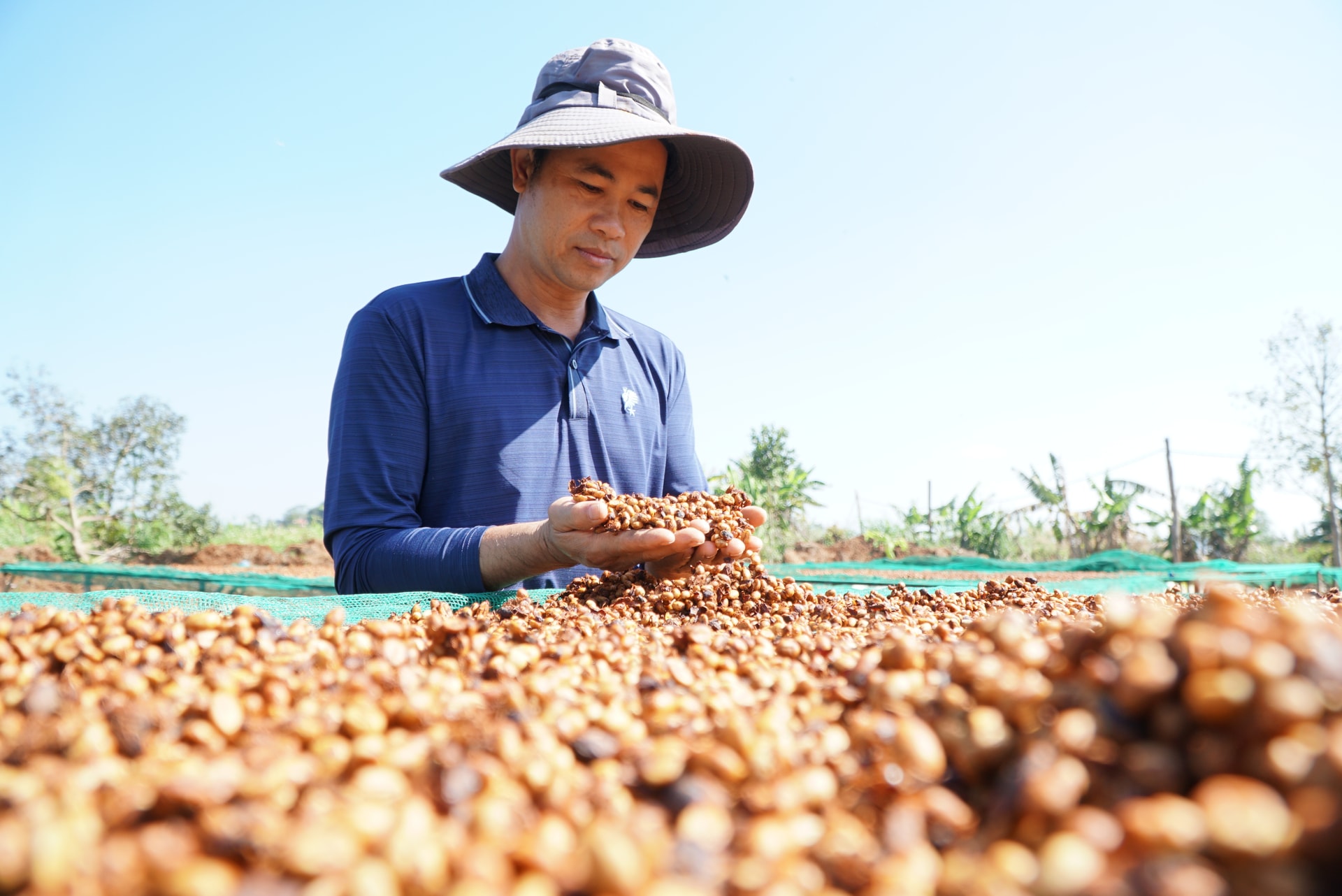
Seeking the Value of Coffee
Mr. Vo Dinh Danh, aged nearly 50, is a native of Duc Lap Commune, one of the earliest coffee-growing areas in the Central Highland. In 2012, when the coffee prices dropped, he began seeking a sustainable development path for coffee cultivation. He attended coffee development workshops organized by the provincial authorities, where he was first introduced to high-quality and specialty coffee—concepts that were still unfamiliar to most farmers at the time.
After returning from the workshop, Mr. Danh had a few reference materials and no specific guidance. There was limited information on specialty coffee at the time, so he had to explore and experiment on his own. He began with small batches, trying out different processing methods. In the first harvest, after considerable effort and many failed attempts, he obtained only 70 kilograms of finished coffee.
He brought this small amount of coffee to Ho Chi Minh City, where he roasted, ground, and cupped it with experienced professionals. For Mr. Danh, those first tasting sessions were not merely quality checks but the first serious confrontation with the product he had created himself.
For three consecutive years, Mr. Danh devoted himself entirely to coffee, conducting hundreds of processing trials through a cycle of trial, error, and adjustment—from replanting new varieties and tending the trees to determining harvest timing, processing methods, drying, and storage. Only after establishing a clear approach and gaining market acceptance did he begin to consider increasing production.
Establishing an easy-to-apply process for farmers
In 2013, Mr. Danh established the Dak Mil Agricultural and Forestry Cooperative to secure sufficient land for raw materials. The cooperative unites local coffee producers to improve the quality of their coffee. Mr. Danh offers training and shares the production methods he has researched and validated with cooperative members for collective application.
The process starts with selecting varieties, caring for the orchards, and harvesting only fully ripe coffee. This is followed by proper processing, drying on mesh beds, and storing techniques to ensure uniform product quality.
Members of the cooperative utilize organic farming practices, allowing natural grass to grow, weeding only after applying fertilizer, and keeping ground cover to retain moisture and mitigate soil erosion. After establishing the process, the cooperative held coffee cupping sessions, allowing each member to review their entire production process and pinpoint necessary adjustments to enhance bean quality.
By 2017, the cooperative had become heavily engaged in premium coffee production. Annually, it produces approximately 40 tons of specialty, high-quality coffee, with green bean prices 30–40% above market rates.
Lam Dong Province has approximately 328,000 hectares of coffee cultivation, with an expected yield of about 1 million tons for the 2025–2026 crop year. Over 98% of coffee exports remain ungraded green beans. Additionally, the common practice of harvesting unripe beans—motivated by yield pressures or seasonal labor shortages—continues to diminish coffee's value. This poses a significant obstacle to Lam Dong coffee entering the specialty market.
Within this framework, the model established by the Dak Mil Agricultural and Forestry Cooperative offers a sustainable and effective roadmap, gradually steering Lam Dong coffee toward the premium market.