


EPR Mechanism Promotes Green Agricultural Production
To achieve the target of collecting 80% of pesticide packaging in accordance with regulations by 2030, Lam Dong’s agriculture and environment sector is accelerating the application of the Extended Producer Responsibility (EPR) mechanism in conjunction with green agricultural production programs. The approach aims to shift from a model in which the State is solely responsible for collection and treatment to one where manufacturers and producers share responsibility for managing waste.
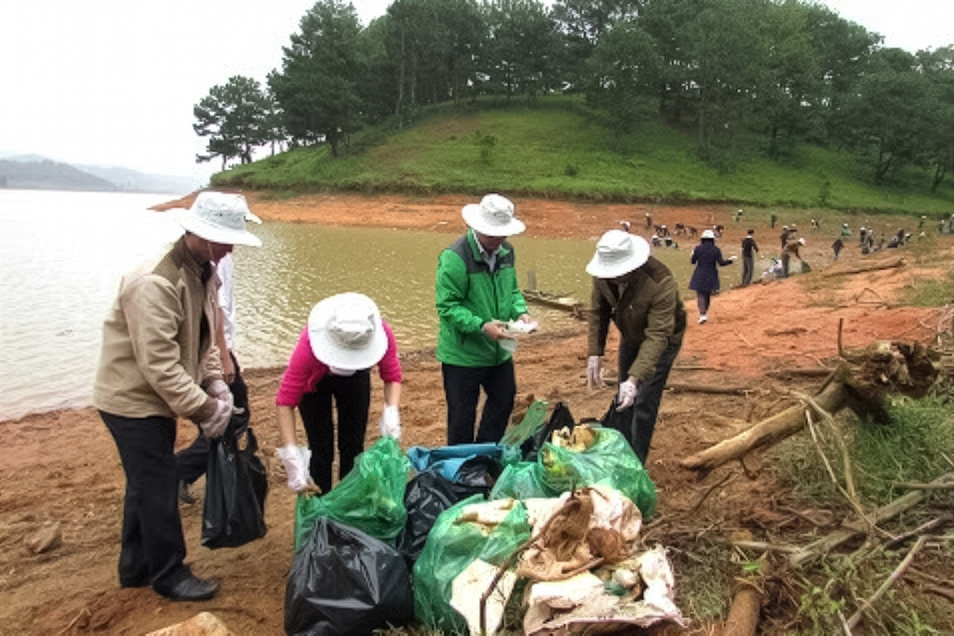
Environmental Risks Remain a Concern
With more than one million hectares of agricultural land, Lam Dong generates millions of pesticide packages every year, amounting to tens of tonnes of hazardous waste that pose risks to the environment.
The province has established 4,810 collection tanks for pesticide packaging and 23 temporary storage facilities. Of these, 3,980 collection tanks remain in operation, while 830 have deteriorated or been damaged. In many agricultural areas, pesticide packaging is still discarded outside designated containers or washed downstream during the rainy season, causing soil and water pollution.
To address these ongoing environmental risks, the province has allocated billions of Vietnamese dong from its budget over the past year to support periodic collection and treatment activities. Numerous collection points and new storage tanks have been installed in residential communities and key agricultural production areas.
For example, local authorities are required to build collection tanks and organize the collection and transportation of pesticide packaging for proper treatment in areas with every 10 hectares of perennial crops or every 3 hectares of annual crops.
The agriculture and environment sector has organized awareness campaigns and outreach programs encouraging farmers to collect and properly dispose of pesticide packaging, particularly in key production zones and watershed areas. These activities have been integrated with programs implemented by businesses and industry associations. At the same time, we are expanding integrated pest management (IPM), integrated plant health management (IPHM), and production models following VietGAP and GlobalGAP standards to reduce dependence on chemical pesticides
Vu Thi Thuy, Deputy Head of the Provincial Sub-Department of Crop Production and Plant Protection
Implementing the EPR Mechanism More Effectively
However, budget constraints have prevented some localities from implementing collection programs regularly, resulting in an estimated provincial collection rate of only 38.6% for pesticide packaging.
To secure additional resources for maintaining and expanding collection systems, agricultural input manufacturers and distributors are expected to implement the EPR mechanism not only through financial contributions but also by directly participating in packaging recovery through dealer networks, investing in collection equipment, and improving hazardous waste treatment from the point of generation.
According to Han Quynh Chau, an engineer of the Provincial Agricultural Extension Center, maximizing the effectiveness of the EPR mechanism requires stronger guidance for farmers on sorting and promptly delivering pesticide packaging to designated collection points.
Only through coordinated efforts among government agencies, businesses and farmers can the province effectively reduce environmental pollution from pesticide packaging waste, helping build sustainable agricultural value chains and advance the development of a green economy.
Specifically, local authorities are expected to accurately assess the volume of pesticide packaging generated in order to propose EPR funding and establish collection points and storage facilities in the most convenient production areas.
Farmers are encouraged to rinse pesticide containers after use, return the rinse water to spraying equipment, puncture the packaging to prevent reuse, and transport it to designated collection sites.
At the same time, wider adoption of integrated pest management practices and biological pesticides can significantly reduce hazardous packaging waste at its source, contributing to environmental protection and ensuring sustainable livelihoods for farmers.
Under the Law on Environmental Protection, the EPR mechanism requires manufacturers and importers to either directly organize the collection and recycling of pesticide packaging or make financial contributions to the Environmental Protection Fund to support these activities.