


Ethnic Minority Farmers in Ta Nung Thrive Through Agricultural Innovation
From traditional farming practices, ethnic minority communities in the Ta Nung area of Cam Ly - Da Lat Ward have actively shifted their mindset, learning and applying more effective agricultural models. These changes are gradually opening up sustainable development opportunities for household and community economies.
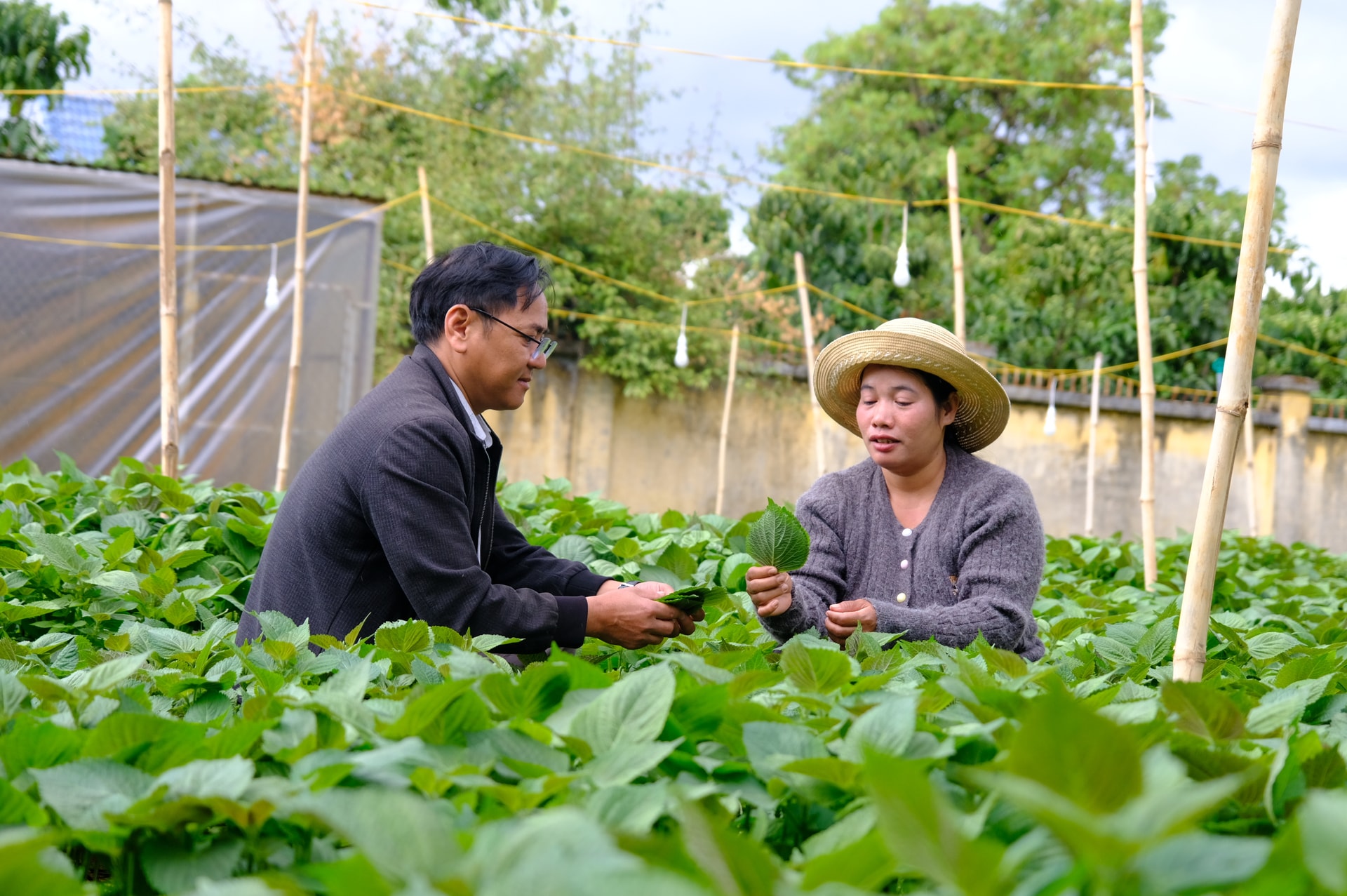
One of the typical examples frequently mentioned by local residents is Cil Ha Phuoc, a young K’ho farmer and head of the Ta Nung 2 Farmers’ Association branch. With a keen sense of the market, he not only runs his farm effectively but also contributes funds to expand roads leading to production areas and willingly shares his experience with other farmers.
In addition to traditional coffee cultivation, he grows avocado, bananas, and foliage plants used for flower arrangements such as dollar leaves and ming fern. Recently, he and many local farmers have shifted to growing sesame leaves. By diversifying crops, household incomes have become more stable while reducing the risk of fluctuating prices.
In coffee production, many households have proactively renovated their gardens, replanting with new varieties and applying advanced techniques to increase productivity. A typical example is Mbon Ha Muoi, a successful farmer whose annual revenue exceeds VND 1 billion. When agricultural products command good prices, farmers invest more carefully in cultivation and gradually change old farming habits. Many families have also boldly switched to growing flowers such as chrysanthemums and gerberas.
From these pioneering individuals, many inefficient farming areas have been converted, and new models have been tested and proven effective, contributing to changes in the agricultural economy of ethnic minority communities in Ta Nung.
According to Vu Minh Tan, Vice Chairman of the Farmers’ Association of Cam Ly - Da Lat Ward, over the past five years farmers have boldly shifted crop structures in response to market demands and production realities. Once effective models proved successful, good practices quickly spread, helping transform the production mindset of many households, from small-scale farming dependent on a single crop to diversified cultivation that takes into account market demand and added value.
Alongside self-driven efforts, capital from the Vietnam Bank for Social Policies has provided additional motivation for farmers to invest in production. Under the orientation of local authorities, the Farmers’ Association has strengthened communication and encouraged the development of more sustainable and efficient economic models compared with traditional practices. Many training courses and technology transfer programs have been organized to help farmers increase productivity and meet growing market demands.
Cam Ly- Da Lat Ward currently has 576 ethnic minority households with 1,779 residents, mainly living in Ta Nung neighborhoods. In recent years, the locality has implemented national programs on ethnic minority development with practical solutions. As a result, both material and spiritual living standards have improved significantly. Average income per capita has increased by about 1.3 times compared with 2020, while about 55% of ethnic minority workers have received vocational training.
At the same time, the locality has mobilized social resources to invest in socio-economic infrastructure, including rural roads, electricity, water for production, and community cultural facilities. Access to preferential loans, especially from the Vietnam Bank for Social Policies, has helped many households boldly switch crops and expand production, gradually narrowing development gaps between different areas.
In the coming time, Cam Ly - Da Lat Ward will continue mobilizing and effectively using resources in a practical and sustainable direction. The focus will be on economic restructuring, improving the quality of skilled agricultural labor, and encouraging production linkages associated with stable consumption markets. Activities supporting production expansion and job placement programs will also continue, creating more opportunities for workers, especially young ethnic minority laborers. The goal is not only to increase incomes but also to build a comprehensive and sustainable ethnic minority community in their homeland.