


Expanding Value Chains for Key Agricultural Crops
Western Lam Dong is home to four major industrial crops — coffee, pepper, rubber and cashew. However, value chain linkages for these key products remain limited and require further expansion to unlock their full economic potential.
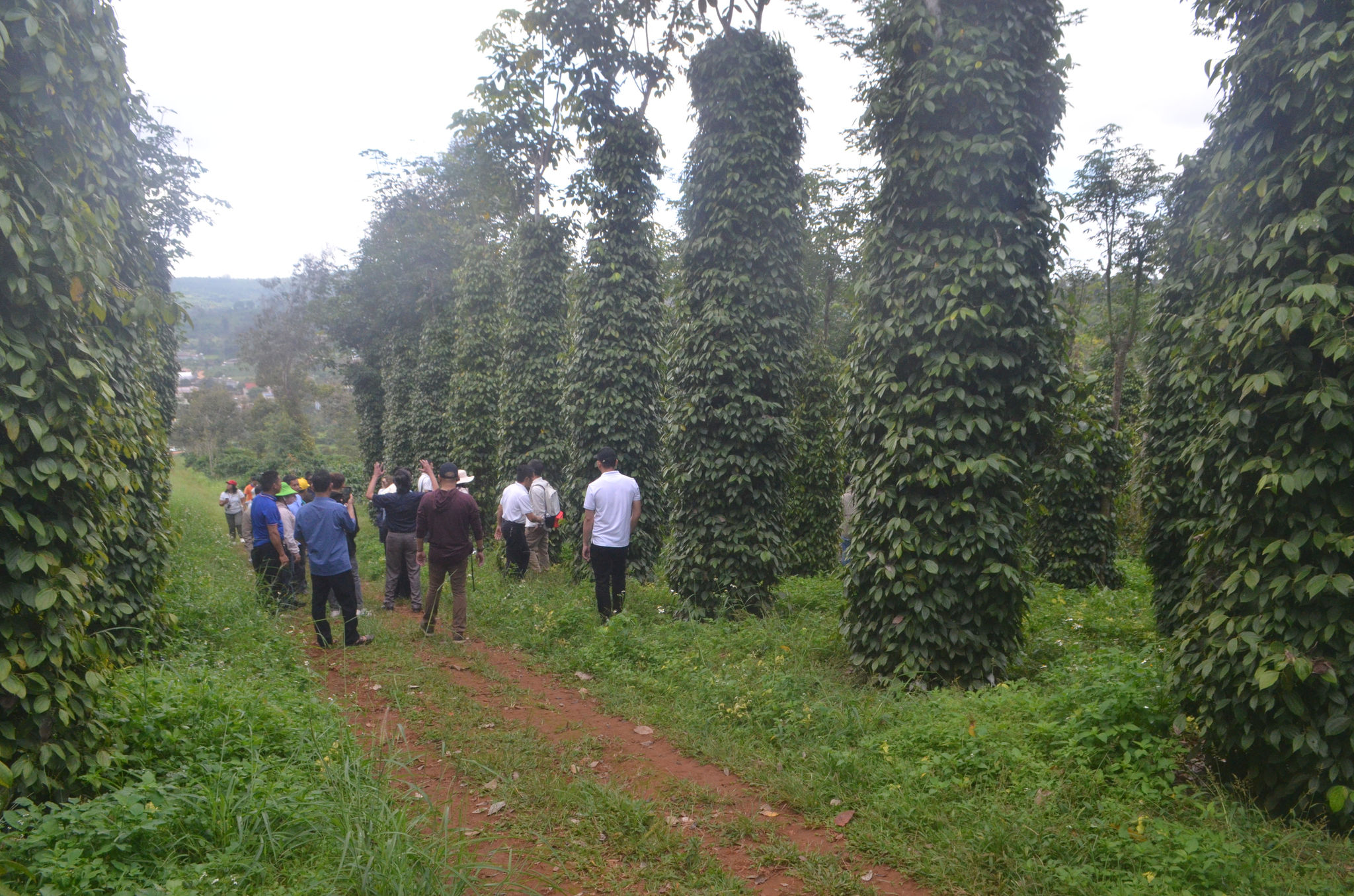
Promoting Sustainable Agricultural Linkages in Western Lam Dong
In Duc An Commune, Chairman of the Commune People’s Committee Vo Quoc Tuan said coffee and pepper are the two leading industrial crops, covering more than 13,000 hectares. The locality considers the expansion of agricultural value chains a top priority in promoting sustainable agricultural development.
Duc An continues to strengthen communication, mobilization, support and technical guidance for farming households, cooperatives and enterprises to develop production toward higher quality and added value associated with certified good agricultural practices and food safety standards. These advantages are seen as important factors in attracting investment and encouraging enterprises to participate in product purchasing and distribution.
The commune is also expanding its high-tech coffee production area to 450 hectares, involving two cooperatives and around 200 farming households.
Meanwhile, Truong Xuan Commune has one of the largest pepper-growing areas in western Lam Dong, with more than 4,800 hectares. Nguyen Van Anh, Chairman of the Commune Farmers’ Association, said several households and cooperatives have already adopted certified production models for pepper, including Rainforest Alliance (RA) and organic standards, though current production remains small-scale.
The commune is now conducting surveys and assessments for individual households and neighboring farming groups to gradually expand standardized pepper-growing zones on a larger scale, creating favorable conditions for attracting major enterprises to purchase products under long-term contracts.
Nguyen Thi Ha, a resident of Hamlet 10 in Truong Xuan Commune, said her family owns one hectare of pepper plantation. Over the past two years, she has participated in local training courses on certified production standards.
“After two years of preparation, I believe my family now has sufficient conditions to apply organic pepper cultivation processes. We are registering to join a cooperative with output purchasing commitments to stabilize product consumption,” she shared.
Digital Transformation Seen as a Lever for Agricultural Value Chains
Speaking at a recent conference with localities in western Lam Dong, Le Trong Yen, Member of the Provincial Party Standing Committee and Permanent Vice Chairman of the Provincial People’s Committee, emphasized that the province is prioritizing investment in logistics infrastructure, processing centers and cold storage systems, while also expanding international cooperation in seed research, technology transfer and foreign direct investment to support high-tech, value-chain-based agriculture.
According to the provincial leader, localities should take advantage of these favorable conditions to elevate existing agricultural and rural value chains, thereby improving people’s livelihoods.
He stressed that turning opportunities into tangible outcomes requires coordinated participation from authorities, businesses and residents, along with clear planning, stronger regional connectivity and focused, long-term investment strategies.
In particular, digital transformation is considered a key driver in improving value-chain governance through solutions such as crop-area management systems, electronic traceability stamps and online agricultural trading platforms, helping establish sustainable linkages among farmers, cooperatives and enterprises.
Preliminary statistics show that the province’s 28 western communes and wards currently manage around 235,000 hectares of perennial and industrial crops. The region has established and maintained 113 agricultural production and consumption linkages involving approximately 10,000 farming households.
Most large-scale linkages focus on the province’s strategic agricultural products, especially coffee and pepper. Many production models have adopted cultivation processes that meet domestic and international standards such as VietGAP, GlobalGAP, Organic, 4C, Rainforest Alliance and UTZ certification systems.