


Expecting a bumper rice harvest
The communes and wards in the southeastern area of the province are entering the production and crop care stage of the 2025–2026 winter–spring season. Despite the dry season, thanks to sufficient and favorable irrigation water, along with other crops, most rice-growing areas are developing well, raising expectations for a bumper harvest.
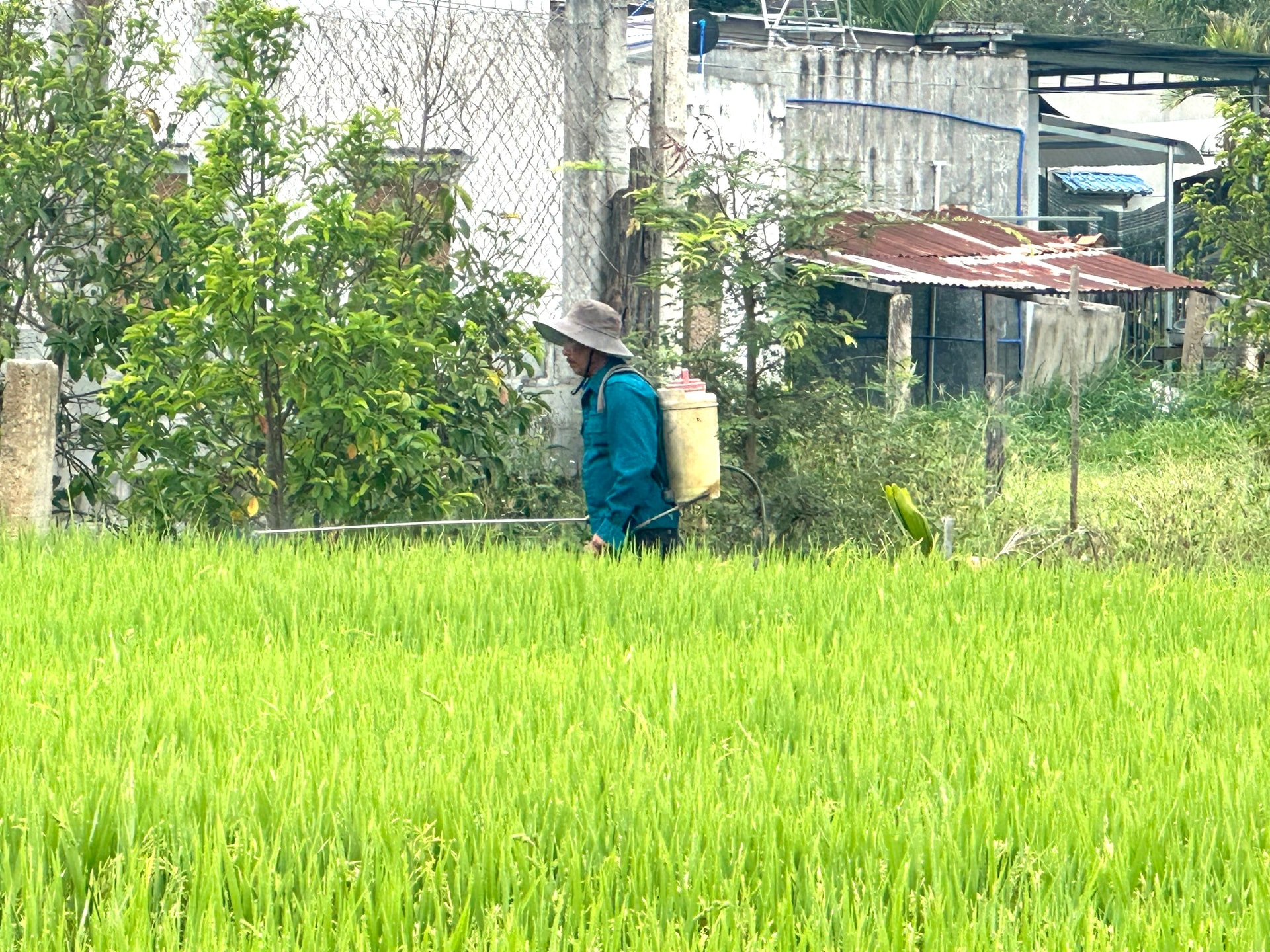
Rice fields thriving
By mid-March 2026, many rice-growing areas in southeastern communes and wards have reached the panicle initiation and flowering stage, creating vast stretches of vibrant green paddies.
In Tu Son Hamlet, Song Luy Commune, farmer Phung Van Sy carefully tends his field, removing weeds and unwanted rice plants that could affect productivity. His family cultivates about 7,500 square meters of rice, irrigated by water from the Dai Ninh Reservoir.
With strong plant growth and full panicles forming across the field, Sy expects the crop to be ready for harvest within about a month, with yields likely higher than previous seasons.
Nearby farmer Dam Van Hien, who grows more than one hectare of winter–spring rice, shares the same optimism. Abundant sunshine, stable irrigation, and relatively low pest pressure have supported strong crop development. He estimates yields could exceed 650 kilograms per 1,000 square meters.
armers are pinning their hopes on a price increase as the harvest approaches to maximize profit margins. In Song Luy Commune, nearly 570 hectares of winter-spring rice are nearing maturity, with high-yield varieties like Dai Thom 8 and OM18 widely cultivated. Thanks to favorable weather, pest pressure has remained minimal.
The positive outlook extends to other key agricultural areas, including Tanh Linh and Bac Binh, where healthy crop growth points toward a bountiful season. However, with the dry season intensifying, local authorities are stepping up strategic irrigation management to safeguard yields.
In Tanh Linh District, nearly 3,600 hectares of crops are being cultivated in the winter–spring season, including 2,930 hectares of rice. Local water user groups have coordinated irrigation schedules to help farmers prepare their land, sow seeds, and care for crops on time.
Farmers are also being encouraged to clear canals and irrigation channels, arrange crops with similar growth cycles in the same areas, and improve water distribution to maximize efficiency.
Authorities are also promoting reduced pesticide use, particularly as harvest approaches, to prevent chemical residues and ensure safe agricultural products.
The provincial agricultural sector has urged farmers to regularly inspect irrigation canals and reservoirs, repair leaks quickly, and adopt water-saving irrigation methods such as sprinkler or drip systems where possible.
Farmers are also advised to closely monitor their fields and control common pests and diseases—including brown planthoppers, stem borers, thrips, and rice blast—during critical growth stages.
According to the provincial Sub-Department of Crop Production and Plant Protection, the province currently has more than 54,600 hectares of winter–spring rice, including over 38,840 hectares in the southeastern region at various stages of development—from seedlings and tillering to flowering, ripening, and harvest.