


Exploring the National Park Through the Heritage Two-Needle Pine Forest
High on the majestic Lang Biang Plateau, deep within the core zone of Bidoup–Nui Ba National Park, lies a breathtaking cluster of 108 ancient two-needle pine trees, aged between 700 and 1,000 years. Recognized as Vietnam Heritage Trees, these natural giants stand as living witnesses to the Earth’s evolutionary history — and as a symbol of sustainable forest-based eco-tourism.
A Prehistoric Echo in the Ancient Forest
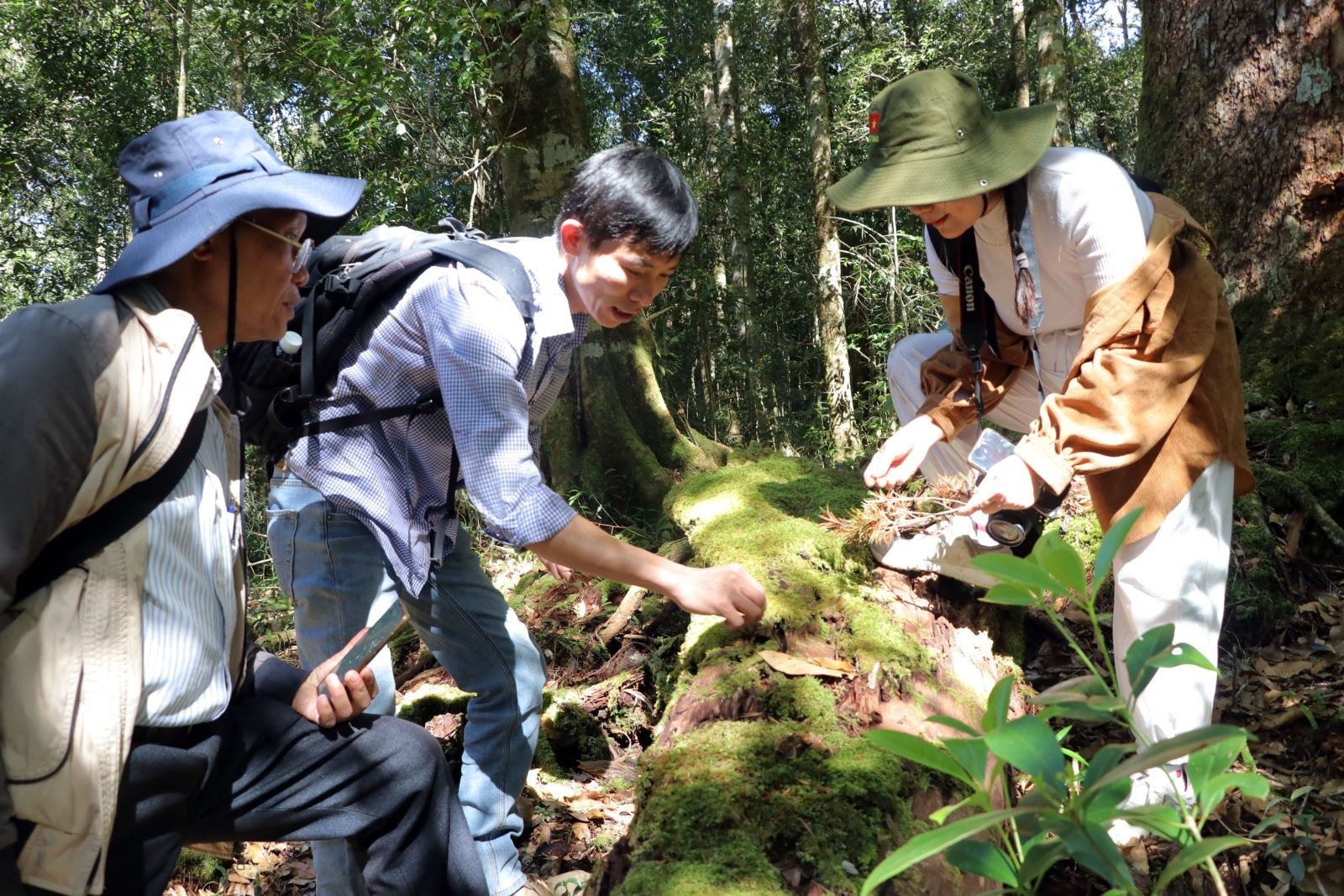
The journey to the ancient pine grove is a mesmerizing adventure through pristine wilderness. Dense mixed forests blanketed in moss and lichen, winding streams whispering beneath the canopy, and the melodies of birds and insects combine to create a symphony of life. Sunlight filters through the mist and treetops, illuminating the forest floor like a timeless painting.
Established in 2004, Bidoup–Nui Ba National Park is one of Vietnam’s most biologically diverse areas, home to 2,089 plant species, including 74 listed in the Vietnam Red Data Book. Among its treasures are rare and endemic species such as Fokienia hodginsii, Calocedrus macrolepis, and Cupressus tonkinensis — and most notably, the two-needle pine (Pinus krempfii), a globally recognized species featured in both the national and international Red Lists.
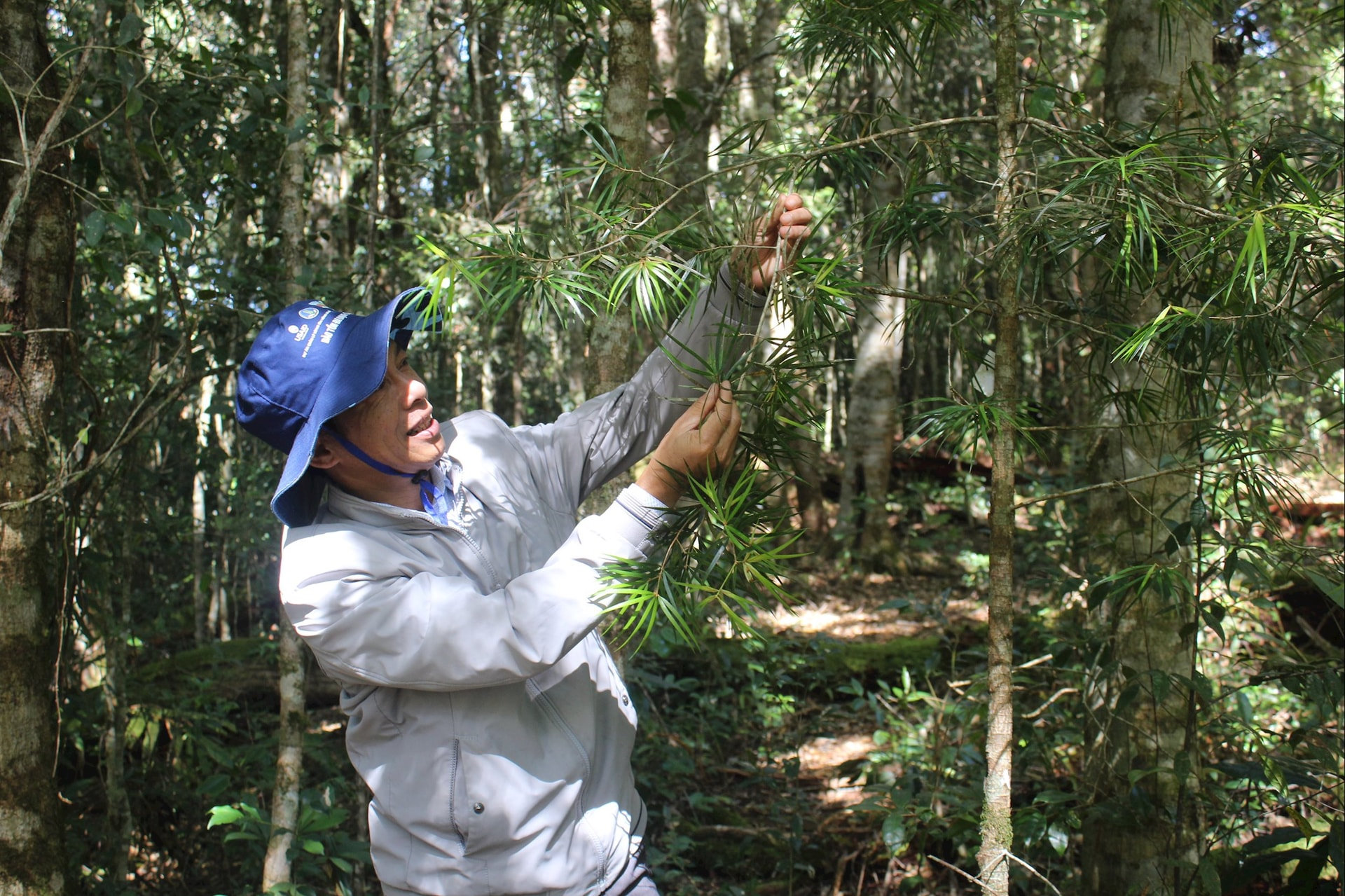
Endemic to the Lang Biang highlands, this unique pine species is easily identified by its flat, paired leaves, delicate form, and distinct cones — earning it the poetic name “the messenger from prehistory.” Botanists describe it as a “living fossil”, the only surviving member of a genus that once thrived during the Tertiary Period and is now known mostly from fossil records.
Beyond its immense scientific, ecological, and aesthetic value, the ancient pine forest holds deep spiritual meaning for the local K’ho ethnic community. The trees are seen as sacred guardians — symbols of ancestral faith and traditional cultural identity. The Vietnam Association for Conservation of Nature and Environment recognized the 108 ancient trees as Vietnam Heritage Trees, honoring not only their biological importance but also their role in the spiritual and cultural life of the highland people.
Guardians of Time and the Forest
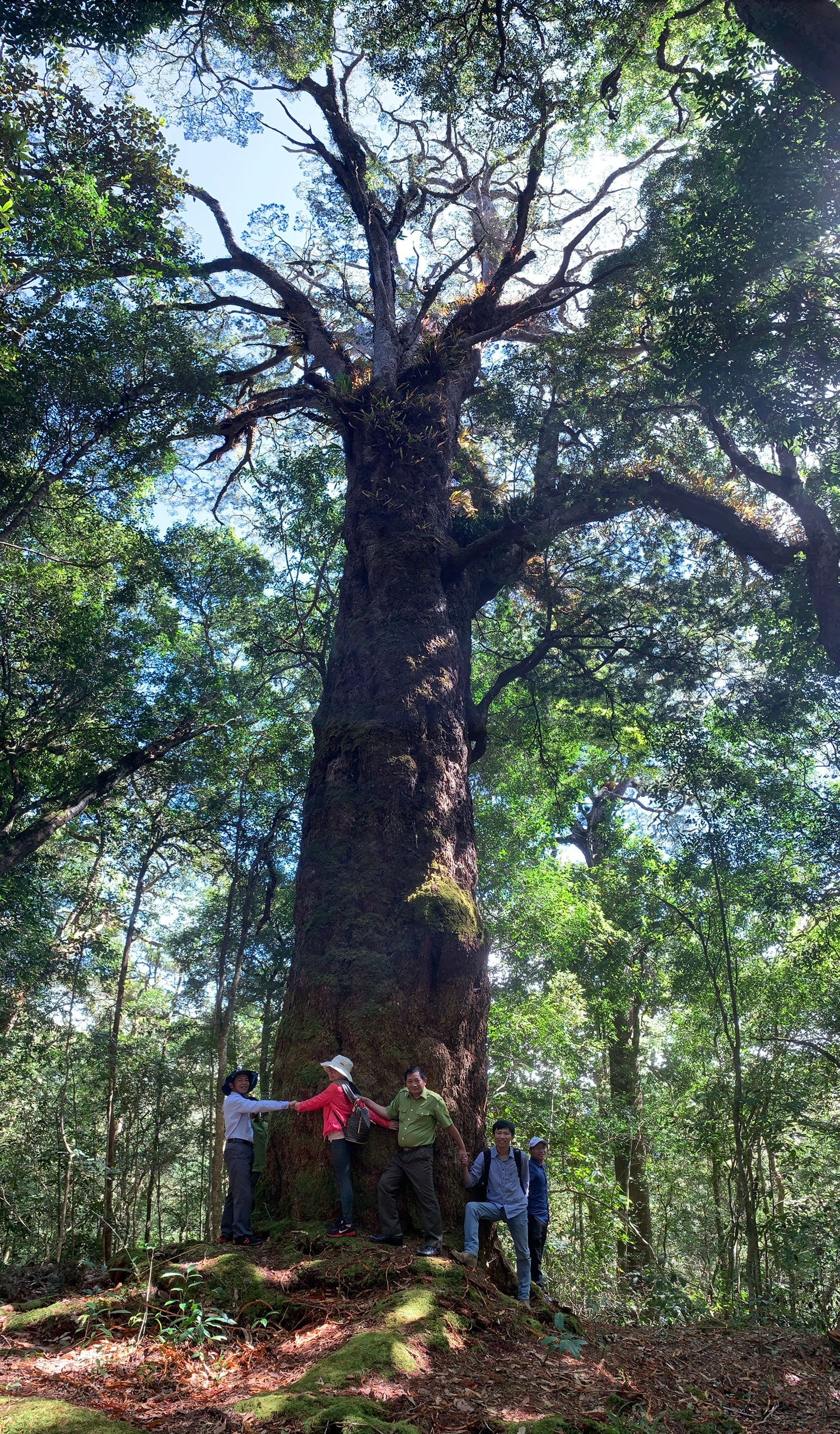
The preservation of this ancient forest is the result of more than two decades of dedicated conservation work by Bidoup–Nui Ba’s forest rangers. Their footsteps have marked every trail and ridge, their vigilance ensuring that each tree continues to thrive. The pines, standing 35 to 40 meters tall with trunks up to two meters in diameter, grow naturally within a stable ecological zone, largely undisturbed by human activity.
Visitors who trek through this primeval forest often describe a sense of awe — standing before centuries-old giants, touching their rugged bark, and sensing the quiet strength that has withstood countless seasons. Many wrap their arms around the massive trunks, trying to measure their breadth, while listening to the heartfelt stories of local rangers who protect the forest as if it were their own kin.
“The two-needle pine is not only a masterpiece of nature but also a priceless treasure gifted to this land,” said Mr. Nguyen Luong Minh, Deputy Director of Bidoup–Nui Ba National Park.
“Alongside natural regeneration, the park is implementing propagation and replanting programs to create new generations of two-needle pines — ensuring that this rare species continues to thrive in its native habitat.”
Sustaining Heritage Through Eco-Tourism
In an era of climate change and biodiversity loss, forests like Bidoup–Nui Ba stand as vital bastions of life. The ancient two-needle pine forest is more than a natural wonder — it is a reminder of the enduring connection between humanity and nature. Promoting its value means not just honoring a heritage symbol but also inspiring a greener, more sustainable way of life.
The park’s management board has introduced practical measures to both preserve and share this natural legacy:
Strict protection and zoning of the ancient pine area;
Development of eco-trails, rest points, and interpretive signage for visitors;
Installation of scientific information panels to enhance public understanding;
Strengthened collaboration with international partners for the conservation of ancient plant species;
Partnerships with local K’ho communities to develop eco-tourism tied to sustainable livelihoods, where villagers serve as both forest guardians and cultural storytellers.
Environmental education programs are also being expanded, especially for young visitors, fostering a lifelong love for nature and a shared commitment to safeguarding Vietnam’s natural heritage for generations to come.