


Farmers Actively Restock Livestock After Tet
After the peak consumption period during Tet, many livestock households in the southeastern region of the province are gradually restocking to resume production. However, amid disease risks, high feed costs and market volatility, pig farmers are taking a cautious approach to herd expansion.
Careful Consideration in Restocking Herds
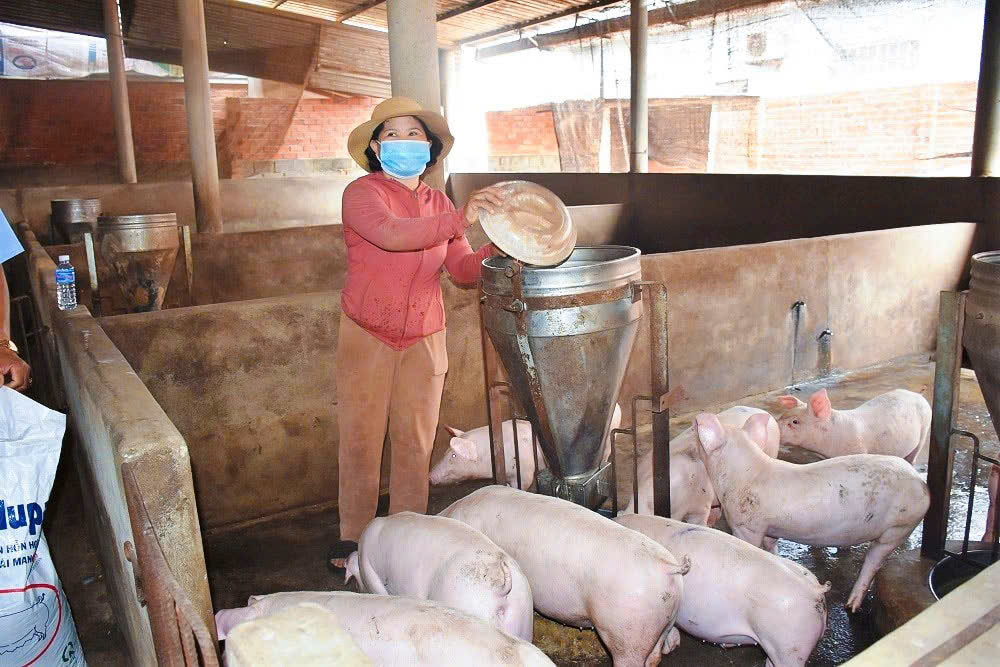
After selling 25 pigs during the Tet holiday, many of the pens at Huynh Van Be's farm in Thien Trung Quarter, Mui Ne Ward, remain empty. Rather than hurrying to purchase new piglets, he has decided to take the time to tidy up the barns, disinfect the surrounding area, and carefully consider his next steps before restocking. “In pig farming, there’s no need to be hasty. The barns need to be sanitized, and the piglets should have clear, verified origins to ensure peace of mind,” Be stated.
Huynh Van Be is one of the veteran pig farmers in the area. At one time, his family had a herd of over 100 pigs, consisting of sows, piglets, and market-ready pigs. However, in recent years, fluctuating market prices, rising feed costs and African swine fever have made pig farming increasingly difficult for many households.
To lower expenses, his family utilizes garden vegetables and leftover food combined with feed for their pigs. This approach helps to reduce feeding costs while industrial feed prices remain elevated, enabling labor to compensate for decreased profits.
In addition to Mui Ne, numerous livestock farmers in other areas are making thorough evaluations before restocking their animals. In Ham Thang Ward, Nguyen Thi Lan from Thang Loi Quarter is developing a strategy to rebuild her herd after her family's pigs were impacted by the floods of late 2025.
Currently, her family has only five pigs left in the barn, which she expects to sell in a little over a month. After that, she plans to repair and disinfect the barns before buying new piglets. “We have to be very careful with sanitation to prevent African swine fever. Disease remains a major concern,” Lan said.
The agricultural sector reports that pig farming is gradually recovering after facing challenges from disease and weaker consumer demand following the 2026 Lunar New Year. By the end of February 2026, Lam Dong Province had seen its pig population rise by approximately 7.5 percent compared to the same period last year.
Specialized agencies are continuing to enhance disease monitoring, rigorously manage breeding stock, animal feed, veterinary medications, and environmental conditions, while also increasing efforts to communicate and guide farmers on biosecure farming techniques and controlled restocking that align with barn conditions and financial capabilities.
Promoting Farm-Based Livestock and Disease Control
In addition to household farming, the farm model is developing steadily, helping improve disease control and production stability. The province is home to 1,900 livestock farms, including 203 large farms, 555 medium-sized farms and 1,142 small farms. Among these, 37 farms have received VietGAP or Organic certification, and 95 have been recognised as disease-safe facilities.
Numerous farms have proactively applied science and technology to production, implementing closed cold-barn systems, automated feeders and drinkers, surveillance cameras, and advanced waste collection and treatment systems to ensure biosecurity and protect the environment. The development of farm-based livestock production linked to value chains is enhancing disease control, expanding market access, and boosting the competitiveness of livestock products.
The livestock sector is seen as moving in the right direction through controlled restocking, the growth of farm-based livestock production, and stronger value-chain linkages, which are crucial for stabilizing production and securing food supplies in the years ahead.
According to the Department of Agriculture and Environment, by the end of February 2026, the province had a pig population of 1,410,000, achieving 88.7 percent of the yearly target; the total for goats and sheep reached 108,100, fulfilling 94 percent of the goal; while the number of poultry stood at 21,600,000 birds, corresponding to 93.3 percent of the target.