


Farmers in Da Huoai 3 Commune Care for Durian Orchards During the Dry Season
Amid scorching heat and dry winds, durian orchards in Da Huoai 3 Commune are entering the critical flower-shedding, fruit-setting and fruit-development stages. Without timely care, both yield and fruit quality for the 2026 season could be adversely affected.
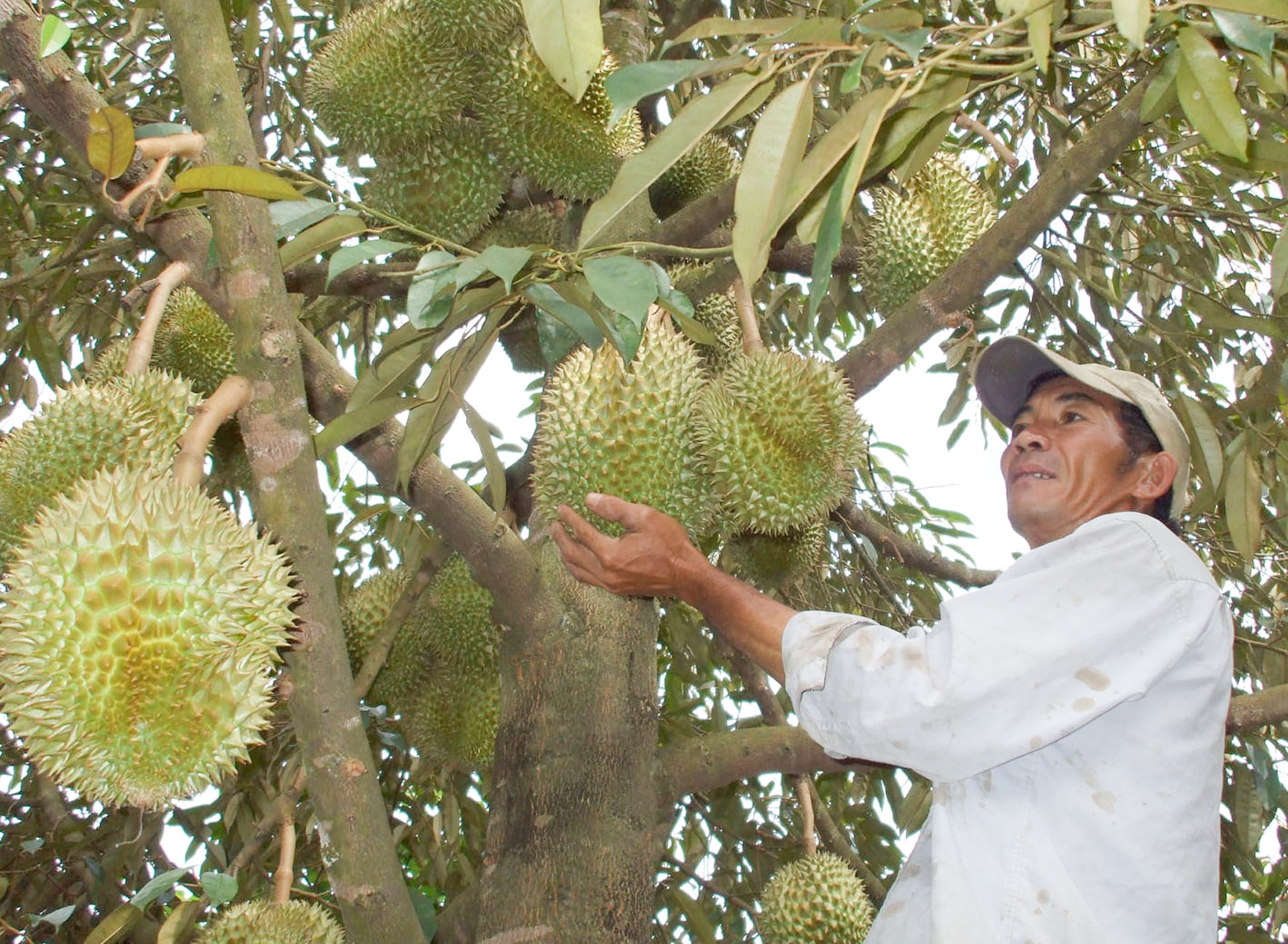
A Crucial Season for Yield
K’Du Minh, a durian grower in Hamlet 4, said: "Durian trees are quite susceptible to high temperatures. On hot, sunny days, the trees can suffer from leaf scorch, which diminishes their ability to photosynthesize and, in turn, their capability to produce nutrients.
During the dry season, durian trees face heightened risks of diseases like branch dieback, sap bleeding, and root rot. Thus, providing proper care during this time is crucial. It not only supports the healthy growth of the trees but also guarantees a good yield and quality of fruit for the upcoming season."
Based on his experience, Mr. Minh proactively stores dry leaves and straw to mulch around the base of his durian trees during the dry season to retain moisture. He also ensures adequate irrigation to help the trees avoid heat stress, which can lead to flower wilting and fruit drop.
“While durian thrives in moist conditions, it's crucial to implement proper irrigation methods. The best times to water are early in the morning or late in the afternoon, when temperatures are cooler, and it's advisable to apply water in moderate amounts. Allowing the soil to become excessively dry before applying a large amount of water can lead to localized flooding, hindering root absorption and creating an environment conducive to harmful fungi. Ensuring adequate water supply, along with appropriate nutrient support during dry spells, contributes to enhancing the tree's resilience and drought resistance,” remarked Nguyen Manh Hung, another durian grower from Da Huoai 3 Commune.
A Key Crop
According to Hung, because durian requires a large amount of water, irrigation is not simply about moistening the soil—it is an “art” of regulating plant growth. Well-watered trees grow better and are more resistant to pests and diseases, thereby ensuring stable yields.
Ka Sep, another local farmer, added: “Under intense heat, soil moisture evaporates quickly, leading to drought conditions. Irrigation is both a technical solution to sustain growth and a protective measure to prevent serious damage caused by extreme heat.”
Since the start of the 2026 dry season, agricultural extension officers in Da Huoai 3 Commune have conducted on-site visits to durian orchards to instruct farmers on effective care methods during the dry season, as well as on pest and disease management during the flowering, fruit setting, and fruit development phases, in addition to production practices that align with VietGAP standards and export market expectations. Consequently, farmers have become more proactive in applying cultivation methods and executing pest control measures.
Nguyen Van Trinh, Chairman of the People’s Committee of Da Huoai 3 Commune, said the commune currently has about 1,430 hectares of durian, including roughly 823 hectares in production, with annual output estimated at around 9,000 tons.
For the 2025–2030 period, the commune plans to shift from traditional farming to an agriculture-based economy, reorganize production along value chains, and develop specialized fruit-growing areas, with durian identified as one of its key crops.