Flavors of Tay and Nung cuisine in Lam Dong’s great forests
Ho Mai•17/03/2026 15:35
In the vast highlands of Lam Dong, Tay and Nung families brought with them not only the determination to build a new life but also the cultural memories of their northern mountainous homeland. In small kitchens amid the great forests, the aroma of sticky rice cakes, five-color sticky rice and roasted pork with mac mat leaves still fills the air during festivals and family gatherings, reminding them of their roots and strengthening community bonds in their second homeland.
bia 1-ok
In the vast highlands of Lam Dong, Tay and Nung families brought with them not only the determination to build a new life but also the cultural memories of their northern mountainous homeland. In small kitchens amid the great forests, the aroma of sticky rice cakes, five-color sticky rice and roasted pork with mac mat leaves still fills the air during festivals and family gatherings, reminding them of their roots and strengthening community bonds in their second homeland.
Bringing the flavors of their homeland to a new land
Amid the new rhythm of life in the Lam Dong highlands, memories of their ancestral homeland remain vivid in every Tay and Nung family. In the cultural life of the community, traditional cuisine continues to be preserved as an essential part of their identity.
Rooted in a long history, Tay and Nung cuisine is rich and diverse, with many distinctive dishes that reflect a unique culinary identity. Living side by side, the two communities share many similarities in their food traditions.
In the new land of Lam Dong, familiar flavors from their northern homeland are still preserved by Tay and Nung people in every household.
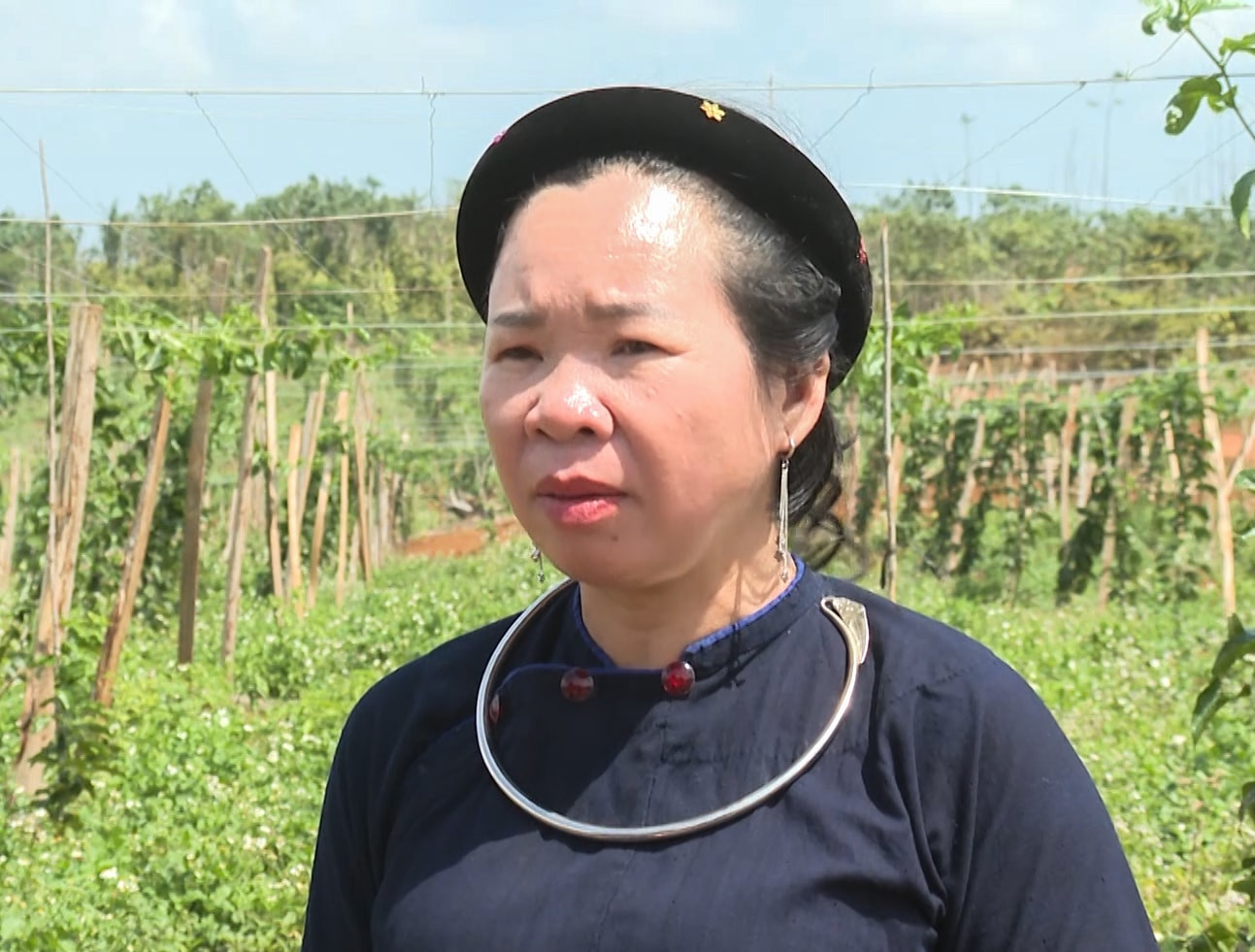
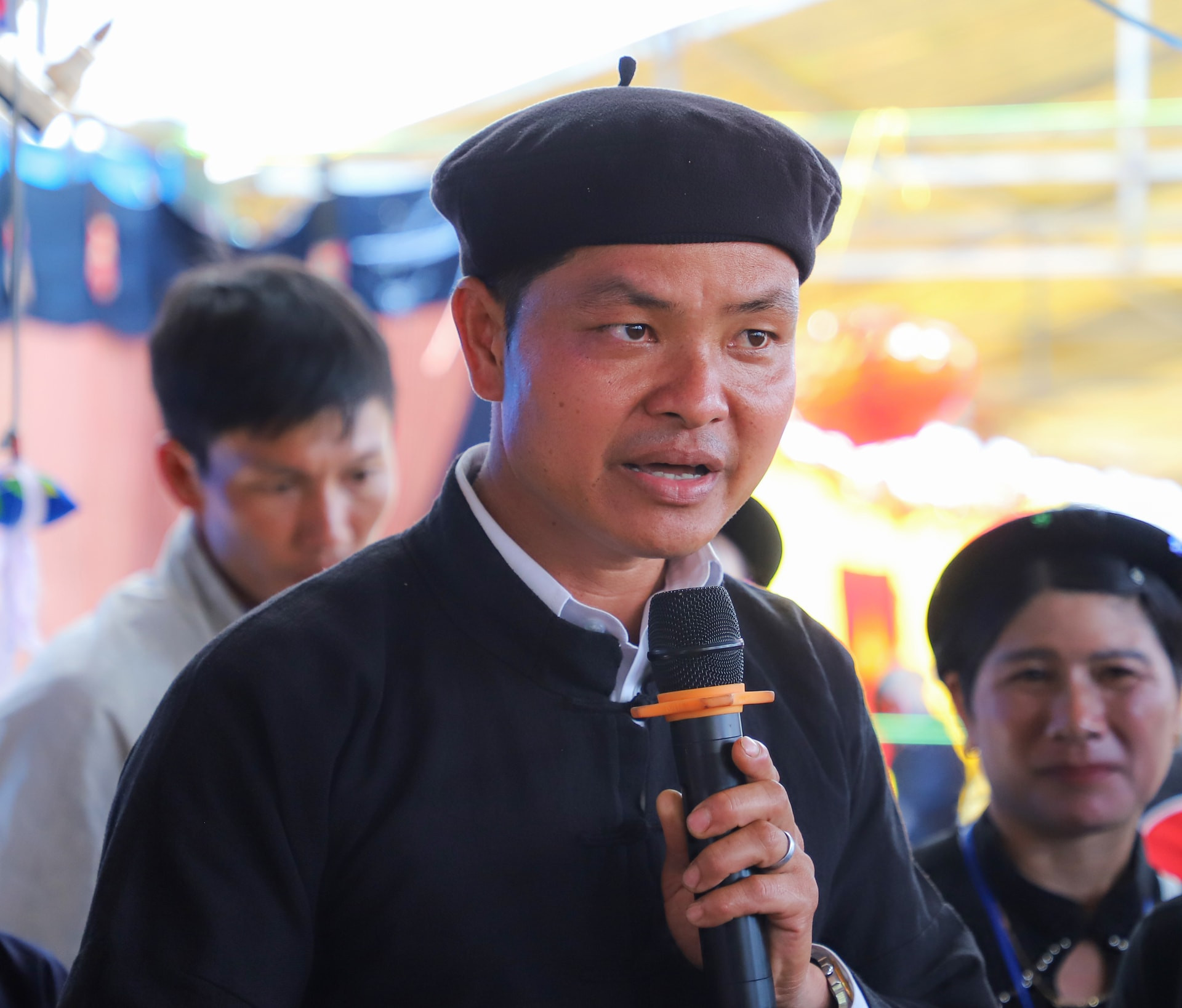
Hoang Van Phong, Secretary of the Nam Tan Village Party Cell in Nam Da Commune, said that wherever they go, Tay and Nung people still maintain the tradition of preparing traditional dishes during festivals, weddings and other important family occasions.
“
During festivals or important family occasions, Tay and Nung people still keep the habit of preparing traditional dishes such as roasted pork, khau nhuc, khao cake and gai cake. More than just food, these dishes help younger generations stay connected to their roots.
Hoang Van Phong Secretary of the Nam Tan Village Party Cell, Nam Da Commune, Lam Dong Province
For many families, the kitchen is where the flavors of their homeland are preserved most clearly. Traditional dishes are passed down through generations, from elders to younger family members.
Traditional cuisine is not only about food, but also about memories and cultural identity preserved by the Tay and Nung communities through many generations.
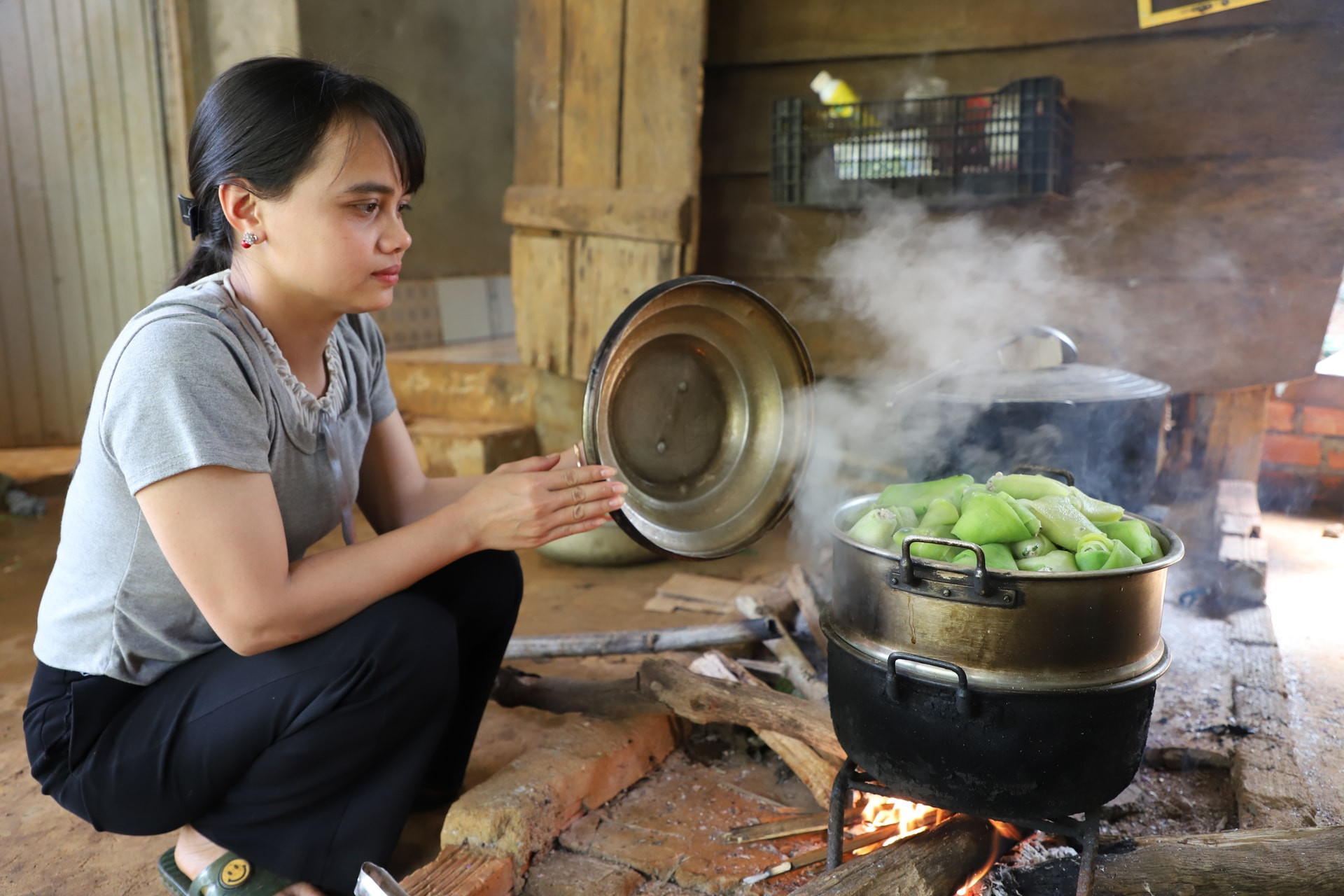
During festivals or joyful family occasions, relatives gather around the kitchen fire to prepare the traditional feast together. The sound of pounding sticky rice, the aroma of new rice and the fragrance of roasted pork with mac mat leaves filling the small kitchen are cultural memories carefully preserved over time.
Beyond family meals, traditional Tay and Nung dishes also add distinctive cultural colors to community festivals, especially the Long Tong Festival – the traditional “going to the fields” festival held at the beginning of the year.
This important festival is an occasion for local people to pray for favorable weather, abundant harvests and a prosperous life.
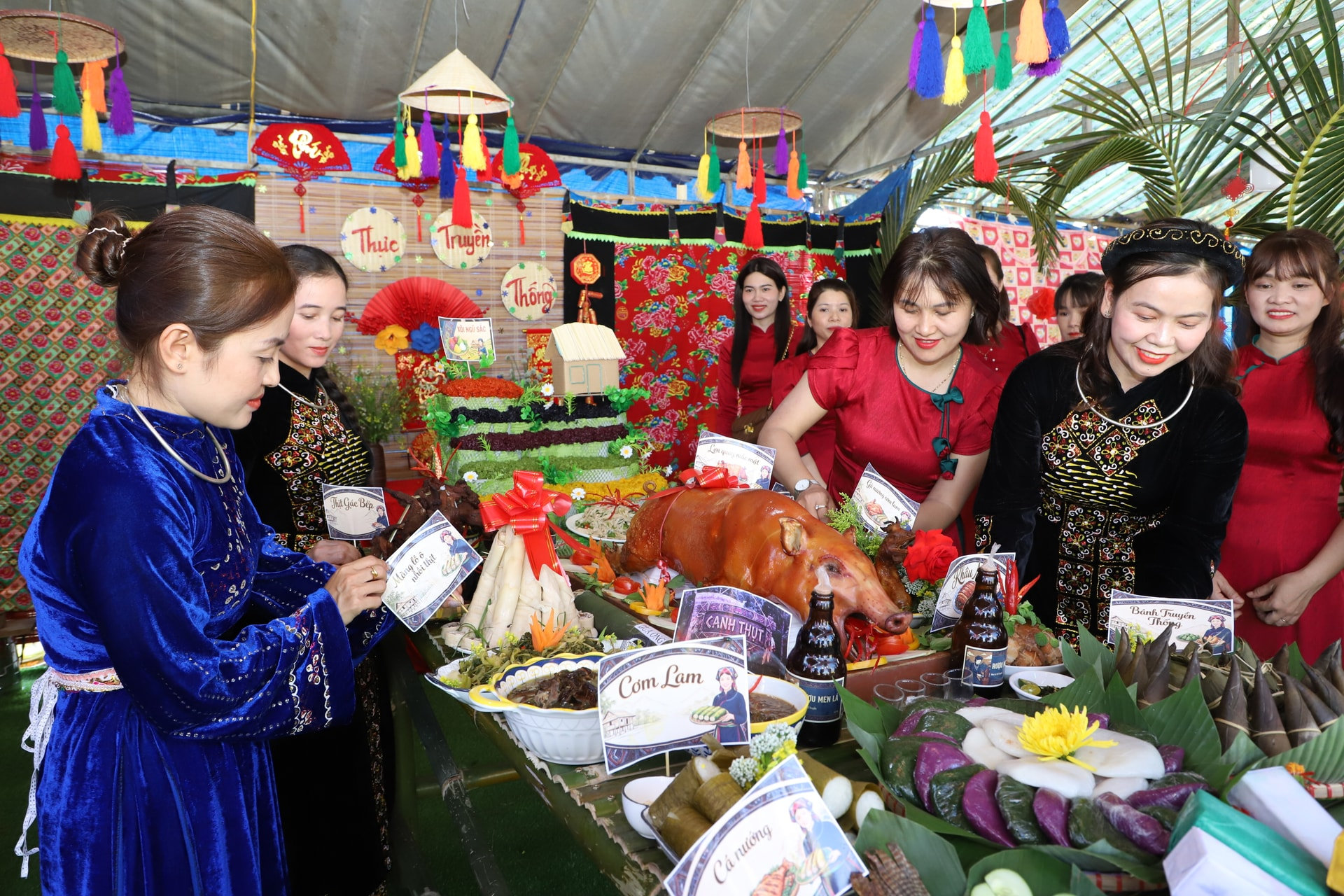
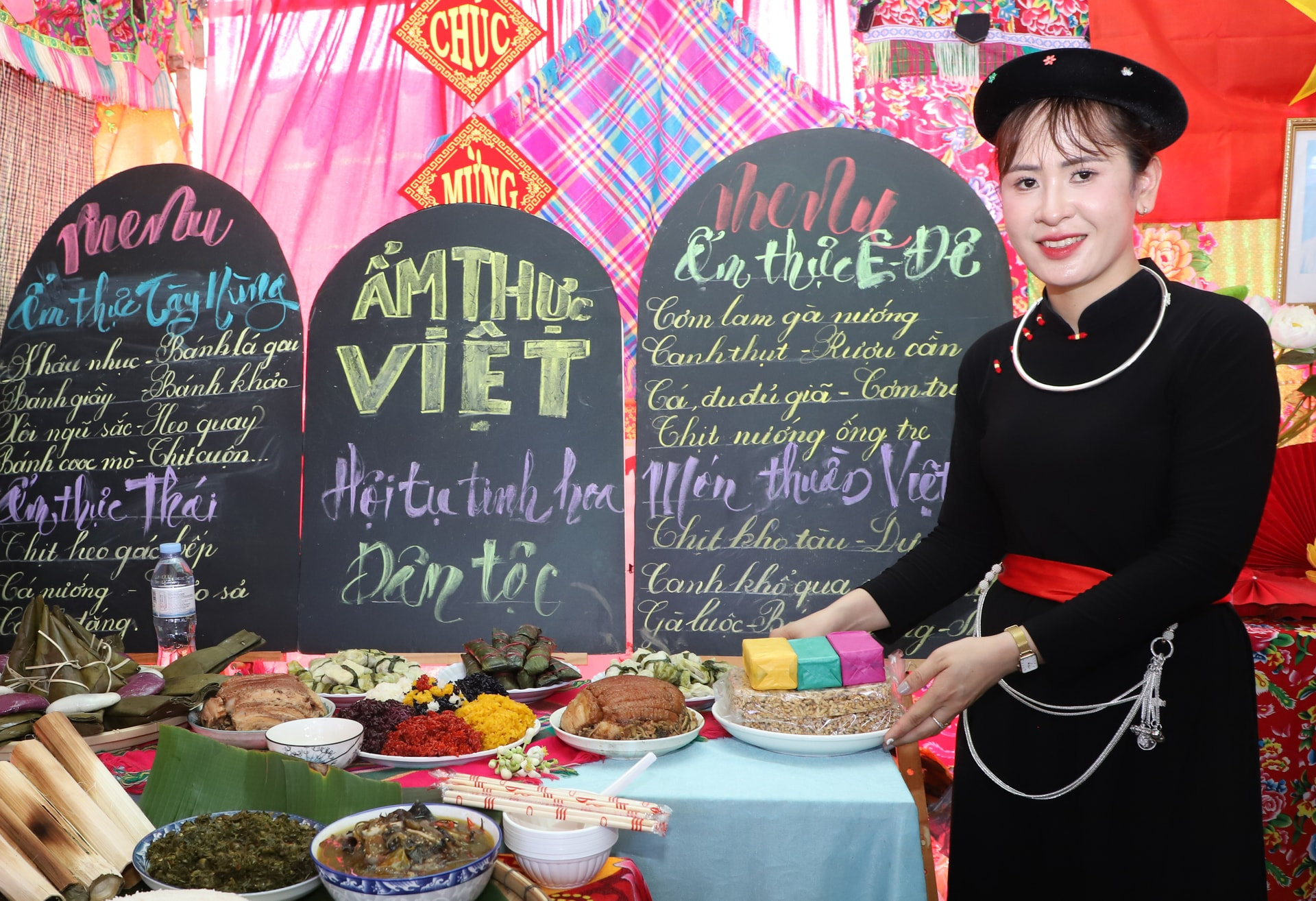
Traditional cuisine adds distinctive cultural flavor to the Long Tong Festival of the Tay and Nung communities.
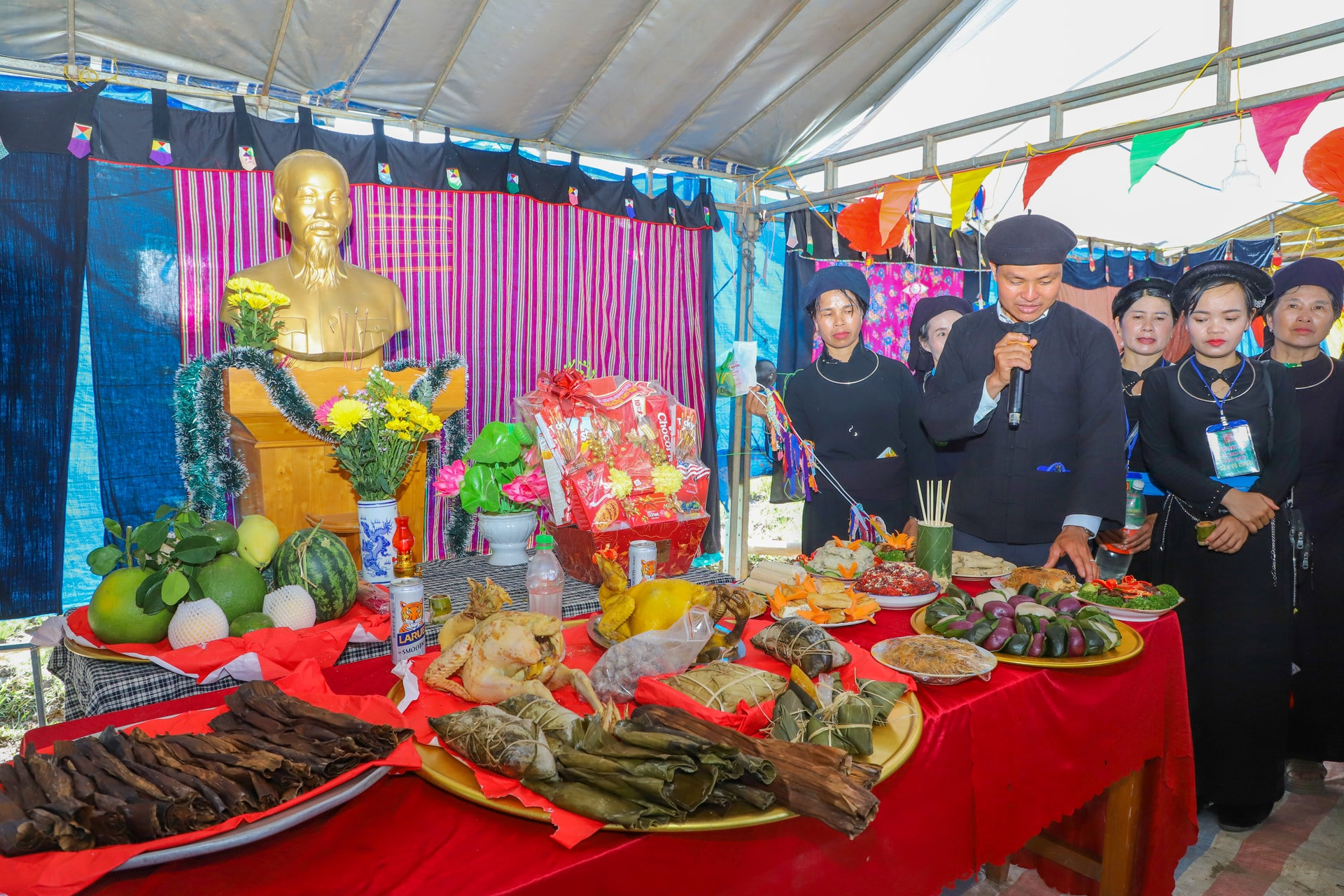
In their second homeland of Lam Dong, the Long Tong Festival is still maintained by the Tay and Nung community at the beginning of each spring. On this occasion, offerings to deities and ancestors are carefully prepared with many traditional dishes.
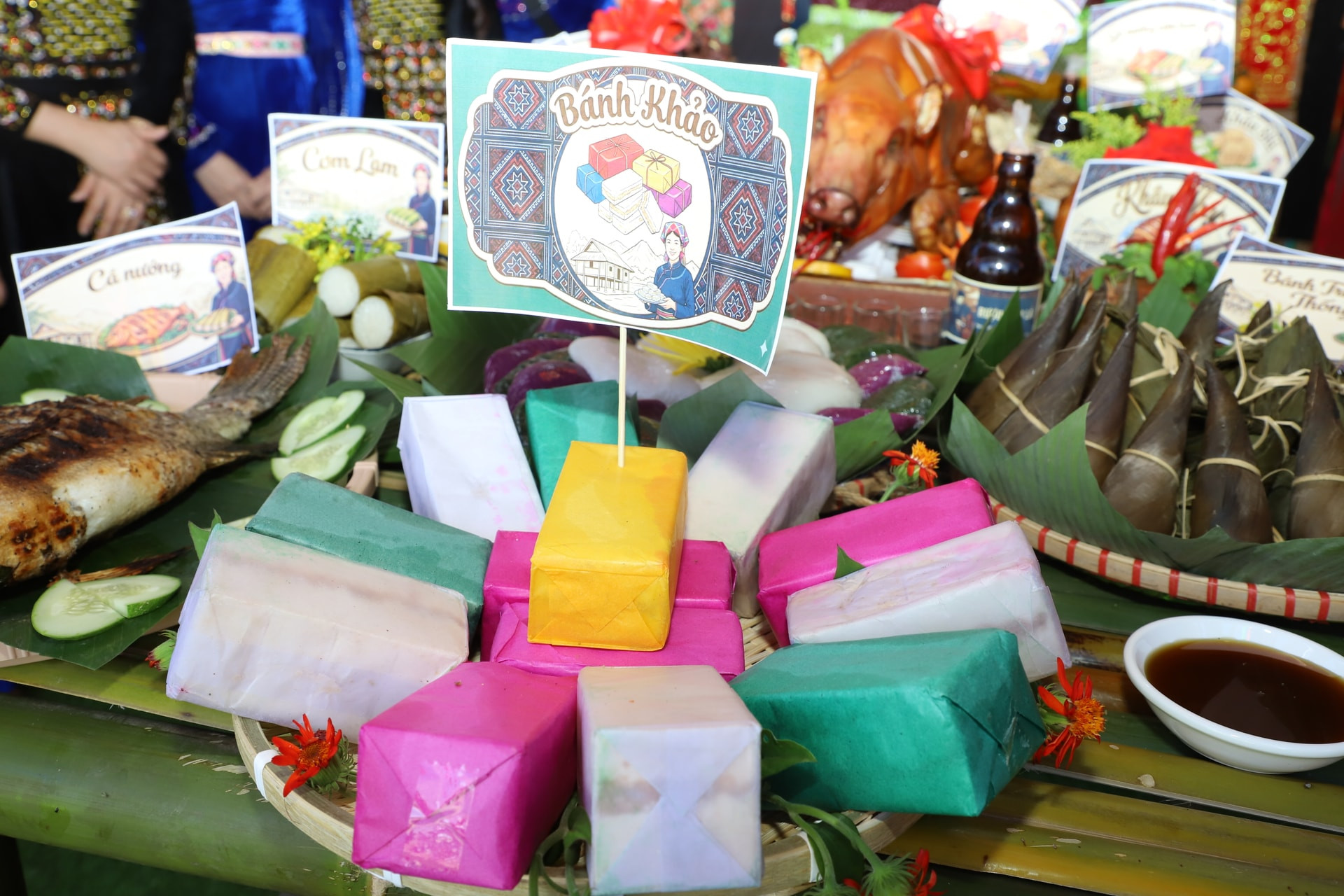
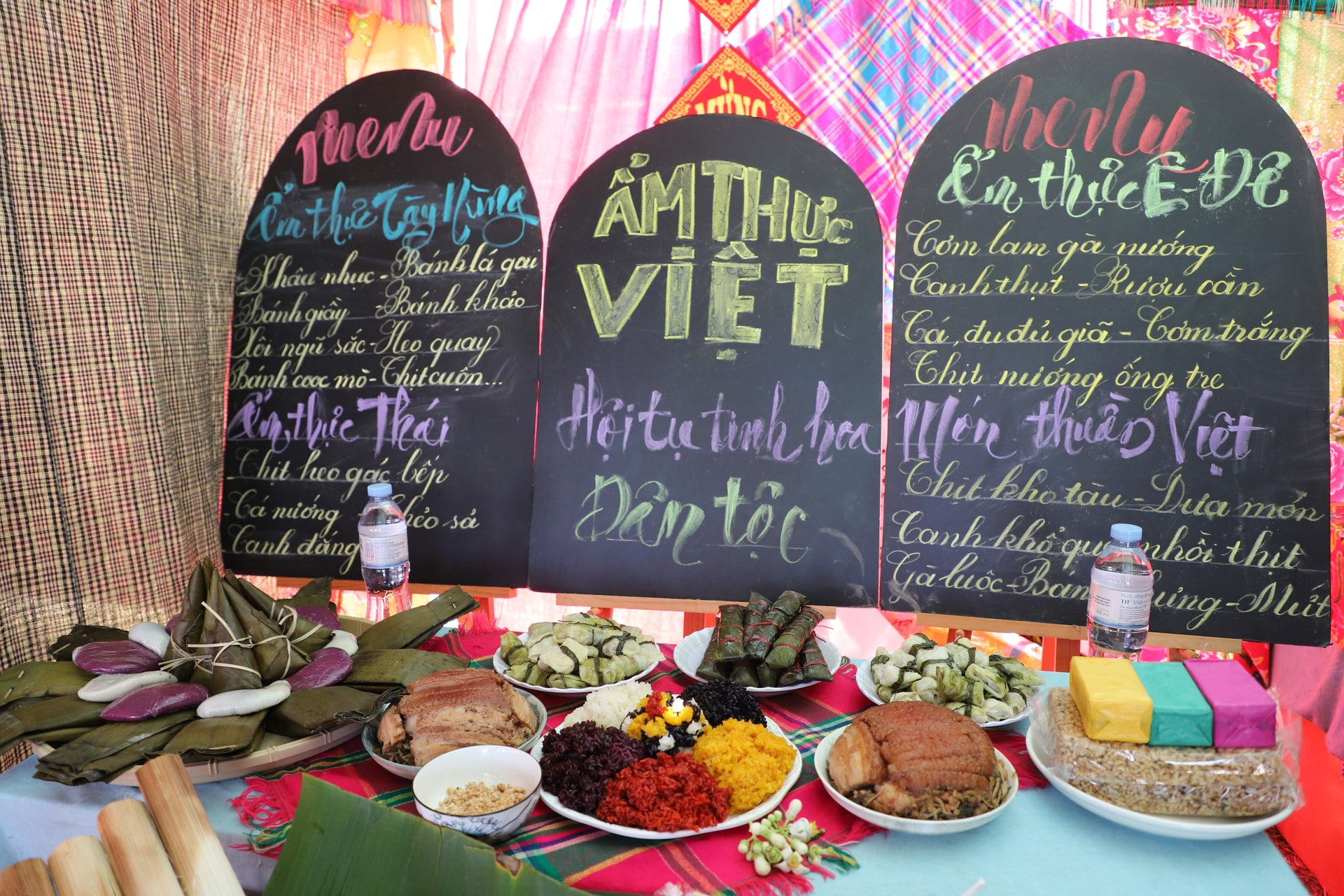
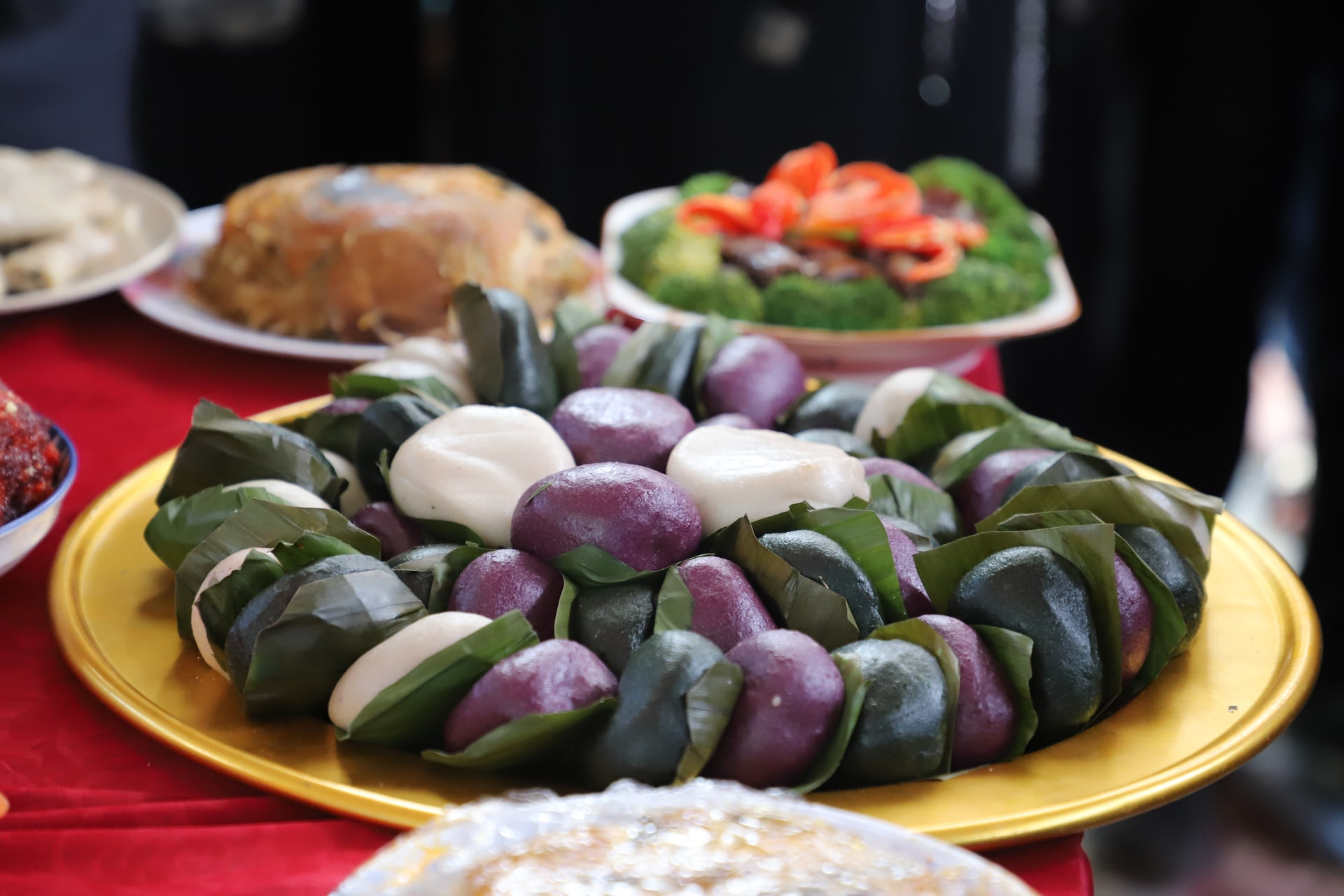
Five-color sticky rice, banh giay, banh khao, roasted pork, bamboo shoots stuffed with meat and khau nhuc are neatly arranged on the ceremonial tray. After the ritual, the traditional feast is served for everyone to enjoy together.
The atmosphere is lively yet warm, as people gather around tables filled with dishes from their homeland to talk and share the joy of the new year.
“
At the Long Tong Festival, we prepare traditional dishes as offerings to the deities. It is also an occasion for everyone to enjoy and share the flavors of our homeland, while praying for a favorable new year and abundant harvests.
Hoang Thi Nhu Nam Son Village, Nam Da Commune, Lam Dong Province
Amid the lively atmosphere of the early spring festival, the aroma of new sticky rice and roasted pork with mac mat leaves blends with cheerful conversations, creating a vibrant cultural scene rich in identity on this new land.
From sticky rice in their second homeland to dishes rich in cultural identity
In the culture of the Tay and Nung people, sticky rice holds a special place. It is not only a staple food but also closely linked to the community’s beliefs and spiritual life. Therefore, during festivals or important family occasions, dishes made from sticky rice are almost indispensable.
Traditional cakes made from fragrant sticky rice of the Tay and Nung people.
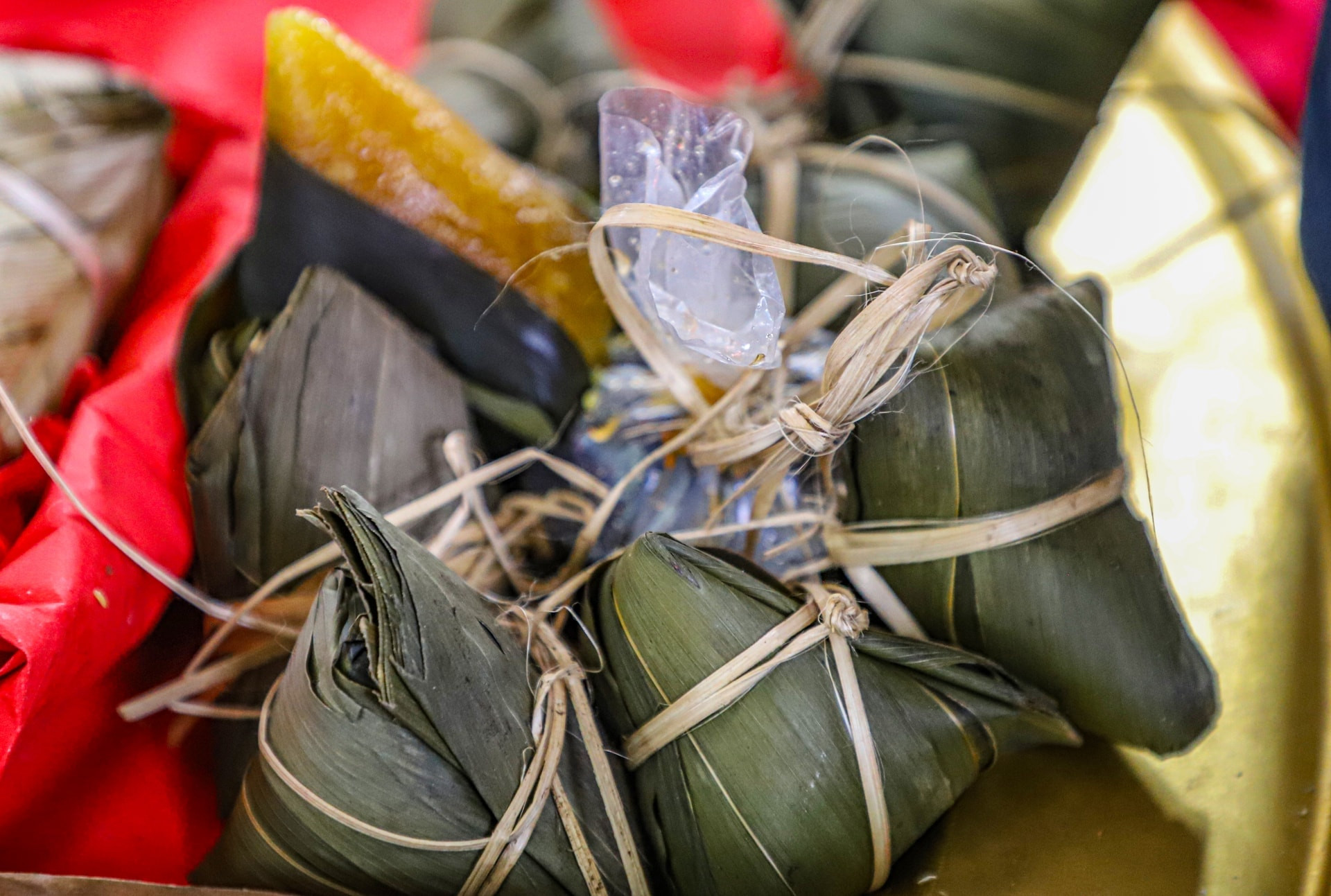
From fragrant sticky rice grown in their second homeland, people make many traditional cakes such as banh giay, banh khao, banh gai, banh chung, khau sli and banh vat vai. Each type of cake carries its own meaning, but all reflect family unity and togetherness.
Banh giay – a cake symbolizing fullness and family reunion.
Among traditional Tay and Nung cakes, banh giay is closely associated with festivals. After being steamed, the sticky rice is pounded until smooth in a large mortar and shaped into soft white rounds. In Tay and Nung belief, the round form of banh giay symbolizes the sun and the moon, embodying fullness, prosperity and family reunion.
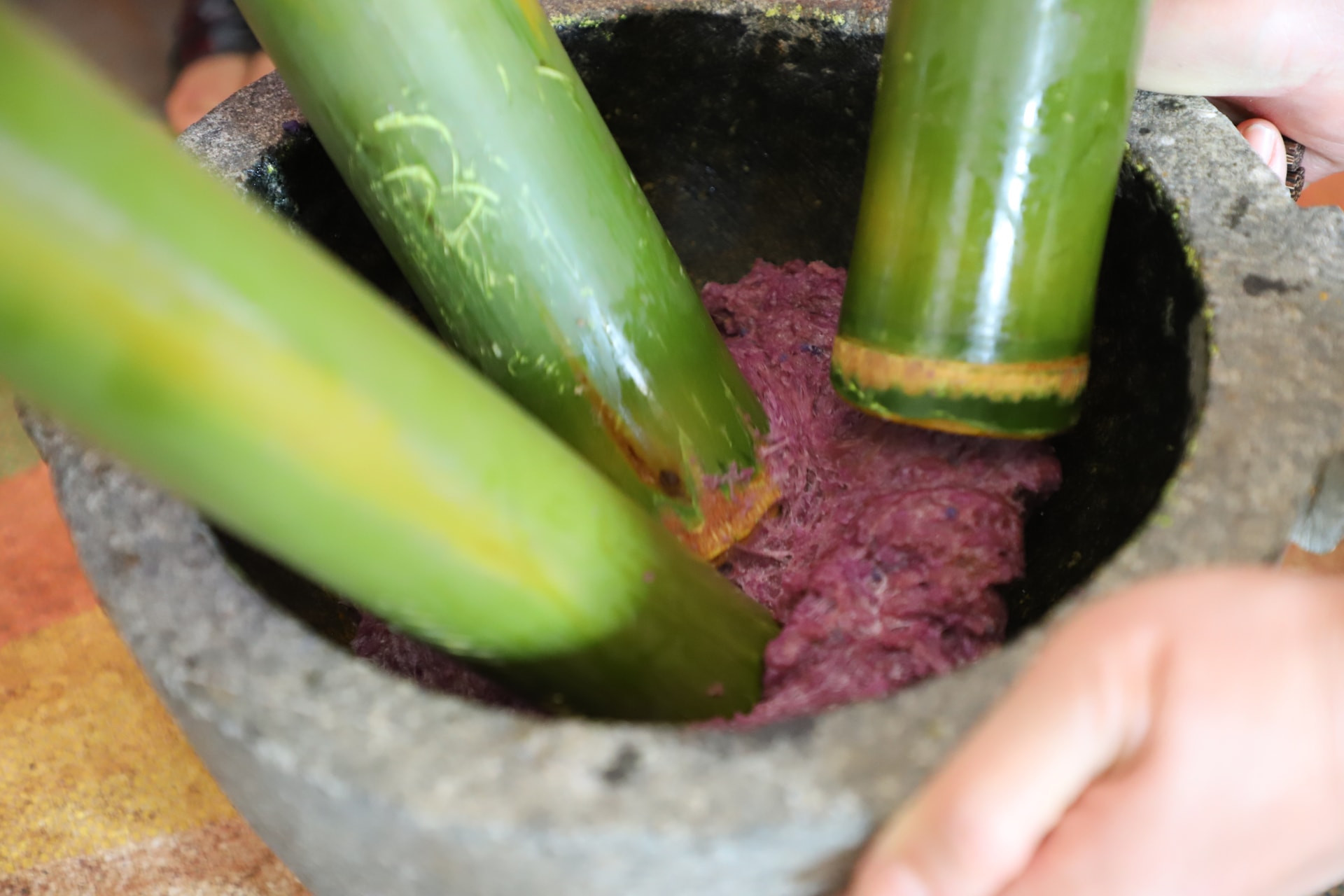
Sticky rice is pounded to make banh giay.
“
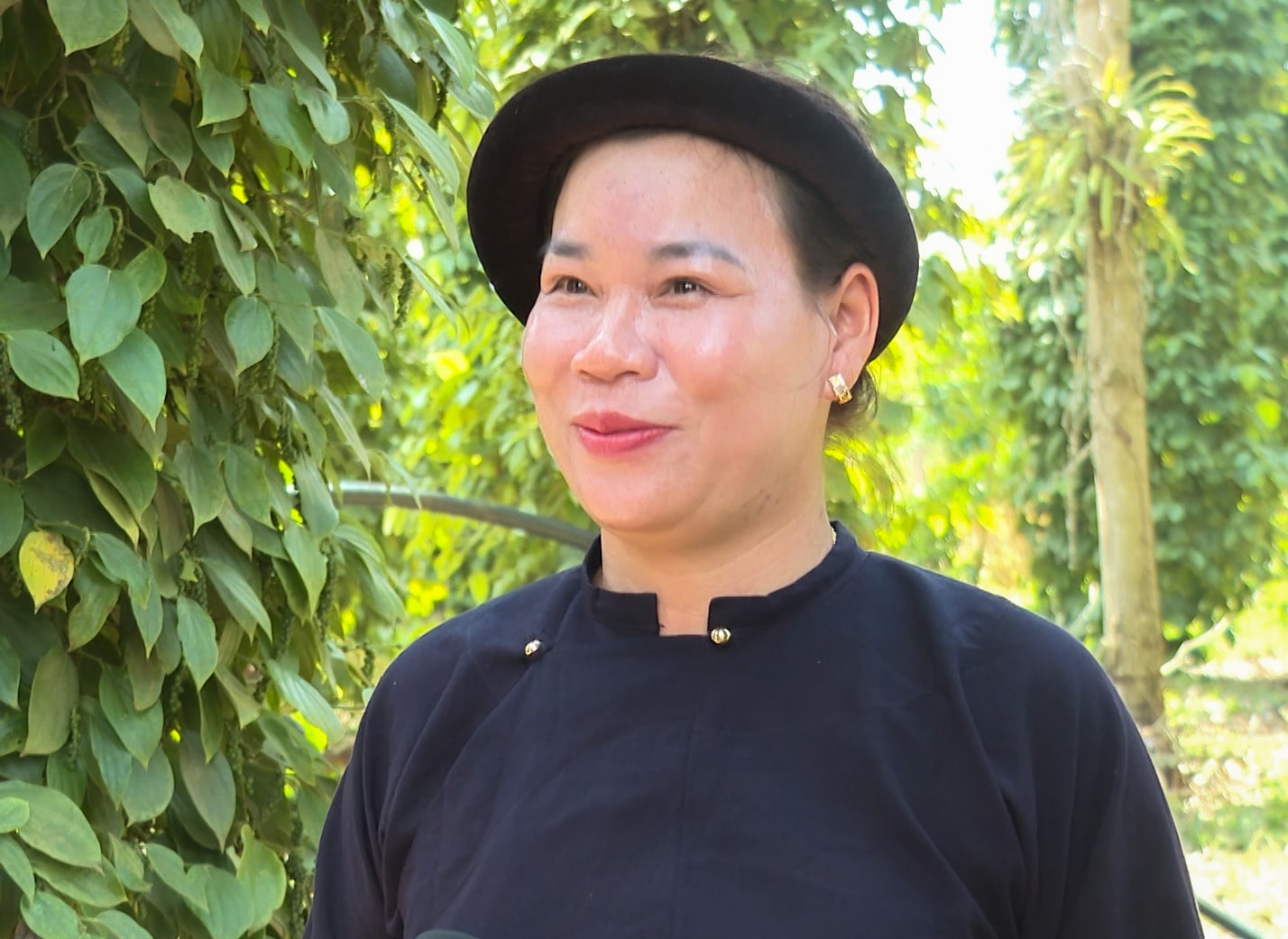
On important occasions and during festivals, Tay families prepare sticky-rice cakes as offerings to their ancestors. Afterwards, the whole family gathers to share them together. It is a way for younger generations to remember their grandparents and preserve their traditions.
Be Thi Diep Vice Head of the Women’s Association Chapter, R’But Hamlet, Quang Son Commune, Lam Dong Province
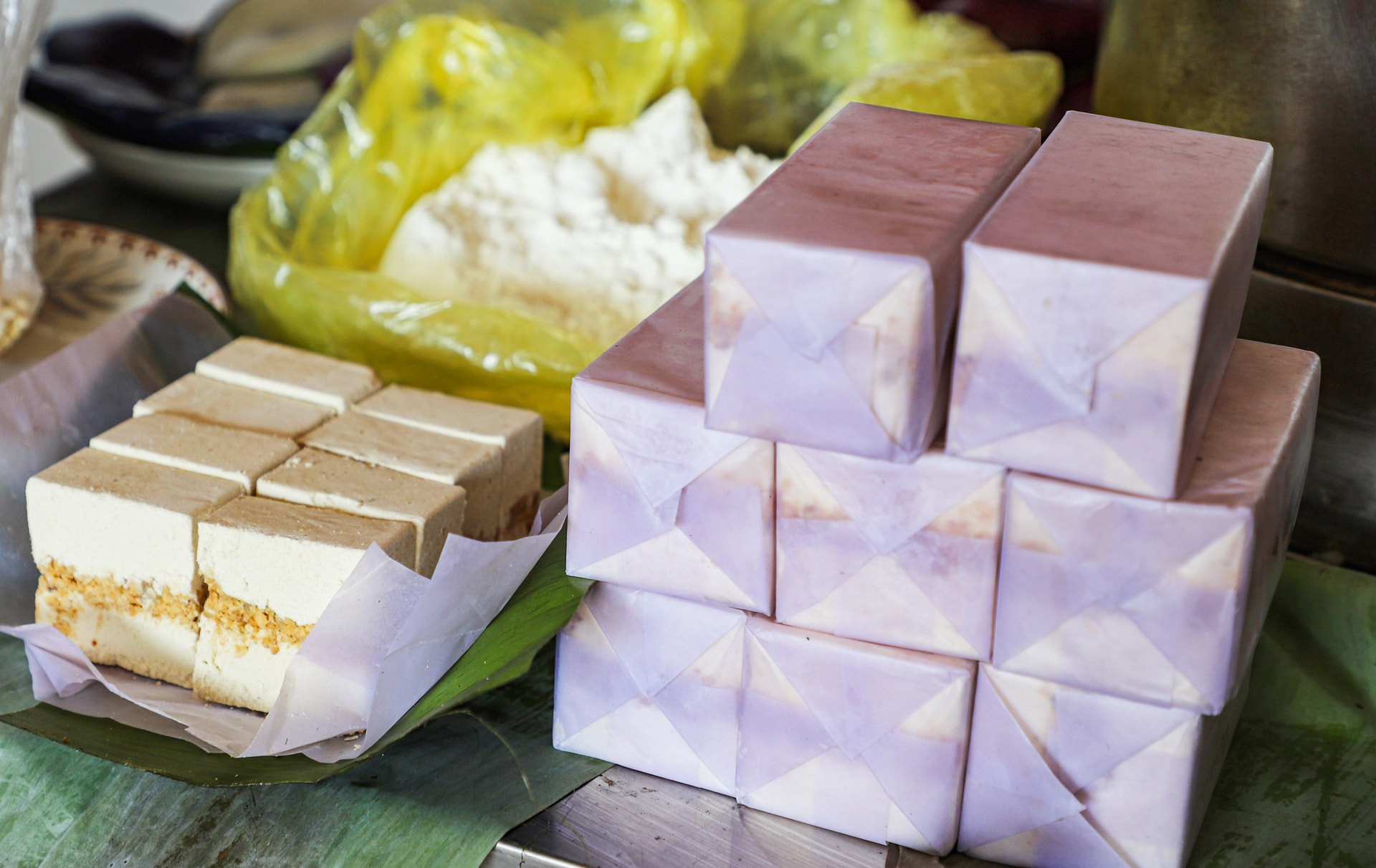
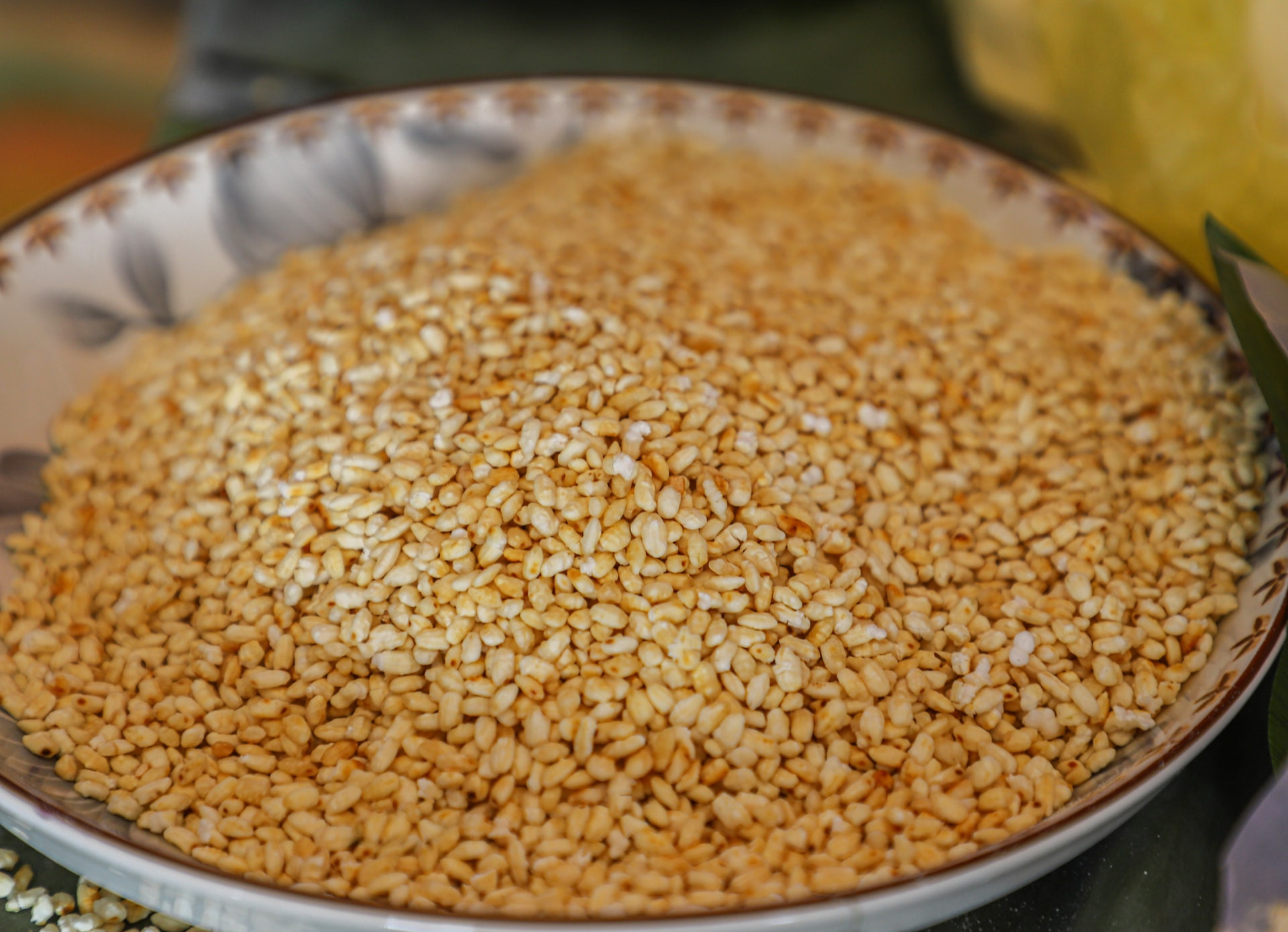
Another distinctive Tay and Nung cake is banh khao, whose preparation involves several meticulous steps. Sticky rice is roasted until fragrant, then ground into fine flour. The flour is placed in a paper-lined basket to retain moisture and ensure it binds properly. The filling typically consists of peanuts, roasted sesame seeds and diced pork fat mixed with cane sugar.
Banh khao – a traditional cake of the Tay and Nung peopleBanh khao is cut into small pieces after being pressed in the mold.Sticky rice is roasted to make flour for banh khao.
When pressed in molds, the cakes are shaped into small squares or rectangles. When enjoyed, banh khao offers the fragrant taste of roasted sticky rice, the nutty flavor of peanuts and sesame, and the gentle sweetness of cane sugar. Just a small piece is enough to evoke the traditional flavors of the ethnic community.
Besides cakes made from sticky rice, Tay and Nung cuisine is also known for many elaborately prepared dishes such as roasted pork, roasted duck, khau nhuc, bamboo-tube rice and various dishes made from wild bamboo shoots.
Mac mat leaves and fruits create the distinctive flavor of roasted pork dishes
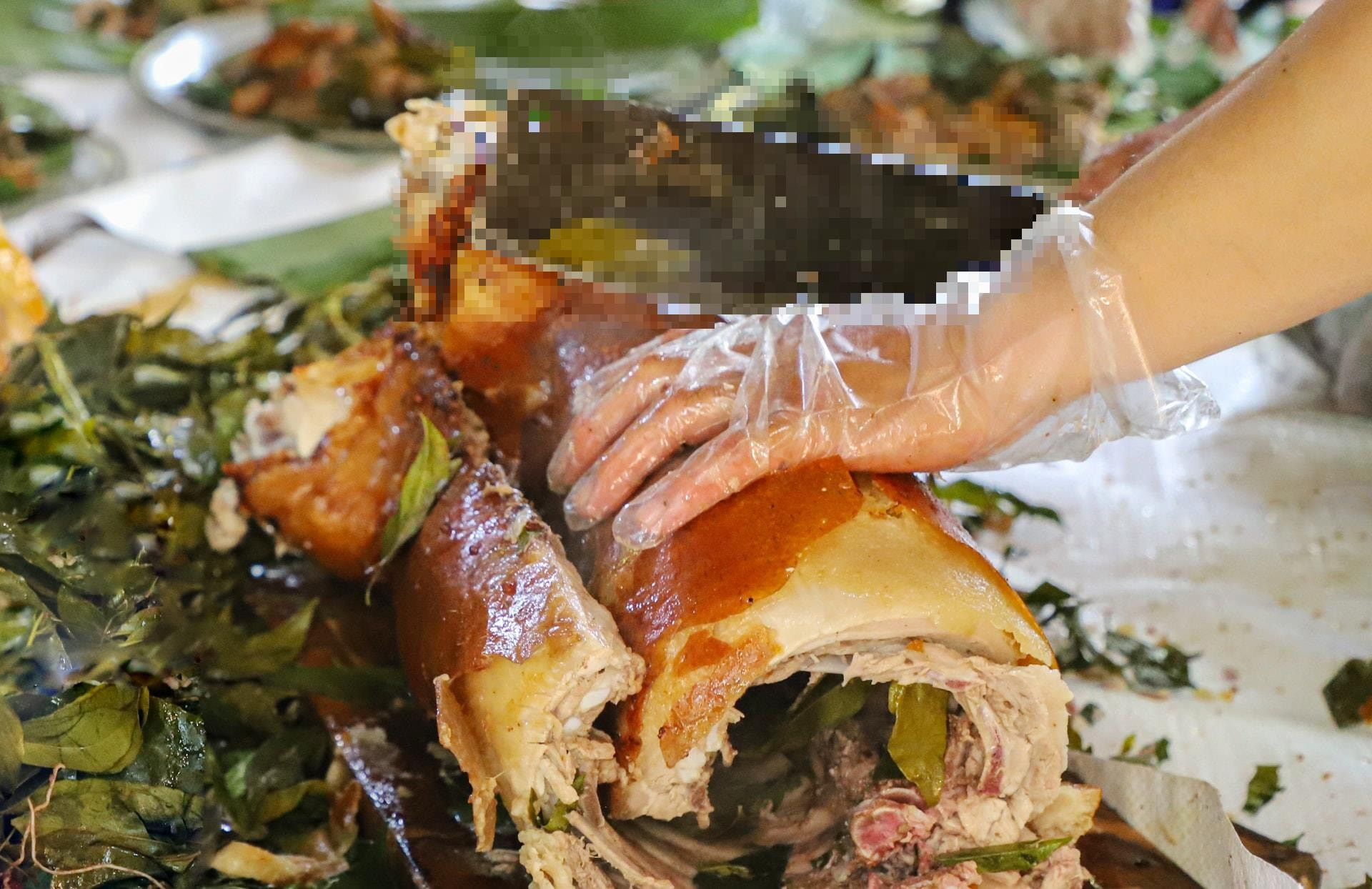
Among them, roasted pork and roasted duck stuffed with mac mat leaves are distinctive dishes. Mac mat is a familiar plant in the northern mountainous region. Its leaves and fruits have a unique aroma; when stuffed inside pork or duck and roasted over charcoal, they create a very distinctive flavor.
The skin turns golden and crispy, while the meat inside remains tender and sweet. The fragrance of mac mat blending with the smell of roasted meat spreads throughout the kitchen. Whenever there is a wedding or a major celebration in the village, this aroma becomes a familiar sign that a joyful occasion is near.
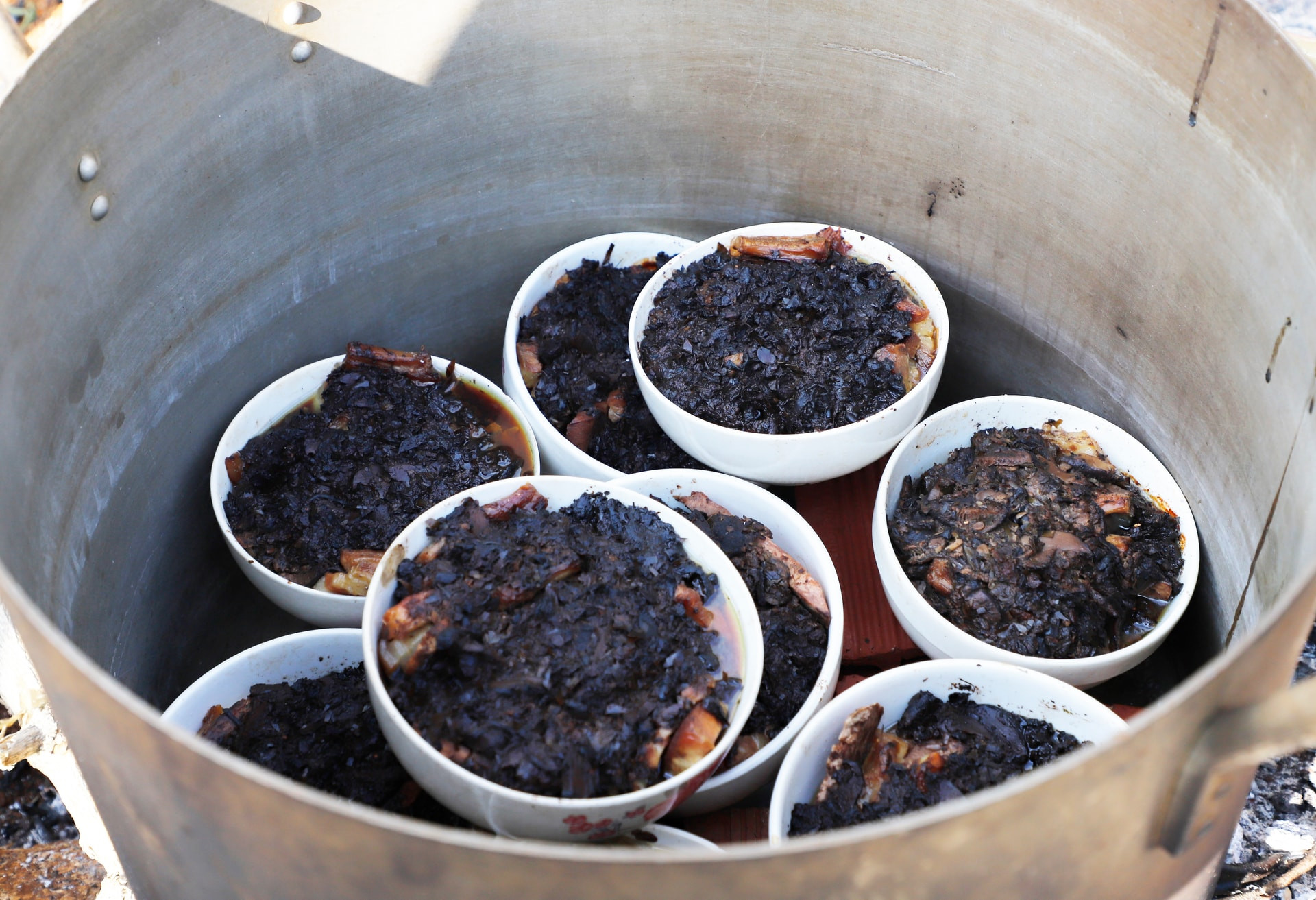
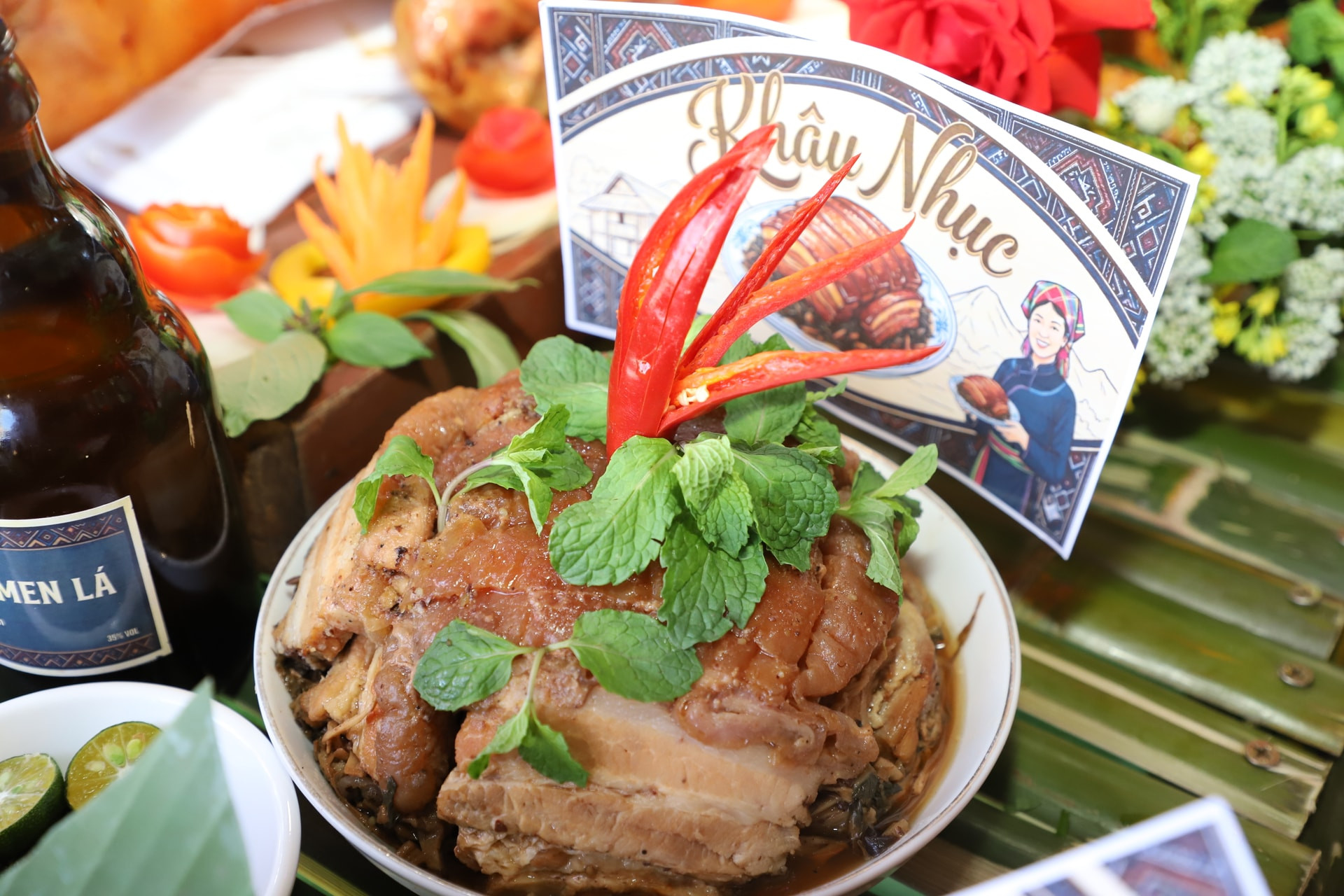
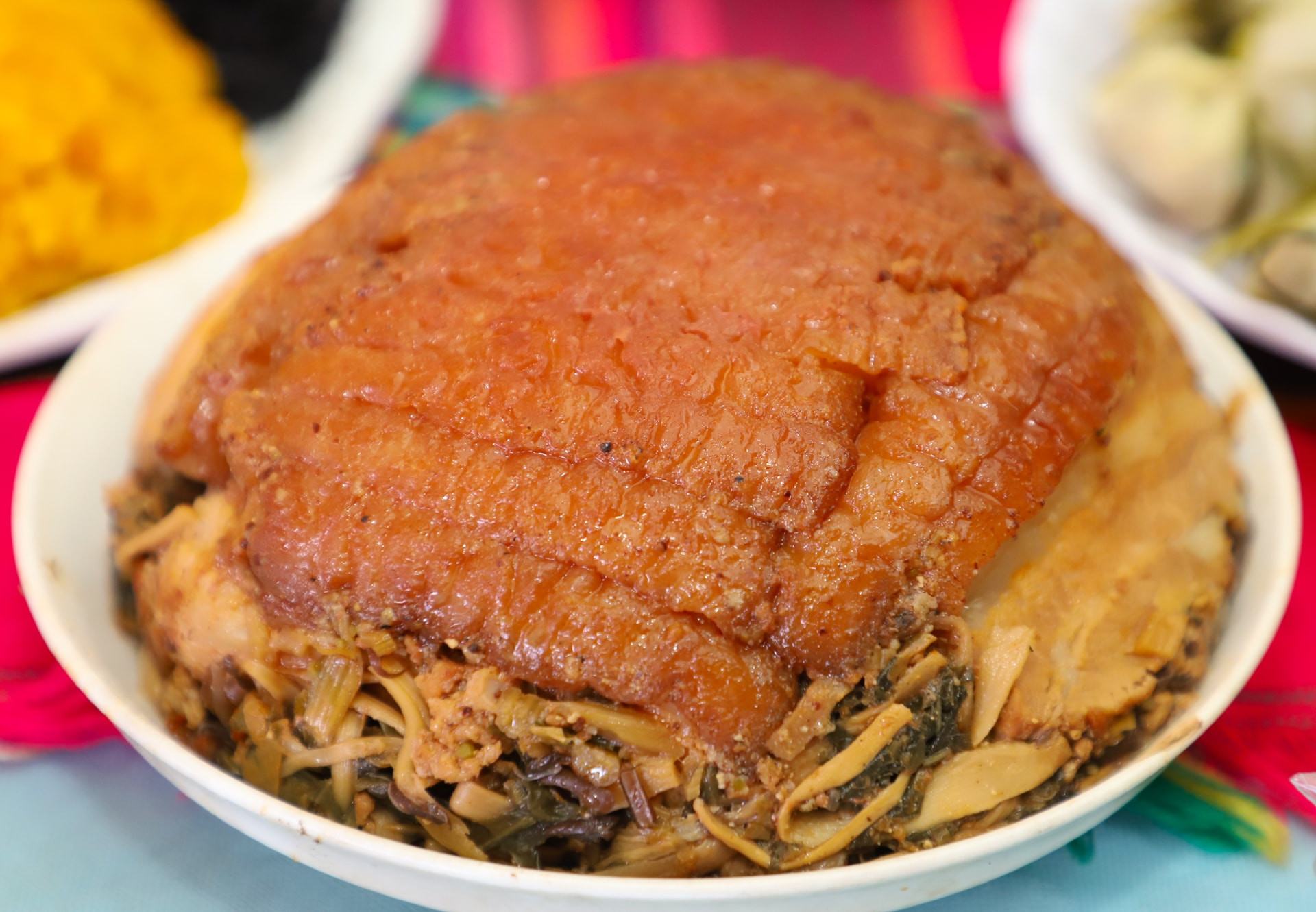
Another indispensable dish on the Tay and Nung feast tray is khau nhuc. It is made from thick slices of pork belly marinated with spices such as five-spice powder, pepper, garlic, rice wine and soy sauce. The meat is then layered with wood ear mushrooms and sweet potatoes or taro before being steamed for many hours.
The steaming process for khau nhuc lasts for many hours to make the meat tender and soft.Khau nhuc – a rich and elaborate dish often served during festivals of the Tay and Nung people.The meat pieces are marinated with traditional spices before cooking, creating the distinctive flavor of Tay and Nung cuisine.
When cooked, the meat becomes tender and richly infused with spices, while the skin turns soft yet slightly crispy, creating a rich but not greasy flavor. On the feast tray, khau nhuc is often arranged in a tall mound resembling a small hill. In the belief of the Tay and Nung people, this shape symbolizes growth, prosperity and abundance.
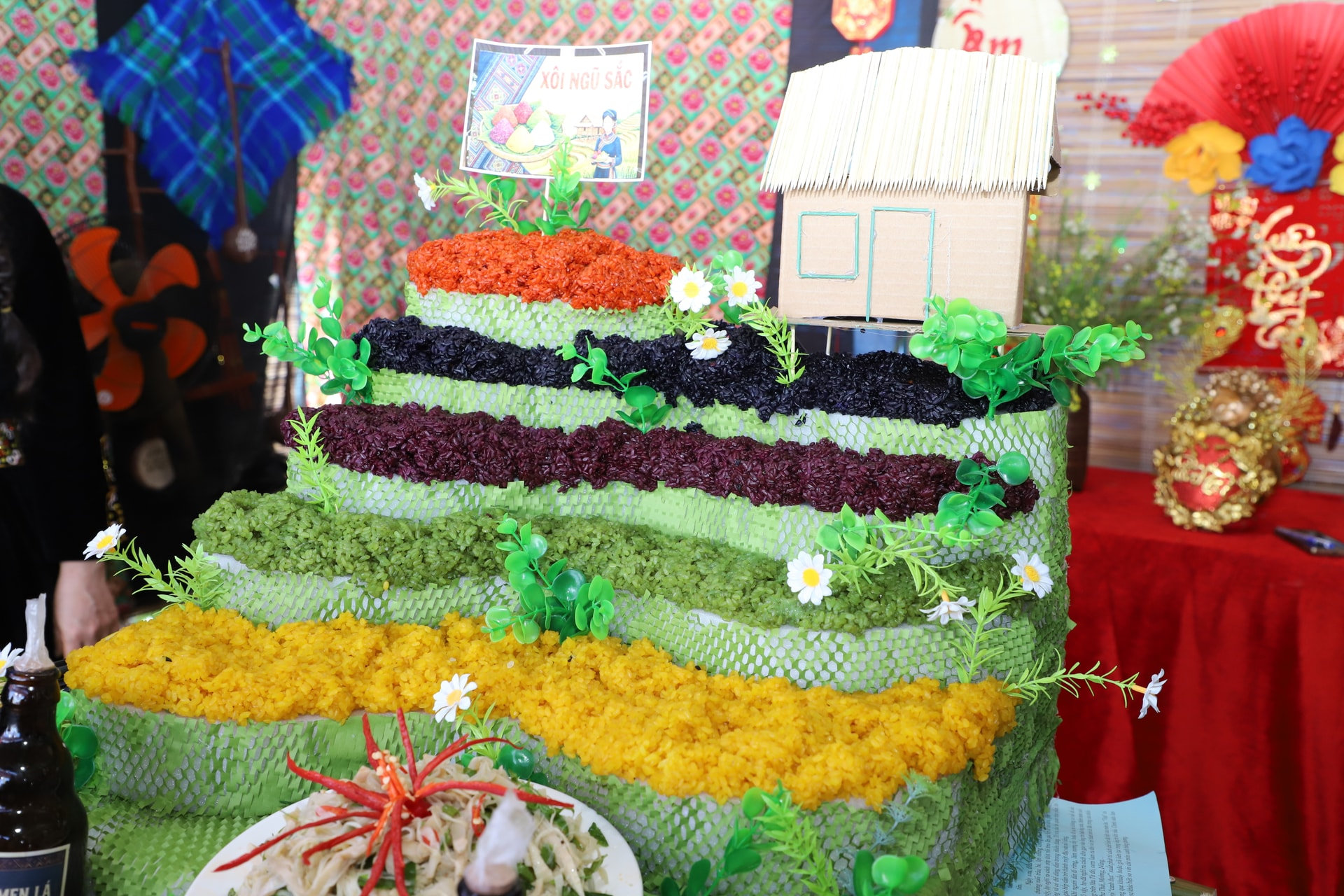
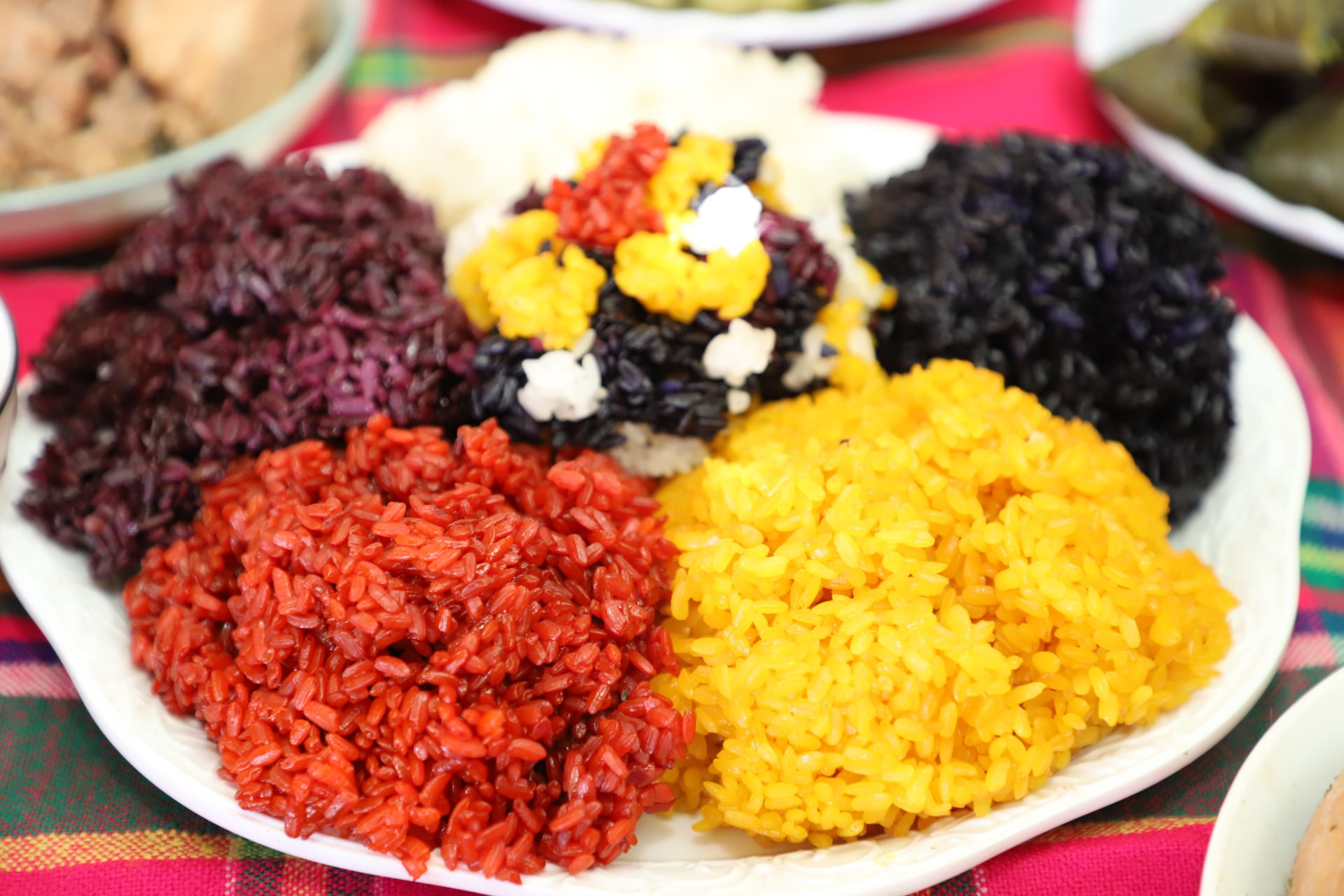
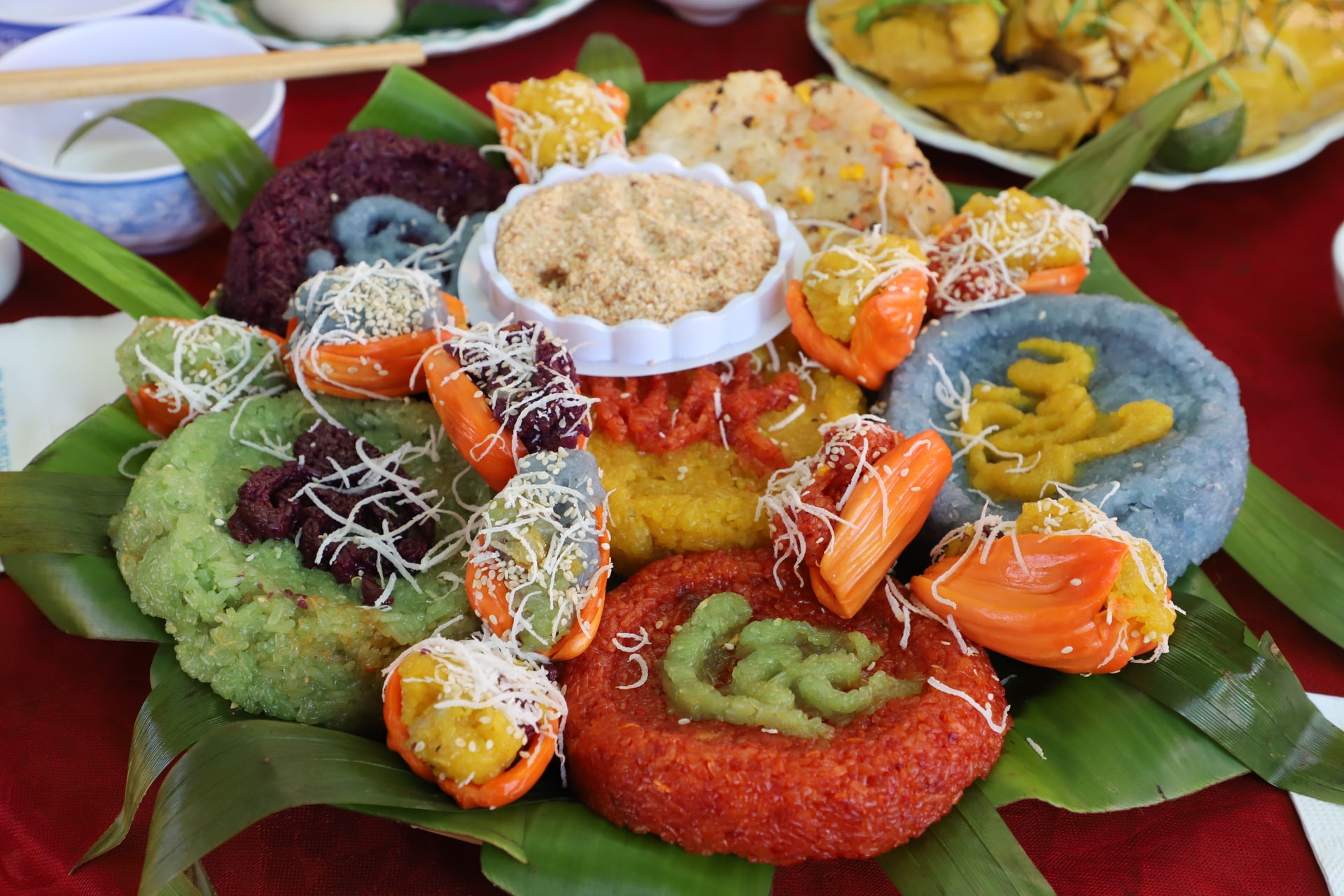
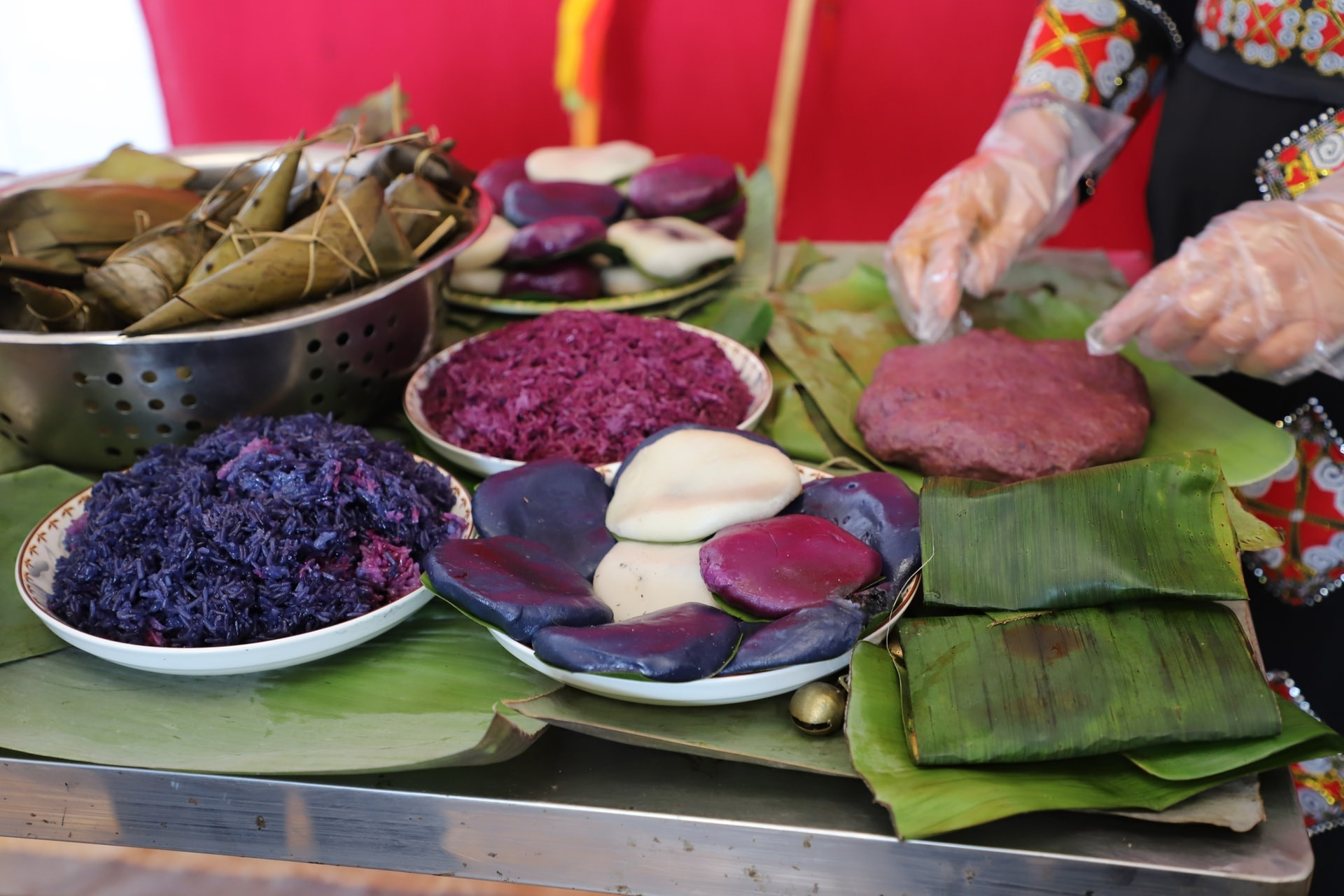
In addition, five-color sticky rice is also an indispensable dish. Its five colors – red, purple, yellow, white (or green) and black – are created from natural leaves and roots such as cam leaves, turmeric and gac fruit. Besides its vibrant appearance, each color symbolizes elements of the universe and conveys wishes for a prosperous life.
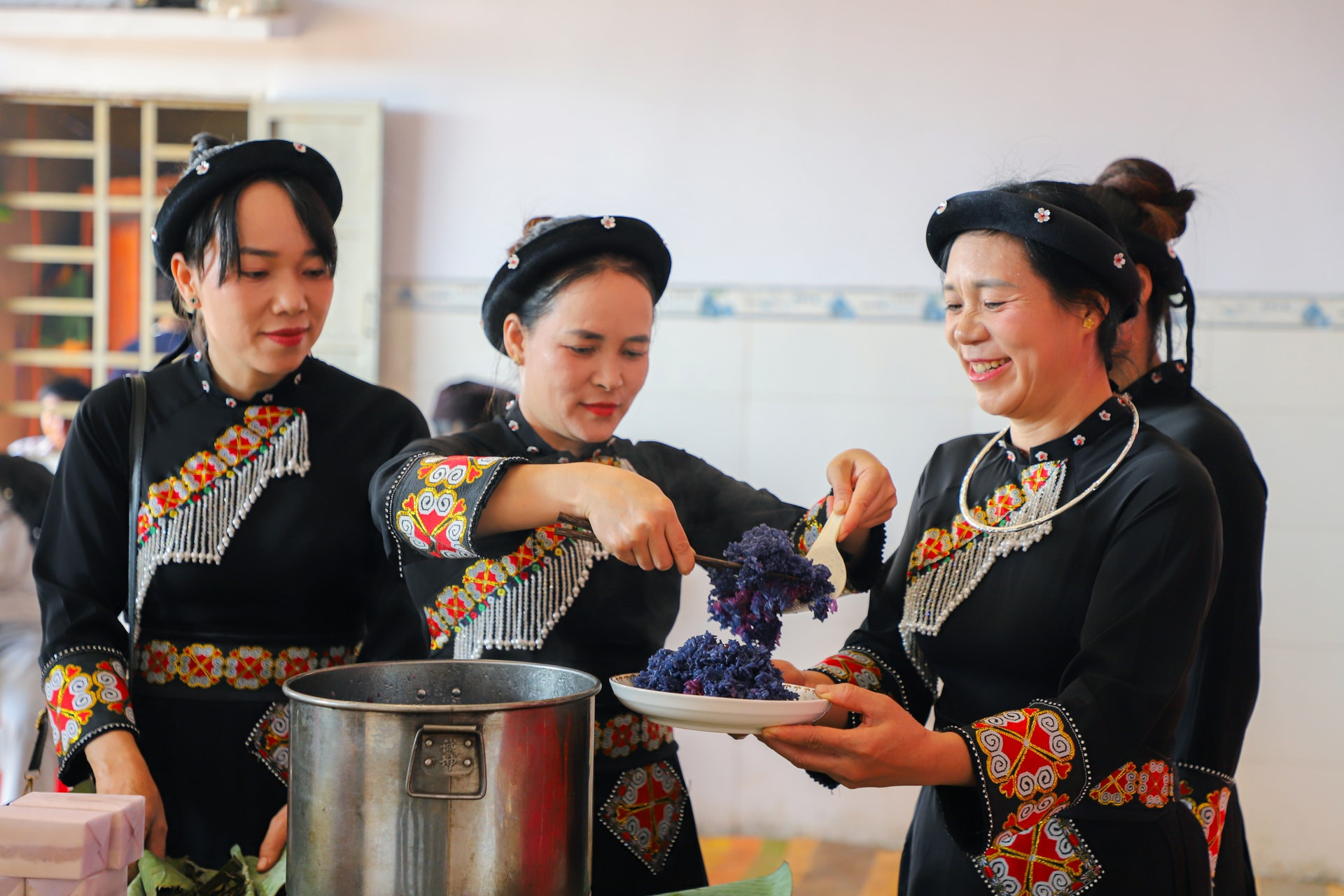
Five-color sticky rice is dyed with natural colors from leaves, roots and fruits.The colors of the sticky rice symbolize the philosophy of yin and yang and the five elements.Tay and Nung people steam fragrant sticky rice made from upland glutinous rice.Five-color sticky rice on a traditional feast tray.
“
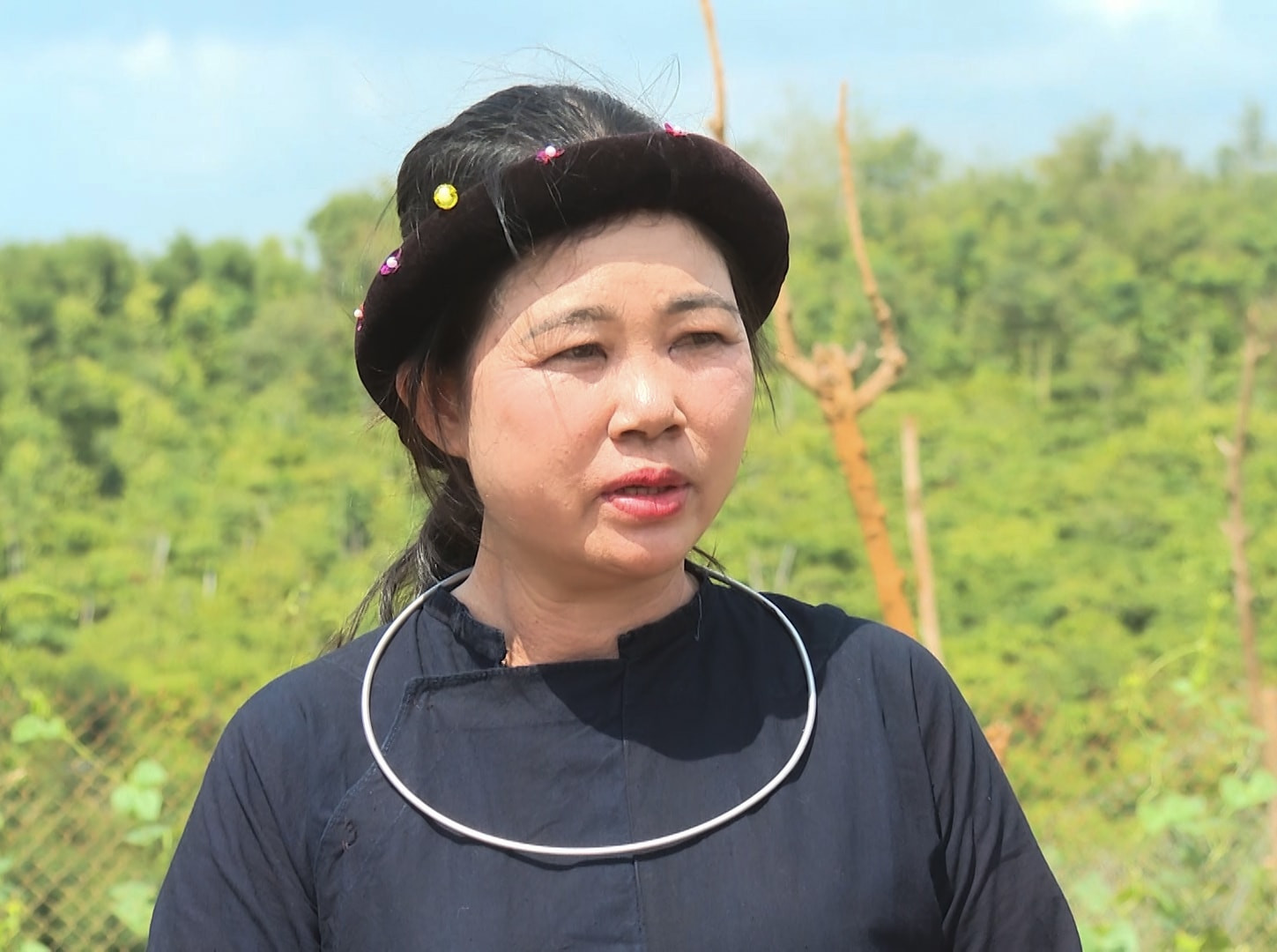
The colors of the sticky rice all come from plants and leaves grown in home gardens. When steaming the rice, the fire must be carefully controlled so the grains become soft and sticky while keeping their colors. Five-color sticky rice is often offered to ancestors during festivals.
Dam Thi Kiem R’But Hamlet, Quang Son Commune, Lam Dong Province
Strengthening community bonds through traditional dishes
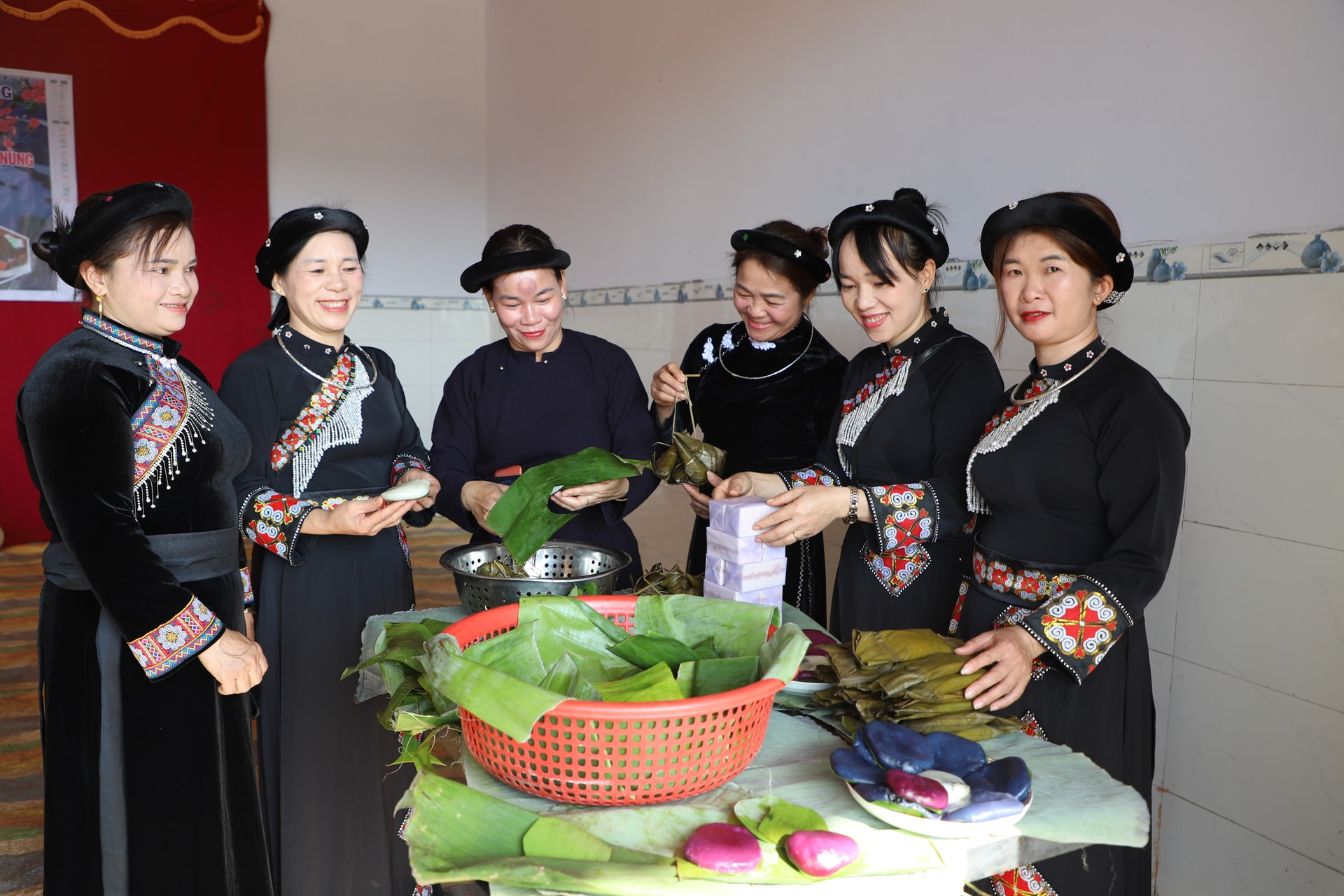
During festivals, weddings or family gatherings, Tay and Nung people often begin preparing the feast early in the morning. Elders guide the younger generations on how to pound cakes, steam sticky rice and roast meat, while the young learn how to marinate spices, wrap cakes and arrange the feast trays.
Cuisine becomes a bridge connecting the community during festivals and celebrations
These seemingly simple tasks become opportunities for generations to pass down experiences and cultural values to one another.
“
These dishes are not only enjoyed for their flavor but also help bring people together to share joy, extend hospitality and strengthen community ties.
Dam Thi Vien R’But Hamlet, Quang Son Commune, Lam Dong Province
The warm atmosphere surrounding the traditional family meal is always filled with cheerful laughter and conversation. Stories of harvest seasons, memories of their ancestral homeland, and reflections on modern life are shared over cups of strong rice wine.
Through each dish, the Tay and Nung people convey messages of filial piety, gratitude to their ancestors, and a sense of responsibility to preserve their cultural identity.
These dishes are not only about taste; they also carry the flavor of home — a flavor that helps those living far away keep their memories alive, cherish their ethnic heritage, and contribute to the rich and diverse cultural tapestry of the Central Highlands of Lam Dong.
Cuisine has become an important part of preserving ethnic cultural identity



.jpg)