Forest Protection Starts with Every Forest Owner’s Responsibility
Diem Thuong•28/09/2026 11:12
Protecting Lam Dong’s forests requires more decisive and coordinated action. Forest protection is not only about safeguarding existing forest cover, but also about preserving ecological resources, livelihoods and the foundation for the province’s sustainable development.
Forest patrols conducted by the Da Huoai Forest Protection Department
Pressure on Forest Protection
Lam Dong has over 1.166 million hectares of land allocated for forestry, which makes up 48.12% of its entire natural area. The area covered by forests exceeds 1.112 million hectares, encompassing more than 930,156 hectares of natural forests and over 182,679 hectares of planted forests. As of 2025, the province's forest coverage rate stood at 45.91%.
The extensive forest resources, distributed over a wide area with rugged terrains, along with natural forests mixed with agricultural land, present considerable challenges for forest management and protection.
According to the provincial Forest Protection Department, in the first eight months of 2026, the province organized 822 campaigns to promote forestry laws and regulations, secured 2,589 commitments related to forest protection as well as forest fire prevention and control, and executed 3,276 patrols and inspections that involved about 6,000 participants.
“
Across Lam Dong Province, 381 violations of the Forestry Law were detected, including 175 cases of illegal forest clearing that damaged 30.2285 hectares of forest. Compared with the same period in 2025, the total number of violations rose by 23.3%, cases of illegal forest clearing increased by 50.9%, and the area of forest damaged by illegal clearing increased by 38.2%.
Forest rangers provide guidance to business households on compliance with regulations
Moreover, the province noted 195 violations of the Land Law related to the encroachment upon or illegal occupation of forest land, spanning an area of 33.323 hectares.
Authorities addressed 393 forestry-related violations, including 372 cases subject to administrative penalties and 21 cases referred for criminal proceedings, with nearly VND2.48 billion collected for the state budget.
Importantly, the assessment of forest loss is conducted according to various groups of forest owners, such as forest management boards, enterprises tasked with forest management, and local authorities.
This approach facilitates the identification of affected forest regions, the determination of high-risk areas, and the clarification of management responsibilities for designated forest zones.
The forestry authorities indicate that various factors contribute to illegal deforestation and encroachment onto forest land. Increasing prices for agricultural commodities have intensified the pressure on forest land.
Some violators engage in unlawful forest clearing during nighttime or the early morning to evade detection by authorities.
Alongside the inherent challenges posed by difficult terrain, extensive areas and limited staffing, there are still deficiencies in forest management and protection in certain regions and among some forest owners.
Forest inspection in the Ham Thuan Bac Forest Protection Department
Phan Nguyen Hoang Tan, Director of the Department of Agriculture and Environment, stated that while some progress has been made, breaches of forestry regulations, especially illegal land clearing, continue to be a complex issue in certain regions.
The number of violations, instances of unlawful forest clearing, and the extent of forest damage have all risen compared to the same period last year, as encroachment on forested land persists. At the same time, the growth of the forest sector and its economic potential are not meeting the province's capabilities and opportunities.
Phan Nguyen Hoang Tan emphasized that local authorities and forest owners must enhance their management duties over the areas they oversee, actively pinpoint high-risk zones, establish patrol and inspection teams, and quickly identify and address violations.
“
Responsibility for forest protection must be clearly assigned down to each plot, compartment and sub-compartment under the principle of ‘six clear points’: clear personnel, clear tasks, clear timelines, clear responsibilities, clear outputs and clear authority.
Phan Nguyen Hoang Tan, Member of the Provincial Party Committee and Director of Department of Agriculture and Environment
Strengthening Responsibility, Protecting Forests from the Ground Up
Amid the continuing pressure on forest protection, results in some areas show that improvements can be achieved when authorities maintain close contact with local communities, strengthen patrols and coordinate closely in handling violations.
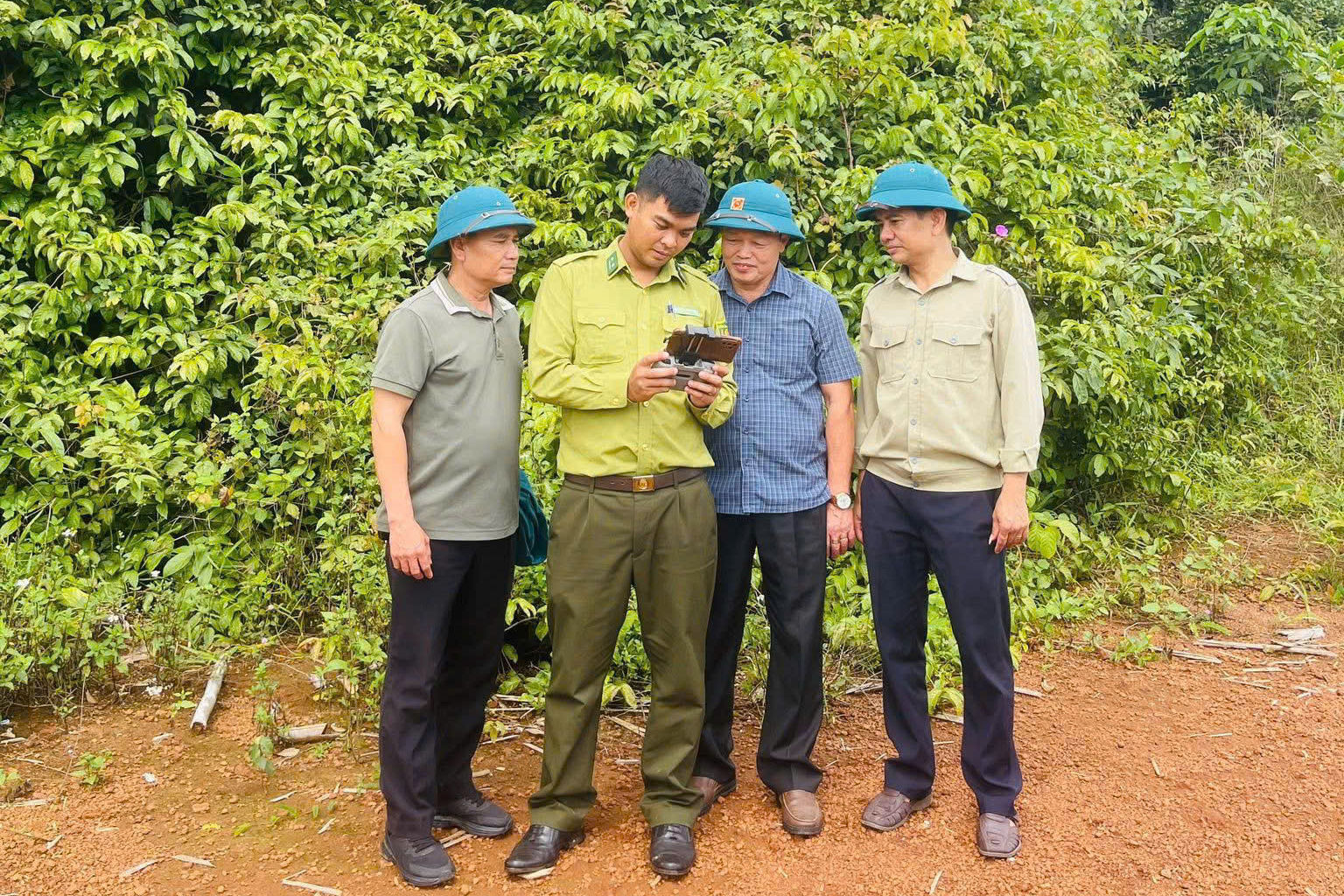
Forest rangers use aerial equipment to inspect forests
In the jurisdiction overseen by the Bao Lam Forest Protection Department, from the start of the year until the reporting period in August 2026, officials identified and addressed six infractions of forestry regulations, successfully identifying the offenders in each instance.
The affected forest area diminished to 0.0816 hectares, representing a 97% decline compared with the same period last year. The number of violations has dropped by 45%, while the quantity of lost forest products has decreased by 95%.
These findings indicate favorable developments in Bao Lam. Maintaining patrols in key areas and quickly identifying and addressing offenders are key elements in enhancing grassroots forest protection.
A representative from Bao Lam Forestry One Member Co., Ltd. stated that the crucial aspect of successful forest protection is the proactive management of forest zones, rather than waiting for illegal deforestation to happen before carrying out inspections and taking action.
The company allocates staff to designated areas and intensifies patrols in high-risk locations. It also collaborates closely with forest rangers and local authorities to detect and prevent violations from the outset.
Forest patrols in Ham Thuan Bac Commune
In the area managed by the Gia Nghia Forest Protection Department, efforts to protect the forest have persisted despite challenging weather conditions, such as heavy rainfall and treacherous forest roads.
During July and August 2026, the department carried out 460 forest protection patrols and identified four violations, including two breaches of forestry regulations and two incidents related to forest land.
The cases of Bao Lam and Gia Nghia highlight that forest protection should not solely depend on specialized forces. It also necessitates close collaboration among forest rangers, local authorities, forest owners, and community members.
When all stakeholders actively engage on the ground and vigilantly monitor the situation, it becomes more probable that violations will be identified and addressed at an early stage.
To achieve more uniform advancements across the province, effective strategies must be adopted that reflect the specific conditions of each locality, especially in areas particularly vulnerable to illegal logging and the encroachment of forest lands.
The Department of Agriculture and Environment has requested that forest rangers concentrate on assisting local authorities and landowners in regions prone to becoming hotspots, such as Dam Rong 1, Ta Hine, Lac Duong, Quang Son, and Quang Khe.
Forest management units have been directed to assess and identify critical locations, assign personnel to set up checkpoints, and enhance patrols, inspections, and surveillance activities to swiftly identify and curb violations.
They should also take the initiative to collaborate with police, forest rangers, and local authorities in the areas of forest protection, forest land management, and preventing obstruction of law enforcement officers.
At the community level, local officials are obligated to adequately fulfill their responsibilities related to state management of forestry, land, construction standards, and population management.
Local authorities need to curb unregulated migration aimed at clearing forests for agricultural use, firmly reclaim encroached forest land, and resolve disputes concerning forest land encroachment definitively.
Lam Dong is stepping up the application of technology in forest resource management
Specifically, organizations and individuals who have failed to fulfill their management duties, permitting illegal activities such as forest clearing, logging, or encroachment on forest land to take place without prompt intervention to prevent, identify, or address these violations, must have their responsibilities reassessed and may face disciplinary measures or be referred to relevant authorities for action in accordance with regulations.
In addition to enhancing grassroots efforts, Lam Dong is also increasing the use of technology in managing forest resources.
The provincial Forest Protection Department has been assigned the responsibility of developing and operating a database for forests and forest land, and utilizing remote sensing imagery, geographic information systems (GIS), and other technological tools to improve monitoring, early warning systems, and the detection of violations.
Accelerating forest regeneration efforts
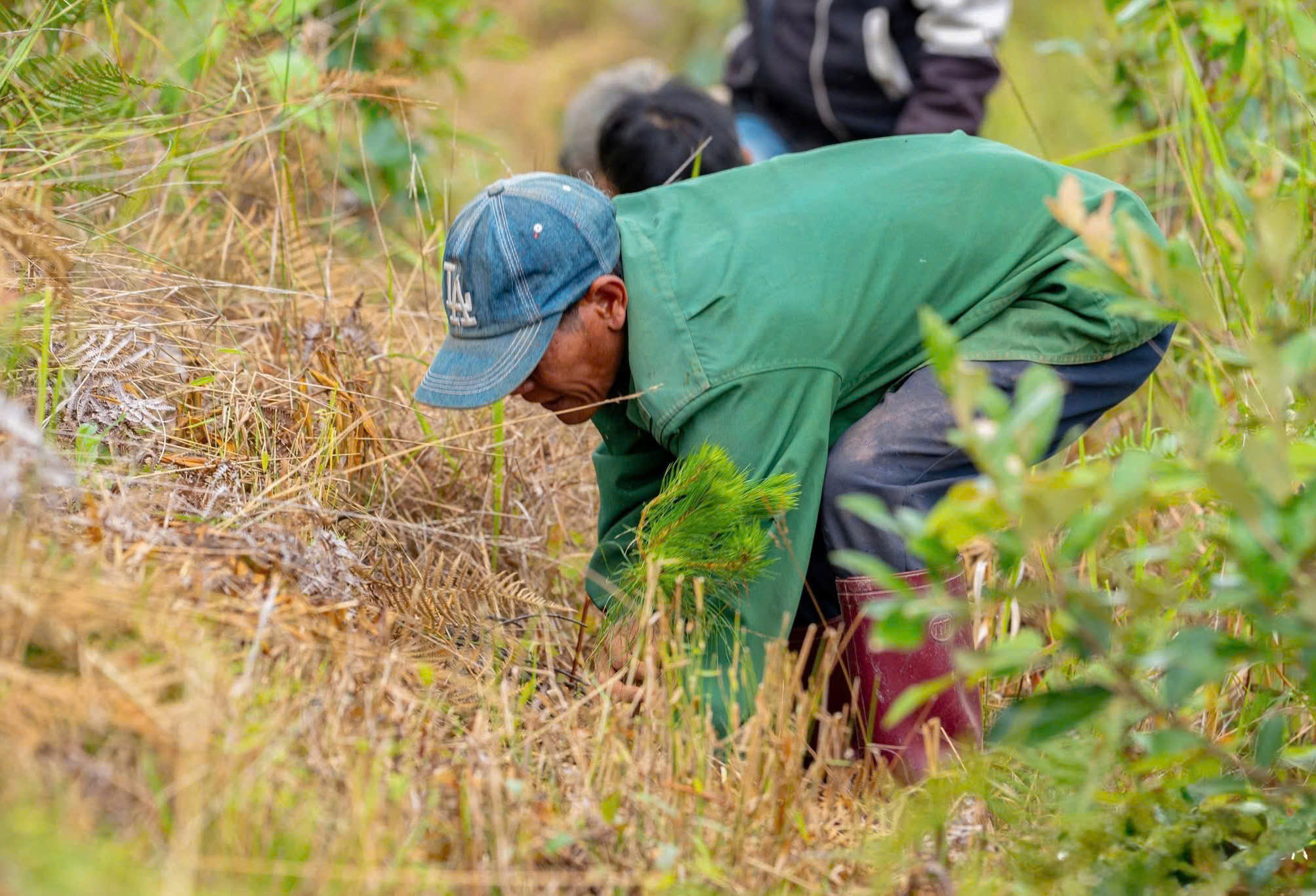
Missions for the final months of the year include not only preventing illegal forest clearing and encroachment on forest land, but also accelerating concentrated forest planting, replacement planting, dispersed tree planting and assisted natural regeneration.
The province will also complete plans for sustainable forest management, forest allocation and forest leasing, ensuring that forest areas are placed under effective management.