


Four Outstanding Achievements Define Lam Dong’s 500-Day Campaign
Lam Dong completed all eligible tasks involving the collection of samples from fallen soldiers' remains three months ahead of schedule, marking a significant achievement in the first phase of the 500-day campaign through scientific, innovative and flexible approaches. These results and the lessons learned provide an important foundation for the province to successfully implement the second phase.
Proactive and Innovative Implementation
During the first phase of the 500-day campaign to accelerate the search for, recovery and identification of fallen soldiers' remains (hereinafter referred to as the 500-Day Campaign), Lam Dong faced a substantial workload across a vast area with varying terrain and climatic conditions. The province currently has 12 war martyrs' cemeteries containing 13,228 graves. Of these, 4,776 contain remains that have yet to be identified, including 3,625 eligible for sample collection.
In response to these challenges, the Provincial Steering Committee 515 proactively adopted appropriate implementation methods, focusing on standardizing procedures, assigning personnel according to their expertise and coordinating operations flexibly to suit local conditions.
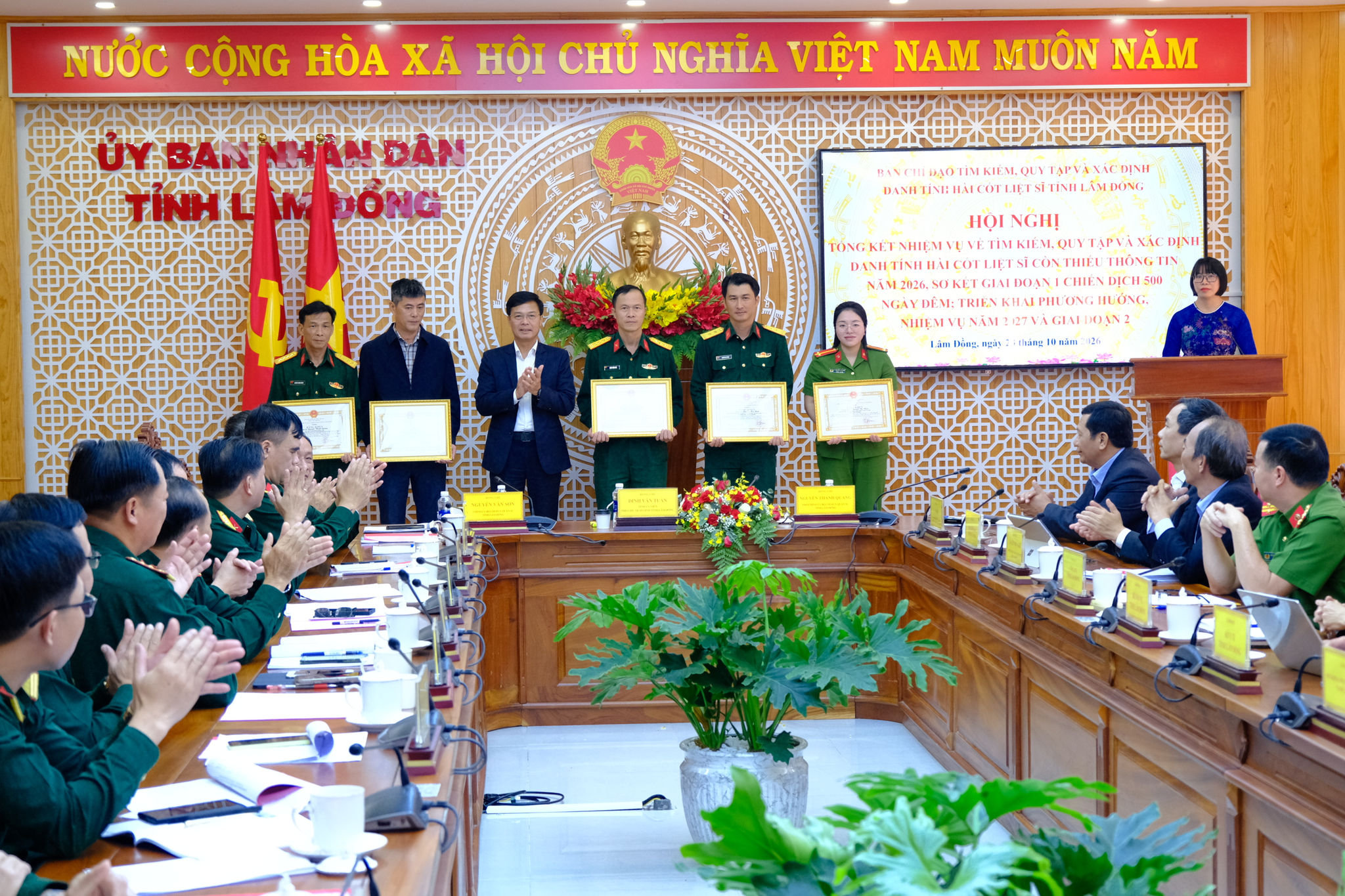
According to Dinh Van Tuan, Vice Chairman of the Lam Dong Provincial People's Committee and Head of the Provincial Steering Committee 515, the campaign mobilized an interagency force comprising officers and soldiers from the Provincial Military Command, personnel from the Department of Home Affairs, the Department of Health, the Provincial Center for Forensic Medicine and Medical Assessment, and local forces. Five sampling teams operated simultaneously, carrying out their assigned tasks under standardized procedures.
A notable feature of the province's approach was that it did not launch operations simultaneously across all sites from the outset. Instead, it first conducted a pilot operation to review and refine procedures, minimize errors and ensure readiness before expanding the effort.
Senior Colonel Nguyen Thanh Quang, Deputy Political Commissar of the Lam Dong Provincial Military Command and Deputy Head of the Provincial Steering Committee 515, who directly oversaw DNA sample collection across the province, said that at the Duc Linh Commune War Martyrs' Cemetery, the teams carefully reviewed each stage of the process. These included cross-checking fallen soldiers' records and cemetery maps against actual site conditions, locating graves, exhuming remains, collecting samples, digitizing information, and packaging, sealing, preserving and handing over samples. Once the procedures were standardized, the teams were quickly divided into smaller groups to carry out operations simultaneously.
Based on the standardized procedures, personnel deployment was further adjusted according to the workload and actual conditions at each cemetery. At sites with fewer graves requiring sample collection, teams were assigned to work simultaneously, while all five teams were deployed together at the Lam Dong and Binh Thuan War Martyrs' Cemeteries. This approach helped prioritize personnel for sites with heavier workloads while making effective use of each team's time and capabilities.
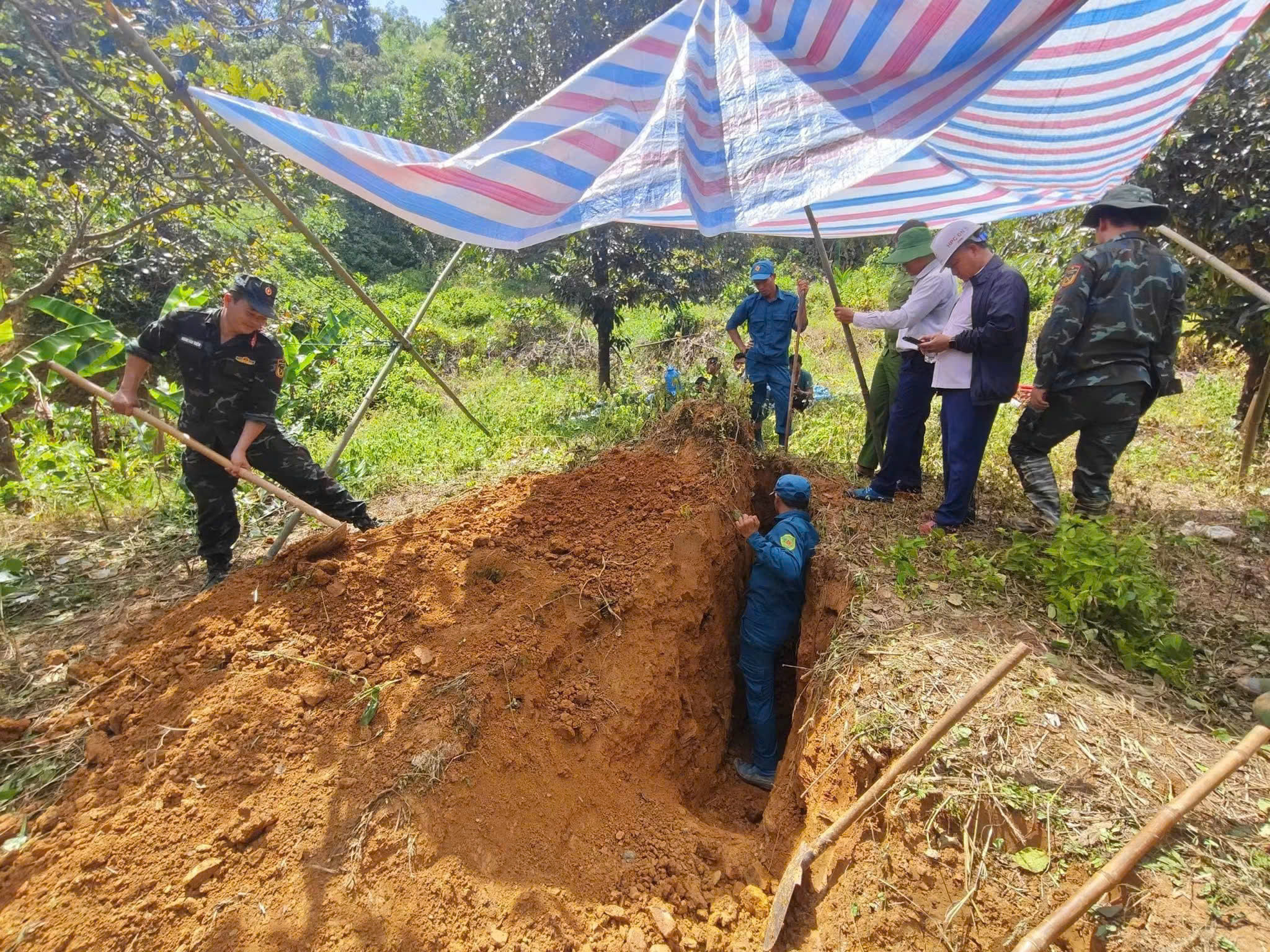
Alongside coordinating specialized teams, the Provincial Military Command proactively assigned personnel to specific tasks. Local militia and self-defense forces were mobilized to assist with grave excavation. At the Binh Thuan War Martyrs' Cemetery, where a large number of graves required excavation, additional personnel from the 812th Infantry Regiment were deployed. More than 100 officers, soldiers and members of local militia and self-defense forces directly participated in the operation.
Clearly defined roles and responsibilities enabled the forces to carry out multiple stages simultaneously, reducing pressure on specialized personnel, minimizing waiting times and ensuring overall progress. Despite efforts to accelerate the work, the province continued to prioritize accuracy and strict procedures, ensuring safety at every stage.
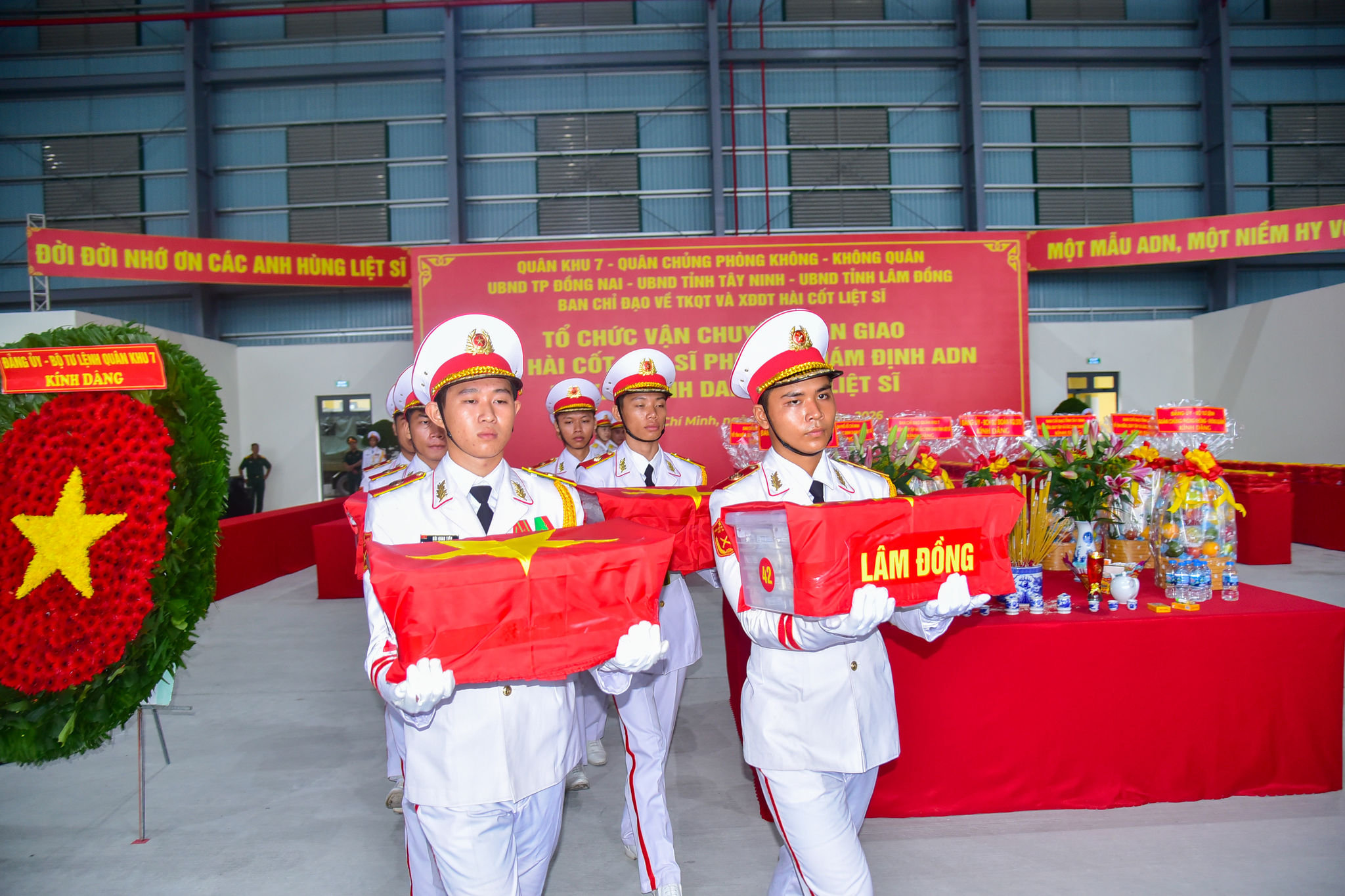
Through this coordinated and systematic approach, the Provincial Steering Committee 515 completed the handover of 3,625 samples from fallen soldiers' remains to the Military Forensic Institute under the Ministry of National Defence for DNA analysis on September 15, 2026.
Major General Tran Chi Tam, member of the Standing Committee of the Military Region 7 Party Committee, Deputy Political Commissar of Military Region 7 and Head of the Military Region 7 Steering Committee for the Search, Recovery and Identification of Fallen Soldiers' Remains, affirmed that Lam Dong's achievements made an important contribution to Military Region 7 completing its mission nine months ahead of schedule.
Alongside the collection of samples from fallen soldiers' remains, efforts to collect biological samples from maternal relatives of fallen soldiers whose identities have yet to be established were also intensified. The Lam Dong Provincial Police coordinated with the Police Department for Administrative Management of Social Order (C06) under the Ministry of Public Security and GeneViet, the sampling unit, to establish 16 centralized sample collection sites. As a result, the province collected 1,371 samples against a target of 1,366 from relatives on the maternal side of fallen soldiers, achieving 100.37% of the target and exceeding the plan by five samples.
Efforts to search for and recover fallen soldiers' remains have also been stepped up. Since the beginning of 2026, the Provincial Military Command has conducted 32 search and survey operations, recovering the remains of 26 fallen soldiers, with more than 799 personnel deployments and approximately 2,192.5 cubic meters of earth and rock excavated. Notably, a search operation in Hoa Thang Commune from July 21 to 23, 2026, yielded significant results, with the remains of 12 fallen soldiers recovered.
Four Outstanding Achievements Lay the Foundation for Phase Two
Assessing the results of the first phase of the 500-day campaign in Lam Dong, Major General Tran Chi Tam recognized the Provincial Steering Committee 515 for its outstanding performance in four key areas: the most thorough and systematic organization; the most innovative, coordinated and effective implementation methods; the most synchronized, determined and effective collection of samples from fallen soldiers' remains at cemeteries; and the most coordinated and far-reaching information and communication efforts.
These assessments not only acknowledged the achievements but also highlighted the effectiveness of clearly defined responsibilities assigned to individual Steering Committee members, localities, agencies and units, close coordination among participating forces, and strong political determination in carrying out the mission. In particular, communication efforts helped foster a strong sense of responsibility and deep gratitude among authorities, agencies and participating forces.
These lessons provide an important foundation for Lam Dong to build upon in the second phase, as the search for, recovery and identification of fallen soldiers' remains continue to face numerous challenges requiring perseverance and even closer coordination.
Recognizing these requirements, the Provincial Steering Committee 515 has proactively developed an implementation plan for the second phase, outlining specific tasks and solutions. According to Dinh Van Tuan, the province will implement coordinated search measures, prioritizing locations with reliable information, reviewing and identifying key search areas, and strengthening coordination among military agencies, police, provincial departments and local authorities.
In particular, the province will focus on examining records and lists of fallen soldiers, deciphering military unit codes and designations, and using databases on fallen soldiers and their graves to cross-reference information and narrow down search areas. At the same time, it will intensify the application of information technology to review and update records and lists of fallen soldiers, verify search locations, and develop maps for the search and recovery of fallen soldiers' remains.
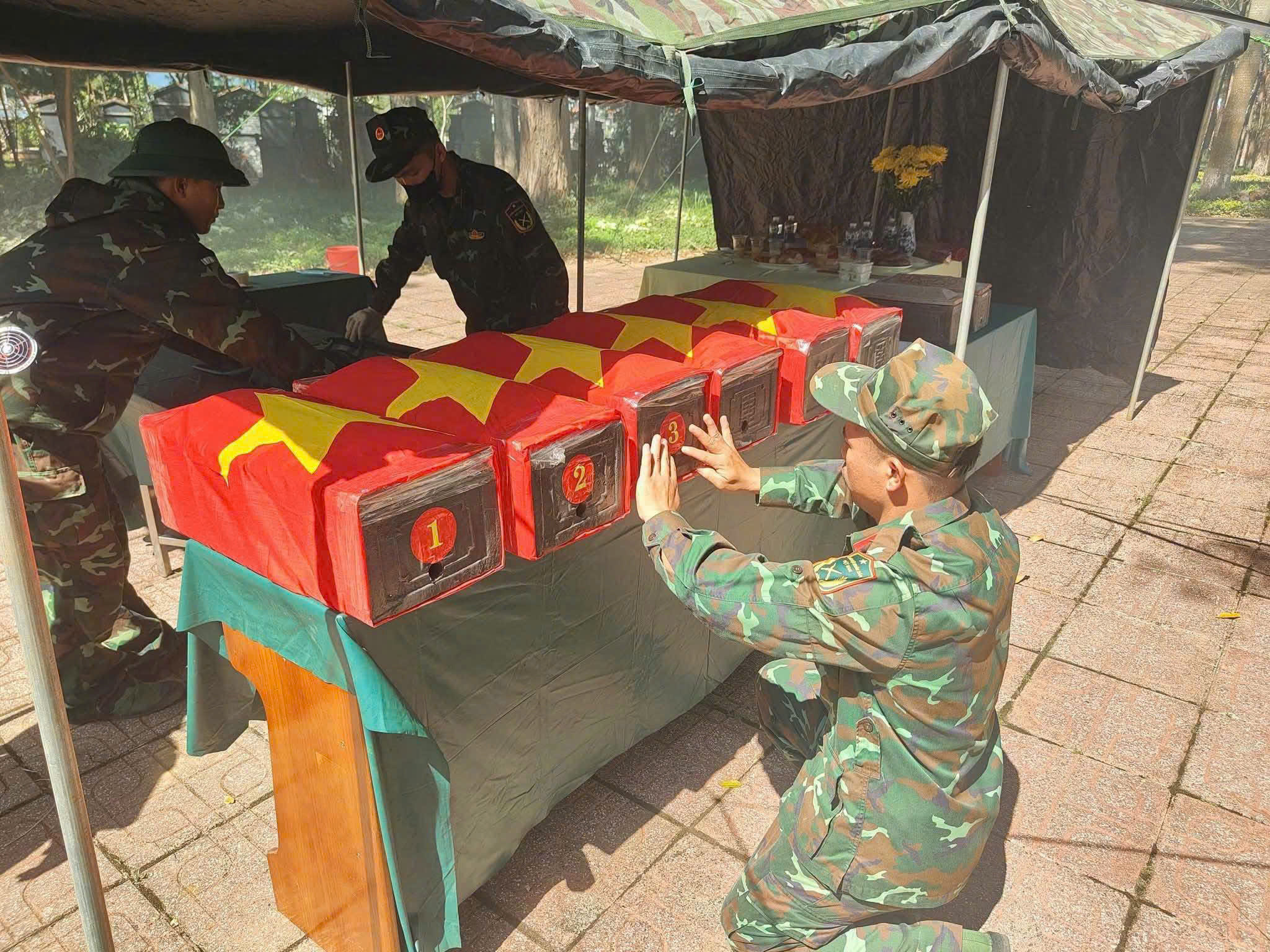
For unidentified graves at war martyrs' cemeteries, the province will strengthen coordination with specialized agencies to collect samples from fallen soldiers' remains in accordance with regulations, after verification using evidence-based methods. At the same time, it will ensure the full provision of benefits and entitlements for personnel of Team K75 under the Provincial Military Command, the force directly responsible for search and recovery operations during the second phase of the campaign.
Dinh Van Tuan called on authorities and agencies at all levels to continue upholding their sense of responsibility, mobilizing coordinated efforts across the entire political system and encouraging public participation, with a firm determination to improve the effectiveness of the second phase of the 500-day campaign.