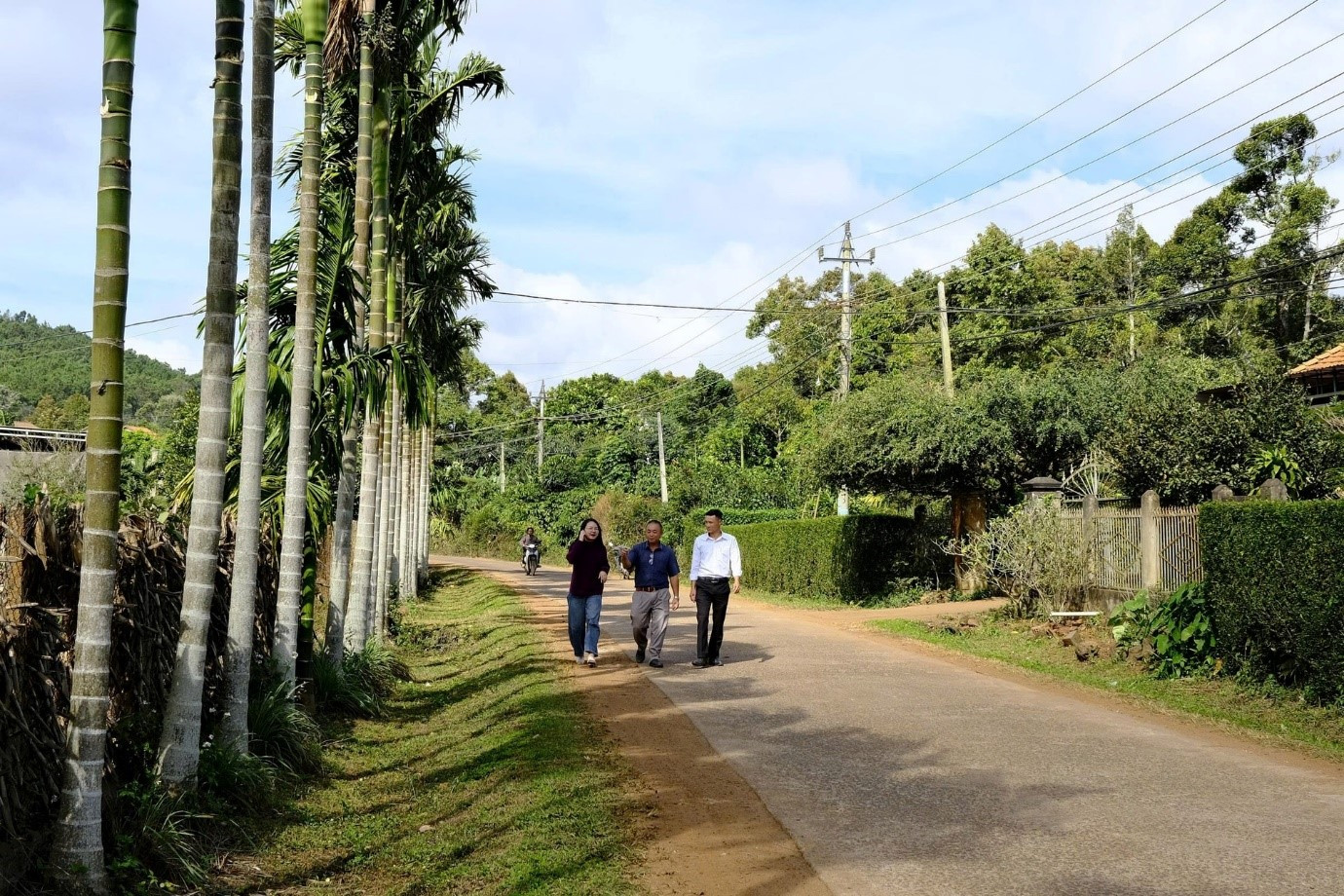

From Clean Homes to Green, Tidy Neighborhoods in Dak Song
No longer just a mobilization campaign, the “Three Cleans” model in Dak Son 1 Hamlet, Dak Song Commune (Lam Dong Province), is gradually becoming an integral part of daily life. It has taken root as a lasting habit among local residents, helping transform the rural landscape toward a more civilized, green, clean, and beautiful environment.
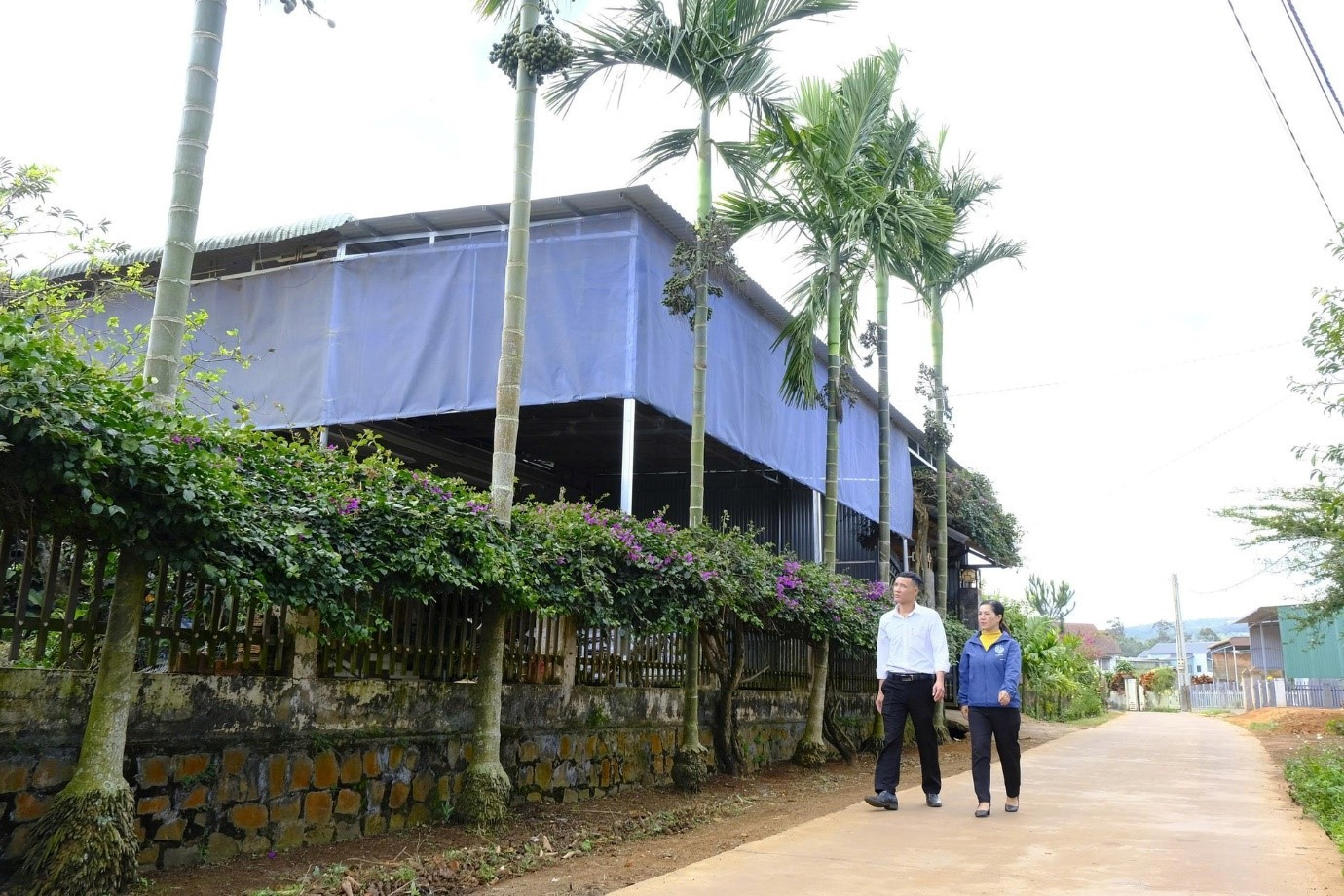
When cleanliness becomes a way of life
For many years, residents of Dak Son 1 Hamlet have been conscious of maintaining environmental hygiene in their daily routines. However, since the “Three Cleans” model—clean homes, clean kitchens, clean alleys—has been implemented in a coordinated manner and linked with the campaign “Building Families with Five No’s and Three Cleans,” practices that were once voluntary have become more systematic, scientific, and widely influential within the community.
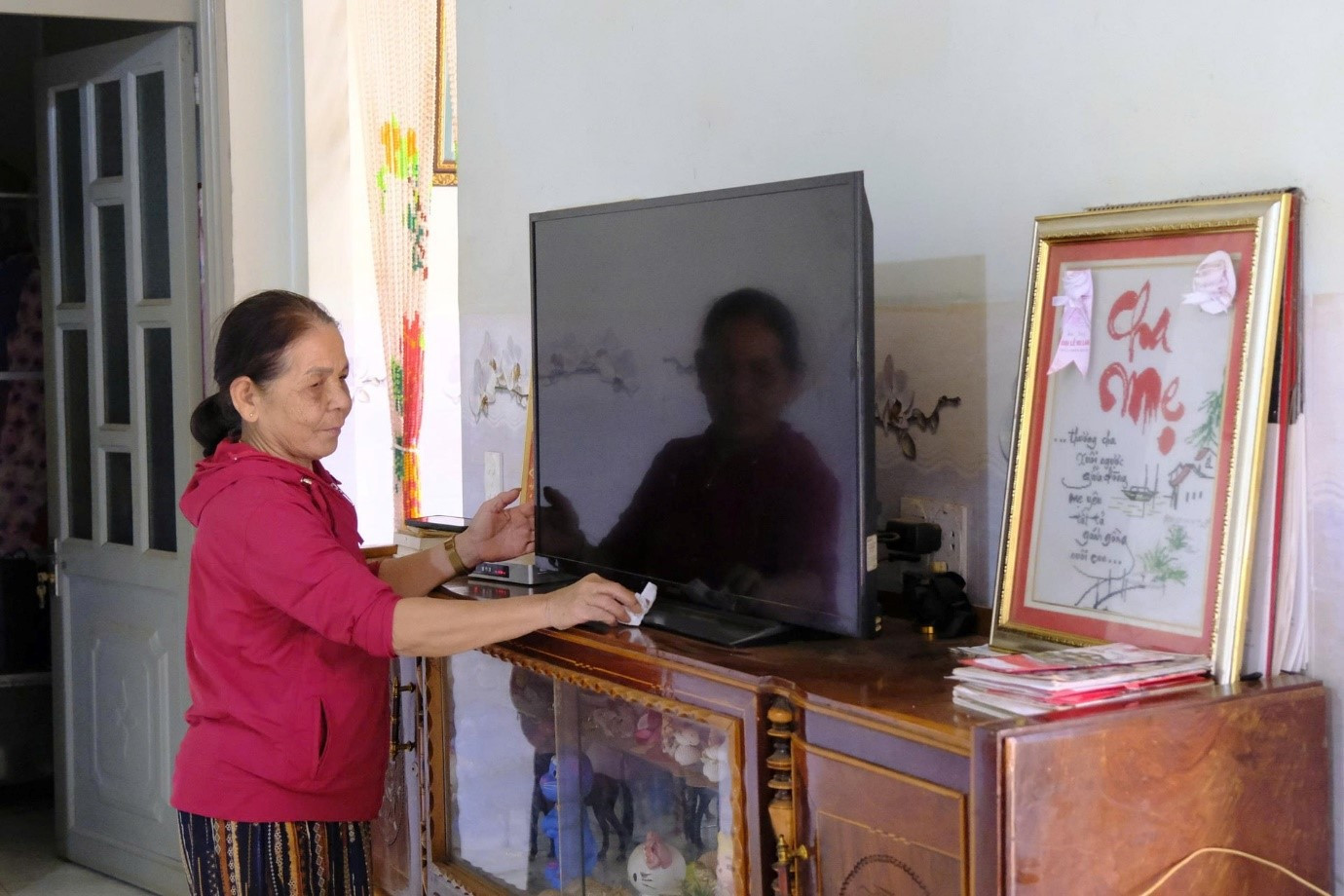
Having lived in Dak Son 1 for many years, Ms Nguyen Thi Dong not only keeps her home neat and tidy but is also one of the pioneers in implementing the “Three Cleans” model in the neighborhood.
From the very beginning of the program, Ms Dong proactively changed her family’s daily habits in a more scientific and environmentally friendly direction. The kitchen and living areas are always well organized, clean, and convenient. Household waste is carefully sorted: non-biodegradable waste is moved to designated collection points for specialized vehicles, while organic waste is reused as fertilizer for the garden behind her house.
In the past, keeping the house clean was mainly the responsibility of each family. Since joining the ‘Three Cleans’ model, everyone has become more aware and works together to keep village roads and alleys clean and beautiful. It’s not enough for just one home to be clean—everything around it must be clean for the living environment to truly improve
Ms Nguyen Thi Dong, Dak Son 1 Hamlet, Dak Song Commune, Lam Dong Province
Beyond keeping her own home clean, Ms Dong actively shares her experience in waste sorting and environmental protection with neighbors. At village meetings and during community clean-up drives, she consistently participates with enthusiasm, readily guiding and reminding others to take part.
Thanks to role models like Ms Nguyen Thi Dong, the “Three Cleans” model in Dak Son 1 Hamlet has moved beyond slogans to truly take hold in everyday life. This collective effort not only enhances the local landscape but also nurtures a cultural lifestyle movement within the community, allowing civilized practices to take deep root and develop sustainably.
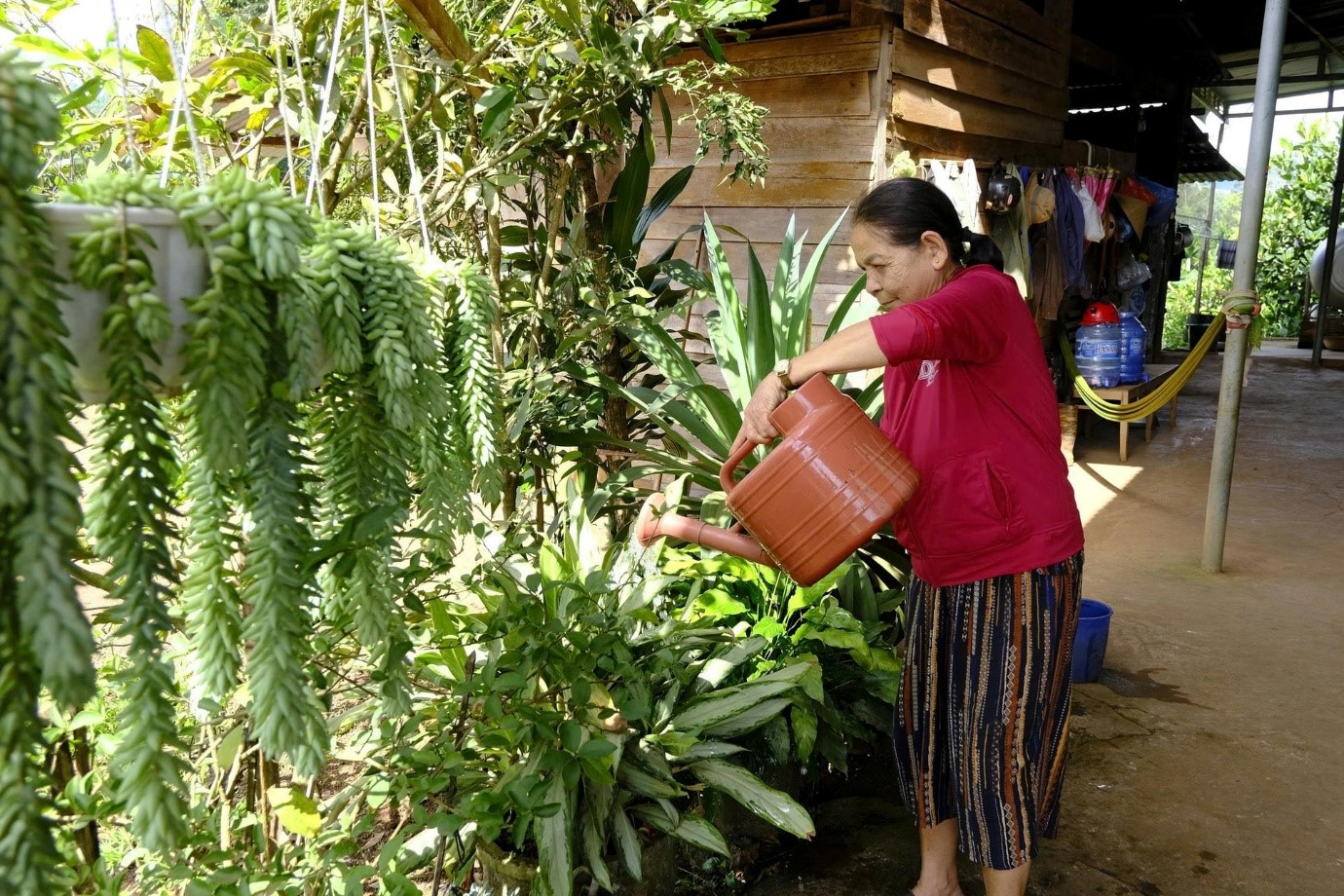
Spreading from each household
The “Three Cleans” model has not remained confined to individual households but has spread strongly into shared community spaces.
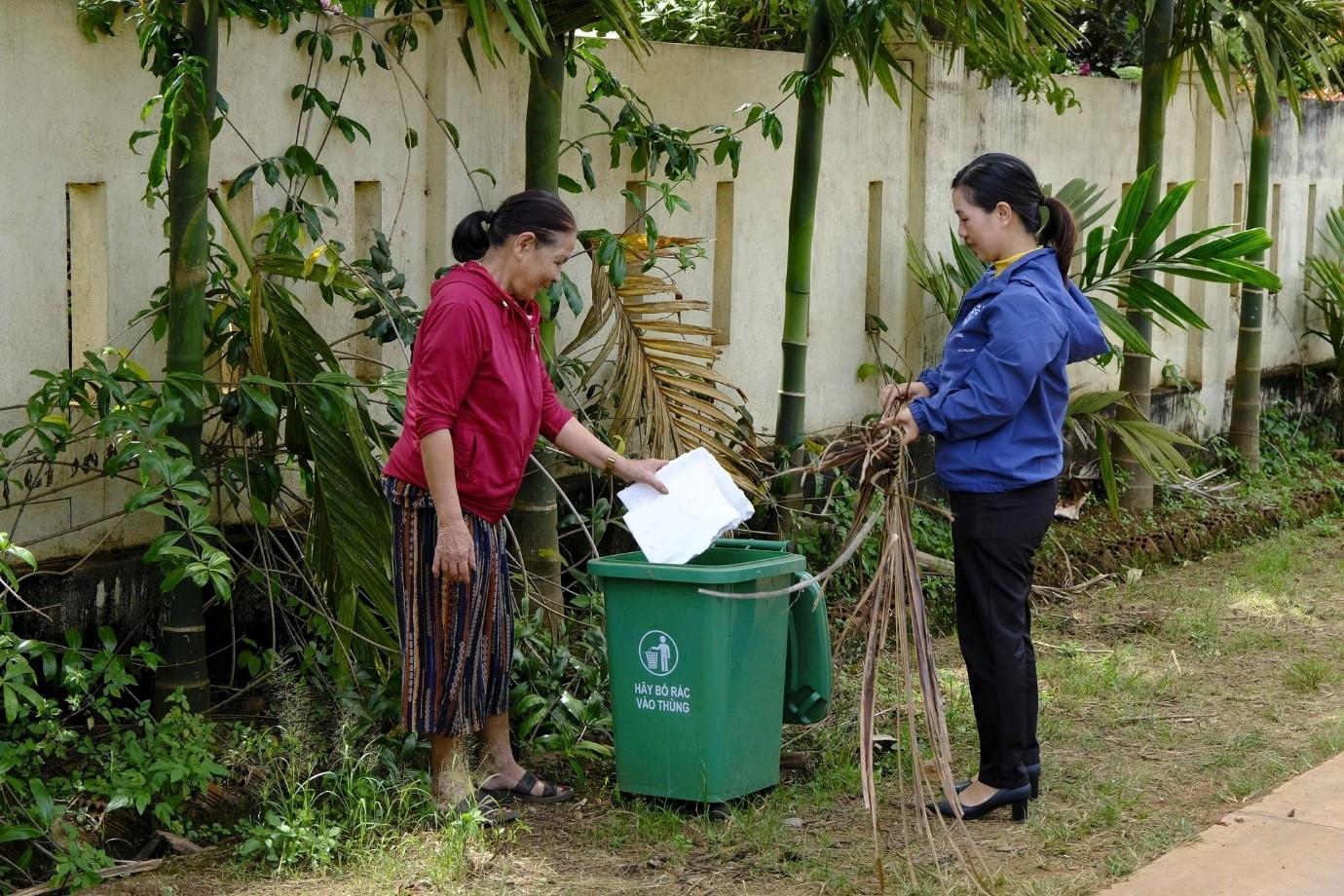
In 2026, the hamlet plans to launch an emulation movement among neighborhood clusters focusing on flower planting, road improvement, and ecological environmental protection, helping create green, clean, and beautiful landscapes while improving residents’ quality of life
Ms Bui Thi Loan, Deputy Secretary of the Party Cell and Head
of Dak Son 1 Hamlet, Dak Song Commune
Movements such as “Volunteer Saturdays” and “Green Sundays” are maintained on a regular basis, attracting large numbers of residents to participate in cleaning village roads, alleys, and residential areas. In addition to organized clean-up campaigns, each household also voluntarily takes responsibility for cleaning the area in front of their homes.
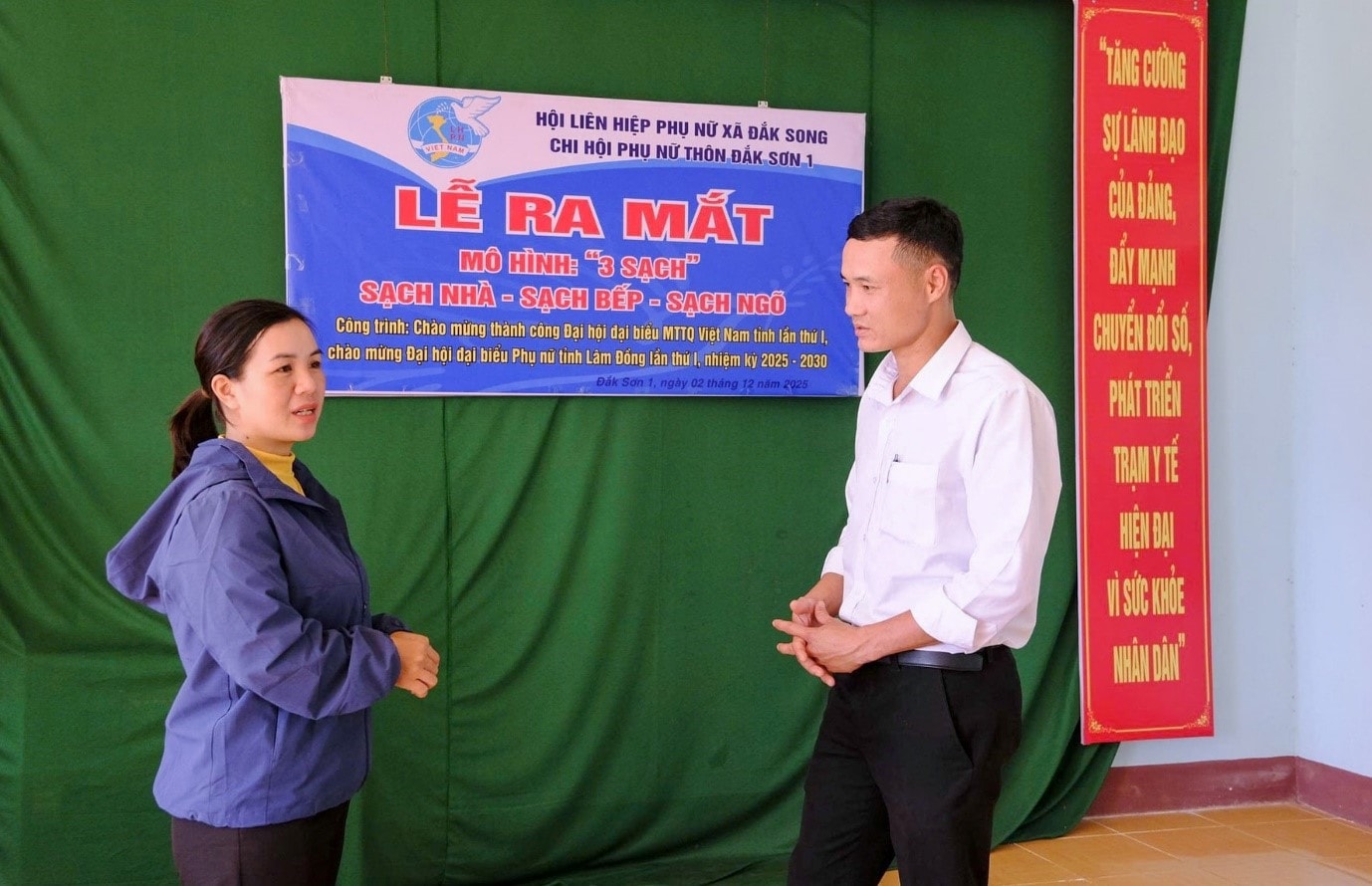
Ms Ngo Thi Tuyet Nhung, Vice Chairwoman of the Vietnam Fatherland Front Committee of the commune and Chairwoman of the Dak Song Commune Women’s Union, said the “Three Cleans” model initiated by the Women’s Union is one of the projects celebrating the first Congress of the Vietnam Fatherland Front of Lam Dong Province and the first Provincial Women’s Congress for the 2025–2030 term.
Through this model, a green, clean, beautiful, and safe living environment has been built and maintained in each household and neighborhood. It is also a practical activity contributing to the fulfillment of Criterion No. 17 under the National Target Program on New Rural Development.
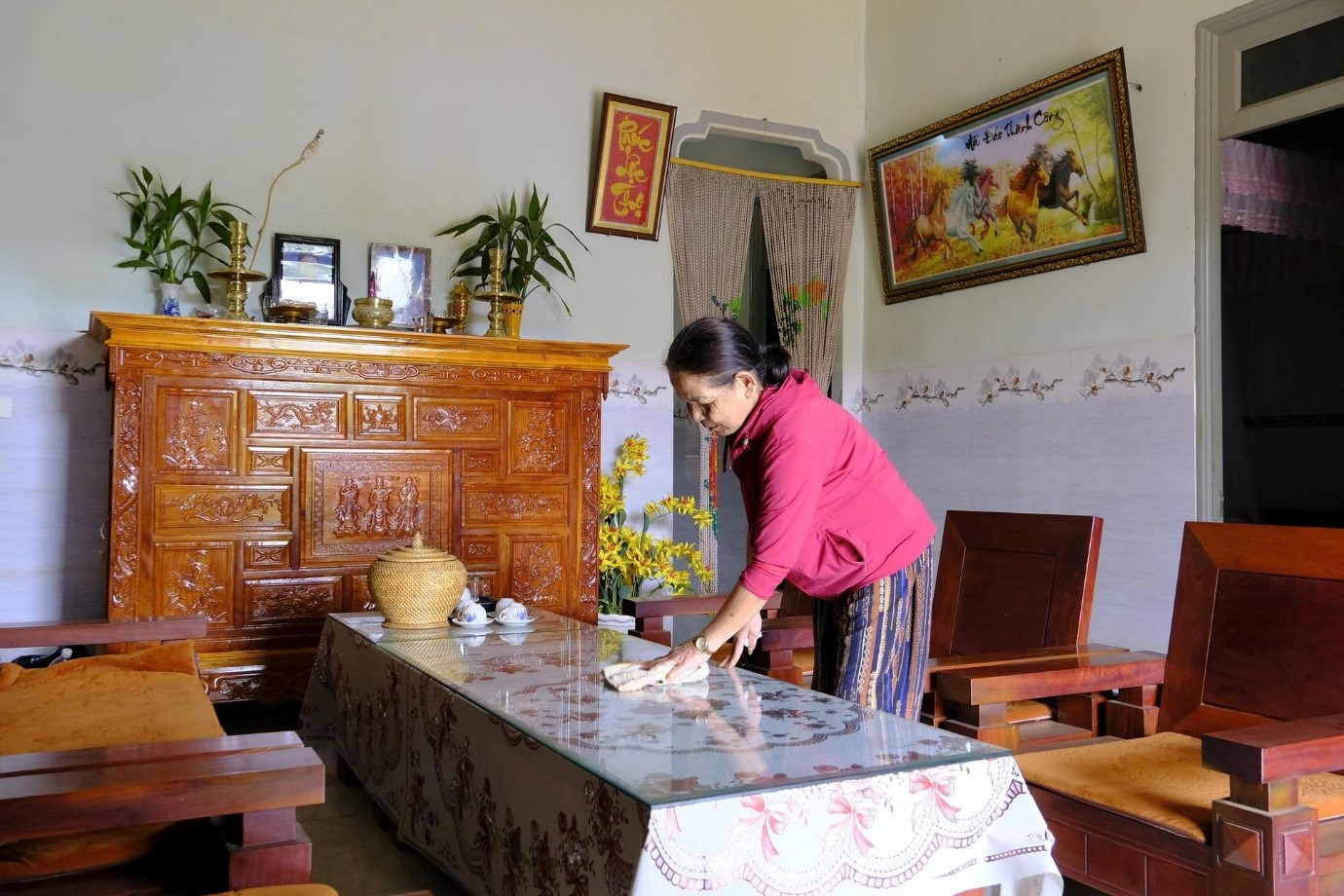
Alongside communication and advocacy efforts, the Women’s Union has coordinated with local authorities and mass organizations to encourage residents to use environmentally friendly products and limit single-use plastic waste. Initiatives such as “Women’s Flower Roads,” “Green–Clean–Beautiful Routes,” and “Women Self-Managed Roads” not only beautify villages but also gradually help build a cultured and civilized lifestyle in residential areas.
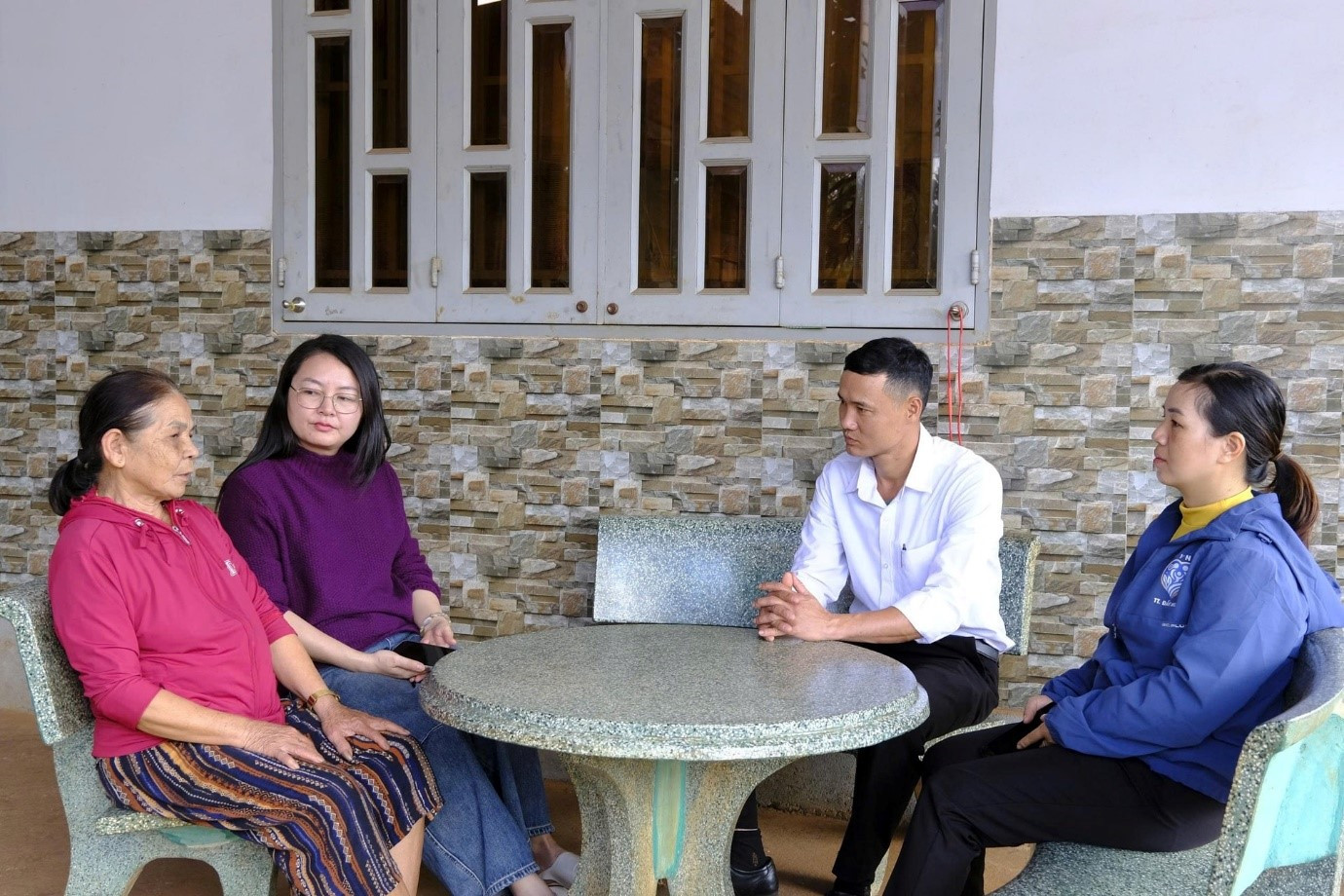
Regular inspection, evaluation, recognition, and commendation of outstanding collectives and individuals are carried out by local authorities, creating motivation for these movements to be sustained over the long term, gain depth, and spread widely.
From simple actions within each household to visible changes along village roads and alleys, the “Three Cleans” model in Dak Son 1 Hamlet is steadily demonstrating its practical effectiveness. More than an environmental protection solution, it serves as an important foundation for building an increasingly civilized, green, clean, and beautiful Dak Song Commune.