


Ginger Products Open New Value for Lam Dong Farmers
A young entrepreneur in Lam Dong is turning ginger into diverse products while building links with farmers and exploring new markets.
An idea takes root
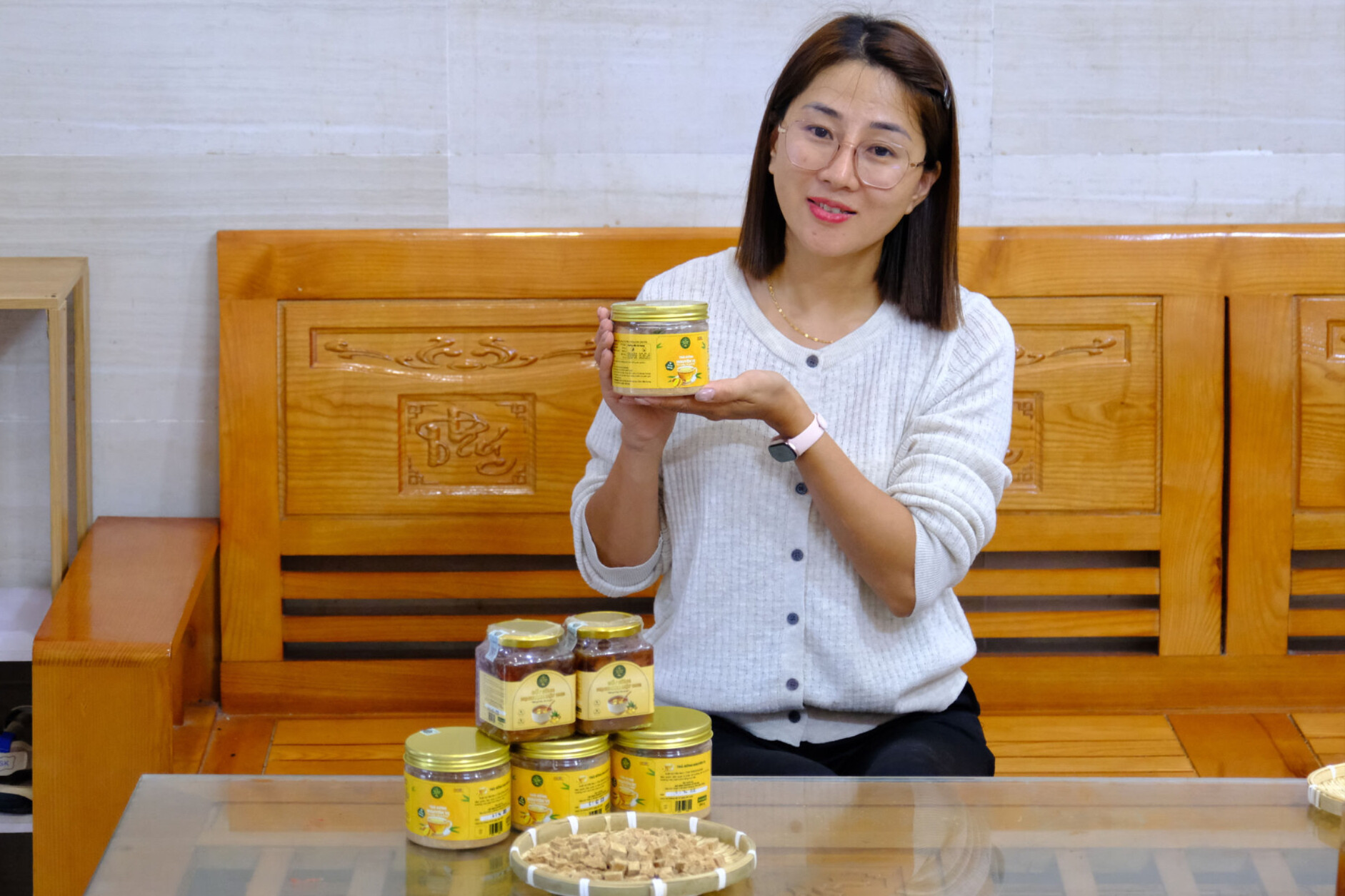
After graduating from the Ho Chi Minh City University of Food Industry, Le Thi Nu had a background in food processing. However, her journey into natural-product entrepreneurship only began in early 2025, when she started researching medicinal plants and ways to develop products from familiar ingredients.
Ginger was the first raw material she chose.
Drawing on knowledge gathered from acquaintances and online sources, Nu began experimenting with ginger tea.
“At first, I simply wanted to make a product from an ingredient that was familiar and easy to find. I learned as I worked, trying to see whether the product would suit consumers. After receiving positive feedback, I became more confident about investing more systematically,” Nu said.
As the products gradually took shape, she began considering equipment that could increase production capacity and improve consistency.
She invested around VND80 million in a range of equipment, including a press, grinder, drying oven, cooking and mixing equipment, and other production tools.
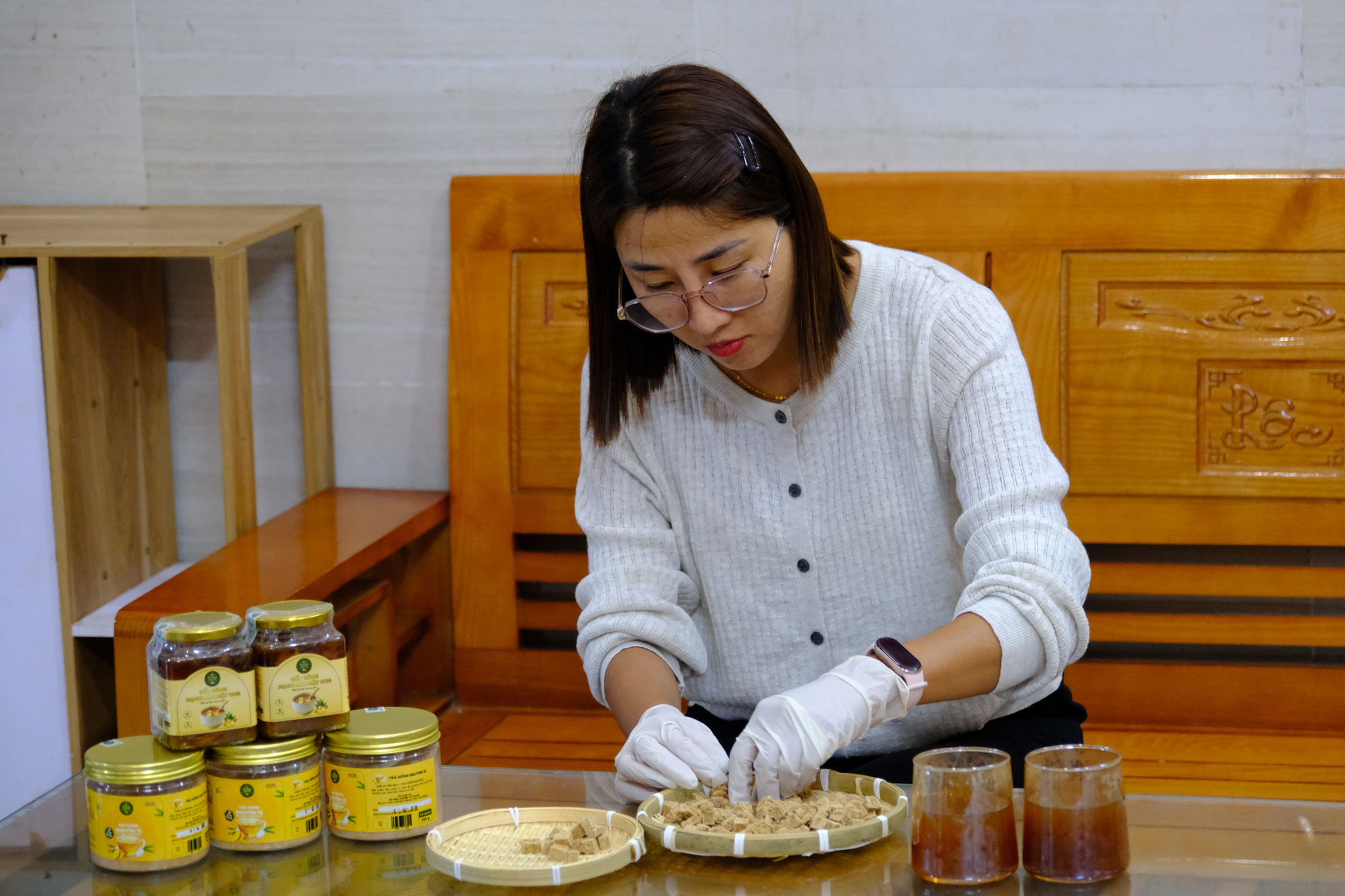
With the new equipment in place, Nu began promoting her products on Facebook, TikTok and Shopee.
Online sales opened another route for products made at her small facility in Dam Rong 2 Commune to reach consumers in other areas.
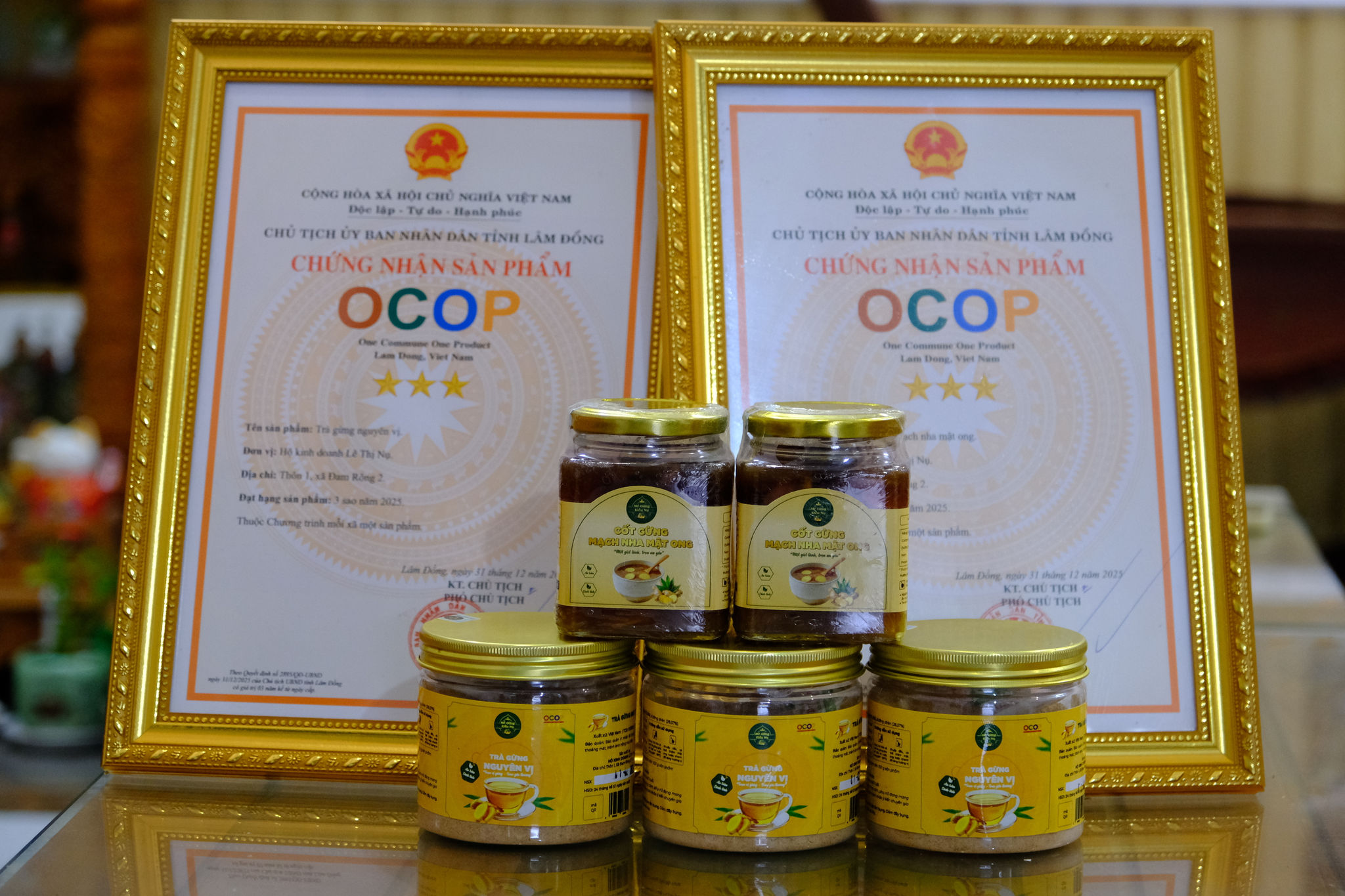
Local authorities also helped her complete the procedures required under the OCOP program. At the end of 2025, her original ginger tea and malt-honey ginger concentrate were recognized as three-star OCOP products by Lam Dong Province.
These two products became a foundation for further experimentation.
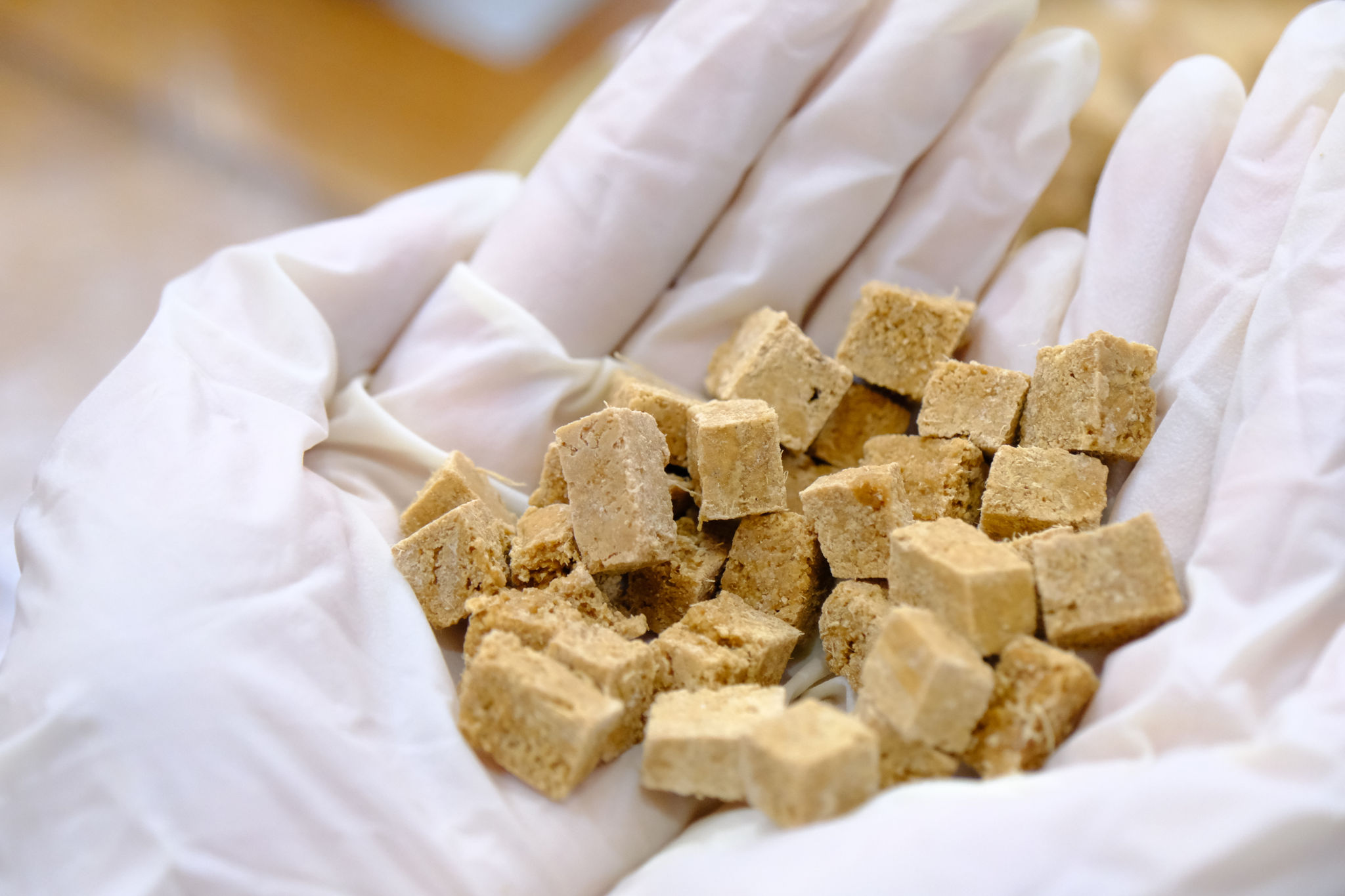
Nu subsequently developed ginger-mugwort extract, ginger tablets, warming ginger balm, mosquito-repellent balm and herbal shampoo, along with other personal-care products.
Ginger, honey, mugwort, perilla and cogon grass are among the familiar ingredients she has continued to research and combine, seeking ways to create additional value from locally available natural resources.
Connecting raw materials with the market
To secure a stable supply of ginger, Nu has established links with five farming households in Tan Ha Lam Ha Commune, covering a total area of around 3 hectares.
Pham Dinh Hung, one of the farmers involved in the linkage, currently grows ginger on 8,000 m2 of land.
“Working with a processing facility gives my family another outlet for our ginger. If the market is stable, we will feel more confident about investing in cultivation and expanding the growing area,” Hung said.
For Nu, working directly with farmers also provides greater control over the quality of raw materials.
The approach is consistent with the agricultural transition being promoted in Dam Rong 2 Commune, where local authorities are seeking to move from conventional agricultural production toward an agricultural economy linked to processing, preservation, distribution and market development.
The commune currently has 11 production and sales linkages involving 127 households, covering a total area of 183.79 hectares, with estimated output of 5,485 tonnes.
Nguyen Van Chinh, Vice Chairman of the Dam Rong 2 Commune People's Committee, said the locality is restructuring agriculture toward the development of raw-material areas, broader production linkages and value chains connecting cultivation with preliminary processing, processing and market distribution.
“The locality encourages producers to invest in processing, improve product quality and build brands. When agricultural products are more deeply processed and linked to raw-material areas and markets, more of the value created can remain with producers,” Chinh said.
For Nu, the journey with ginger is still at an early stage. What began with a few experiments in a small production facility is gradually developing into a broader value chain, connecting farmers, processing and consumers.
The next challenge is to turn familiar raw materials into products with stable quality, recognizable brands and sustainable markets—so that the value of ginger does not end at the farm gate.