


“Gold Mine” of Agricultural Tourism in Da Lat
Alongside luxury resorts and well-known attractions that have long defined Da Lat, a new form of tourism has emerged in recent years, offering unique experiences that captivate visitors: agricultural tourism. This is not just a trend—it is an untapped “gold mine,” creating golden opportunities for both farmers and tourists alike.
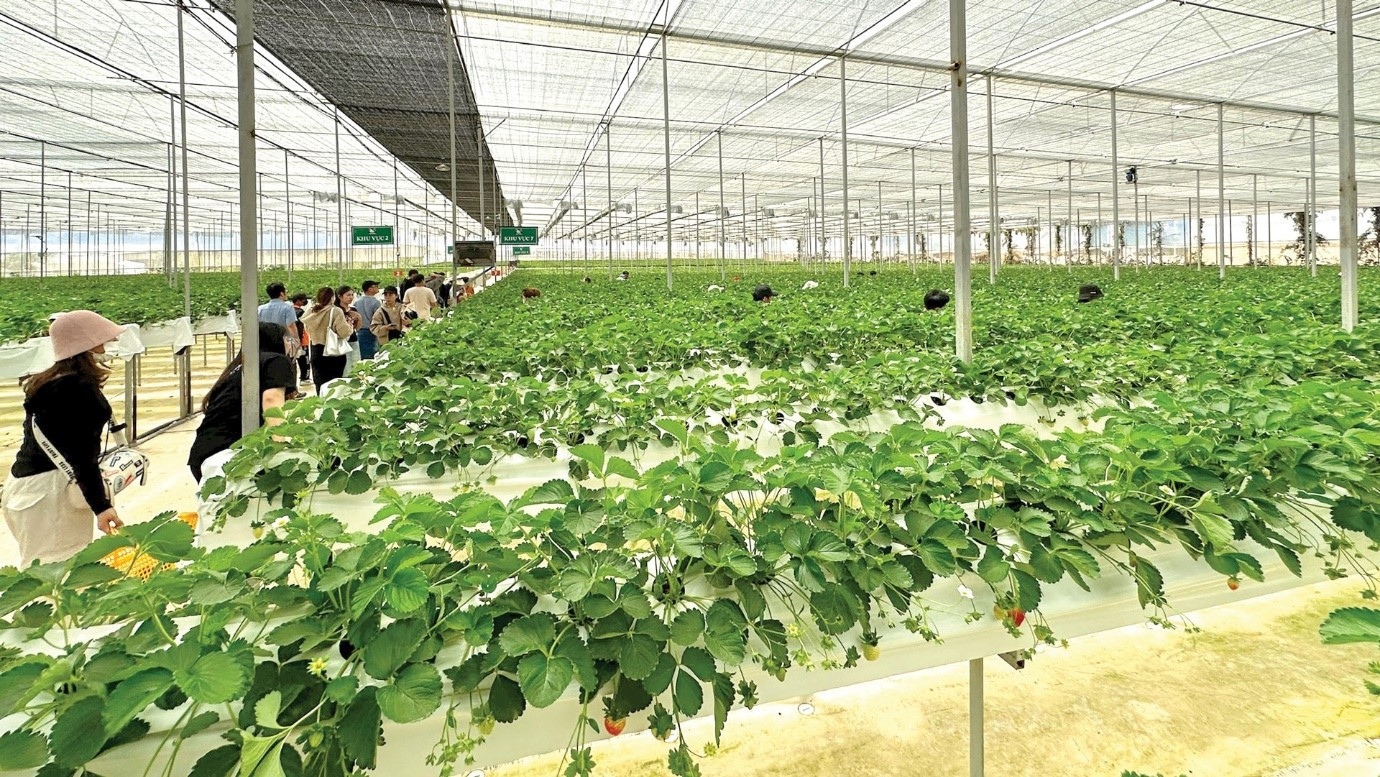
When Farms Become Destinations
We visited the vineyard of veteran farmer Nguyen Huu Thanh in Bong Lai Hamlet, Hiep Thanh Commune. Though only gaining attention in recent years, his vineyard—with plump, evenly ripened grapes cultivated through meticulous research and experimentation—has become an ideal destination for both local and out-of-province tourists.
Visitors delight in observing and learning about grape cultivation, then hand-picking the clusters they like to take home or enjoy fresh on-site. Minh Thuy, a visitor from Ho Chi Minh City, shared: "This attraction is very interesting. I brought my children here to both explore and learn about grape cultivation, and to buy fresh products directly from the vineyard. The feeling of picking grapes with your own hands is so different from buying at the market—very exciting."
Not far from Mr. Thanh’s vineyard, Bong Lai Farm—a farm-based tourism spot—lies hidden among vast elephant grass fields in Lam Dong’s famous dairy region. Though not near the city center, it still attracts many visitors seeking the fresh, peaceful atmosphere of rural life.
Additionally, many other farm tourism models across the Lam Vien Plateau are developing rapidly, leveraging agricultural advantages to create unique experiences, such as Cun Farm, Tam Trinh Coffee Experiences, and Avocado Farm. Each location has its own character, yet all emphasize agriculture and closeness to nature.
Double Benefits of Agricultural Tourism
The Lam Vien Plateau boasts stunning natural landscapes, diverse agricultural products, and rich cultural values. Rural areas enjoy an ideal climate, beautiful natural scenery, and distinctive cultural traits of ethnic communities. For example, Xuan Truong Ward in Da Lat is famous for Arabica and Moka coffee as well as wind-dried persimmons, where Kinh, Hoa, and K’ho communities coexist harmoniously. Locals not only enhance product quality but also actively organize garden-based tourism activities, promoting both specialty products and local culture.
Agricultural tourism offers dual benefits: increasing income for locals, promoting products, and simultaneously enhancing livelihoods while raising awareness about environmental protection.
Tran Dang Khoi, a farmer in Thai Phien Flower Village, shared: "Previously, we focused solely on flower production. But once visitors came to explore and take photos, I realized our village looked more beautiful, and our products were better promoted. Tourists admire the flowers and buy clean vegetables, which brings us extra income, joy in our work, and a greater love for farming."
Today, many communes and wards across the Lam Vien Plateau are actively promoting agricultural tourism, viewing it as a key solution to sustainable rural development and diversifying tourism offerings.
Investing Strategically to Exploit the “Gold Mine”
For agricultural tourism to reach its full potential, coordinated efforts are needed from authorities, businesses, and local communities. Upgrading infrastructure such as transportation, electricity, water supply, and improving landscapes and the environment is essential.
With a well-planned investment strategy and close cooperation, this “gold mine” promises to be effectively exploited, delivering dual benefits for local communities and unforgettable experiences for visitors, while elevating Da Lat’s agricultural tourism on the international travel map.