


Golden Tet on Bamboo Racks
In the final days of the year, Thanh Binh hamlet, Dam Rong 1 commune, Lam Dong province, comes alive under the brightest sunshine of the dry season. In front of homes and across courtyards, rows of bamboo racks lined with rice paper stretch into the distance, creating a vibrant scene of labor that signals the Lunar New Year is near.
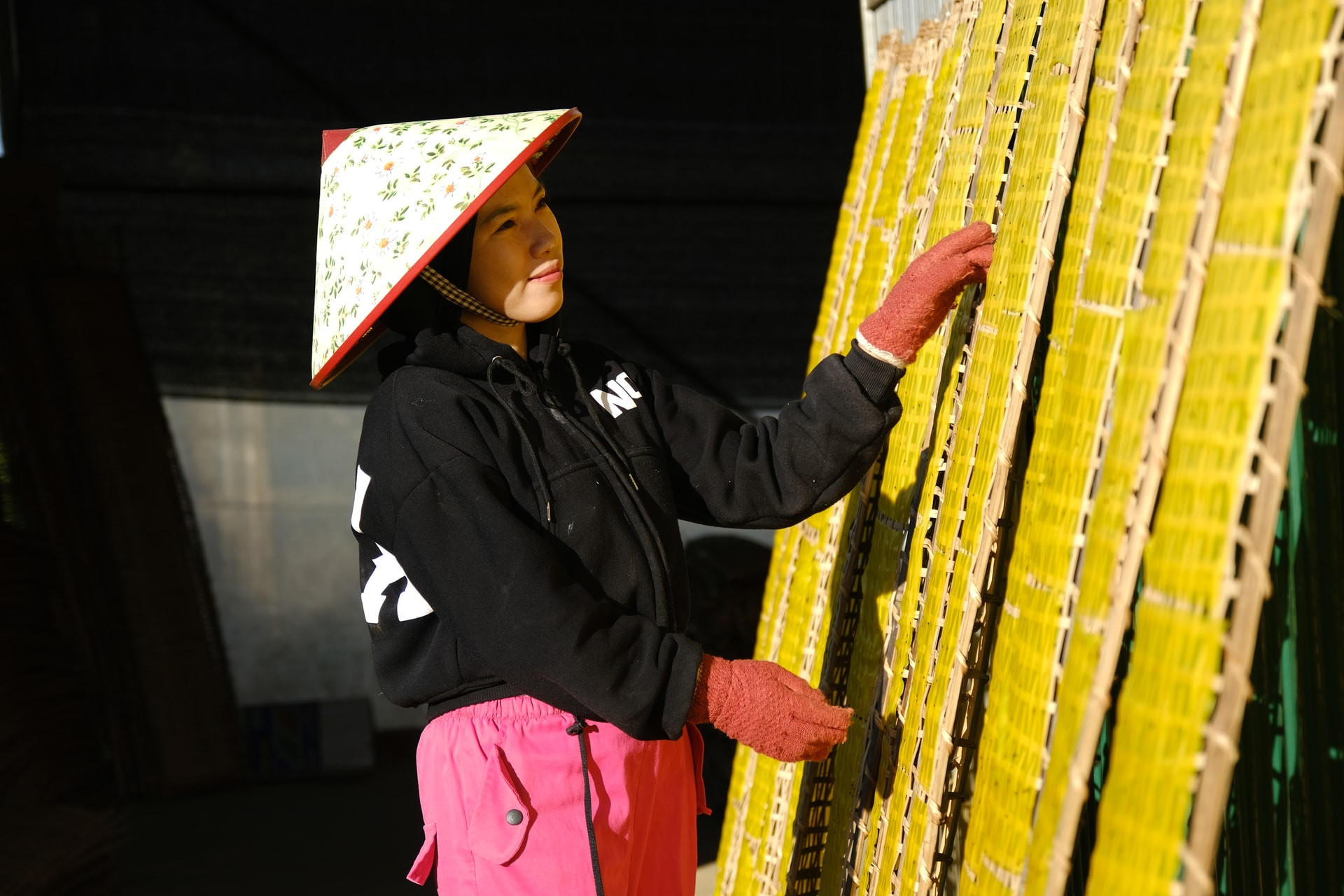
The hamlet currently has around 10 rice paper workshops in operation. Although these facilities remain modest in scale, sunny days bring a lively rhythm to production. The craft is not new to the area, but it has seen significant growth in recent years, driven by stable demand and increased investment in machinery.
Among the neatly arranged drying racks, the workshop run by To Thi Hien (35 years old) stands out as one of the busiest. Having worked in the trade for nearly eight years, she began operating her own facility in March 2022. With an investment of about 300 million VND in equipment and a production area of roughly 100 square meters, her oven is fired up from early morning each day.
On average, we produce about 10,000 rice paper sheets a day. During peak periods, especially ahead of Tet, output increases to meet orders from traders in Da Lat and neighboring localities.
Ms. To Thi Hien, Thanh Binh hamlet, Dam Rong 1 commune
Production typically starts at 5 a.m. and continues until around 5 p.m., with each step—from mixing the batter and spreading the rice paper to drying and stacking—carried out in a continuous flow.
Thanh Binh rice paper is made from simple ingredients including rice, salt and sesame, without additives. The rice is carefully soaked and finely ground to achieve the right consistency, ensuring flexibility and preventing sticking. A small amount of turmeric is added, giving the rice paper its warm golden hue—a distinctive hallmark of the local product.
The workshops also provide jobs for seven to eight seasonal workers, mostly local residents. For older workers, the job is particularly suitable as it can be done at home and does not require heavy labor, especially after the coffee harvest season when more free time is available.
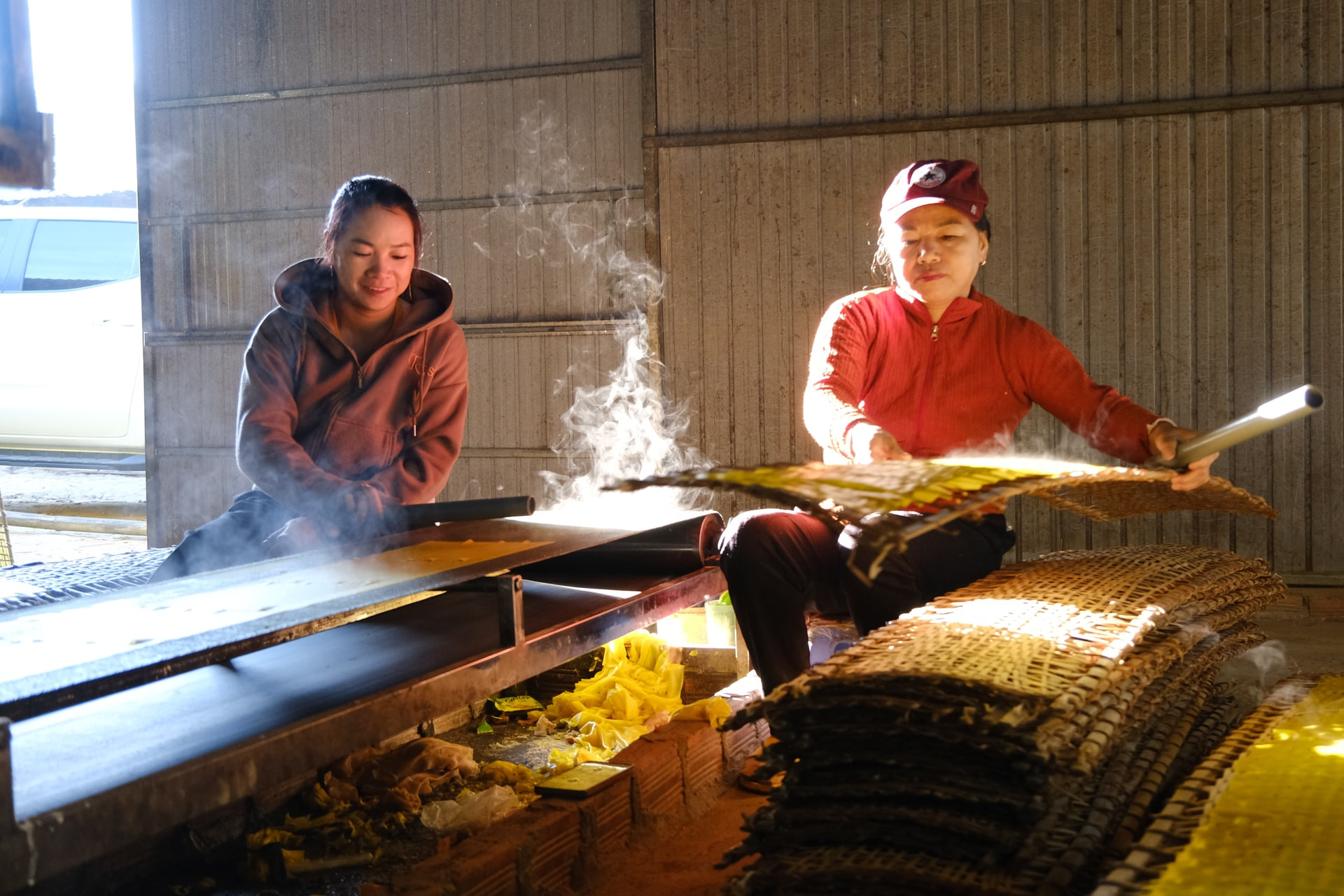
At one corner of the drying yard, Lo Thi Bong (55 years old) carefully adjusts each sheet to ensure even drying. Having worked in the trade for more than four years, she considers rice paper making an integral part of her daily routine.
This job requires patience and meticulous attention, from mixing the batter to controlling the fire and every small movement. Only with experience can the rice paper turn out thin, flexible and unbroken.
Ms. Lo Thi Bong, Thanh Binh hamlet, Dam Rong 1 commune
For younger workers, the craft offers both a stable income and a long-term attachment. Hoang Thi Nhung (26 years old), who has been in the trade for two years, produces around 1,000 sheets per day, rising to nearly 2,000 sheets during the year-end rush. “Wages increase with seniority—the longer you work, the higher the income,” she said.
According to Ms Hien, rice paper production is highly weather-dependent. During the rainy season, from around June to October, workshops often suspend operations as the sheets cannot dry properly. In contrast, the dry season—especially toward year’s end—sees continuous production. Wholesale prices currently stand at about 850 VND per sheet, with shipments of around 30,000 sheets dispatched every three days.
Thanks to steady demand, rice paper making has become a reliable source of income for many households in Thanh Binh. Traders come directly to purchase the products, helping sustain a traditional craft deeply rooted in rural life.
As spring approaches, golden rice paper sheets drying along village paths under the sun reflect both the familiar scent of rice and the diligent rhythm of local life—quietly preserving the taste and spirit of Tet through the hands of village artisans.