


“Green Dragon” Conquers Demanding Markets
Once heavily dependent on China, Lam Dong’s “Green Dragon” — its signature dragon fruit — has expanded exports to more than 20 countries, including Japan, South Korea, India, the United States, the Middle East and Europe. The shift is opening new opportunities while also presenting significant challenges for farmers and exporters.
Holding on to Dragon Fruit Through Market Swings
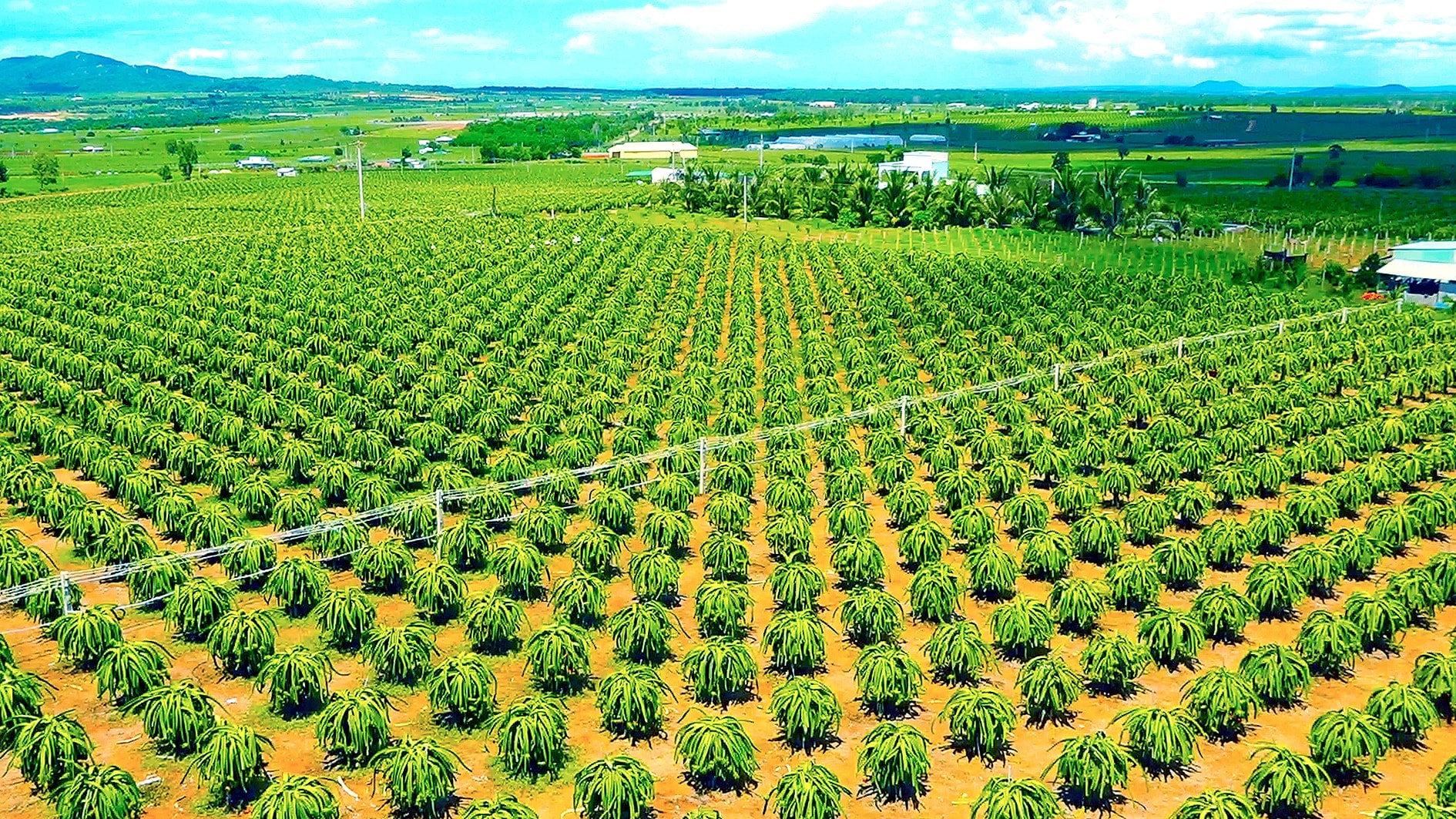
In late winter, while many crops prepare for spring, dragon fruit farms in southeastern Lam Dong glow under night lights used for off-season cultivation — a striking landscape that hides a complex economic story.
Tran Dang Phuoc, a farmer in Phu Cuong Hamlet, has spent more than a decade with dragon fruit. He once sold three hectares of coffee land to invest in a two-hectare orchard, only to face severe price fluctuations. At times, prices plunged from VND 20,000 per kilogram to as low as VND 3,000–6,000, and during the COVID-19 pandemic fell below VND 1,000, forcing many growers to abandon their fields.
Support measures have since been proposed, including negotiations with the United States to add heat-treatment options for exported dragon fruit, helping reduce logistics costs.
Phuoc recalled nearly giving up before switching to off-season production for Tet. That decision proved decisive, as prices rose to VND 30,000–35,000 per kilogram, generating hundreds of millions of dong in revenue and helping him recover. Over the past three years, stable prices have restored confidence among growers.
Market Diversification: Opportunity and Pressure
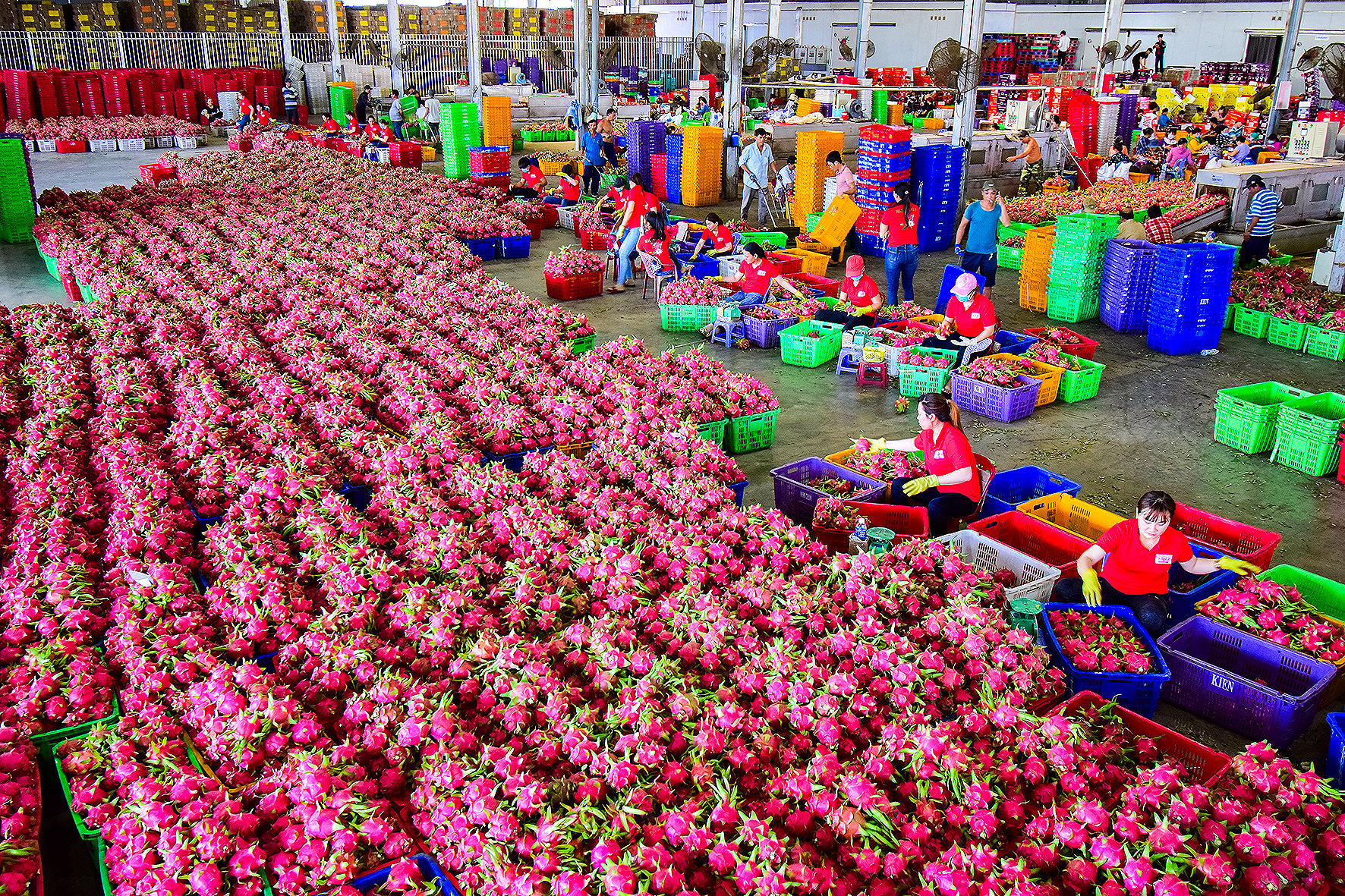
According to the Binh Thuan Dragon Fruit Association in Lam Dong Province, exports to China have dropped from 85% to about 55%, while shipments to demanding markets such as Japan, South Korea, Australia, India, Thailand, the United States and Europe continue to grow.
Huynh Canh, Chairman of the association and Director of Son Tra Company, said businesses are focusing on GlobalGAP certification and expanding linkages with growing areas. Clear traceability systems, planting area codes and standardized packaging facilities have become key advantages when approaching high-value markets.
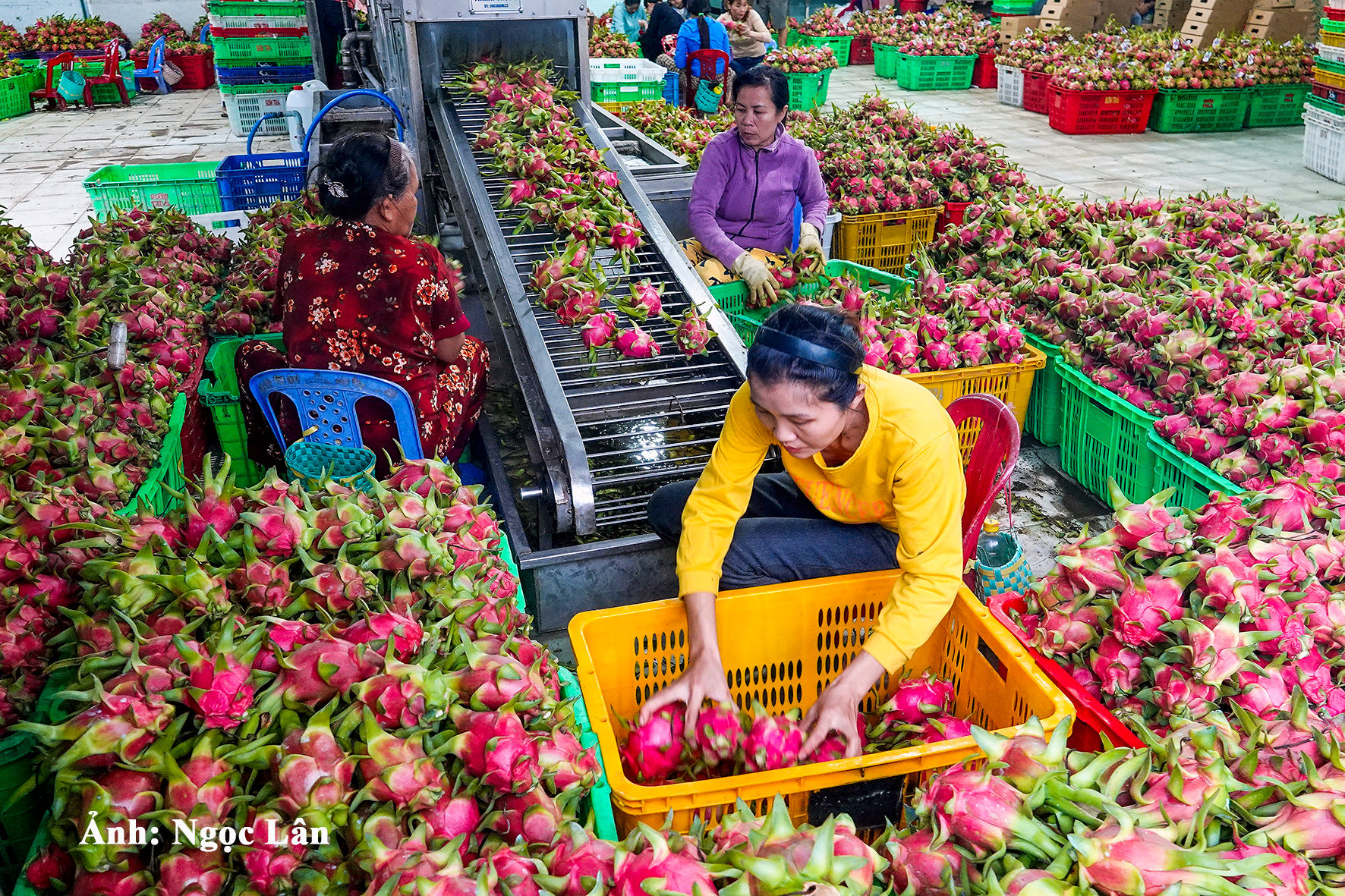
However, the transition is far from easy. Meeting strict standards requires significant investment, while rising agricultural input costs place additional pressure on farmers and enterprises.
Building a “Green Agriculture” Brand
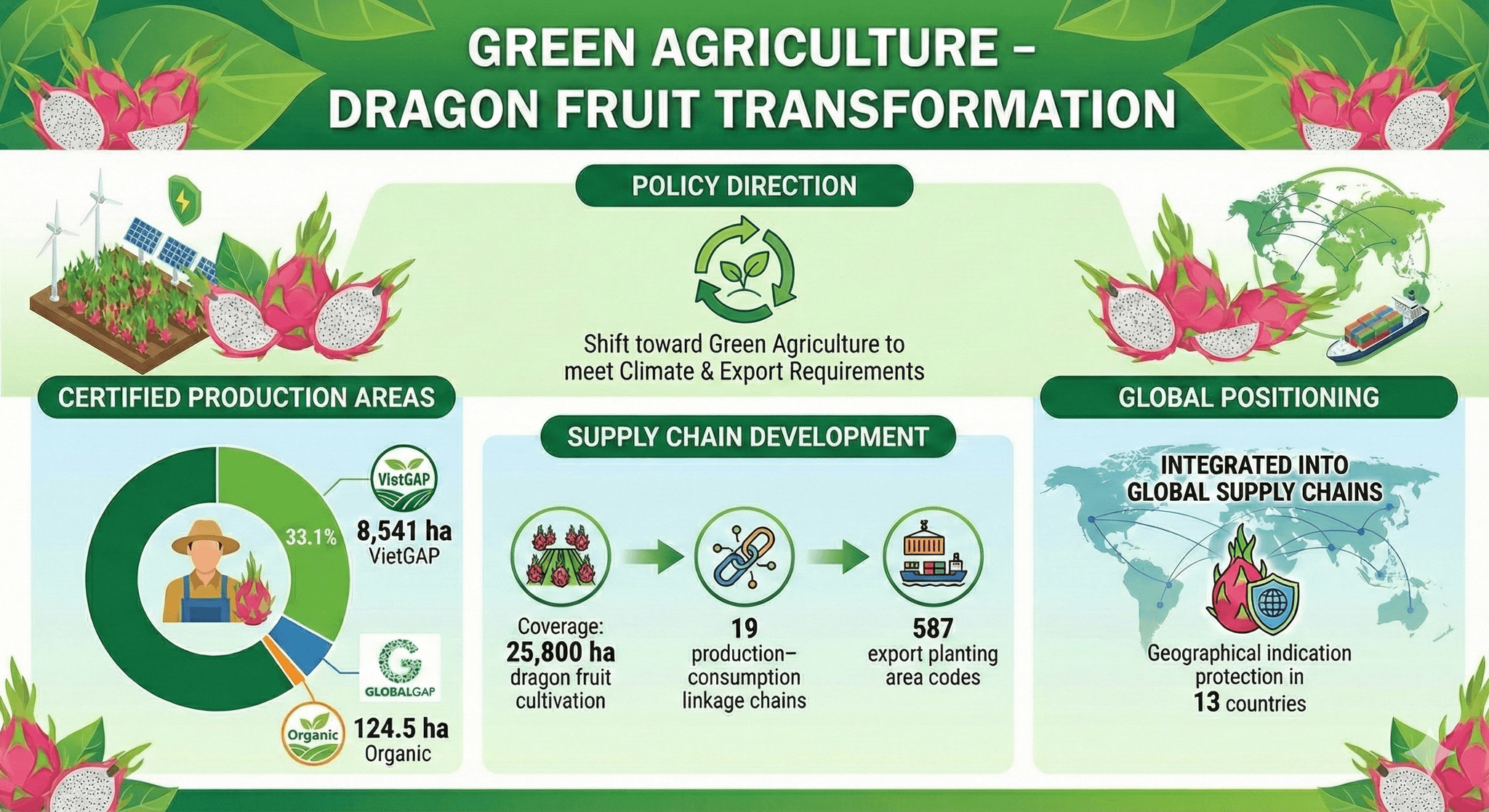
Facing climate change and stricter import regulations, Lam Dong has adopted policies to strengthen the local dragon fruit brand under a “green agriculture” orientation. Currently, 8,541 hectares — about 33.1% of total area — meet VietGAP standards, 453 hectares follow GlobalGAP and 124.5 hectares are certified organic.
The province has also established 19 production-consumption linkage chains and issued 587 export planting area codes covering the entire 25,800 hectares of dragon fruit cultivation. The product now appears in global supply chains and holds geographical indication protection in 13 countries.
In 2025 alone, association members exported around 1.2 million tons of dragon fruit — up 8.3% year-on-year — generating an estimated USD 700 million. Strengthening connections between exporters, cooperatives and farming regions is seen as a key strategy to build a sustainable dragon fruit value chain.