


Green Vegetables on Phu Quy Island
When mentioning Phu Quy Special Zone, we immediately think of a pristine island surrounded by the sea, blessed with an abundance of fresh seafood. However, visitors are also impressed by the wide variety of green vegetables grown on the island.
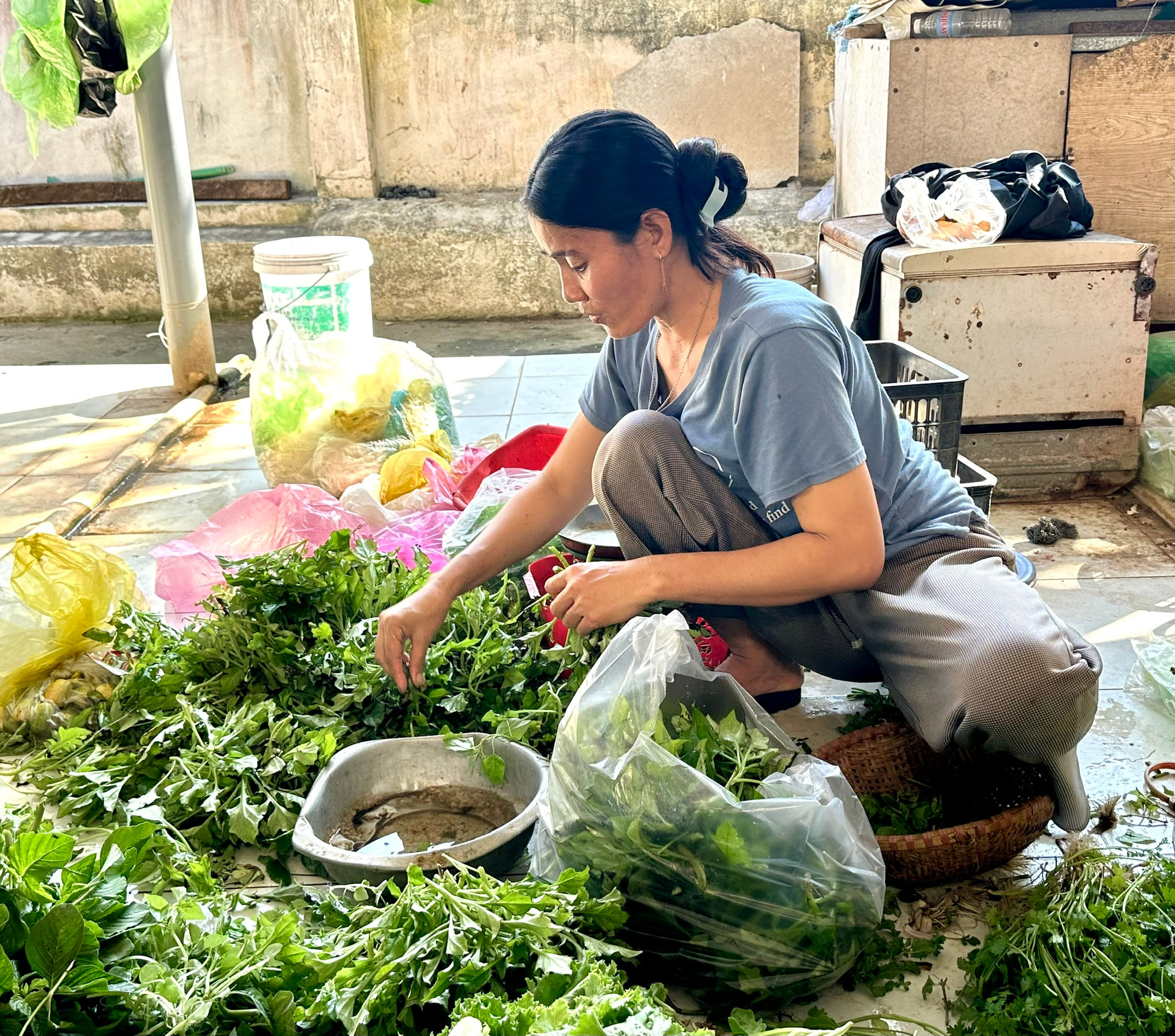
During our visit to Tam Thanh Market (Phu Quy) in the summer of 2026, we observed a remarkable variety of goods. Besides essential items brought over from the mainland to meet the shopping and consumption needs of the local populace, the market boasts stalls that offer fresh vegetables grown right there. Many of the vegetable vendors also own farms on the island.
Do Thi Nieu, from Phu An Hamlet, Phu Quy Special Zone, who cultivates a diverse range of vegetables on her approximately 1.8-sao plot, picks her produce early each morning while it’s still dewy and takes it to the market for sale. An assortment of fresh, colorful vegetables, such as water spinach, salad greens, eggplants, and vibrant wild greens, draws numerous buyers.
Growing fresh vegetables in such severe natural conditions poses significant difficulties. Nieu pointed out that cultivating vegetables on the island involves considerable challenges. The soil is poor, often made up of coral or sandy types; freshwater is limited; and the climate is harsh, featuring salty sea breezes, intense sunlight, and sporadic heavy rainfall. These conditions make conventional farming techniques less effective.
During the rainy season, vegetables are prone to damage from waterlogging, while in the dry season, they face risks from insufficient irrigation, leaf scorching, and nutrient shortages. As a result, the prices of various vegetables fluctuate based on market demand and the growing season.
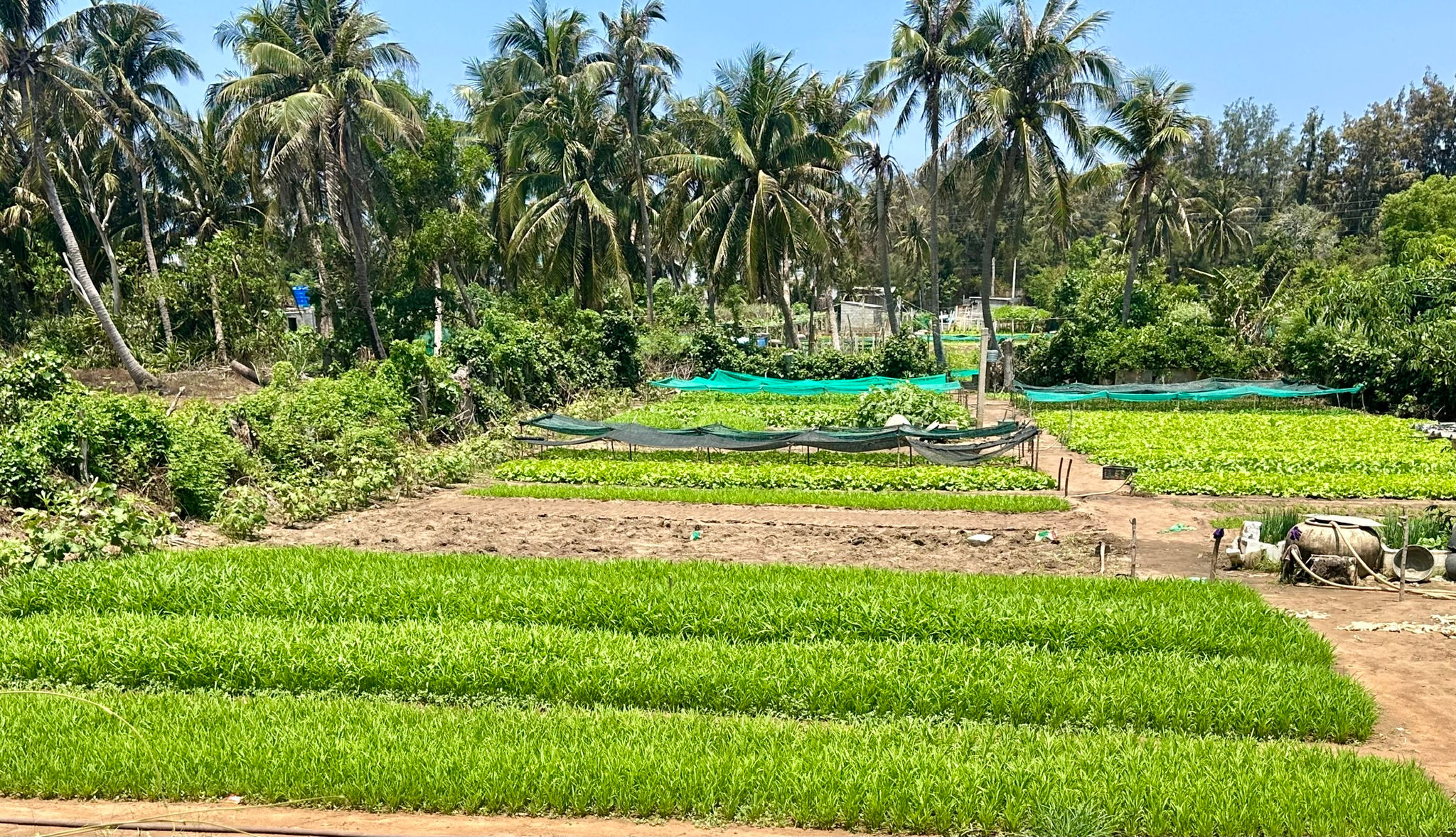
Nieu’s family is not unique; many other families in the special zone have also built their family economies by cultivating vegetables alongside fishing. Local residents indicate that successfully growing vegetables on a remote island demands both experience and appropriate farming techniques.
In particular, due to the limited availability of freshwater, families in the Phu Quy Special Zone have implemented water-saving irrigation practices. They also use organic fertilizers and adopt water-recycling methods, such as setting up rainwater collection systems on rooftops and filtering the harvested water through sand tanks to create reserves for the dry season.
Nguyen Thi Thu, from Phu Thuy Ward, was truly captivated by the unique scent and delightful flavor of the island's vegetables during her visit to Phu Quy. After her trip, she brought some wild vegetables back to the mainland as souvenirs for her family and propagated them using stem cuttings.
At present, water spinach is priced at about VND 10,000 per kilogram, while the island's wild vegetables—a unique type—have risen in price from VND 20,000 to VND 50,000 per kilogram due to heavy rainfall. Despite the comparatively high cost of these vegetables, they continue to be favored by local consumers and mainland visitors.
Do Thi Nieu, Phu Quy Special Zone
According to the People's Committee of the Phu Quy Special Zone, frequent rainfall since the beginning of the year has supported crop growth. The estimated total area under annual crops is around 362.27 hectares, including 158.73 hectares allocated for maize, 3.1 hectares for sweet potatoes, 33.4 hectares for peanuts, 19.73 hectares for various types of beans, and 147.31 hectares for vegetables.
Nonetheless, the rainy season continues to lead to flooding in low-lying areas designated for vegetable cultivation, which disrupts the farming activities of local producers. Currently, farmers in the Phu Quy Special Zone are prioritizing the cultivation of food crops and vegetables to satisfy the basic needs of island inhabitants. Additionally, residents are gradually transitioning to fruit crops that offer higher yields and greater economic returns.
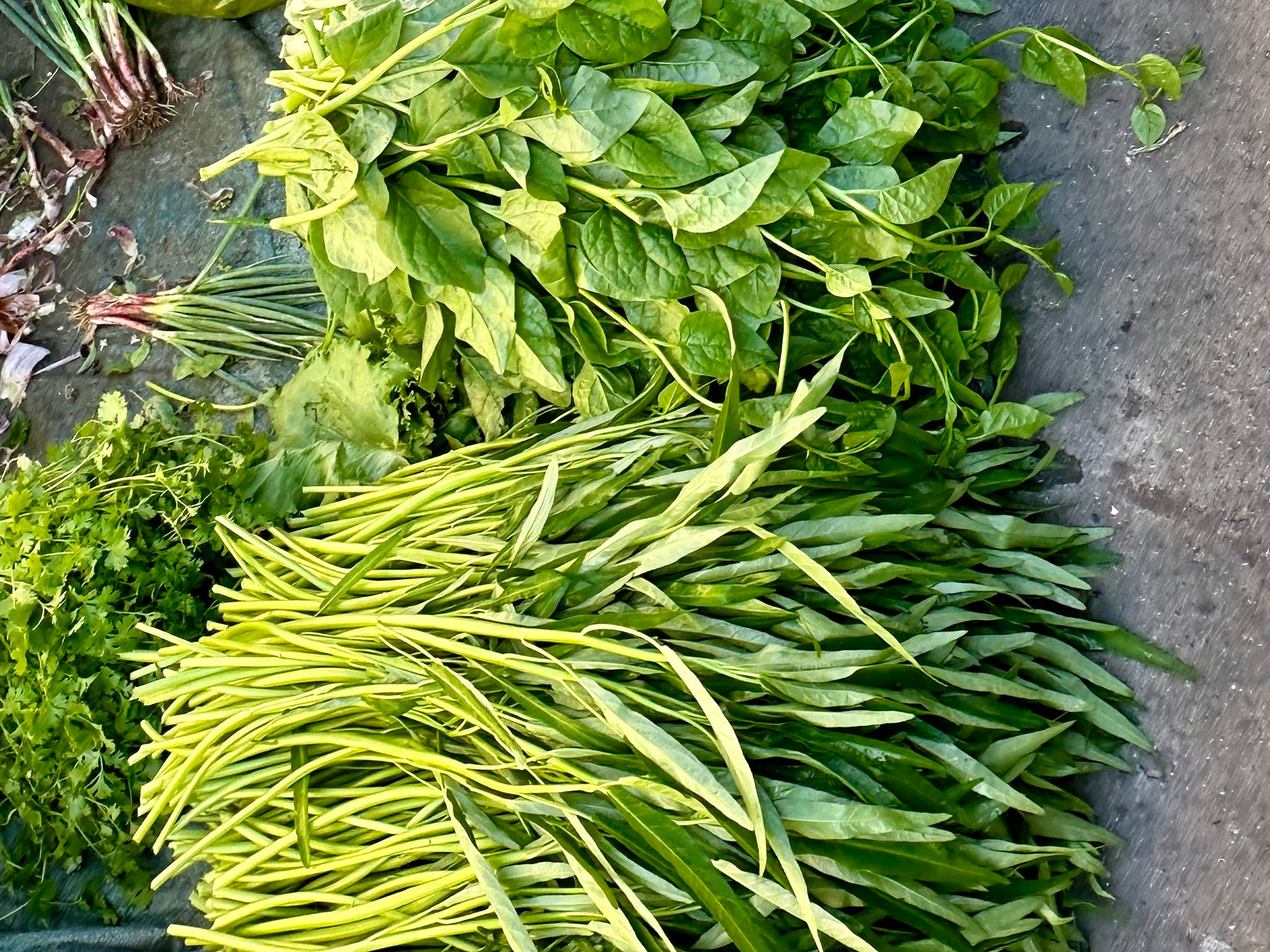
Growing vegetables on Phu Quy Island is more than simply farming; it is also a journey toward building a green and sustainable way of life amid the sea and sky. The green vegetable plots that withstand the island's sun and winds contribute not only to a refreshing landscape but also to greater food self-sufficiency for each household on the island.