


Guardians of the lithophone heritage in Dieng Du Village
Amid the pace of modern life, the sound of lithophones in Dieng Du Village continues to resonate quietly, preserved and passed down by dedicated artisans to younger generations.
Keeping the Lithophone’s Rhythm Alive
As evening settles over Dieng Du Village and the fields fall silent, delicate notes begin to rise from the lithophone, clear, raw, and deeply rooted in the earth. The sound is not loud, yet it lingers, drawing listeners in like the quiet pulse of the mountains themselves.
Among those who safeguard this sound is Dieu Gie (born in 1970), a quiet yet devoted keeper of the tradition. He did not inherit the craft, nor was he formally trained from a young age. Instead, his journey began only in 2022, sparked by watching others play. Curiosity turned into passion, and passion into persistence. “It's fascinating, so I learn,” he said. “At first it was difficult, but over time, the rhythm stays, the sound stays.” For him, the lithophone is more than music, it is memory, echoing the spirit of his people.
Learning the basics, he says, may take only a day. But to truly master the rhythm and tone requires patience and devotion. “You must listen only to your own sound. If you hear too many voices at once, the rhythm slips away,” he said.
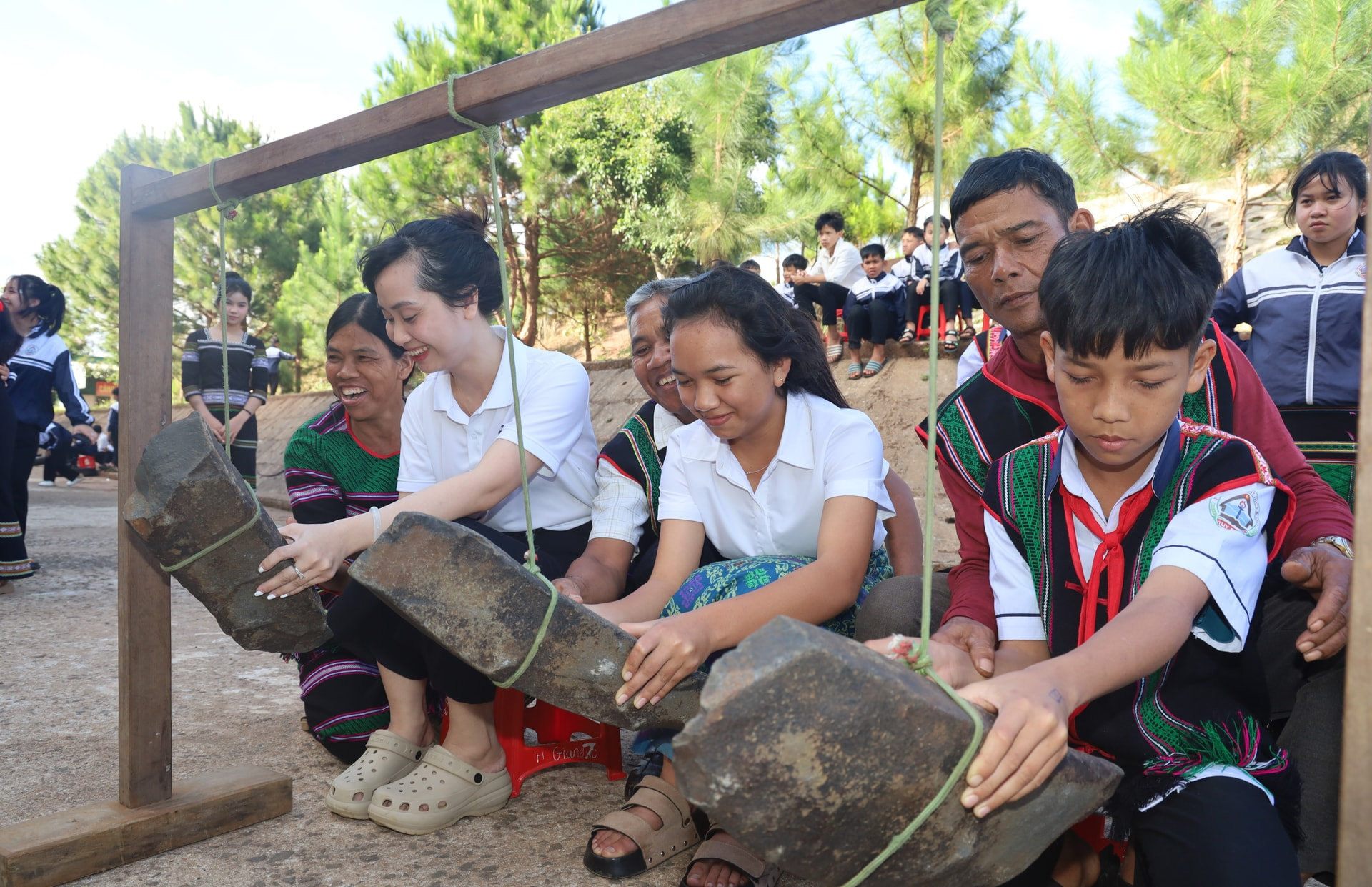
In Dieng Du, more than ten people can play the lithophone, yet only a few have mastered it. The village owns just one set, shared among all. Each practice session becomes precious—a quiet passing of knowledge, from elder to youth, from one pair of hands to another—keeping the sound alive through care and commitment.
Passing the echo forward
For Dieu Gie, preserving the instrument is only half the journey; ensuring its future lies in the hands of the young.
His daughter, Thi San, now in Grade 11, first touched the lithophone as a child. What began as curiosity slowly deepened into love. “At first, I just thought it sounded beautiful,” she said. “But the more I learn, the more I feel it, it’s like the voice, the echo of our forests and mountains.” Now, she can confidently play all three bars of the instrument, carrying forward a tradition that once felt distant.
For her father, the greatest joy is not her skill, but her understanding. “I won’t always be here. The young must continue. Seeing her learn, I feel at ease,” he said, his eyes reflecting quiet hope.
The spirit of transmission extends beyond one family. Artisans like Go Rech and Dieu Xoong continue to teach, not for recognition, but for preservation. “We learn to keep it alive,” Go Rech said. “When children begin to care, that is our happiness.”
Today, the lithophone team of Dieng Du not only performs at festivals but also brings the sound into schools. There are no blackboards, no formal lessons—only stone, rhythm, and patience. Classes take place after long hours in the fields, yet more young people come, learning each note as a way of returning to their roots.
In a hustle-bustle world, where traditions risk fading into silence, the voice of stone still endures in Dieng Du, soft, steady, and alive and carried by those who choose to listen, to learn, and to pass it on.