


Halal Certification: From Compliance to Export Orders
Halal certification can open doors to Muslim-majority markets, but it does not guarantee sales. For Lam Dong, expanding exports will depend on meeting market-specific standards, identifying the right buyers and building effective distribution networks.
Under Islamic law, halal is an Arabic term meaning “permissible.” For food products, Halal certification confirms that a product meets the requirements of the applicable standard, covering everything from ingredients to production processes, handling and storage. These requirements are designed to ensure that products contain no prohibited ingredients and are protected from cross-contamination with non-Halal substances.
However, certification is only one condition for entering a market; it does not guarantee sales. Businesses must also identify their target markets, verify whether their certificates are recognized in those countries and meet the specific requirements of importers. Without these steps, the cost of compliance may not translate into commercial opportunities.

Lam Dong has 38 businesses and commercial establishments with Halal certification in agriculture, food and tourism. In the first half of 2026, the province’s exports to Muslim-majority markets were worth approximately US$40 million, compared with total exports of more than US$1.6 billion over the same period.
In the first nine months of 2026, Lam Dong’s merchandise exports were estimated at more than US$2.56 billion, up 4.17% year on year and equivalent to 71.32% of its annual target. Coffee, fruits and vegetables, and black pepper provide a foundation for expanding into new markets. Yet these strengths will translate into a competitive advantage only when products meet buyers’ requirements for quality, pricing, volume and delivery schedules.
Certification costs must be tied to market demand
For exporters, selling prices, product quality, consistent supply, shipping costs and distribution networks all affect their ability to secure orders. For small and medium-sized enterprises, uncertainty over market access makes decisions about certification and production adjustments more difficult.
Le Thi Nguyen Ha, director of Phuc Ha Juice Co., Ltd. in Hai Ninh Commune, said businesses should research potential markets before pursuing certification. Without clearly identified buyers or suitable sales channels, the investment may not deliver the expected returns.
“The cost of obtaining and maintaining certification is a concern for small and micro-sized businesses considering entry into the Halal market,” Ha said.
The challenge is not simply to reduce certification costs, but to determine which certification is necessary for a particular product and destination. No single Halal certificate is automatically accepted across all Muslim-majority countries. Although certification systems share common Islamic principles, technical requirements and recognition arrangements for certification bodies can vary by country and product category.
A certificate may be recognized in several markets, but businesses must verify the specific scope of that recognition. Identifying the intended export destination, understanding importer requirements and checking local regulations should therefore precede the selection of a certification body.
Hoang Anh Tho of ISOCERT International Certification and Inspection Joint Stock Company recommended that businesses select target products and markets before incorporating Halal requirements into their existing management systems. Choosing a certification body recognized in the intended market can also help avoid unnecessary costs.
Connecting with buyers to turn compliance into orders
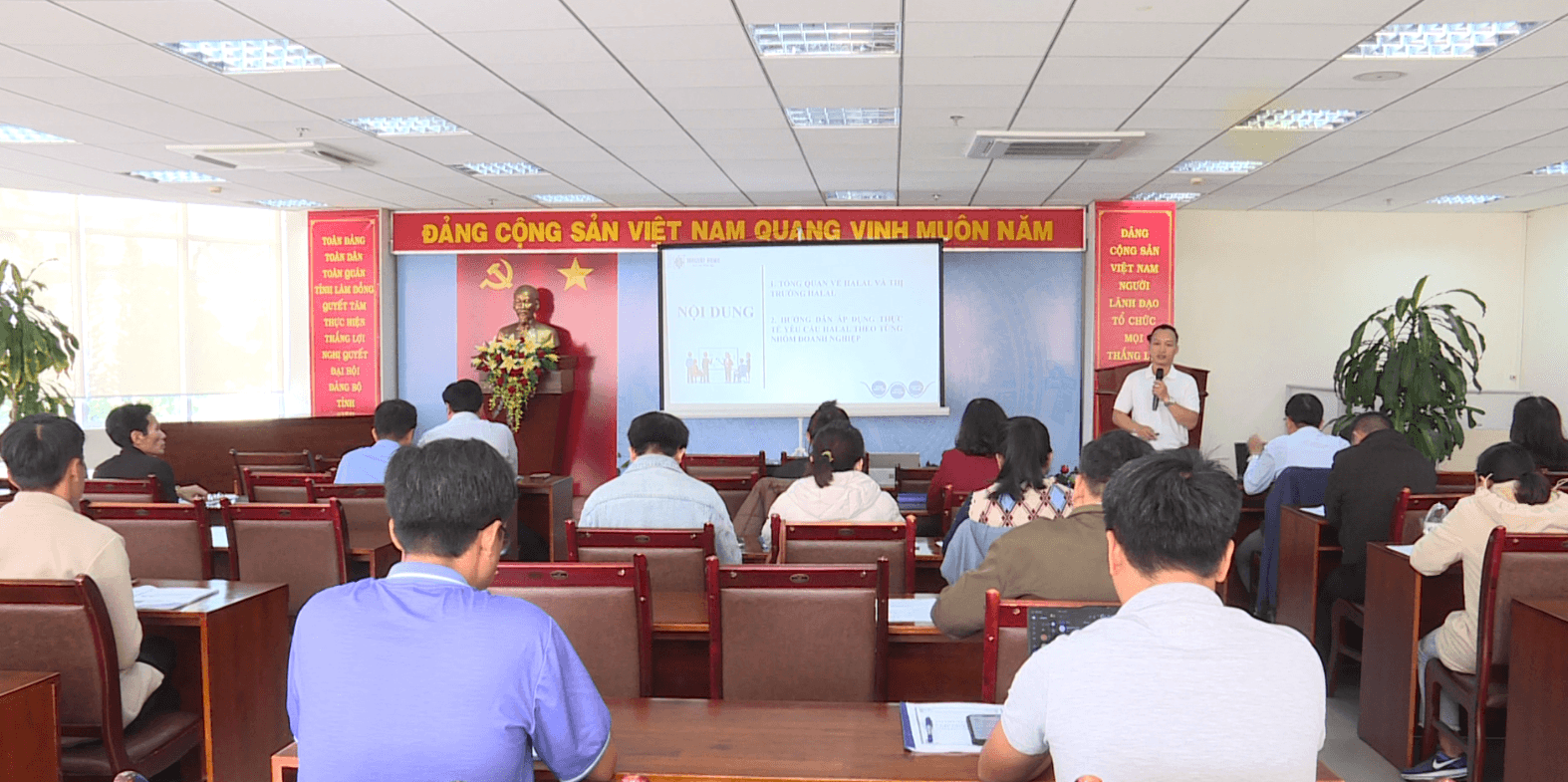
Lam Dong has recently organized a workshop connecting businesses with representatives of Muslim-majority markets. The province has also introduced support for establishing and implementing Halal quality management systems and updating certifications.
These initiatives give businesses access to information on standards and market requirements. The next step is to focus more directly on finding buyers, securing orders and developing distribution channels.

For coffee, fruit and vegetables, and black pepper, Lam Dong could prioritize products with strong competitive potential, identify suitable destination markets and connect businesses capable of meeting buyers’ requirements. A targeted approach would align technical advice, certification support and trade promotion with specific commercial opportunities, rather than spreading resources across initiatives without clearly defined sales prospects.
Beyond certification, businesses must also address packaging specifications, traceability, shelf life, delivery capacity and consistent product quality. These factors can determine whether a company retains an importer after its first order and develops a lasting commercial relationship.
With more than two billion Muslims worldwide, the Halal market offers significant potential for Lam Dong’s agricultural and food products. Global spending on Halal food alone was estimated at approximately US$1.53 trillion in 2024.
The market’s scale points to substantial opportunities, but it does not mean that all of this demand is within reach of local exporters. Expanding market share will require businesses to focus on products with clear advantages, understand buyers’ needs, secure appropriate certification and maintain a reliable supply.
By linking compliance with market demand and distribution capacity, Lam Dong can turn Halal certification from a formal credential into a practical tool for export growth.