


Helping Lam Dong Coffee Reach Global Markets
Lam Dong’s coffee industry is undergoing a significant transformation, shifting away from a production-driven mindset toward a value-oriented approach. Through replanting aging plantations, adopting advanced farming techniques, promoting deep processing and strengthening branding, Lam Dong coffee is steadily enhancing its competitiveness, meeting stringent standards and expanding its presence in international markets.
A foundation for sustainable development
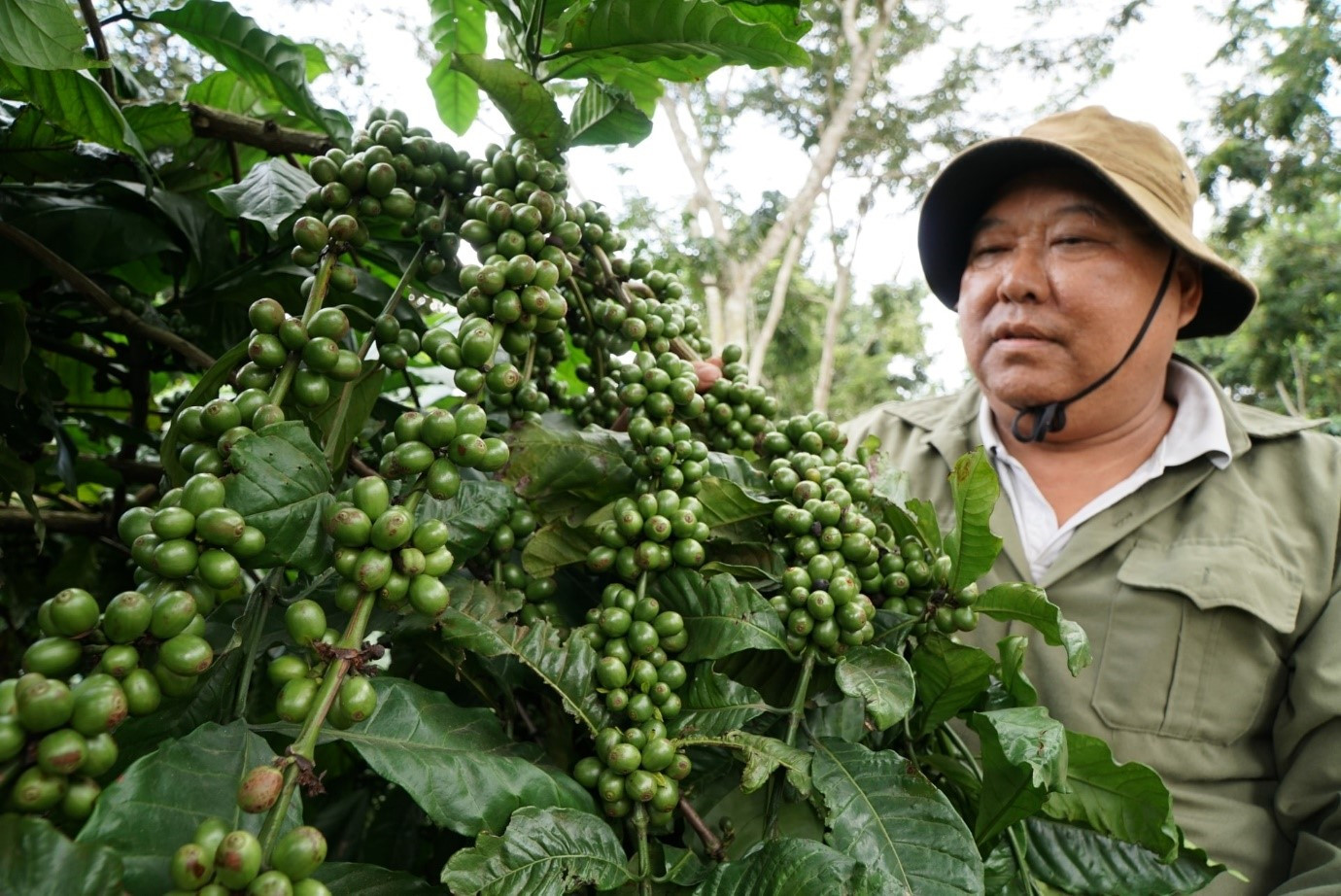
In 2000, Ly Van Khiem left his hometown to settle in Ta Son Hamlet, Ta Nang Commune (Lam Dong province), following the wave of people seeking new land to build their livelihoods. At the time, the area was largely undeveloped, production conditions were limited, and agricultural knowledge was almost nonexistent. Learning from experienced farmers while experimenting on his own, Khiem has remained closely tied to coffee cultivation from the earliest days until now.
Over time, coffee not only took root in the new land but also became the family’s main source of income and a cornerstone of long-term livelihoods. After years of cultivation and witnessing fluctuations in prices and plantation quality, Khiem boldly grafted and rejuvenated his coffee garden, selecting high-quality varieties suited to local soil and climate conditions. From his practical experience, he believes that coffee farming can only be sustainable when growers invest properly, apply correct techniques and place quality at the heart of long-term value.
Following administrative merger, Lam Dong has become Vietnam’s largest coffee-growing province, with more than 328,000 hectares under cultivation. Output for the 2025–2026 crop year is expected to exceed 1 million tons, reinforcing the province’s position as the country’s coffee “capital.”
Beyond generating substantial income, the coffee sector provides livelihoods for rural communities and attracts dozens of enterprises engaged in purchasing, processing and exporting, creating strong spillover effects for the local economy. With its natural advantages and large-scale production, Lam Dong holds significant potential to become a leading hub for coffee production, processing and exports in Vietnam.
From volume-driven growth to value creation
In recent years, coffee production in Lam Dong has gradually shifted toward a more modern model. The province currently has 22,735 hectares of coffee cultivated using high-tech farming practices. Five high-tech coffee production zones are being developed, covering a total area of 1,743.5 hectares, with five zones already officially recognized in key coffee-growing areas such as Di Linh, Bao Lam, Thuan An and Duc An.
Technologies including water-saving irrigation systems, smart fertigation and integrated pest and disease management (IPHM) have helped reduce input costs, optimize resources and improve coffee bean quality.
At the same time, Lam Dong has expanded areas certified under sustainable standards such as VietGAP, 4C, UTZ, Rainforest Alliance and organic farming. Certified coffee areas now total 117,454 hectares, accounting for 36.4% of the province’s total coffee acreage, with an output of 433,715 tons.
The province has also established 65 production–consumption linkage chains, involving 29,420 farming households across 55,468 hectares. These linkages help standardize production, stabilize market outlets and ensure a sustainable supply for processing and exporting enterprises.
In 2024, Lam Dong directly exported approximately 158,253 tons of green coffee beans, generating export revenue of USD 478.8 million. Major markets such as Switzerland, Italy, Japan and Germany impose strict requirements on quality and sustainability, placing increasing pressure on domestic production.
Despite these achievements, the coffee sector continues to face challenges. Climate change has intensified droughts, unseasonal rainfall and pest outbreaks, while rising costs of inputs, fertilizers and labor have narrowed farmers’ profit margins.
Notably, more than 98% of exported coffee remains unprocessed green beans, resulting in low added value. Practices such as harvesting unripe cherries and weak linkages between farmers and enterprises persist, undermining quality and hindering the development of specialty coffee.
In addition, the European Union’s Deforestation Regulation (EUDR) introduces mandatory requirements for transparency of growing areas and traceability, forcing the coffee industry to undergo fundamental changes to maintain export markets.
In response to deeper international integration, Lam Dong’s agricultural sector has identified a long-term strategy of shifting from agricultural production to an agricultural economy, with quality, branding and compliance with international standards as key benchmarks.
The province is focusing on replanting and rejuvenating aging coffee gardens, accelerating the adoption of high-tech and digital solutions, strengthening substantive linkages, and promoting deep processing, with the goal of increasing the share of processed coffee to 10–15% by 2030. At the same time, Lam Dong is positioning and effectively leveraging the geographical indication “Lam Dong Coffee,” while linking coffee production with agro-tourism and local cultural values.
Through this approach, Lam Dong is steadily moving toward high-quality, specialty and sustainable coffee development, laying the groundwork for highland coffee beans to reach further into global markets.