


Hung Kings’ heritage: Lam Dong reasserts its cultural identity after the merger
Lam Dong will leverage the 2026 Hung Kings' Festival as a strategic "cultural axis" to unify its newly merged highland and coastal territories. By hosting UNESCO-recognized rituals across its expanded borders, provincial authorities aim to consolidate national identity into a singular driver for regional integration.
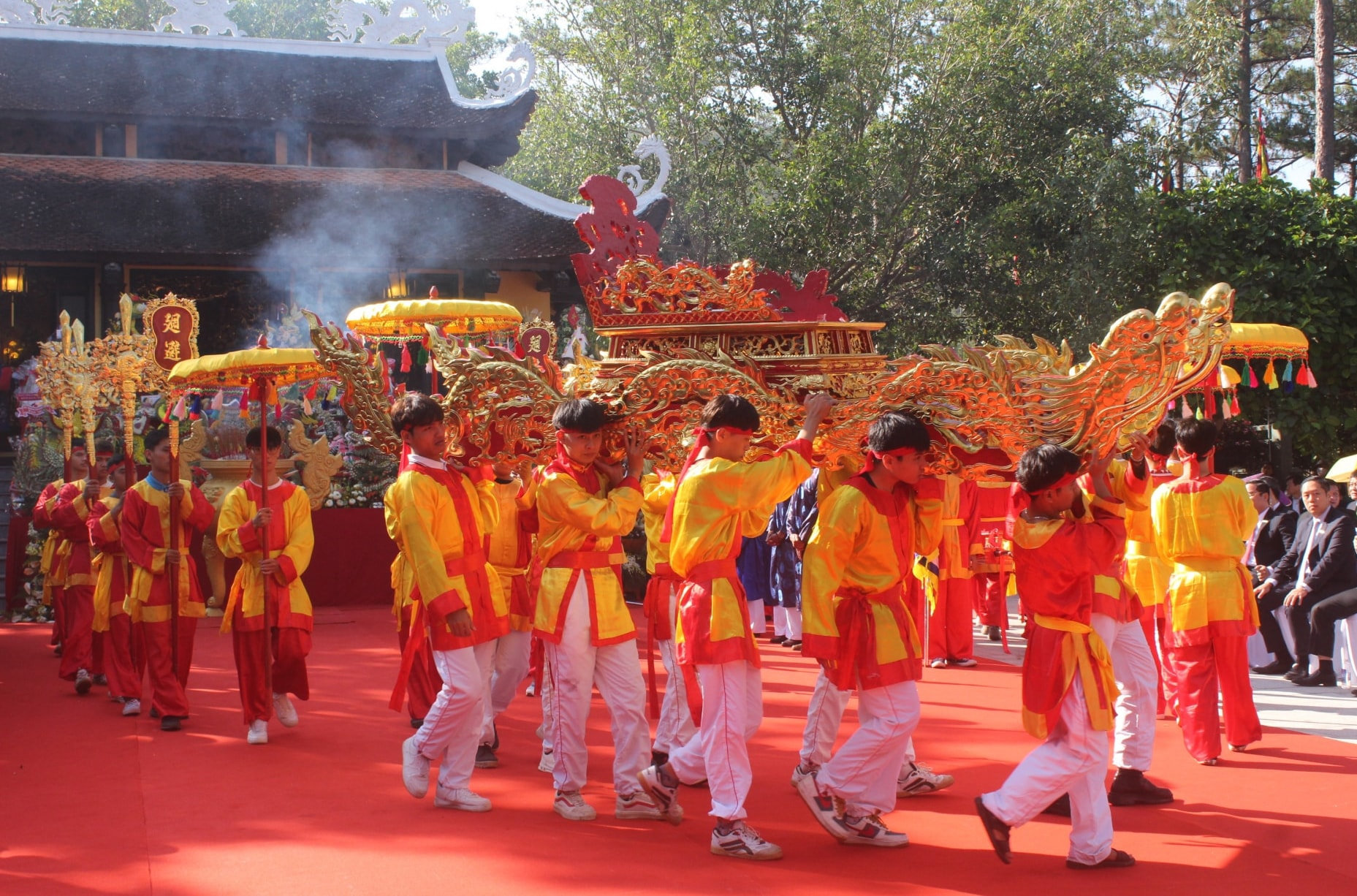
Administrative and cultural convergence
A landmark administrative merger has repositioned Lam Dong on Vietnam’s heritage map. In 2026, for the first time, the province will simultaneously host the Hung Kings’ Festival at two primary hubs: the National Ancestor Temple (Da Lat) and the Hung Kings Temple (Phan Ri Cua).
This initiative represents more than a ritualistic observance; it is a calculated effort to solidify community ties across geographically distinct but culturally connected regions. The presence of two provincial-level relics within a single new administrative entity underscores national unity, as former boundaries are superseded by a shared sense of ancestral origin.
Da Lat as the central heritage axis
In the administrative center of Da Lat, the festival focuses on the Au Lac Temple (Prenn Falls). Field reports indicate that preparations, ranging from the opening ceremonies to traditional sacrificial rites, are being executed with strict synchronicity and rigor.
Situated at its gateway and shaped by its unique highland topography and climate, this site serves as a central "heritage axis," establishing a direct link between the local community and international visitors. Sustaining this major festival is a strategic move to define Lam Dong’s cultural brand within the framework of global integration.
Preserving local identity in Phan Ri Cua
A distinguishing feature of the 2026 festival is the integration and enhancement of the organizational framework at the Hung Kings Temple in Phan Ri Cua.
Maintained since 2018, this remains the sole temple dedicated to the National Ancestors in the former coastal district now part of Lam Dong, deeply embedded in the spiritual life of the maritime community. Delegating primary organizational duties to local authorities reflects a commitment to grassroots cultural management.
The synergy between highland pine forests and coastal landscapes creates a diverse heritage profile, strengthening the province's collective spiritual identity following the merger.
Legacy transmission in the digital age
To ensure heritage remains dynamic rather than static, Lam Dong is prioritizing digital technology and storytelling techniques to engage younger demographics. The "Returning to the Roots" message is being decoded through modern language across digital platforms, providing ancient values with contemporary relevance.
In an era of globalization, consolidating cultural strength from the grassroots level serves as a vital technical barrier for identity preservation. This ensures that Vietnamese citizens, regardless of location, maintain a resilient foundation for integration without cultural assimilation.
The 2026 Hung Kings’ Festival in Lam Dong is more than a major celebration; it is a moment of collective national focus. The offerings made are not merely acts of historical gratitude, but a commitment to safeguarding the national lineage, ensuring that Vietnamese identity remains the most enduring internal strength in the province's international trajectory.